Utility energy auditor meeting with a young homeowner couple at their kitchen table, discussing rebate options on a tablet with energy-efficient lighting, double-pane windows, and a heat pump unit visible in the background.

Your Utility Company Wants to Pay You to Save Energy (Here’s How New Homeowners Can Cash In)

Contact your utility provider directly to request a comprehensive list of available rebates and incentives—most offer free home energy audits that identify specific upgrades qualifying for immediate cash back, often ranging from $50 for LED lightbulbs to $2,000 for HVAC system replacements. Download your state’s energy office database of approved contractors who understand program requirements and can handle rebate paperwork as part of their service, eliminating application confusion and ensuring you receive every dollar you’re entitled to.
Bundle multiple efficiency upgrades in a single project timeline to maximize …

Technician measuring indoor air quality with handheld meter and tripod sampler beneath a ceiling vent in a modern office; blurred glass partitions, HVAC vents, and workers in the background.

Why Your Commercial Property Could Be Making Tenants Sick (And How to Prove It’s Not)

Poor indoor air quality costs commercial property owners an average of $200 billion annually in lost productivity, increased liability exposure, and accelerated building deterioration. Yet most property managers only discover air quality problems after tenant complaints, failed inspections, or costly litigation.
Commercial indoor air quality testing identifies hidden contaminants before they threaten your bottom line. The process measures everything from volatile organic compounds and mold spores to carbon dioxide levels and particulate matter that standard maintenance overlooks. For real estate investors, comprehensive testing …

Couple at a kitchen table reviewing home expenses with a calculator, small house model, and stacked coins, softly lit by daylight, with a blurred open-plan kitchen and windowed street in the background.

What Your Home Really Costs Over Five Years (And How to Budget for It)

Calculate your true 5-year homeownership costs by multiplying your purchase price by 1.4 to account for all expenses beyond your mortgage—including property taxes, insurance, maintenance, utilities, and repairs. This rule-of-thumb estimate reveals that a $400,000 home actually costs approximately $560,000 over five years, helping you determine whether you can genuinely afford the property you’re considering.
Track every recurring expense in three categories: fixed costs (mortgage, property taxes, insurance), variable costs (utilities, landscaping, cleaning), and reserve funds (minimum 1-3% of home value annually for repairs…

Energy auditor operating a blower door test in a New York brownstone entryway as a homeowner watches, with snow-covered stoop and neighboring brownstones visible outside

How New York Homeowners Cut Energy Bills by Half (And You Can Too)

Claim your share of New York’s $250 million energy efficiency incentive pool through NYSERDA programs that reimburse 50-75% of upgrade costs, including air sealing, insulation improvements, and HVAC replacements. New homeowners qualify for expedited rebates when bundling three or more efficiency measures within the first year of ownership.
Schedule a comprehensive home energy audit within 60 days of closing to identify the highest-impact improvements specific to your property. New York utilities subsidize these assessments at $50-100, and the resulting report prioritizes upgrades by payback period, helping you allocate …

Wooden house model on a kitchen table surrounded by a blank-display calculator, unmarked papers, a jar of coins, house keys, a lightbulb, and a wrench, with the background softly blurred in natural daylight.

The Real Cost of Owning a Home Goes Far Beyond Your Mortgage Payment

Calculate your true homeownership costs by adding fixed expenses (mortgage principal and interest, property taxes, homeowners insurance) to variable expenses (maintenance, utilities, HOA fees) plus opportunity costs of your down payment. Multiply your home’s value by 1-3% annually to estimate maintenance reserves—a $400,000 home requires $4,000-$12,000 yearly for repairs and upkeep. Factor in closing costs of 2-5% of purchase price, which translates to $8,000-$20,000 on that same property.
The economics total cost formula—Total Cost = Fixed Costs + Variable Costs + Opportunity Costs—reveals the complete financial …

HOA board members and an advisor reviewing paperwork at a conference table, with a suburban townhouse community visible through a bright window and background elements softly blurred.

Why Your HOA’s Industry Classification Actually Matters (And How to Use It)

**Identify NAICS code 813990** as the official classification for homeowners associations—a six-digit designation that categorizes HOAs under “Other Similar Organizations” within the civic and social organizations sector. This seemingly simple code carries significant weight when applying for business insurance policies, opening commercial bank accounts, filing tax documents, or negotiating vendor contracts.
**Verify your association’s classification immediately** by cross-referencing with the U.S. Census Bureau’s official NAICS database, as misclassification can trigger insurance coverage gaps, banking …

Concerned couple reviewing mortgage papers on the front steps of a suburban home with a blurred courthouse in the background, symbolizing foreclosure laws and timelines.

What Happens When You Can’t Pay Your Mortgage (State-by-State Reality Check)

# Understanding Foreclosure Laws: Your Essential Legal Guide
**Understand your state’s foreclosure timeline immediately**—judicial foreclosure states require court proceedings that can extend 6-12 months, while non-judicial states may complete the process in as little as 120 days. This distinction fundamentally determines how much time you have to act and which legal protections apply to your situation.
**Document every communication with your lender in writing**. Federal law requires servicers to provide specific foreclosure protections, including a 120-day grace period before initiating proceedings after your first …

Modern two-story home with rooftop solar panels, triple-pane windows, and an exterior heat pump at golden hour, viewed from the curb in a suburban neighborhood

How the New Energy Efficient Home Credit Could Save You Thousands

Claim up to $5,000 in federal tax credits by purchasing a newly built energy-efficient home that meets specific certification standards. The Energy Efficient Home Credit rewards homebuyers who invest in properties certified under programs like ENERGY STAR or equivalent provincial standards, directly reducing your tax burden dollar-for-dollar rather than simply lowering taxable income.
Verify your home’s eligibility by confirming it was purchased after December 31, 2021, and meets or exceeds the required energy efficiency benchmarks—typically at least 20% more efficient than standard building codes. Your builder or developer …

Eye-level close-up of a board member stopping a property manager from signing a contract on a conference table, with blurred colleagues, binders, and a condo model in the background under soft daylight.

Your HOA Board’s Biggest Mistake: What Never to Hand Off to Management

Hiring a property manager can streamline your HOA’s daily operations, but crossing certain boundaries can expose your community to legal liability, financial mismanagement, and governance failures that cost thousands to remedy. The line between delegation and abdication isn’t always clear—yet getting it wrong means boards that rubber-stamp manager decisions wake up to embezzlement scandals, unenforceable rules, or lawsuits they never saw coming.
**Understanding the delegation dilemma** begins with recognizing that property managers are administrative professionals, not elected fiduciaries. While …

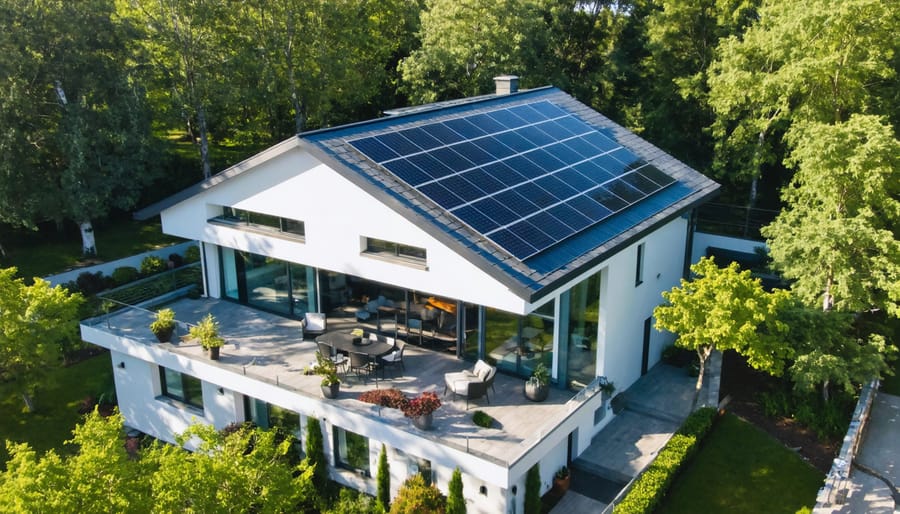
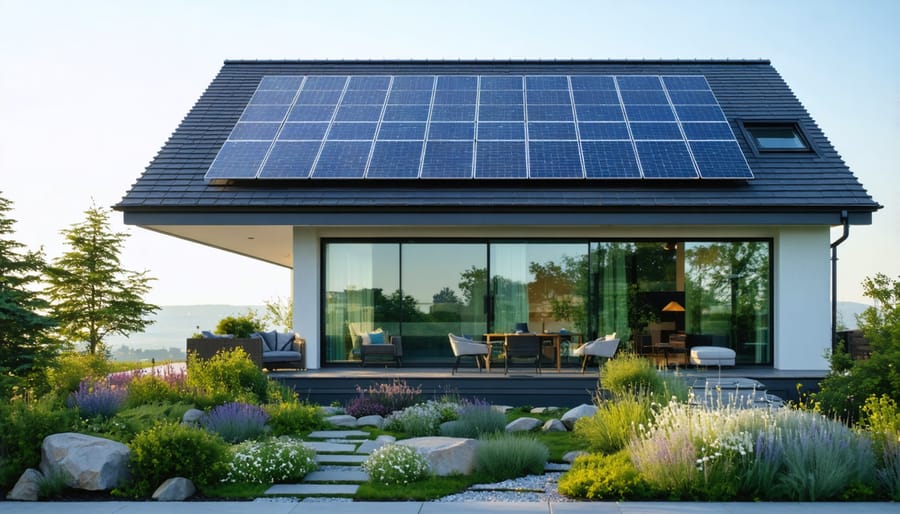
"Energy-efficient home with solar panels and landscaped garden, embodying sustainable living."

Smart Energy Home Design That Pays You Back

Transform your home into a fortress of efficiency while maximizing your property’s value and reducing environmental impact. Modern energy-efficient home design goes far beyond basic insulation and LED bulbs – it’s a strategic approach that combines cutting-edge technology with smart financial planning. Today’s homeowners can slash utility costs by 50-70% through integrated design solutions, while qualifying for significant tax incentives and specialized green mortgages.
With energy costs soaring and climate concerns mounting, investing in energy-efficient home design isn’t just environmentally …