
Poor indoor air quality costs commercial property owners an average of $200 billion annually in lost productivity, increased liability exposure, and accelerated building deterioration. Yet most property managers only discover air quality problems after tenant complaints, failed inspections, or costly litigation.
Commercial indoor air quality testing identifies hidden contaminants before they threaten your bottom line. The process measures everything from volatile organic compounds and mold spores to carbon dioxide levels and particulate matter that standard maintenance overlooks. For real estate investors, comprehensive testing delivers three immediate benefits: documentation that shields against liability claims, data-driven insights that reduce insurance premiums, and quantifiable improvements that command higher lease rates.
The financial calculus is straightforward. Testing typically costs between $300 and $1,500 per building, depending on square footage and complexity. Compare that to the median settlement of $87,000 for indoor air quality lawsuits or the 10-15% rental premium that certified healthy buildings command in competitive markets. Property managers who conduct regular testing reduce HVAC operating costs by identifying inefficiencies, extend building component lifecycles by catching moisture problems early, and create defensible records that insurance carriers reward with lower premiums.
Understanding when to test, what contaminants matter most for your property type, and how to leverage results strategically transforms air quality from a compliance headache into a value-creation opportunity. The following guide breaks down exactly what commercial property owners need to know.
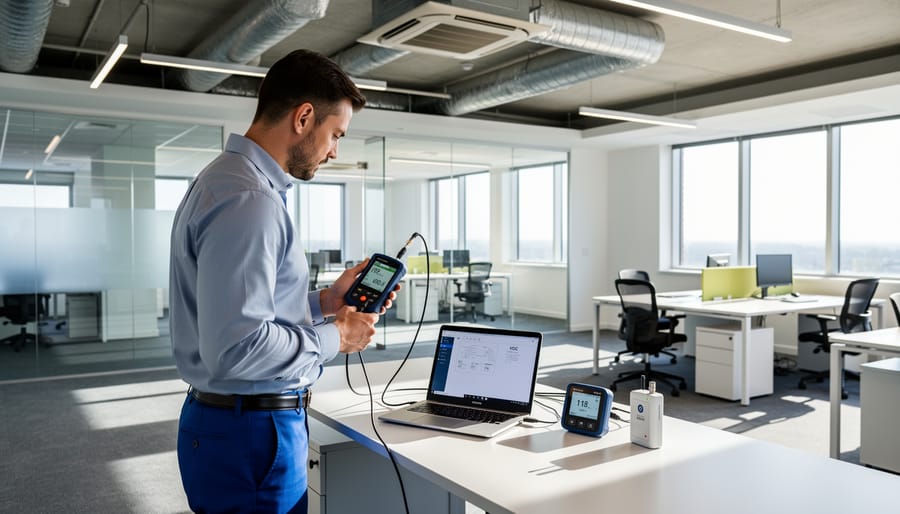
What Commercial Indoor Air Quality Testing Actually Measures
Common Indoor Air Contaminants That Affect Property Value
Understanding which contaminants threaten your commercial property’s value helps you prioritize testing and remediation efforts. Several culprits consistently emerge as deal-breakers during property transactions.
Mold tops the list of investor concerns, and for good reason. Beyond the health implications, visible mold growth can tank property valuations by 20-40% and scare away potential tenants or buyers. It thrives in moisture-rich environments, often hiding within walls, ceiling tiles, or HVAC systems until it becomes a costly problem. What makes mold particularly insidious for property owners is the liability exposure—if tenants develop health issues linked to mold exposure, you’re looking at potential lawsuits that dwarf remediation costs.
Carbon monoxide presents a silent threat in buildings with combustion equipment like boilers, furnaces, or parking garages. This odorless gas can accumulate to dangerous levels without proper ventilation, creating serious liability concerns and potentially violating occupancy codes.
Formaldehyde off-gassing from building materials, particularly pressed wood products, flooring, and insulation installed during renovations, has become increasingly problematic. While levels typically decrease over time, elevated concentrations can trigger tenant complaints and regulatory scrutiny.
HVAC-related pollutants represent a catch-all category that includes everything from biological growth within ductwork to inadequate fresh air exchange rates. Poor HVAC maintenance doesn’t just compromise air quality—it signals deferred maintenance to sophisticated buyers, often justifying aggressive price negotiations. Regular testing identifies these issues before they impact your bottom line or complicate transactions.
Understanding Air Quality Standards and Benchmarks
Understanding what constitutes acceptable air quality in your commercial property starts with knowing the regulatory landscape. The Environmental Protection Agency (EPA) provides guidelines for indoor air quality, though they’re recommendations rather than enforceable standards for most commercial properties. These guidelines focus on common pollutants like carbon dioxide, volatile organic compounds (VOCs), and particulate matter.
For workplace environments, OSHA (Occupational Safety and Health Administration) sets legally binding standards, particularly for industrial settings. OSHA’s permissible exposure limits (PELs) establish maximum concentrations for various airborne contaminants to protect worker health. However, many industry experts recommend going beyond minimum compliance to achieve truly healthy indoor environments.
Here’s what the numbers mean in practical terms: Carbon dioxide levels below 1,000 parts per million (ppm) indicate good ventilation, while readings above 1,500 ppm suggest inadequate fresh air circulation. VOC concentrations should typically remain below 500 micrograms per cubic meter for optimal comfort and health.
For property owners and real estate investors, understanding these benchmarks is crucial for liability protection and property valuation. Poor air quality can trigger insurance claims, tenant complaints, and decreased property values, while documentation of excellent air quality can become a valuable selling point and risk management tool.
When Your Property Actually Needs Air Quality Testing
Legal and Insurance Requirements You Can’t Ignore
Commercial property owners face specific situations where air quality testing isn’t optional—it’s legally required. Understanding these obligations protects you from regulatory penalties and positions your property favorably in the insurance marketplace.
Most jurisdictions mandate air quality testing during property transfers, particularly for commercial buildings constructed before 1980 or those with known contamination history. Some states require disclosure of previous air quality issues to tenants and buyers, even after remediation. Schools, healthcare facilities, and childcare centers typically face the strictest requirements, with regular testing intervals specified by local health departments.
From an insurance perspective, documented air quality testing creates a compelling risk profile that directly influences liability insurance premiums. Insurers view proactive testing as risk mitigation, often rewarding property owners with reduced premiums or enhanced coverage options. Conversely, properties without recent testing may face higher rates or exclusions for air quality-related claims.
The financial implications extend beyond premiums. Comprehensive air quality documentation strengthens your defense in potential tenant health claims and demonstrates due diligence if disputes arise. Many commercial liability policies now include provisions specifically addressing indoor air quality, making your testing records valuable evidence of responsible property management.
Keep testing reports for at least seven years—the typical statute of limitations for property-related claims. This documentation becomes particularly crucial during refinancing, as lenders increasingly require environmental assessments that include air quality verification. Staying ahead of these requirements isn’t just about compliance; it’s a strategic financial move that protects your investment and enhances insurability.
The Commercial Air Quality Testing Process: What to Expect
Choosing Between DIY Monitoring and Professional Assessment
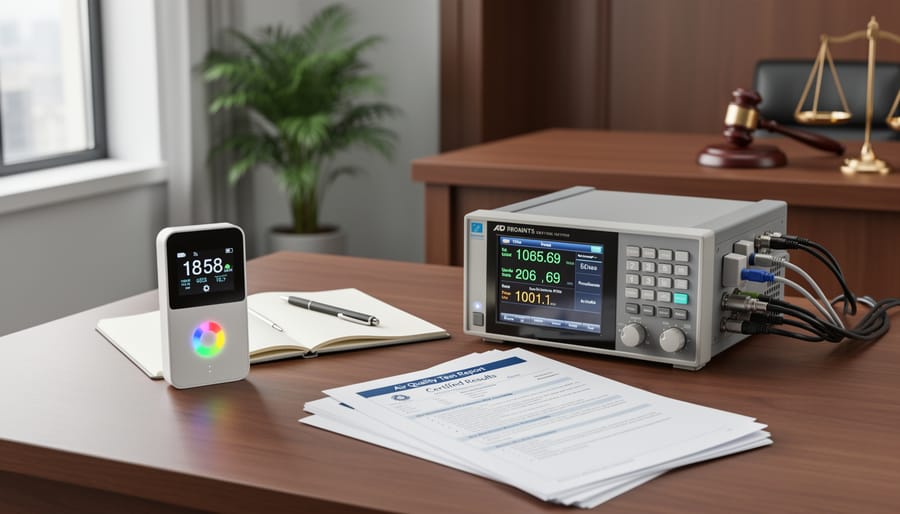
Consumer-grade air quality monitors have become increasingly affordable, with decent models starting around $200-$300. These devices can track common pollutants like particulate matter, carbon dioxide, and volatile organic compounds in real-time. They’re excellent for ongoing monitoring and identifying potential problems, making them valuable tools for property managers who want continuous oversight.
However, DIY monitors have significant limitations when it comes to commercial real estate decisions. They typically aren’t calibrated to laboratory standards, can’t detect specific contaminants like mold species or asbestos, and lack the documentation necessary for legal disputes or insurance claims. If you’re facing a tenant complaint, considering a property purchase, or dealing with suspected contamination, professional testing is non-negotiable.
Professional assessments cost between $400-$1,500 depending on property size and testing scope, but they provide certified lab results with legally defensible documentation. This credibility difference becomes crucial during property transactions, lease negotiations, or liability claims. Insurance companies and courts recognize certified testing reports, while DIY monitor readings carry little weight.
The smart approach combines both methods. Use consumer monitors for daily tracking and early warning signs, then call in certified professionals when readings suggest problems or when you need documentation for business purposes. For property transactions or tenant disputes, spending on professional testing protects your investment far more effectively than relying on DIY data. Think of consumer monitors as your smoke detector and professional testing as your fire marshal inspection—both serve important but distinctly different purposes.
What Professional Testing Actually Costs (And What Affects the Price)
Professional indoor air quality testing typically costs between $400 and $1,500 for most commercial properties, though larger facilities can run $3,000 or more. Here’s what determines your investment:
Property size is the primary cost driver. A 2,000-square-foot office might cost $500-700, while a 20,000-square-foot warehouse could reach $2,500. Testing scope matters equally—basic particle counts and CO2 measurements cost less than comprehensive assessments including VOCs, mold spores, and chemical contaminants.
Regional differences affect pricing too. Urban markets with stricter regulations often charge 20-30% more than rural areas. The number of testing locations within your building also adds up, with each additional sampling point costing $75-150.
For ongoing monitoring programs, budget $150-300 monthly for continuous sensor systems, or schedule quarterly manual testing at discounted rates (typically 15-25% off single-test pricing). Many property managers find quarterly testing strikes the right balance between cost control and liability protection.
Smart budgeting tip: Factor testing costs into your property maintenance reserve fund at roughly $800-1,200 annually per building. This proactive approach prevents budget surprises while demonstrating due diligence to insurers and tenants. Consider it essential infrastructure spending, much like HVAC maintenance—it protects both your asset value and occupant health.
Reading Your Air Quality Report: Red Flags Property Owners Must Address
Immediate Actions When Tests Reveal Problems
When air quality testing reveals contamination, swift action protects both tenant health and your financial liability. Your response should be proportional to the severity and type of problem detected.
For elevated carbon monoxide or volatile organic compounds, immediately improve ventilation by opening windows and adjusting HVAC settings while you investigate the source. Document everything meticulously—these records become crucial for insurance claims and potential liability disputes. Notify tenants promptly with clear, factual information about what was found and your action plan. Transparency here actually reduces your legal exposure rather than increasing it.
Mold or asbestos discoveries require professional remediation—never attempt DIY fixes. Engage licensed contractors who carry proper insurance, and obtain multiple quotes to protect your budget. Some commercial property insurance policies cover testing and remediation costs, so review your coverage immediately.
For tenant communication, provide written notices explaining the issue, health implications if any, temporary accommodations if necessary, and your remediation timeline. This documentation demonstrates due diligence should disputes arise later. Consider consulting with your insurance broker about coverage for business interruption or tenant relocation expenses.
Schedule follow-up testing after remediation to verify problem resolution—this final report becomes valuable documentation for your property records and can actually enhance property value by demonstrating proactive management.
Building Air Quality Testing Into Your Property Maintenance Strategy
How Good Air Quality Affects Tenant Retention and Property Marketability
In today’s competitive commercial real estate market, indoor air quality has evolved from a maintenance concern to a strategic asset that directly impacts your bottom line. Property owners who invest in regular air quality testing and improvements are seeing measurable returns through enhanced tenant retention and stronger market positioning.
The numbers tell a compelling story. Buildings with certified excellent air quality can command rental premiums of 5-8% above comparable properties, according to recent market analyses. More importantly, tenant turnover costs—which typically range from three to six months of rent when factoring in vacancy periods, marketing expenses, and tenant improvement allowances—drop significantly when occupants enjoy healthier environments. Tenants in buildings with superior air quality report fewer sick days, increased productivity, and higher workplace satisfaction, making them far less likely to relocate when lease renewals approach.
From a marketability standpoint, proactive air quality management provides powerful differentiation. When prospective tenants tour multiple properties, documented air quality metrics and visible monitoring systems signal professional management and genuine concern for occupant wellbeing. This becomes especially valuable when competing for health-conscious organizations or companies in sectors like technology and finance, where talent recruitment depends on premium workplace conditions.
The liability protection angle strengthens the financial case further. Regular testing creates documentation that demonstrates due diligence, potentially shielding property owners from costly litigation related to sick building syndrome claims. Insurance providers increasingly recognize this risk management approach, with some offering premium reductions for properties maintaining comprehensive air quality programs. The upfront investment in testing and remediation—typically $0.10 to $0.30 per square foot annually—pales compared to the potential revenue losses from extended vacancies or legal settlements.

Documentation Practices That Protect You During Disputes
Proper documentation transforms air quality testing from a routine expense into a powerful legal shield. Your testing records should include timestamped reports with specific pollutant measurements, chain of custody documentation for samples, and detailed notes about testing locations and conditions. This creates an audit trail that insurance carriers value during claims processing and that can decisively counter tenant disputes.
Store digital and physical copies of all test results for at least seven years, matching most statute of limitations periods for property claims. Include photographs of testing equipment placement, weather conditions during sampling, and any visible sources of contamination. When disputes arise, this level of detail demonstrates you took reasonable steps to maintain safe conditions.
For property transactions, comprehensive air quality documentation significantly strengthens your position. Buyers increasingly request historical testing data during due diligence, and having organized records ready accelerates closings while justifying your asking price. Some savvy investors even use strong air quality histories to negotiate better insurance premiums on acquired properties.
Consider maintaining a testing log that tracks frequency, results trends, and corrective actions taken. This proactive approach shows pattern recognition and continuous improvement, which courts and insurers interpret as genuine commitment to occupant safety rather than reactive compliance.
Commercial indoor air quality testing shouldn’t be viewed as just another line item in your maintenance budget—it’s a strategic investment that delivers measurable returns across multiple dimensions of your property portfolio. In today’s competitive real estate market, demonstrable healthy indoor environments have evolved from a nice-to-have amenity into a genuine competitive differentiator that influences tenant decisions, lease rates, and ultimately, your bottom line.
Consider the tangible benefits: properties with documented superior air quality command premium rents, experience lower vacancy rates, and attract higher-quality tenants who prioritize wellness. From an insurance perspective, proactive testing creates a defensible record that can protect you from costly liability claims and potentially reduce your premiums. Property managers who maintain comprehensive air quality documentation also find themselves better positioned when negotiating with insurers or defending against tenant complaints.
The legal landscape continues to tightening around indoor environmental quality standards, making early adoption of regular testing protocols a forward-thinking risk management strategy rather than reactive compliance. Properties with established air quality monitoring programs also tend to sell at premium valuations, as sophisticated buyers recognize the reduced liability exposure and enhanced marketability these measures provide.
In an era where health-conscious tenants increasingly research building wellness credentials before signing leases, your air quality testing records become powerful marketing assets. The question isn’t whether you can afford to test—it’s whether you can afford not to in a market where transparency and tenant wellbeing directly impact your property’s financial performance and long-term value.