
Calculate your home’s baseline energy consumption before investing a single dollar in green upgrades. Request 12 months of utility bills from the previous owner or your provider, then use free online calculators to identify which systems—heating, cooling, or appliances—drain the most power. This data-driven approach prevents wasting money on trendy solar panels when your real issue is a 20-year-old furnace hemorrhaging cash monthly.
Prioritize improvements by return on investment rather than environmental appeal. Air sealing and insulation upgrades typically cost $1,500-$3,500 and reduce energy bills by 15-30% within the first year, while a $25,000 solar installation might take 8-12 years to break even. LED lighting conversions deliver immediate 75% energy reduction for under $200, and programmable thermostats save $180 annually for a $150 investment.
Leverage financial incentives that effectively subsidize your green transition. Federal tax credits currently cover 30% of solar installation costs through 2032, while provincial programs offer rebates up to $5,000 for heat pump installations. Many lenders now provide specialized green mortgages with lower interest rates for energy-efficient homes, and some insurers discount premiums by 5-10% for properties with wind-resistant or fire-resistant green features.
Structure your upgrades across three financial phases instead of draining savings immediately. Start with low-cost, high-impact changes during your first year while building equity, tackle mid-range mechanical systems in years two through four when refinancing becomes viable, and schedule major installations like solar or geothermal systems once you’ve maximized other savings and confirmed long-term ownership plans. First-time homeowner education programs often include energy efficiency modules that help you avoid costly mistakes and identify region-specific rebates.
Green energy home transformation isn’t about perfection—it’s about strategic, financially sound decisions that reduce environmental impact while protecting your investment and monthly budget.
What Actually Makes a Home ‘Green Energy’ Ready
The Energy Efficiency Foundation
Before you even think about solar panels or wind turbines, the smartest investment in your green energy journey is reducing how much energy your home wastes in the first place. Think of it this way: generating renewable energy for a leaky, inefficient home is like filling a bathtub with the drain open. These foundational energy efficiency upgrades typically offer the fastest payback periods and highest returns on investment.
Start with insulation, particularly in attics, walls, and basements where heat loss is most significant. Proper insulation can reduce heating and cooling costs by 15-20% annually, which directly impacts your bottom line and increases property value. Next, examine your windows. Double or triple-pane windows with low-E coatings prevent heat transfer and can qualify for tax credits or rebates in many jurisdictions.
Your HVAC system represents another major opportunity. Modern high-efficiency furnaces and heat pumps can slash energy consumption by 30-50% compared to older models. Similarly, Energy Star certified appliances, from refrigerators to washing machines, use significantly less electricity and water while maintaining performance.
From a financing perspective, many lenders now offer green mortgages with favorable terms for homes meeting energy efficiency standards. Additionally, homeowner’s insurance providers increasingly reward efficiency improvements with premium discounts, recognizing that well-maintained, efficient homes present lower risk profiles. These foundational improvements create measurable value that appraisers recognize during property evaluations.
Renewable Energy Systems That Actually Pay Off
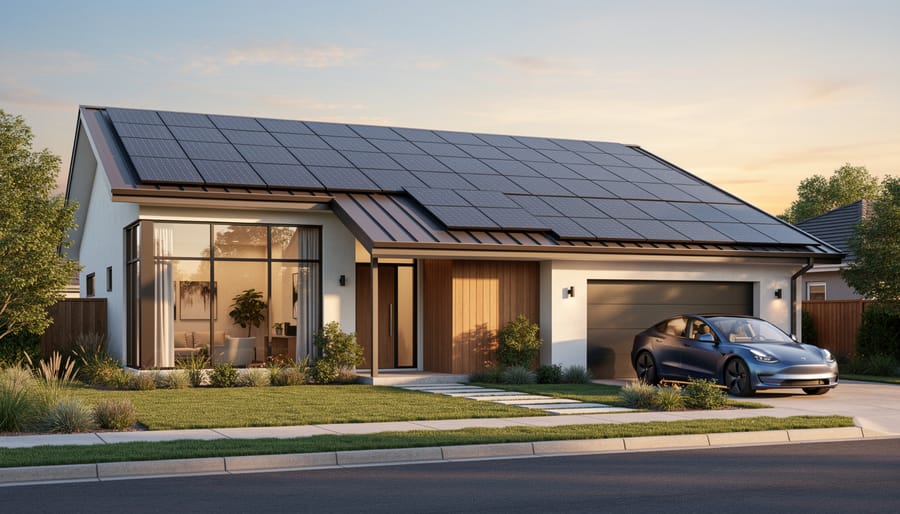
Let’s talk real numbers. Solar panels remain the heavyweight champion of residential green energy, with most homeowners seeing ROI within 7-12 years depending on location and utility rates. A typical 6-kilowatt system costs $15,000-$25,000 after federal tax credits, slashing monthly electric bills by 50-90%. Your property value typically increases by about 4%, meaning that initial investment often comes back at resale. The key is understanding your local net metering policies—these determine whether your utility company pays you for excess energy production.
Geothermal heat pumps represent a more significant upfront commitment at $20,000-$40,000, but they’re the marathon runners of energy efficiency. These systems tap into stable underground temperatures to heat and cool your home, reducing HVAC costs by 30-60%. Expect payback in 10-15 years, with the bonus of 25-year equipment lifespans. They’re particularly attractive in regions with extreme temperatures where traditional HVAC systems work overtime.
Residential wind turbines are the wildcard. Unless you’re sitting on several acres with consistent 10+ mph winds, the economics rarely pencil out for suburban homeowners. Small turbines ($15,000-$50,000) typically take 20+ years to break even, making them more passion project than prudent investment for most properties.
The bottom line: solar makes financial sense for most homeowners, geothermal works for the long-term minded with suitable property, and wind remains niche. Always get multiple quotes and verify your installer’s credentials before signing contracts.

The Real Cost Breakdown: Investment vs. Long-Term Savings
Financing Your Green Energy Upgrades
Transforming your home into an energy-efficient haven doesn’t have to drain your savings account. Today’s marketplace offers several innovative financing solutions designed specifically for homeowners pursuing sustainability upgrades.
Traditional home loan options now frequently include energy efficiency provisions. Many lenders offer favorable terms when you’re purchasing or refinancing a property with documented energy-saving features. These conventional mortgages may provide increased borrowing power or reduced interest rates when your home meets certain efficiency standards.
Green mortgages represent a specialized financing tool gaining traction across Canada. These products allow borrowers to finance energy improvements during purchase or refinance, often with more favorable terms than standard loans. The logic is simple: lower utility bills mean more disposable income, which translates to reduced default risk for lenders.
PACE financing (Property Assessed Clean Energy) programs attach the loan to your property rather than you personally. Repayment occurs through your property tax bill, typically over 10-20 years. This arrangement offers two major advantages: the debt stays with the property if you sell, and approval doesn’t depend heavily on your credit score. However, PACE isn’t universally available, so check your municipality’s participation status.
Home equity loans and lines of credit provide another pathway for funding green upgrades. If you’ve built substantial equity, tapping into it for sustainability improvements can make financial sense, especially considering the potential increase in property value and the immediate reduction in operating costs.
Before choosing any financing route, calculate your projected energy savings against loan costs. The ideal scenario combines manageable payments with measurable utility bill reductions, creating positive cash flow from day one.
Tax Credits and Incentives You Can’t Afford to Miss
Making the switch to green energy becomes significantly more affordable when you tap into the financial incentives designed specifically for homeowners like you. Understanding available tax credits and rebates can transform what seems like an expensive upgrade into a financially savvy investment.
At the federal level, the Residential Clean Energy Credit stands out as a game-changer, offering up to 30% back on solar panel installations, geothermal heat pumps, and wind energy systems through 2032. This credit applies directly to your tax liability, meaning real money back in your pocket. For a typical solar installation costing $20,000, you’re looking at $6,000 in federal tax savings alone.
State and provincial programs add another layer of savings. Many jurisdictions offer additional rebates ranging from $500 to $5,000 for energy-efficient upgrades. These programs often stack with federal incentives, multiplying your savings potential. Some states even provide property tax exemptions, ensuring your home’s increased value from green improvements won’t inflate your annual tax bill.
Don’t overlook your utility company’s offerings. Many providers run their own incentive programs, offering cash rebates for installing smart thermostats, energy-efficient appliances, or solar panels. These rebates can cover 10-20% of equipment costs and often come with expedited processing.
Local municipalities sometimes sweeten the deal further with grants, low-interest financing programs, or expedited permitting for green projects. The key is bundling these opportunities strategically. Working with a qualified tax professional or green energy consultant ensures you’re maximizing every available dollar, potentially covering 40-50% of your total investment through combined incentives. That’s the difference between a pipe dream and an achievable reality for most homeowners.
How Green Energy Features Impact Your Home’s Value and Insurance
Insurance Considerations for Green Energy Homes
Adding renewable energy systems to your home doesn’t just change your utility bills—it transforms your insurance needs too. Understanding how solar panels, wind turbines, and battery storage affect your homeowners insurance coverage is essential for protecting your investment while potentially saving money.
Most standard home insurance policies cover solar panels and related equipment as part of your dwelling coverage, but here’s the catch: you need to notify your insurer about the installation and likely increase your coverage limits. Solar systems typically add $15,000 to $30,000 in property value, so failing to update your policy could leave you underinsured. Ground-mounted systems may require separate coverage as a detached structure, while roof-mounted panels usually fall under your main dwelling protection.
The good news? Many insurers now offer green energy discounts ranging from 5% to 15% on premiums. These discounts recognize that homes with renewable energy systems often demonstrate better overall risk management and may have backup power during outages. Some carriers also provide specialized green home policies with higher coverage limits for energy-efficient upgrades.
Battery storage systems like Tesla Powerwall require specific attention in your policy. These systems present unique risks including fire hazards and electrical issues, so ensure your insurer explicitly covers lithium-ion battery storage. Request documentation confirming coverage for both the equipment itself and potential liability claims.
Risk mitigation strategies can further reduce premiums. Professional installation with proper permits and certifications demonstrates due diligence to insurers. Regular maintenance records, monitoring systems, and fire suppression equipment near battery storage all signal responsible ownership. Consider bundling your auto and home insurance with a carrier offering robust green energy coverage—this approach often unlocks additional discounts while simplifying claims management.
Your First-Year Action Plan for New Homeowners
Start Here: Zero-Cost and Low-Cost Changes
Before investing thousands in solar panels or heat pumps, start with changes that cost little to nothing. These foundational steps often deliver surprising returns and help you understand your home’s energy personality.
Begin with a professional energy audit, typically costing $200-500, or request a free one through your utility company. This assessment identifies your biggest energy drains and prioritizes improvements based on actual data, not guesswork. Think of it as a financial health check for your home’s energy budget.
Next, tackle behavioral changes that cost zero dollars. Lower your thermostat by 2-3 degrees in winter, switch to LED bulbs as old ones burn out, and use programmable thermostats to avoid heating or cooling an empty house. These adjustments can reduce energy bills by 10-15% annually without any upfront investment.
For minimal cost, address air leaks with weatherstripping and caulk, add insulation to your attic, and install low-flow water fixtures. These upgrades typically cost under $500 total but can cut heating and cooling costs by 20-30%. Many utility companies offer rebates that make these improvements essentially free, turning them into immediate positive-return investments that boost your property’s efficiency profile.
Mid-Range Investments Worth Making Early
If you’re ready to move beyond the basics, mid-range green energy investments typically deliver impressive returns within three to seven years. Smart thermostats like Nest or Ecobee cost between $200-300 but can reduce heating and cooling bills by 10-23%, often qualifying for utility rebates that cut your upfront cost in half. These devices learn your schedule and adjust automatically, making efficiency effortless.
Converting your entire home to LED lighting runs approximately $200-500 depending on size, yet LEDs use 75% less energy than incandescent bulbs and last 25 times longer. The payback period is often under two years, making this one of the smartest quick wins available.
Water heater upgrades to heat pump or tankless models range from $1,200-3,500 after incentives. These systems can slash water heating costs by 30-50%, representing serious savings since water heating accounts for roughly 18% of home energy use.
Don’t overlook weatherproofing, which includes air sealing, insulation upgrades, and window treatments. Investing $500-2,000 here can reduce energy loss by 20-30%. Many homeowners insurance providers offer discounts for homes with superior weatherproofing, as these improvements also protect against storm damage and moisture issues. Consider bundling these upgrades into your refinancing if you’re optimizing your mortgage terms.

Planning Your Major Green Energy Transition
Transforming your home into a green energy powerhouse requires strategic planning rather than rushing into installations. Most homeowners benefit from a phased approach over 1-5 years, allowing you to spread costs and take advantage of evolving technology and incentives.
Start with an energy audit during your first year to identify priority improvements. This baseline assessment helps you sequence upgrades logically—addressing insulation and efficiency first typically maximizes your renewable energy investment later.
For solar installations, year two or three often proves ideal. This timeline gives you opportunity to improve your credit score for better financing terms, accumulate savings for down payments, and research installers thoroughly. Federal tax credits and state incentives can cover 30-50% of costs, but understanding how these credits interact with your tax liability is crucial for timing.
Geothermal systems, while more expensive upfront, may warrant earlier installation if you’re already undertaking major landscaping or construction projects. The 10-15 year payback period means starting sooner captures more long-term savings.
Consider specialized green energy insurance riders that protect your renewable investments against damage or underperformance. Some insurers now offer premium discounts for verified green energy systems, effectively reducing your ongoing homeownership costs while safeguarding your sustainable infrastructure investments.
Avoiding the Costly Mistakes First-Time Green Homeowners Make
Even the most enthusiastic green homeowners can stumble into expensive traps that diminish both their financial returns and environmental impact. Understanding these pitfalls before you invest can save you thousands of dollars and years of frustration.
The single biggest mistake? Installing renewable energy systems before addressing basic energy efficiency. It’s tempting to jump straight to solar panels, but adding renewables to a leaky, poorly insulated home is like pouring water into a bucket full of holes. You’ll end up purchasing a larger, more expensive system than you actually need. Smart homeowners conduct energy audits first and seal gaps, upgrade insulation, and replace inefficient windows before considering solar or wind installations.
Oversized systems represent another costly error. Some contractors oversell capacity to boost their commission, leaving you with panels that produce far more electricity than you’ll ever use. Without battery storage or favorable net metering policies, that excess energy translates to minimal financial benefit. Right-sizing your system based on actual usage data, not optimistic projections, protects your investment.
Contractor selection deserves serious scrutiny. Red flags include pressure tactics, vague timelines, requests for large upfront payments exceeding 25 percent, and reluctance to provide references or licensing information. Always verify credentials through your state’s contractor licensing board and check for NABCEP certification for solar installers. Request multiple bids and compare not just price, but warranty terms and post-installation support.
Incentive timing mistakes can cost you dearly. Many first-time green homeowners assume tax credits apply immediately or misunderstand their eligibility. The federal Investment Tax Credit requires sufficient tax liability to claim, meaning if you don’t owe taxes, you can’t benefit that year. Some utility rebates operate on first-come, first-served basis with limited annual funding. Missing application deadlines or failing to coordinate installations with incentive periods can mean leaving thousands of dollars unclaimed. Work with your tax advisor early and research all available incentives before scheduling installation.

Transforming your home into a green energy powerhouse isn’t just an eco-friendly checkbox—it’s a strategic financial decision that pays dividends for both your wallet and the planet. As we’ve explored throughout this guide, the intersection of environmental responsibility and financial prudence has never been more accessible for new homeowners.
The journey to sustainability doesn’t require an all-or-nothing approach. Start by assessing your property’s current energy profile and identifying the low-hanging fruit—perhaps it’s upgrading insulation, installing a programmable thermostat, or switching to LED lighting. These smaller steps build momentum and financial confidence for larger investments like solar panels or geothermal systems down the road.
Remember that financing options have evolved dramatically. From specialized green home equity loans to energy-efficient mortgages that factor in reduced utility costs, lenders increasingly recognize that sustainable upgrades enhance property value and reduce default risk. Similarly, insurance providers often reward energy-efficient homes with premium discounts, acknowledging their reduced exposure to certain risks.
The most successful green energy homeowners view sustainability as an ongoing evolution rather than a destination. Technology advances, incentives change, and your financial situation will grow over time. Start with one meaningful upgrade this year, track your savings, and reinvest those gains into your next project. Review available tax credits annually, stay connected with local utility rebate programs, and consider joining homeowner networks to share experiences and resources. Your green energy journey begins with a single, informed decision—make yours today.