
Multifamily property insurance operates fundamentally differently than standard homeowners coverage, and understanding these distinctions can mean the difference between full protection and catastrophic financial exposure. A building with five or more units requires specialized commercial policies that account for tenant liability, loss of rental income, and significantly higher replacement costs—typically ranging from $1,500 to $10,000 annually per property depending on unit count, location, and coverage limits.
Your investment faces unique risks that single-family properties never encounter. Multiple tenants increase liability exposure exponentially, while shared common areas, heating systems, and structural components create cascading damage scenarios. Standard dwelling policies cap out at four units, leaving larger properties completely uninsured under conventional residential policies—a mistake that has bankrupted countless investors who discovered their coverage gap only after filing a claim.
The insurance landscape for multifamily buildings encompasses three essential coverage layers: property protection for the physical structure and systems, general liability defending against tenant and visitor injury claims, and loss of rental income coverage replacing cash flow during repairs. Optional endorsements like umbrella policies, equipment breakdown coverage, and tenant discrimination insurance provide additional safeguards that many property managers consider non-negotiable.
Cost optimization requires strategic decisions about deductibles, coverage limits, and risk mitigation measures. Properties with updated electrical systems, modern roofing, security features, and documented maintenance histories qualify for premium reductions of 15-30%, while claims-free track records and bundled policy structures deliver additional savings that compound over time.

What Makes Multi-Family Property Insurance Different
Commercial vs. Residential Coverage
The line between residential and commercial insurance isn’t drawn at some arbitrary number—it’s typically determined by how many dwelling units your property contains. Most insurers classify properties with one to four units as residential, while buildings with five or more units cross into commercial insurance territory. This distinction fundamentally changes your coverage landscape.
When your property qualifies as commercial, you’ll need a specialized commercial property policy rather than a standard landlord or dwelling policy. This shift brings both advantages and considerations. Commercial policies offer higher liability limits—often starting at $1 million compared to residential policies’ typical $300,000 to $500,000—which better protects you against tenant lawsuits and third-party claims. You’ll also gain access to more comprehensive apartment building coverage options, including business income protection that covers lost rental income during repairs.
The tradeoff? Commercial policies generally cost more upfront, though the per-unit cost often decreases as your property size increases. You’ll also face more rigorous underwriting requirements, including detailed property inspections, maintenance records, and sometimes proof of professional property management.
Some four-unit properties might still qualify for residential coverage, but if you’re operating the building as a clear business venture—with on-site offices, commercial tenants, or significant amenities—insurers may push you toward commercial coverage regardless of unit count. Understanding this threshold helps you budget appropriately and secure adequate protection as your portfolio grows.
The Occupancy Factor
The distinction between owner-occupied and tenant-occupied units creates a significant divide in the insurance landscape for multifamily properties. If you’re living in one of the units while renting out the others, you’ll typically qualify for more favorable premiums compared to a fully tenant-occupied building. Insurance carriers view owner-occupied properties as lower risk because you have a direct stake in maintaining the property and can monitor tenant activities more closely.
When you live onsite, insurers often extend traditional homeowners policy benefits with landlord endorsements, which generally costs less than a pure investment property policy. However, once all units become tenant-occupied, you’re firmly in commercial insurance territory with correspondingly higher premiums—sometimes 25-40% more expensive.
The occupancy factor also influences your liability exposure. Tenant-occupied buildings face higher liability risks due to multiple parties accessing the property, increased turnover, and potential maintenance gaps. This reality translates directly into higher coverage requirements and premium calculations. Understanding this distinction before purchasing a multifamily property allows you to budget accurately for insurance costs and potentially strategize your occupancy approach to optimize your overall investment returns while maintaining adequate protection.
Essential Coverage Types Every Multi-Family Owner Must Have
Property and Dwelling Coverage
Property and dwelling coverage forms the foundation of your multifamily insurance policy, protecting the physical structure that houses your investment returns. This coverage extends beyond the building itself to include permanently attached fixtures, built-in appliances, and structural components like plumbing and electrical systems.
When selecting coverage, you’ll encounter two valuation methods that significantly impact your premiums and potential payouts. Replacement cost coverage pays to rebuild or repair your property using current materials and labor costs, regardless of depreciation. This option provides superior protection, especially in today’s construction environment where material costs fluctuate dramatically. Actual cash value coverage, conversely, factors in depreciation, meaning you’ll receive the structure’s current market value minus wear and tear.
For multifamily properties, replacement cost coverage typically makes stronger financial sense. Consider this: a 20-year-old apartment building might have depreciated considerably, but rebuilding after a total loss requires today’s construction prices. The premium difference often pales compared to potential out-of-pocket expenses during reconstruction.
Smart investors also evaluate extended replacement cost endorsements, which provide an additional percentage above your coverage limit if construction costs spike unexpectedly. This buffer protects against market volatility and ensures you can fully restore your income-generating asset.
Liability Protection That Actually Protects You
Liability protection stands as your financial shield when someone gets injured on your multifamily property. Standard liability coverage typically starts at $1 million per occurrence, but here’s the reality check: a single serious injury claim can quickly exceed that amount, especially in today’s litigation-heavy environment.
For multifamily properties, liability coverage addresses slip-and-fall accidents, injuries in common areas, and even claims arising from tenant disputes. It also covers legal defense costs, which can run into six figures before a case even reaches trial. Smart property investors recognize that adequate liability protection isn’t optional, it’s foundational to avoiding hidden insurance risks that threaten their entire portfolio.
This is where umbrella policies become essential for high-value assets. An umbrella policy kicks in when your primary liability coverage maxes out, providing an additional $1 million to $5 million in protection. For multifamily investors, umbrella coverage typically costs between $200 and $500 annually per million dollars of coverage, making it remarkably affordable relative to the protection it provides.
Consider this: if your property portfolio exceeds $2 million in value, umbrella coverage isn’t just recommended, it’s a strategic necessity that protects both your investment and personal assets from catastrophic claims.
Loss of Rental Income Coverage
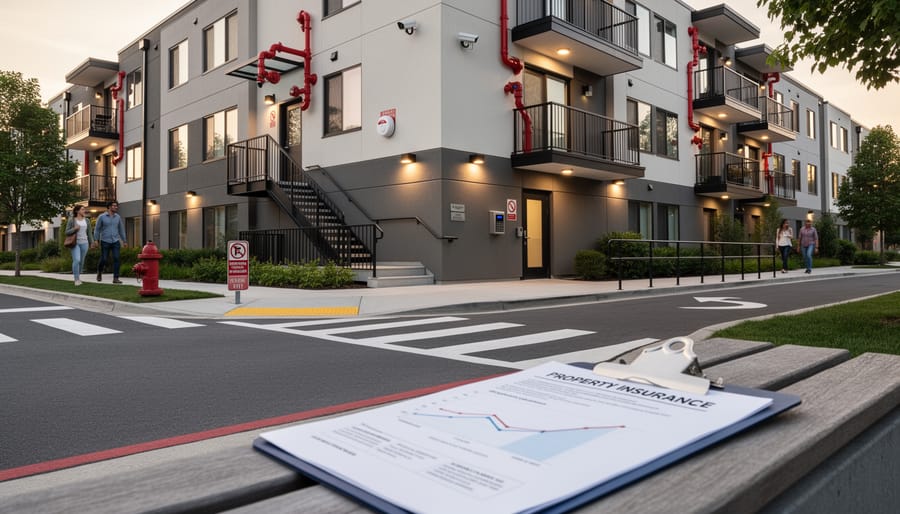
Loss of rental income coverage, sometimes called rental loss or business income coverage, is one of those protections that property owners don’t appreciate until they desperately need it. Here’s the scenario: a fire damages three units in your six-unit building, making them uninhabitable for four months during repairs. Without this coverage, you’re still paying your mortgage, utilities, and property taxes while collecting zero rent from those units. That’s a financial squeeze that can quickly become a crisis.
This coverage kicks in when a covered peril, like fire, wind damage, or vandalism, forces you to vacate units temporarily. It typically replaces the rental income you would have collected during the restoration period, based on your actual rental history. Most policies include a waiting period of 24 to 72 hours before coverage begins and set a maximum timeframe, often 12 months.
The cost is surprisingly reasonable, usually adding just a modest percentage to your overall premium. Smart investors calculate their potential exposure by multiplying monthly rent by the number of units, then considering how long major repairs typically take. This mathematical reality makes loss of rental income coverage essential rather than optional for protecting your investment’s cash flow continuity.
Fair Rental Value Insurance
If you live in one of the units within your multi-family property, Fair Rental Value insurance becomes a critical safety net. This specialized coverage reimburses you for lost rental income on your owner-occupied unit when covered damage forces you to temporarily relocate. Think of it as your personal income replacement policy within the larger investment framework.
The coverage typically kicks in after a fire, storm, or other insured peril makes your unit uninhabitable. Instead of losing both your home and potential rental income, Fair Rental Value compensates you based on what you could reasonably charge if you were renting that space to a tenant. This amount usually reflects current market rates in your area, helping you cover alternative housing costs while repairs are underway. For owner-occupants balancing investment returns with personal housing needs, this protection ensures a covered disaster doesn’t drain your cash reserves or force difficult financial choices during an already stressful situation.
Building Code Upgrade Coverage
When damage strikes an older multifamily property, you might face an unexpected financial curveball: current building codes. This is where Building Code Upgrade Coverage, sometimes called ordinance or law coverage, becomes essential.
Here’s the reality—if your 1970s apartment building suffers fire damage, local codes won’t let you simply rebuild what was there. Instead, you’ll need modern electrical systems, updated plumbing, enhanced fire suppression, and current accessibility features. These requirements can add 20-50% to your reconstruction costs, and standard property insurance won’t cover that gap.
This specialized coverage addresses three key areas: the cost of demolishing non-compliant portions of your building, the increased expense of rebuilding to code, and the reduced value of undamaged sections that now require upgrades. For property investors managing older buildings, this coverage protects against the financial shock of mandatory modernization. While it increases your premium modestly, it’s far less expensive than funding a six-figure code compliance project out of pocket during an already stressful claim situation.
Additional Coverage Options Worth Considering
Flood and Earthquake Insurance
Standard multifamily property insurance policies typically exclude flood and earthquake coverage, requiring separate policies for these specific perils. This exclusion exists because these catastrophic events create concentrated regional losses that insurers prefer to manage through specialized programs rather than bundling into general policies.
For multifamily property owners, determining whether you need this coverage depends heavily on location. If your building sits in a FEMA-designated flood zone or near fault lines, these policies shift from optional to essential. Mortgage lenders often mandate flood insurance for properties in high-risk areas, making it a non-negotiable requirement.
The cost-benefit analysis becomes crucial for comprehensive property risk management. Even properties outside designated high-risk zones face increasing exposure due to climate-related insurance changes and extreme weather patterns. Consider that 20% of flood claims come from moderate-to-low-risk areas.
Smart investors evaluate historical data, elevation certificates, and local geological surveys before deciding. While these policies add to your operating expenses, a single uninsured catastrophic event could eliminate your entire investment. Assess your specific risk profile rather than assuming you’re safe based solely on past experience.
Equipment Breakdown and Mechanical Coverage
Equipment breakdown coverage protects your multifamily property’s essential mechanical systems when standard property insurance won’t. Think of it as specialized protection for the expensive machinery that keeps your building running smoothly and your tenants comfortable.
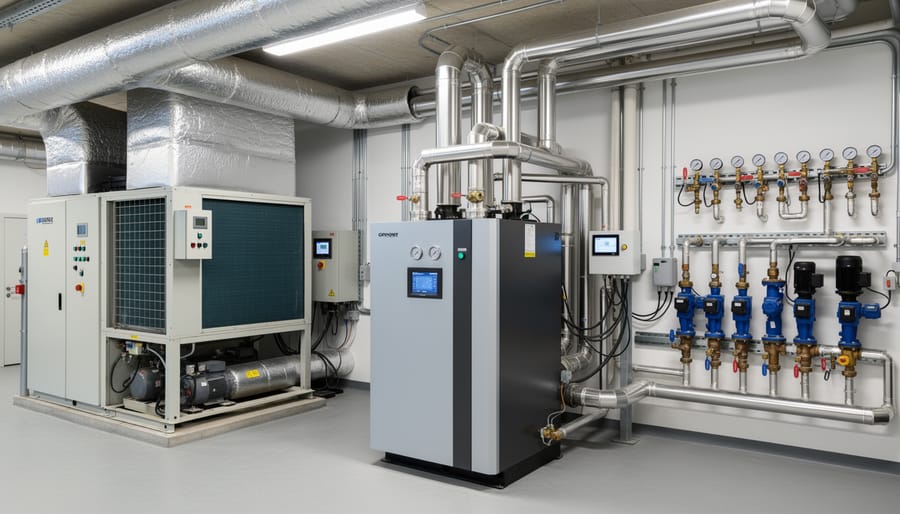
This coverage steps in when critical systems like boilers, HVAC units, elevators, water heaters, and electrical panels suddenly fail due to mechanical or electrical breakdown. Unlike standard policies that typically cover only named perils like fire or vandalism, equipment breakdown insurance addresses internal malfunctions that can cost thousands to repair or replace.
For multifamily property owners, this protection is particularly valuable because mechanical failures can affect multiple units simultaneously, potentially displacing tenants and triggering loss of rental income. When a central boiler fails during winter or the main air conditioning system breaks down in summer, you’re facing both immediate repair costs and unhappy residents.
Modern equipment breakdown policies often include coverage for spoilage losses (like food in commercial refrigerators), business interruption, and even utility interruption expenses. Given that replacing a commercial HVAC system can easily exceed $50,000, this relatively affordable coverage offers significant financial protection for your investment property.
Ordinance or Law Coverage
When a municipality updates building codes after your property experiences damage, you could face unexpected renovation costs that standard property insurance won’t cover. Ordinance or Law Coverage addresses this financial gap by extending protection beyond what basic policies provide.
This specialized endorsement typically operates through three distinct components. Coverage A handles the undamaged portion of your building that must be demolished to comply with current codes. Coverage B reimburses the demolition and debris removal expenses required by law. Coverage C, often the most valuable component, pays for the increased construction costs needed to bring your rebuilt property up to modern code standards.
For multifamily properties, these mandates might include upgraded electrical systems, fire suppression equipment, seismic reinforcements, or accessibility improvements. Without this coverage, a $100,000 fire claim could balloon into a $250,000 reconstruction project when code compliance requirements enter the picture. Most lenders require this protection for investment properties, recognizing that building code violations can create significant financial exposure. The premium increase typically ranges from 5-15% of your base policy cost, making it a worthwhile investment for comprehensive risk management.
What Drives Your Multi-Family Insurance Costs
Property Characteristics That Matter Most
Your property’s physical characteristics significantly influence insurance premiums, and understanding these factors helps you budget accurately. Building age plays a crucial role—older structures typically face higher premiums because they’re more prone to electrical issues, plumbing failures, and may not meet current building codes. Insurers view properties built before 1980 with extra scrutiny due to outdated systems and materials.
Construction type directly impacts your rates. Brick and concrete buildings earn lower premiums than wood-frame structures because they’re more fire-resistant and weather-resistant. If your property features fire-resistant materials and updated electrical systems, you’ll likely qualify for better rates.
Square footage and unit count create a straightforward equation: more space and units mean higher replacement costs and greater liability exposure. A 12-unit building naturally costs more to insure than a duplex. However, economies of scale can work in your favor—per-unit costs often decrease as your property size increases.
Additional factors like roof age, security features, and updated systems also matter. Insurers reward properties with newer roofs (less than 15 years old), security systems, and modern HVAC installations with reduced premiums, recognizing these features lower claim risks.
Location and Risk Assessment
Where your multifamily property sits plays a major role in determining your insurance premiums. Insurers carefully evaluate location-based risks before setting rates, and understanding these factors helps you anticipate costs and potentially negotiate better coverage.
High crime neighborhoods typically mean higher premiums since theft, vandalism, and property damage claims increase in these areas. Insurers analyze local crime statistics and loss histories to assess risk exposure. Similarly, properties in natural disaster zones face elevated costs. If your building sits in a flood plain, earthquake zone, or hurricane-prone region, expect specialized coverage requirements and steeper premiums.
Proximity to fire services significantly impacts your rates too. Buildings within five miles of a fire station and near fire hydrants generally qualify for lower premiums because response times are faster, minimizing potential damage. Some insurers offer discounts of 10-20% for properties near emergency services.
Before purchasing a multifamily property, research the location’s risk profile thoroughly. Order a property-specific risk assessment report and compare quotes from multiple insurers who understand the area’s unique challenges. This due diligence protects your investment while keeping coverage costs manageable.
Claims History and Deductible Choices
Your property’s claims history significantly impacts premium costs—insurers view frequent claims as red flags indicating higher risk. Filing multiple claims within three to five years can trigger rate increases of 20-40% or even result in coverage denial. Smart investors often absorb minor repairs out-of-pocket rather than filing claims that could haunt them for years.
Deductible selection offers a strategic lever for managing premiums. Higher deductibles—typically ranging from $1,000 to $10,000 for multifamily properties—can reduce annual premiums by 15-30%. The key is finding your sweet spot: choose the highest deductible you can comfortably pay from reserves without jeopardizing cash flow during emergencies. Property owners with strong financial cushions often opt for $5,000+ deductibles to capture meaningful savings while maintaining adequate protection for catastrophic losses.
Smart Strategies to Reduce Your Insurance Premiums
Risk Mitigation Improvements
Strategic upgrades to your multifamily property can significantly reduce insurance premiums while protecting your investment. Installing monitored fire alarm systems and sprinkler networks typically earns 5-15% discounts, as these features dramatically reduce potential catastrophic losses. Modern security enhancements like 24-hour surveillance cameras, controlled access entry systems, and adequate exterior lighting can lower premiums by 2-10%.
Roof upgrades deserve special attention. Replacing aging roofs with impact-resistant materials rated for wind and hail resistance often qualifies for substantial discounts, particularly in storm-prone regions. Insurance carriers favor roofs less than ten years old, and Class 4 impact-rated shingles can reduce premiums by up to 30% in certain markets.
Other valuable improvements include upgrading electrical and plumbing systems to current code standards, installing central station burglar alarms, and adding backup generators for critical systems. Many insurers reward properties with documented preventive maintenance programs that include regular inspections of HVAC systems, fire safety equipment, and structural components. Before investing in upgrades, request a property assessment from your insurer to identify which improvements will deliver the best premium reduction returns.
Policy Bundling and Portfolio Discounts
If you own multiple multifamily properties, bundling your insurance policies can unlock significant savings that directly improve your portfolio’s bottom line. Many insurance carriers offer portfolio discounts ranging from 10% to 25% when you consolidate coverage for several buildings under a single provider. This approach not only reduces premiums but also streamlines your administrative workload by centralizing policy management, renewals, and claims processing.
Beyond multi-property bundling, you can achieve additional savings by combining different coverage types with the same insurer. For instance, packaging your general liability, property damage, and umbrella policies together often qualifies you for reduced rates. Some carriers even extend discounts when you add commercial auto insurance for maintenance vehicles or workers’ compensation coverage for on-site staff.
The key to maximizing these opportunities lies in shopping strategically. Work with an insurance broker who specializes in multifamily properties and has relationships with multiple carriers. They can compare bundling options across providers to identify the most advantageous combination for your specific portfolio composition. Keep in mind that while bundling typically offers savings, you should still evaluate each coverage component independently to ensure you’re not sacrificing necessary protection for the sake of convenience. The ideal scenario balances comprehensive coverage with cost efficiency through smart policy packaging.
Common Insurance Mistakes That Cost Multi-Family Owners Thousands
Multi-family property owners often make costly insurance decisions that leave them financially vulnerable when disasters strike. Understanding these common pitfalls can save you thousands in unexpected out-of-pocket expenses.
One of the most expensive mistakes is underinsuring the property value. Many owners rely on outdated appraisals or fail to account for construction cost increases. When a major loss occurs, they discover their coverage falls short of replacement costs, leaving them to cover the difference personally. Review your property valuation annually and adjust coverage limits accordingly.
Another critical error involves overlooking loss of rental income coverage, also known as business interruption insurance. If fire or water damage forces tenants out for six months, you’re still responsible for mortgage payments and expenses without rental income. This protection bridges that gap but is frequently excluded from basic policies.
Many owners also fail to properly vet tenant liability coverage requirements. While requiring renters insurance from tenants seems straightforward, enforcement gaps create risk. Establish clear lease language and verification systems to ensure continuous tenant coverage.
The liability coverage mistake proves particularly costly. Standard policies often provide insufficient protection for slip-and-fall claims or other accidents on multi-unit properties. Consider umbrella policies that extend beyond basic limits, especially for properties with common areas, pools, or playgrounds.
Failing to disclose property details accurately represents another trap. Unreported renovations, home business operations by tenants, or changes in occupancy status can void claims when insurers discover discrepancies. These insurance coverage gaps emerge precisely when you need protection most.
Finally, many owners automatically renew policies without shopping around or reassessing needs. Market conditions change, and competitor offerings might provide better coverage at lower rates. Annual policy reviews ensure you maintain optimal protection without overpaying.

How to Choose the Right Insurance Provider
Selecting the right insurance provider for your multifamily property requires more than just finding the lowest premium. You need a carrier that truly understands the unique risks associated with rental properties and can deliver when claims arise.
Start by seeking insurers who specialize in commercial or investment property coverage rather than residential-only carriers. These providers understand complexities like tenant turnover, multiple liability exposures, and income protection needs. Ask potential insurers how many multifamily policies they currently manage and request references from similar property owners in your area.
When comparing quotes, look beyond the bottom line. A cheaper premium often means reduced coverage limits, higher deductibles, or exclusions that could leave you vulnerable. Request detailed policy declarations from at least three carriers and compare them side-by-side, paying close attention to coverage limits, deductible amounts, and any exclusions or endorsements.
Investigate each insurer’s financial strength ratings through agencies like AM Best or Standard & Poor’s. A company with an A- rating or higher demonstrates financial stability to pay claims even during catastrophic events. Check online reviews and your state’s insurance department website for complaint ratios and regulatory actions.
Consider working with an independent insurance broker who represents multiple carriers rather than a captive agent tied to one company. Independent brokers can shop your coverage across numerous providers, potentially uncovering better rates and more comprehensive protection. They also bring valuable expertise in structuring policies specifically for multifamily investments.
Finally, evaluate the claims process. Ask about average claim response times, whether they offer 24/7 emergency support, and if they provide dedicated commercial claims adjusters. The true test of any insurance provider comes when you need them most, so choose a partner with proven claims handling capabilities.
Protecting your multifamily property investment isn’t just about collecting rent checks and maintaining the building—it’s about safeguarding your financial future with comprehensive insurance coverage. As we’ve explored throughout this guide, multifamily insurance serves as the foundation of risk management for property owners, shielding you from liability claims, property damage, lost rental income, and unexpected disasters that could otherwise derail your investment strategy.
The difference between adequate coverage and a coverage gap can mean the difference between recovering from a setback and facing financial devastation. Whether you own a duplex or a large apartment complex, taking the time to understand your specific coverage needs, comparing policies from multiple carriers, and regularly reviewing your protection as your property evolves are non-negotiable steps in responsible property ownership.
Now is the time to take action. Schedule a comprehensive insurance review with a qualified agent who specializes in multifamily properties. Bring your current policy documents, property details, and questions about coverage gaps. Request quotes from at least three carriers, and don’t hesitate to negotiate based on risk mitigation measures you’ve implemented. Your multifamily investment deserves protection that’s as robust as your vision for its success.