
Secure landlord liability insurance immediately—even before purchasing your first rental property—because standard homeowners policies won’t cover tenant injuries, property damage claims, or legal defense costs that regularly exceed $50,000 per incident. Many new investors discover this gap only after facing their first lawsuit, when it’s already too late.
Structure your coverage based on property type and usage, not one-size-fits-all recommendations. Single-family rentals require different protection than multi-unit buildings or short-term vacation rentals, with vacation properties demanding specialized policies that account for higher turnover and seasonal risks. Commercial properties need separate business liability coverage, while fix-and-flip projects demand builder’s risk insurance during renovation periods.
Calculate your actual replacement cost annually rather than relying on purchase price or market value. Insurance companies base payouts on rebuilding costs, which fluctuate dramatically with material prices and labor shortages. Underinsured investors routinely face six-figure gaps between their coverage limits and actual reconstruction expenses after major losses.
Bundle umbrella liability policies across your entire portfolio to protect personal assets from catastrophic claims that exceed individual property limits. A $1-2 million umbrella policy costs roughly $300-500 annually but shields your personal wealth from judgments that could otherwise drain bank accounts, retirement funds, and equity in other properties.
Audit your policies quarterly for hidden insurance risks like coverage exclusions, inadequate limits, or gaps between policies that leave you vulnerable during ownership transitions or renovation projects.
Why Standard Property Insurance Isn’t Enough for Real Estate Investors
The Landlord Policy: Your Foundation Coverage
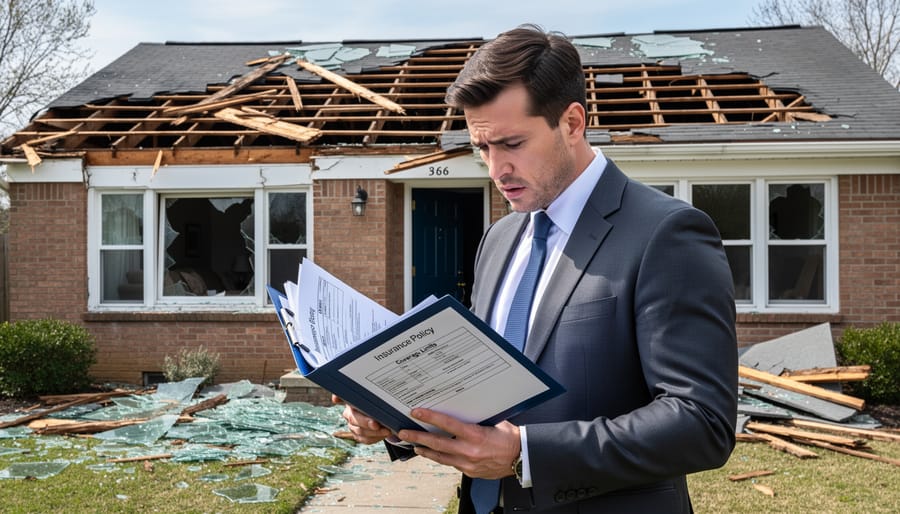
If you’re making the leap from homeowner to landlord, your standard homeowner’s insurance won’t cut it anymore. The moment you start collecting rent, you need a landlord policy, also called a dwelling fire policy, which is specifically designed to protect investment properties.
So what’s the difference? While homeowner’s insurance assumes you’re living in the property and covers your personal belongings, landlord insurance focuses exclusively on the structure itself and your liability as a property owner. Think of it as commercial coverage for residential property. It typically includes protection for the dwelling, other structures on the property like garages or sheds, loss of rental income if the property becomes uninhabitable, and liability coverage if a tenant or visitor gets injured.
Here’s where it gets interesting with costs. A standard landlord policy usually runs 15-25% higher than comparable homeowner’s insurance. For a property valued at $250,000, you might pay $1,500-$2,000 annually versus $1,200 for owner-occupied coverage. Why the premium increase? Simple: rental properties face higher risks from tenant-caused damage and typically sit vacant between occupancies.
What landlord policies don’t cover might surprise you. Most exclude tenant belongings, flood damage, earthquakes, and intentional damage by tenants. You’re also not covered for normal wear and tear or maintenance issues. If your tenant’s leaky faucet causes water damage because they didn’t report it for three months, you might find yourself paying out of pocket.
The coverage scenarios matter too. A kitchen fire from tenant cooking? Covered. Gradual roof leak that went unnoticed? Probably not. This distinction makes regular property inspections crucial, not just for tenant relations but for maintaining your insurance validity.
When Your Tenants Sue: Liability Protection Essentials
Liability lawsuits can devastate your rental property business faster than almost any other risk. When a tenant slips on an icy walkway or a guest suffers an injury from a faulty railing, you’re not just facing potential medical bills—you’re looking at legal fees, court costs, and possible judgments that could reach hundreds of thousands of dollars.
General liability coverage forms your first line of defense against these claims. This protection covers bodily injury, property damage, and the associated legal defense costs when someone gets hurt on your rental property. Think of it as your financial shield when accusations fly, regardless of whether you’re ultimately found at fault.
The coverage limits you need depend significantly on your portfolio size and property values. For investors with one or two single-family rentals, a minimum of $1 million in liability coverage typically provides adequate protection. However, as your portfolio grows, you’ll want to increase these limits proportionally. Investors with multiple properties or higher-value holdings should seriously consider $2 million or more in base coverage.
Beyond basic liability insurance, an umbrella policy adds an extra layer of protection that kicks in once your primary coverage reaches its limit. These policies are remarkably affordable—often costing just a few hundred dollars annually for an additional $1 million in coverage—making them one of the smartest investments for serious real estate investors.
Remember that standard landlord policies typically include some liability coverage, but reviewing the limits quarterly ensures they still match your growing portfolio’s risk profile.

Building Your Insurance Stack: Essential Policies Every Investor Needs
Umbrella Insurance: Your Safety Net Above the Basics
Think of umbrella insurance as the financial safety net that catches you when everything else fails. As a real estate investor, your standard liability policies have limits—typically $300,000 to $500,000 per property. But what happens when a serious accident results in a $2 million lawsuit? That’s where umbrella insurance becomes your portfolio’s best friend.
Umbrella policies kick in after your underlying insurance limits are exhausted, providing an additional layer of protection ranging from $1 million to $5 million or more. The beauty of umbrella coverage lies in its cost-effectiveness: you can often secure $1 million in additional protection for just $150 to $300 annually—a fraction of what you’d pay to increase limits on individual policies.
For real estate investors, umbrella insurance proves invaluable in several scenarios. Imagine a tenant’s guest suffers a severe injury at your rental property, or a child drowns in the pool of your vacation rental despite safety measures. These catastrophic events can generate claims that quickly exceed standard policy limits. Umbrella coverage also protects you beyond just property incidents—it covers legal fees, medical expenses, and even certain personal liability claims that could threaten your entire investment portfolio.
The investment is minimal compared to the protection gained. If you own multiple properties or have significant assets to protect, umbrella insurance isn’t just recommended—it’s essential armor against the unexpected lawsuits that could otherwise devastate years of wealth building.
Loss of Rental Income Coverage: Protecting Your Cash Flow
When your rental property suffers fire damage, a burst pipe, or storm destruction, there’s an obvious problem: the repair costs. But there’s a hidden financial threat that catches many investors off guard—the rental income that evaporates while your property sits vacant during repairs. This is where loss of rental income coverage, sometimes called rent loss insurance, becomes your financial safety net.
This coverage compensates you for lost rental payments when your property becomes uninhabitable due to a covered event. Think of it as business interruption insurance for your rental portfolio. Without it, you’re not only paying for repairs but also covering mortgage payments, property taxes, and insurance premiums with zero income flowing in—a double financial hit that can quickly drain your reserves.
Calculating the right coverage amount requires understanding your actual rental income. Start with your monthly rent, then determine an appropriate coverage period. Most policies offer between 6 and 24 months of protection. A good rule of thumb is selecting coverage that extends beyond your estimated repair timeline—if you think repairs will take four months, consider 12-month coverage to account for unexpected delays and the time needed to find new tenants.
The calculation is straightforward: monthly rent multiplied by the number of covered months. For a property renting at $2,000 monthly with 12-month coverage, you’re looking at $24,000 in protection. Many insurers cap this coverage at 12 months, though some offer extended periods for additional premium.
Don’t overlook coverage for additional expenses either, such as temporary storage fees or costs to expedite repairs, which some policies include.
Flood and Natural Disaster Insurance: Don’t Wait for the Storm
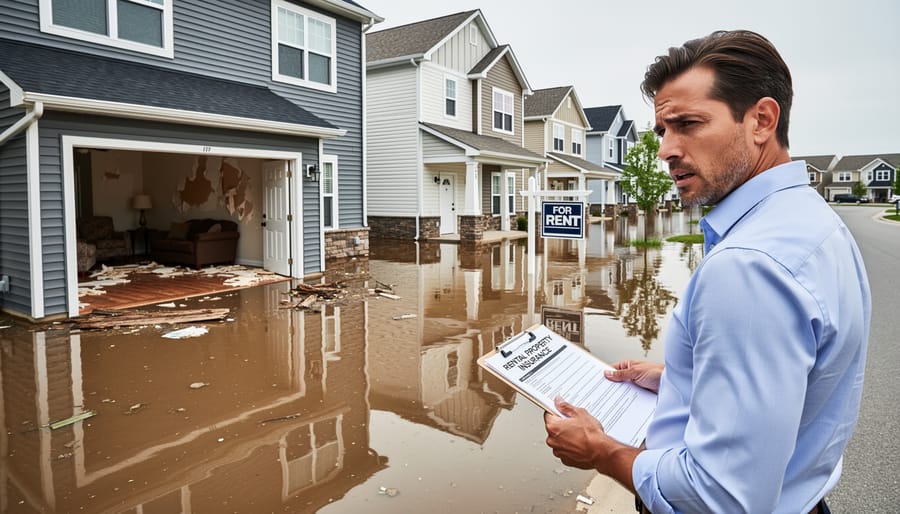
Standard property insurance policies have a significant blind spot that catches many real estate investors off guard: they typically exclude damage from floods, earthquakes, and other natural disasters. This gap in coverage can spell financial catastrophe if you’re not prepared.
Flood insurance deserves special attention because flooding is the most common natural disaster in North America, yet it’s explicitly excluded from standard policies. If your property sits in a FEMA-designated flood zone (particularly high-risk zones A or V), lenders will require flood insurance before approving your mortgage. However, even properties outside these zones face risk—about 25% of flood claims come from moderate-to-low-risk areas where coverage is optional but advisable.
Here’s the trap that costs investors dearly: flood insurance through the National Flood Insurance Program (NFIP) comes with a mandatory 30-day waiting period before coverage begins. You cannot purchase a policy when storms are forecast and expect immediate protection. This means smart disaster preparedness requires planning ahead, not reacting to weather reports.
Earthquake insurance operates similarly in high-risk regions like California and the Pacific Northwest. It’s a separate policy with its own premiums and deductibles, typically ranging from 10-20% of your property’s value. While expensive, one major seismic event can destroy an uninsured investment property completely.
For investors with multiple properties across different regions, evaluate each property’s specific risks. Coastal properties need hurricane and flood coverage, while properties near fault lines require earthquake protection. Don’t assume your standard policy covers these events—review your policy declarations page carefully and fill coverage gaps before disaster strikes. The relatively modest premium costs pale in comparison to potential uninsured losses.
Advanced Protection Strategies for Growing Portfolios
Commercial Blanket Policies: Streamlining Multi-Property Coverage
Once your portfolio expands to four or more properties, managing separate insurance policies for each asset becomes administratively cumbersome and potentially expensive. This is where commercial blanket policies shine, offering a streamlined solution that covers multiple properties under a single master policy.
A blanket policy consolidates coverage across your entire portfolio, providing protection based on total insured value rather than individual property limits. For instance, if you own five properties with a combined value of $2 million, your blanket policy covers that aggregate amount. This flexibility means claims can be paid from the total coverage pool, eliminating concerns about being underinsured on one specific property while maintaining excess coverage on another.
The cost savings can be substantial. Insurance carriers typically offer discounts ranging from 10-25% compared to maintaining individual policies, thanks to reduced administrative overhead and portfolio-level risk assessment. You’ll also save time dealing with a single renewal date, one set of paperwork, and unified premium payments.
However, blanket policies aren’t universally ideal. They work best when your properties share similar characteristics, like multiple single-family rentals in the same metropolitan area. Mixed portfolios containing vastly different property types or those spread across multiple states may not qualify or might not yield significant savings.
Consider this approach when you’ve reached four properties minimum, maintain similar property types, and want predictable administrative costs. Properties with unique risk profiles, like coastal homes requiring specialized flood coverage, might still benefit from separate policies tailored to their specific exposures.
Business Entity Insurance: Protecting Your LLC or Corporation
When you operate as an LLC or corporation, your business entity needs its own insurance protection separate from property-specific policies. Think of it as creating a safety net for the company itself, not just the buildings you own.
General liability insurance for your business entity is your first line of defense. This coverage protects your company if someone gets injured during a property showing, a contractor sues over a contract dispute, or a tenant claims negligence in how you manage properties. Even if you’re meticulous about property insurance, operations-level incidents can still expose your business to costly lawsuits. Coverage typically ranges from $1-2 million and often costs between $500-1,500 annually depending on your portfolio size.
Errors and omissions insurance (also called professional liability) becomes crucial if you provide real estate services beyond basic ownership. If you’re wholesaling properties, consulting for other investors, or managing properties for third parties, E&O coverage protects against claims of professional mistakes or negligent advice. One miscommunication about a property’s condition could trigger a lawsuit that general liability won’t cover.
Your entity structure directly impacts insurance requirements and availability. LLCs and corporations create legal separation between personal and business assets, but insurers evaluate risk differently for each structure. Some carriers offer better rates for incorporated entities because they demonstrate professional operations. Additionally, having multiple LLCs for different properties (a common asset protection strategy) means coordinating insurance across entities, potentially through a master policy with entity-specific endorsements. This approach can actually reduce overall premiums while maintaining strong protection boundaries.
Builder’s Risk and Renovation Coverage
For fix-and-flip investors and those undertaking major renovations, builder’s risk insurance becomes a critical protective layer that standard property policies won’t provide. This specialized coverage protects your investment during construction periods when properties are most vulnerable to theft, vandalism, and weather-related damage.
Builder’s risk policies typically cover the building structure, materials on-site, and fixtures during renovation. However, understanding renovation insurance requirements means recognizing what’s excluded—namely tools, equipment, and contractor liability, which require separate coverage.
Smart investors require contractors to carry their own comprehensive general liability and workers’ compensation insurance. Always verify certificates of insurance before work begins and ensure your policy explicitly covers the type of renovation you’re undertaking, from minor cosmetic updates to major structural changes.
Coverage duration matters too. Most builder’s risk policies last 3-12 months, so plan accordingly for project timelines. The cost typically runs 1-4% of total construction costs, making it relatively affordable protection. Consider adding soft cost coverage, which reimburses expenses like extended loan payments if construction delays occur. This coverage bridges the gap between your standard property policy and the unique risks of active construction, ensuring your investment remains protected throughout the transformation process.
Smart Insurance Management: Cutting Costs Without Cutting Corners
Deductible Strategies That Actually Save Money
Choosing the right deductible can significantly impact your insurance costs without compromising protection. The sweet spot typically involves balancing higher deductibles with premium savings—but only if you maintain sufficient cash reserves to cover potential claims.
For buy-and-hold investors with stable rental income, increasing your deductible from $1,000 to $2,500 can reduce premiums by 15-30%. This strategy makes sense when you have emergency funds covering at least six months of expenses plus your deductible amount. However, if you’re highly leveraged or operating on thin margins, stick with lower deductibles to avoid financial strain during unexpected claims.
Fix-and-flip investors face different considerations. Since projects typically last 6-12 months, a moderate deductible of $1,500-$2,000 offers reasonable premium savings while keeping out-of-pocket exposure manageable. Remember, construction-related claims can accumulate quickly, so factor multiple potential incidents into your reserve calculations.
The most overlooked strategy involves conducting a break-even analysis. Calculate how many years of premium savings would equal your deductible increase. If that number exceeds three years and you haven’t filed claims recently, the higher deductible likely benefits you financially. Always ensure your reserve fund accounts for simultaneous issues across multiple properties—a scenario more common than investors anticipate during severe weather events or market disruptions.
Risk Mitigation Tactics That Lower Premiums
Smart investors know that proactive property risk management doesn’t just protect assets—it also reduces insurance costs. Many carriers offer premium discounts for specific improvements and practices that demonstrate you’re serious about minimizing risk.
Security upgrades deliver some of the most immediate savings. Installing monitored alarm systems, deadbolt locks, and exterior lighting can reduce premiums by 5-20%, depending on your insurer. Video surveillance systems and smart home technology that detects water leaks or fire hazards often qualify for additional discounts since they enable faster emergency response.
Roof condition significantly impacts your rates. A newer roof (typically less than 10 years old) or recent upgrades using impact-resistant materials can slash premiums substantially. Some insurers offer discounts up to 25% for properties with modernized roofing systems, especially in areas prone to severe weather.
Your tenant screening process matters more than you might think. Insurers favor landlords who conduct thorough background checks, verify employment, and require renters insurance from tenants. Documenting these practices—along with regular property inspections and maintenance schedules—demonstrates responsible management that carriers reward with lower rates.
Finally, bundling multiple properties under one policy and maintaining a claims-free history creates leverage for negotiating better premiums. Keep detailed records of all improvements, maintenance activities, and safety upgrades. When renewal time arrives, this documentation becomes your bargaining chip for securing the most competitive rates available.
Working with Specialized Real Estate Insurance Brokers
Specialized real estate insurance brokers bring distinct advantages over general agents who handle multiple insurance types. These professionals understand the unique exposures investors face—vacancy periods, short-term rental restrictions, umbrella policy coordination—and maintain relationships with carriers who actually want to insure investment properties. While your homeowner’s agent might sell you a policy, a specialized broker actively advocates for your portfolio’s needs.
When selecting an insurance partner, look for someone who regularly works with investors at your scale and strategy. They should ask detailed questions about your properties, tenant types, and growth plans before making recommendations. The right broker conducts annual policy reviews to identify coverage gaps as your portfolio evolves and can access markets unavailable to general agents.
Proper representation often uncovers surprising savings. Specialized brokers may bundle properties differently, suggest higher deductibles where appropriate, or recommend loss prevention measures that qualify for premium discounts. They also spot dangerous gaps—like insufficient loss of rent coverage or missing liability protection—that could devastate your investment returns during a claim.
Common Insurance Mistakes Real Estate Investors Must Avoid
The Vacancy Clause Trap
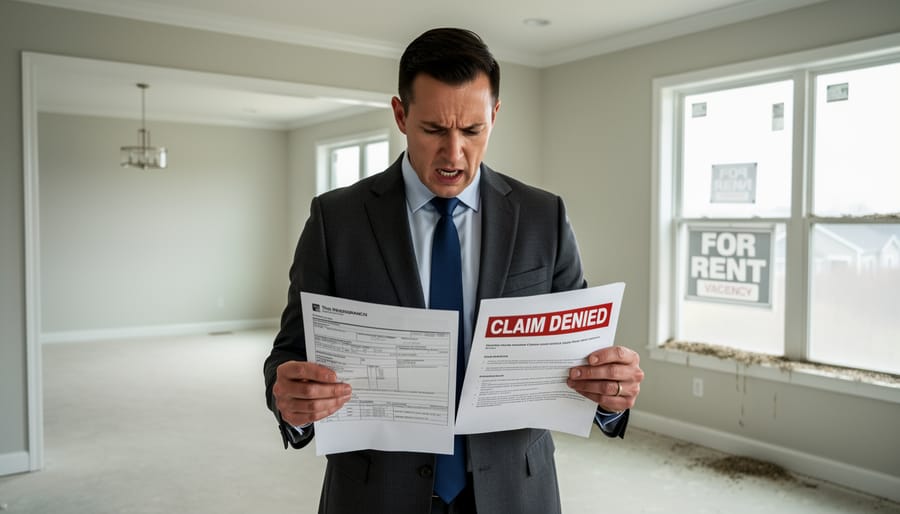
Here’s a costly surprise many investors discover too late: most property insurance policies contain vacancy clauses that automatically suspend or severely limit coverage after just 30 to 60 days of unoccupancy. If your property sits empty during renovations, between tenants, or during off-season periods, you could be completely uninsured without realizing it.
The difference between “vacant” and “unoccupied” matters here. Vacant means the property is empty of both people and belongings, while unoccupied typically means furnished but temporarily without residents. Insurers view vacant properties as higher risk for vandalism, theft, and undetected damage like pipe bursts.
To protect yourself, consider obtaining a specific vacant property policy or vacancy permit from your insurer before the standard coverage lapses. These specialized policies cost more but prevent gaps in protection. For seasonal rentals, discuss your occupancy patterns upfront with your agent to ensure proper coverage year-round. Some insurers offer flexible policies designed specifically for vacation properties with predictable vacancy periods.
Set calendar reminders to check on vacant properties weekly and document your visits with photos. Regular inspections not only help you spot problems early but also demonstrate responsible property management if you ever need to file a claim during a vacancy period.
Underinsuring Property Values and Replacement Costs
One of the costliest mistakes investors make is insuring properties based on purchase price or current market value rather than replacement cost. Here’s the reality: if your property burns down, the insurance company won’t pay what you originally bought it for or what it’s worth on today’s market. They’ll pay what it costs to rebuild it from the ground up, and those numbers can differ dramatically.
Construction costs have skyrocketed in recent years due to supply chain disruptions, labor shortages, and material price inflation. A property you purchased for $200,000 might cost $300,000 or more to rebuild today. If you’re underinsured, you’ll face a significant gap between your payout and actual rebuilding expenses, potentially devastating your investment returns.
The solution is straightforward but requires diligence. Schedule annual policy reviews with your insurance agent to reassess replacement cost values. Many insurers offer inflation guard endorsements that automatically increase coverage limits to keep pace with construction costs. Additionally, consider obtaining independent appraisals that specifically calculate replacement cost rather than market value. Remember, lenders typically require adequate coverage, but their minimums may not fully protect your investment. Taking a proactive approach to coverage limits ensures you’re genuinely protected when disaster strikes.
Neglecting Short-Term Rental-Specific Coverage
Running an Airbnb or VRBO property is a lucrative strategy, but here’s the catch: your standard landlord policy likely becomes void the moment you start accepting short-term guests. Traditional policies are designed for long-term tenants, and the revolving door of travelers introduces risks insurers won’t cover under conventional terms.
Platform-provided coverage sounds reassuring, but it’s secondary protection with significant gaps. Airbnb’s Host Guarantee, for instance, caps at $1 million and excludes cash, securities, and certain valuable items. It only kicks in after your personal insurance, leaving you exposed if your policy has already been invalidated.
Specialized short-term rental coverage addresses these unique exposures. These policies account for higher liability risks from frequent guest turnover, property damage from strangers, and loss of rental income from booking cancellations. Expect to pay 15-25% more than standard landlord insurance, but this premium protects your business model rather than voiding your coverage when you need it most.
Think of insurance not as another line item draining your profits, but as a strategic investment in your portfolio’s longevity. Just as you wouldn’t skip due diligence on a property purchase, neglecting proper coverage leaves your wealth vulnerable to catastrophic loss. The difference between seasoned investors who weather storms and those who lose everything often comes down to comprehensive insurance strategies implemented before disaster strikes.
Your action plan starts today. First, conduct a thorough audit of your existing policies. Pull out every insurance document you have and list what’s covered, what’s excluded, and where gaps exist. Are your dwelling coverage limits keeping pace with reconstruction costs? Does your liability coverage match your net worth? Have you added umbrella protection as your portfolio grew?
Next, schedule consultations with insurance professionals who specialize in real estate investments. Come prepared with your property details, rental income figures, and growth projections. Ask specific questions about coverage scenarios relevant to your investment strategy, whether you’re house hacking, managing short-term rentals, or building a commercial portfolio.
Finally, commit to annual insurance reviews. Your coverage should evolve as your portfolio expands, property values shift, and new risks emerge. Set a calendar reminder to reassess your protection strategy every twelve months.
The investors who build lasting wealth aren’t just savvy about acquisitions—they’re equally strategic about protection. By making informed insurance decisions now, you’re not spending money; you’re preserving the empire you’ve worked so hard to build.