
You can raise your credit score enough to qualify for a home loan in as little as 30 to 90 days by focusing on three high-impact actions: paying down credit card balances below 30% utilization, disputing inaccuracies on your credit report, and becoming an authorized user on a well-managed account. Services like Credit Increase Canada specialize in helping prospective homebuyers navigate this exact challenge, offering targeted strategies that align with mortgage lender requirements.
Most conventional mortgages require a minimum score of 620, while FHA loans accept scores as low as 580 with a larger down payment. Understanding where you stand and which loan type suits your current situation gives you a concrete target to work toward. The difference between a 580 and a 680 score can mean thousands of dollars saved over the life of your mortgage, thanks to lower interest rates and reduced insurance premiums.
The strategies outlined in this guide aren’t theoretical. They’re the same techniques mortgage underwriters and credit counselors recommend daily to clients who want to move from pre-qualification to closing. You’ll learn exactly which actions produce the fastest results, which timelines are realistic for different score improvements, and how to verify your progress using the same credit reporting systems lenders rely on. Whether you’re six months out from buying or hoping to purchase by year’s end, these steps create a clear path from credit repair to homeownership in 2026.
Understanding Credit Score Requirements for Home Loans
Mortgage lenders evaluate three primary factors when reviewing your credit score: your payment history (35% of your score), amounts owed (30%), and length of credit history (15%). These elements tell lenders whether you’ll repay borrowed money reliably. However, the minimum score you need varies significantly based on which loan program you pursue.
Conventional loans, backed by Fannie Mae and Freddie Mac, typically require a minimum score of 620 for approval in 2026, though most lenders prefer 640 or higher. If you’re putting down less than 20%, expect stricter scrutiny. FHA loans offer the most flexibility for borrowers with lower scores, accepting applicants with scores as low as 500 if they can manage a 10% down payment, or 580 with just 3.5% down. Understanding these different home loan essentials helps you target the right program for your current credit situation.
VA loans for military service members and USDA loans for rural properties technically have no minimum credit score requirement from the government agencies themselves. However, individual lenders usually impose their own minimums, commonly around 580-620 for both programs.
The score thresholds above represent approval minimums, but higher scores unlock better interest rates. A borrower with a 760+ score might secure a rate 0.75-1.5 percentage points lower than someone at 620. On a $300,000 loan, that difference costs $40,000-$80,000 in additional interest over 30 years. Even a 20-point score increase can reduce your rate by 0.25%, translating to roughly $15,000 in savings.
Lenders also consider your debt-to-income ratio and employment history, but credit scores remain the primary gatekeeper. Scores above 740 generally qualify you for the best available rates, while anything below 620 severely limits your conventional loan options. Most mortgage professionals recommend reaching at least 680 before applying to access competitive rates and avoid unnecessary costs.
Tools and Materials You’ll Need
Before you can improve your credit score for a home loan, you need the right resources at your fingertips. Think of these as your credit improvement toolkit, each component plays a specific role in helping you identify problems, track progress, and demonstrate improvement to mortgage lenders.
Start by obtaining your credit reports from all three major bureaus: Equifax, Experian, and TransUnion. You’re entitled to one free report annually from each bureau through, the only federally authorized source. Monitoring all three matters because lenders typically use your middle score when qualifying you for a mortgage, and each bureau may contain different information. A collection account appearing on only one report can still sink your application.
- Credit reports from Equifax, Experian, and TransUnion, your baseline assessment documents
- Credit monitoring service, tracks changes and alerts you to new activity that could affect your score
- Budgeting app or spreadsheet, helps allocate funds toward strategic debt paydown
- Payment tracking system, ensures you never miss a due date during improvement efforts
- Documentation folder, stores dispute letters, creditor correspondence, and payment confirmations
- Calculator or debt payoff tool, models different paydown scenarios and their score impact
Beyond basic credit reports, consider investing in a credit monitoring service that provides regular score updates and alerts when new accounts or inquiries appear. Many digital tools now offer integrated credit tracking alongside budgeting features, creating a comprehensive view of your financial readiness.
For dispute documentation, create a dedicated folder, physical or digital, where you’ll save copies of dispute letters, creditor responses, payment confirmations, and any written agreements you secure. Mortgage underwriters may request this documentation to verify that disputed items have been resolved, making organized records essential for a smooth approval process.

Safety Precautions: What to Avoid During Credit Improvement
While improving your credit score for a home loan, certain actions can backfire spectacularly and derail your homebuying timeline. Understanding what to avoid is just as critical as knowing what to do, because a single mistake can cost you months of progress or thousands in higher interest rates.
The most dangerous trap is falling for credit repair scams that promise to erase accurate negative information from your reports. These companies typically charge hundreds or thousands of dollars upfront, then submit frivolous disputes that temporarily remove items before they’re reinstated weeks later. Worse, lenders can see when your reports show suspicious dispute activity, which raises red flags during underwriting. The Federal Trade Commission reports these scams cost consumers over $100 million annually with negligible results for legitimate negative items.
Closing accounts shortens your average credit history length and increases your credit utilization ratio, two factors that comprise about 45% of your score calculation. Keep those old cards open even if you don’t use them regularly.
Applying for new credit during your mortgage process is equally problematic. Each application generates a hard inquiry that can lower your score by 3-5 points, and opening new accounts reduces your average account age. Most critically, lenders re-pull your credit right before closing, and new accounts or inquiries can trigger additional underwriting requirements or even loan denial. Freeze all credit applications at least 90 days before your expected mortgage application.
Co-signing loans for friends or family adds their debt to your debt-to-income ratio, which mortgage lenders scrutinize carefully. Even if the primary borrower makes every payment, that obligation counts against your borrowing capacity and can prevent you from qualifying for the home loan amount you need.
Finally, avoid making large purchases on credit, even if you plan to pay them off quickly. A $3,000 furniture purchase that temporarily increases your utilization from 15% to 45% can drop your score enough to bump you into a higher interest rate tier, costing you thousands over the life of your mortgage.
Step-by-Step Credit Score Improvement Process
Step 1: Review Your Credit Reports and Dispute Errors
Start by requesting your free credit reports from all three bureaus, Equifax, TransUnion, and Experian, through . You’re entitled to one free report per bureau annually, though many Canadians can access their Equifax and TransUnion reports directly through those agencies’ websites. Schedule your requests strategically, pulling one every four months to monitor changes throughout your improvement journey.
When reviewing your reports, scrutinize every entry for accuracy. Common errors include accounts that aren’t yours, incorrect payment statuses, outdated negative items (most should fall off after seven years), wrong credit limits that inflate your utilization ratio, and duplicate accounts. Even small inaccuracies can drag your score down by 20 to 100 points, making the difference between mortgage approval and rejection.
- Document each error with screenshots and highlight the specific inaccuracy
- Gather supporting evidence like payment records, account statements, or identity theft reports
- File disputes online through each bureau’s website or send certified letters detailing the error
- Include your full name, address, account numbers, and clear explanation of why the information is incorrect
- Wait 30 days for the bureau’s investigation (they must respond within this timeframe by law)
- Follow up if you don’t receive a response and escalate to the Consumer Financial Protection Bureau if needed
The dispute success rate hovers around 70-80% for legitimate errors. Bureaus remove incorrect information in roughly one month, though you’ll see the score impact within one to two billing cycles after removal. This makes disputing errors your fastest improvement strategy, but only if actual inaccuracies exist. Don’t waste time disputing accurate negative items, lenders verify everything during underwriting, and you’ll need to take control of debt issues through other strategies instead.
Step 2: Pay Down Credit Card Balances to Improve Utilization
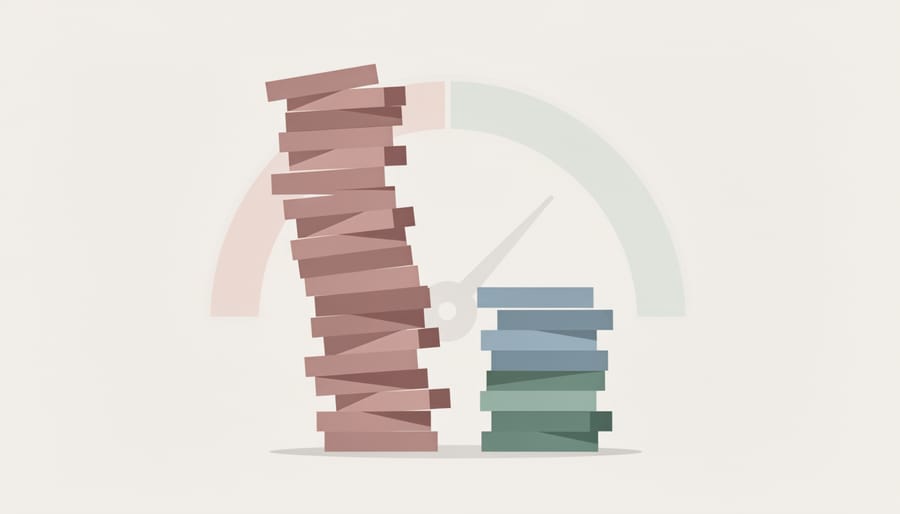
Credit utilization, the percentage of available credit you’re using, accounts for roughly 30% of your credit score calculation. If you have $10,000 in total credit limits and carry $3,000 in balances, your utilization sits at 30%. Most lenders consider this acceptable, but serious mortgage applicants should target below 10% to maximize their scores.
Start by listing all your cards with their balances, limits, and interest rates. Focus your paydown efforts on cards closest to their limits first, since individual card utilization matters as much as your overall ratio. A single maxed-out card damages your score even if your other cards carry zero balances.
If you can’t pay everything down immediately, distribute balances more evenly across cards rather than maxing out one while keeping others empty. Make payments just before your statement closing date, not just the due date, creditors typically report your balance to bureaus on that closing date, so strategic timing reduces the utilization they report.
Most borrowers see score improvements within 30 days once lower balances appear on their credit reports. For maximum mortgage qualification impact, maintain these lower balances for at least two reporting cycles before applying.
Step 3: Set Up Automatic Payments to Eliminate Late Payments
Payment history accounts for 35% of your FICO score, the single largest factor lenders evaluate. A single late payment can drop your score by 60-110 points and remain on your credit report for seven years, making automatic payments your most reliable defense against score damage.
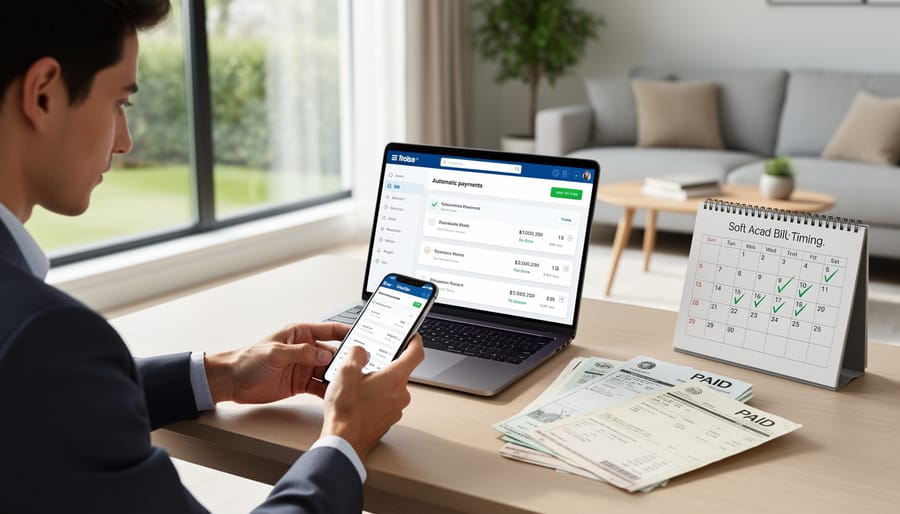
Set up autopay through your credit card issuers’ websites rather than your bank. Card issuers report payments faster, and you can schedule them for 3-5 days before the due date to ensure processing time. Choose to pay the statement balance, not the minimum, to avoid interest charges that could strain your budget.
Create a backup system by linking autopay to a dedicated checking account that you fund weekly. Monitor this account through mobile alerts set at your minimum balance threshold. Calendar reminders two days before each due date give you time to verify sufficient funds.
Check that all payments process correctly for the first three months. Payment history improvements appear on your credit report within 30-60 days of consistent on-time payments. Most lenders want to see at least six months of clean payment history before mortgage approval, so start this strategy immediately, it’s the foundation that makes all other improvement efforts worthwhile.
Step 4: Request Higher Credit Limits Without New Inquiries
Requesting credit limit increases from existing creditors is a powerful, often-overlooked tactic that can lower your utilization ratio without opening new accounts or triggering hard inquiries. Most issuers conduct soft pulls for existing customers, which don’t affect your score.
Timing matters. Wait until you’ve had the card for at least six months, made consistent on-time payments, and ideally increased your income since opening the account. Avoid requesting increases within 60 days of applying for a mortgage, as some lenders may still pull your credit.
Contact your issuer by phone or through their secure online portal. Keep it simple: “I’d like to request a credit limit increase on my account. Has my income increased since I opened this card, and I’d like my limit to reflect that. Will this require a hard inquiry?” If they say yes to the hard pull, decline and try again in three months.
American Express, Discover, and Capital One typically allow online requests with soft pulls every six months. Chase and Citi are more conservative but often approve phone requests for customers with strong payment histories.
Step 5: Become an Authorized User on Established Accounts
Becoming an authorized user on someone else’s credit card account can boost your score by piggybacking on their positive payment history. When the primary cardholder adds you, their account history, including age, payment record, and utilization, may appear on your credit report, potentially improving your credit profile within 30-60 days.
For this strategy to work, choose a primary cardholder who maintains low balances (under 30% utilization), pays on time consistently, and has held the account for several years. A parent or spouse with excellent credit makes an ideal partner. Confirm their card issuer reports authorized users to all three credit bureaus, not all do.
The risk? If the primary cardholder misses payments or maxes out the card, their negative activity could damage your score. You’re also not building your own credit management skills.
This approach works best for home loan applicants who need a modest score boost within 1-3 months and have a trusted person willing to help. It’s most effective when combined with your own positive credit behaviors, not as a standalone fix.
Step 6: Address Collections and Charge-Offs Strategically
Collections and charge-offs create immediate red flags for mortgage underwriters, but you can minimize their damage with the right approach. The strategy depends on your timeline and the creditor’s policies.
Pay-for-Delete Negotiation
Contact the collection agency directly and propose removing the negative item in exchange for payment. Start with: “I’m preparing to apply for a mortgage and can pay this account in full if you’ll remove it from my credit reports. Can you provide that agreement in writing?” Original creditors rarely agree, but third-party collectors sometimes will, especially for older debts they purchased at steep discounts.
Settle vs. Pay in Full
Paying in full carries more weight with mortgage underwriters than settled accounts. FHA guidelines specifically state that settled collections may require explanation letters, while paid-in-full accounts generally don’t trigger additional scrutiny. If you must settle, negotiate for at least 70% of the balance to avoid underwriting complications.
Critical Documentation
Never pay without written confirmation. Request a letter stating the payment amount, that it satisfies the debt, and, if agreed, that they’ll delete the tradeline. Send payments via certified check with tracking, and keep all correspondence for your mortgage file.
Medical collections under $500 won’t appear on credit reports as of 2023, potentially saving your score without negotiation.
Step 7: Establish New Credit Mix (If Time Permits)
Credit mix accounts for 10% of your FICO score, making it the least impactful factor, but it can still provide a modest boost if you have time before applying for your mortgage. This strategy only makes sense if you’re at least six months away from submitting your home loan application.
If you currently have only credit cards, adding an installment loan creates diversity that scoring models favor. A credit-builder loan from a credit union or community bank is your safest option. These small loans (typically $300-$1,000) deposit funds into a locked savings account while you make monthly payments. After 12 months of on-time payments, you receive the money back minus minimal interest. The payment history reports to all three bureaus, and you haven’t taken on actual debt.
Secured credit cards work similarly if you only have installment loans. You deposit $200-$500 as collateral, receive a card with that credit limit, and use it responsibly with low utilization. Choose cards that graduate to unsecured status after 6-12 months of good payment history.
The critical warning: new credit accounts will temporarily lower your score due to the hard inquiry and reduced average account age. You need three months minimum, preferably six, for the positive payment history to outweigh these negatives. If you’re closer to mortgage application time, skip this step entirely. Opening new credit within 90 days of applying for a home loan raises red flags with underwriters and can jeopardize approval.
Timeline: How Long Each Strategy Takes to Impact Your Score
Understanding when each strategy will actually move your credit score helps you create a realistic timeline for your home loan application. Here’s what to expect.
Disputing errors delivers the fastest potential gains. Once the bureaus investigate (typically 30 days), verified corrections appear immediately on your report and can boost your score within the next billing cycle. However, not all disputes succeed, so don’t bank on this alone.
Paying down credit card balances shows results within one to two billing cycles. Your card issuer reports the lower balance to the bureaus, usually once monthly, and your score reflects the improved utilization ratio at the next update. Dropping from 80% to 30% utilization can add 20-60 points within 60 days.
Payment history improvements take longer. Setting up automatic payments prevents future damage immediately, but one on-time payment won’t erase past late payments. You’ll see gradual score increases as you build a consistent track record over three to six months. Recent payment patterns matter most to lenders.
Requesting credit limit increases impacts your score as soon as the higher limit reports, typically within one billing cycle. This instantly improves your utilization ratio without requiring you to pay down balances.
Authorized user accounts, collections settlements, and new credit mix strategies need three to six months minimum before making meaningful differences. Collections can take 30-90 days just to process, then another billing cycle to report.
Plan for at least six months of active credit improvement before applying for mortgage pre-approval. This buffer accounts for reporting delays and gives you time to address hidden homebuyer costs while your score climbs. If you need a home loan sooner, focus exclusively on quick wins like utilization and error disputes.
Verification: How to Confirm Your Score Has Improved
Tracking your credit improvement requires understanding that the score you see isn’t always what your lender sees. Most free credit monitoring apps show VantageScore 3.0 or educational scores, which can differ by 20-50 points from the FICO scores mortgage lenders use. When you check Credit Karma and see 680, your mortgage FICO might actually be 655 or 705.
Mortgage lenders pull three specific FICO versions: Experian FICO 2, TransUnion FICO 4, and Equifax FICO 5. These classic models weigh factors differently than newer scoring systems, particularly regarding collections and credit age. Your lender takes the middle of these three scores for qualification decisions, not the highest or an average.
For accurate tracking, use or services from Experian that show actual FICO 2, 4, and 5 scores. Check monthly rather than daily, as scores need time to reflect your improvements fully. Most positive changes appear within 30-45 days after creditors report updates, but some actions like removing collections can take 60-90 days to show full impact.
Time your mortgage pre-approval strategically. Once you’ve seen consistent improvement for two months and reached your target range, contact lenders for pre-qualification. This soft pull shows your real mortgage scores without impacting them. Full pre-approval with hard inquiries should happen only when you’re ready to house-hunt seriously, as multiple mortgage inquiries within 45 days count as one for scoring purposes.
If your monitored score improved but your mortgage FICO hasn’t budged as much, don’t panic. The older FICO models react more slowly to recent positive changes but also penalize recent negatives less harshly. Give your improvements another 30-60 days to fully register across all three bureaus before reassessing your mortgage readiness.
Frequently Asked Questions
Homebuyers working to improve their credit scores often have specific concerns about timing, strategies, and how lenders will evaluate their efforts. These questions address the most common scenarios mortgage applicants face during the credit improvement process.
What’s rapid rescoring and should I use it?
Rapid rescoring is a service where your lender requests an expedited credit report update after you’ve made changes like paying down balances or disputing errors. It typically costs $25-50 per account per bureau and can reflect changes in 3-5 business days instead of 30-45 days, making it valuable if you’re close to qualifying and just missed the cutoff.
Can I improve my score enough in 30 days to qualify?
Significant improvement in 30 days is possible only if you have specific fixable issues like high credit card balances you can pay down immediately or errors you can dispute. Most borrowers need 3-6 months for meaningful score increases, though paying down credit cards to under 10% utilization can show results within one reporting cycle.
Will working with a credit counseling agency hurt my mortgage application?
Enrolling in a debt management plan through credit counseling won’t directly lower your score, but some lenders view active DMP participation as a red flag during underwriting. If you’re actively working with a counseling agency, discuss timing with your mortgage lender before applying, as you may need to complete or exit the program first.
Should my spouse and I apply together if one of us has bad credit?
Lenders typically use the lower of the two middle credit scores when evaluating joint applications, so applying solo with the higher-score borrower often improves approval odds and rates. However, the solo applicant’s income must qualify for the loan amount on its own, and some lenders offer exceptions for significant income from the lower-scoring spouse.
The answers to these questions often depend on your specific situation and timeline. If you’re working with a mortgage lender or loan officer, share your credit improvement plan with them early in the process. They can provide guidance on which strategies will have the most impact for their specific underwriting criteria and help you avoid actions that might complicate your application. Many lenders have in-house expertise on credit optimization and can even recommend the sequence of actions that will get you to approval fastest based on what they see in your initial credit pull.
Improving your credit score for a home loan isn’t an overnight process, but it’s far more achievable than most people realize. The seven strategies outlined here represent a proven roadmap that thousands of homebuyers have successfully followed to qualify for better mortgage terms.
The timeline matters. If you’re serious about buying a home, start working on your credit today rather than waiting until you’re ready to apply. Most borrowers see meaningful improvements within three to six months of implementing these strategies consistently. Some changes, like correcting errors or reducing credit utilization, can impact your score within 30-60 days. Others, like establishing payment history or diversifying your credit mix, require patience but deliver lasting results.
The effort required is manageable. You don’t need to tackle all seven strategies simultaneously. Focus first on the high-impact actions: reviewing your reports for errors, paying down credit card balances, and setting up automatic payments. These three alone can significantly boost your score and require minimal ongoing effort once established.
Working with a mortgage professional early in your credit improvement journey provides valuable advantages. They can review your specific credit profile, identify which strategies will help most, and guide you on timing your mortgage application to capture your improved scores. Many lenders offer free consultations before you’re ready to apply.
Your next step is simple: pull your credit reports from all three bureaus today and identify which of these seven strategies applies to your situation. The sooner you start, the sooner you’ll be ready to pursue homeownership with confidence.