Modern eco-friendly house with rooftop solar panels, standing-seam metal roof, energy-efficient windows, and an electric vehicle charging in the driveway, photographed at golden hour with native landscaping and a rain barrel visible.

How Green Homes Actually Lower Your Insurance Costs (And Protect Your Investment)

Evaluate your home’s energy-efficient features against your current insurance policy to identify immediate premium reduction opportunities—solar panels, smart thermostats, and high-efficiency HVAC systems can qualify you for discounts ranging from 5% to 20% with many carriers. Request quotes from at least three insurers that specialize in green home insurance benefits, as traditional carriers often overlook the reduced risk profile these properties represent.
Document all sustainable …

Remote real estate agent typing on a laptop in a sleek home office, with floating cloud and lock icons symbolizing secure, cloud-based insurance and compliance tools; blurred city skyline and a secondary monitor with indistinct property images in the background.

How Cloud-Based Brokerages Are Transforming Real Estate Insurance Coverage

Cloud-based real estate brokerages operate entirely through digital platforms, eliminating traditional brick-and-mortar offices while delivering comprehensive services through secure online systems. This model fundamentally transforms how agents manage transactions, client relationships, and crucially, their insurance requirements and risk exposure.
The shift to cloud technology creates measurable insurance advantages that traditional brokerages cannot match. Digital document management systems reduce errors and omissions liability by maintaining automated audit trails of every client interaction, signed disclosure, and transaction …

Home office desk with laptop and coffee by a window showing a parked car in the driveway, an electric vehicle plugged into a charger, and rooftop solar panels under soft daylight.

How Working From Home Could Slash Your Insurance Premiums (While Saving the Planet)

Your daily commute to the home office instead of across town could slash your insurance premiums by 10-25% while simultaneously reducing your carbon footprint. Eco insurance coverage—also called green insurance, low-mileage discounts, or environmental policyholder programs—rewards remote workers and telecommuters who drive less frequently with substantial cost savings. Insurance carriers recognize that fewer miles driven means fewer accident claims, translating directly to lower risk profiles and reduced premiums for work-from-home professionals.
The financial incentive extends beyond simple mileage tracking. Modern eco …

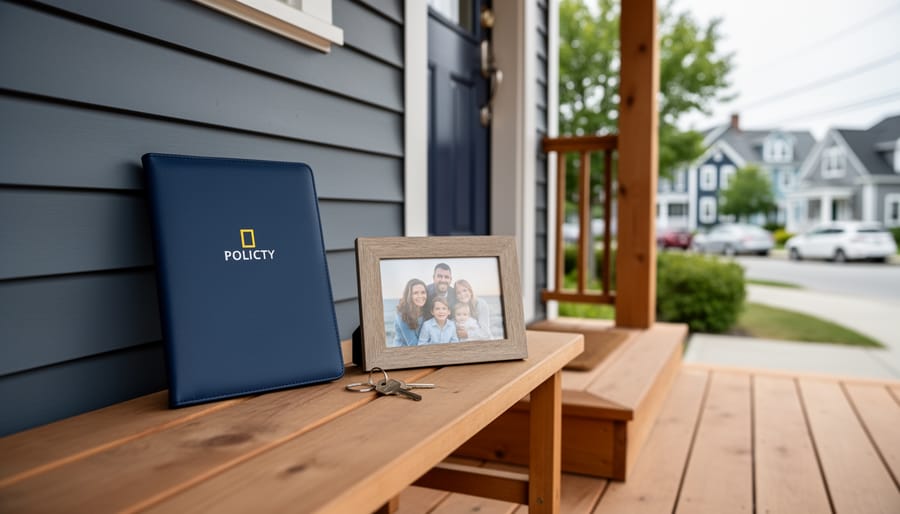
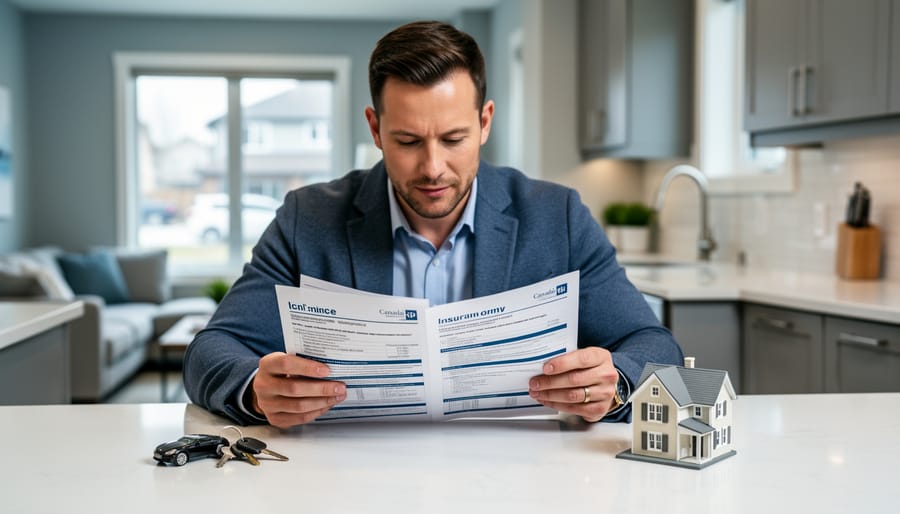
Homeowner handing a house key to an arriving guest with a rolling suitcase at a modern short-term rental entrance, softly lit with a blurred living room and a console table holding unlabeled papers and a small house model in the background.

Why Your Homeowners Policy Won’t Cover Your Airbnb (And What Will)

Your traditional homeowners insurance policy explicitly excludes coverage the moment you accept your first short-term rental booking. This gap leaves you personally liable for guest injuries, property damage, and lost income—exposures that can easily reach six figures from a single incident.
The financial stakes are considerable: A guest’s slip-and-fall lawsuit averages $50,000 in settlements, while a kitchen fire during occupancy can trigger $200,000+ in combined property damage and liability claims. Your standard policy won’t cover any of it because commercial activity voids residential coverage. Yet most property …

Standby generator running beside a modern California hillside home during a power outage, with smoky golden-hour sky, cleared defensible space, dry grasses, and distant power lines.

When the Lights Go Out During Fire Season: Your Property Protection Plan

Download a comprehensive power outage emergency response plan template immediately and customize it within 24 hours—not next week when Public Safety Power Shutoffs (PSPS) are announced with minimal warning. Property owners in California’s fire-prone regions face average PSPS events lasting 24-48 hours, with some extending beyond five days, making documented emergency protocols essential for protecting both physical assets and property values.
Create your plan by identifying critical systems requiring backup power: security systems, sump pumps, refrigeration units, and medical equipment. Document specific generator capacities…

Miniature house wrapped with a stethoscope on a wooden desk with a calculator, coins, and blurred medical paperwork, softly lit to convey the financial impact of medical billing fraud on property insurance.

Medical Billing Fraud Is Inflating Your Insurance Premiums (Here’s How to Fight Back)

Every time you pay your property insurance premium, a hidden cost lurks within that bill: medical billing fraud. This silent epidemic adds an estimated 10% to your insurance costs annually, whether you’re a homeowner, landlord, or real estate investor. Medical billing fraud occurs when healthcare providers, patients, or third parties deliberately submit false or inflated claims to insurance companies—and the financial ripple effects extend far beyond health insurance into the property and casualty coverage you depend on.

Modern home utility room with water heater, small leak sensor puck on the floor, wall-mounted thermal camera aimed at an electrical panel, and a compact edge AI hub on a shelf, softly lit and organized to illustrate on-site risk monitoring.

How Edge AI Is Revolutionizing Insurance Risk Assessment for Property Owners

Property insurance premiums have climbed 33% nationally over the past five years, but a technological revolution happening at the intersection of artificial intelligence and real estate is poised to reverse this trend. Edge insurance—the strategic use of Edge AI systems deployed directly on properties to monitor, predict, and prevent insurable risks—represents the next frontier in property protection and cost reduction.
Unlike cloud-based monitoring systems that process data remotely, Edge AI operates in real-time at your property’s physical location. Smart sensors detect water leaks before they cause catastrophic damage, …

Eye-level close-up of a realtor’s hands holding a house key beside a laptop with a glowing padlock hologram; soft daylight, blurred office with a model house and unreadable paperwork.

Why Your Real Estate Business Needs Cyber Insurance Before the Next Data Breach

Cyber threats have evolved from abstract IT concerns into tangible financial risks that directly impact property values, transaction integrity, and operational continuity. A single ransomware attack can halt property closings, expose sensitive client data, and trigger compliance penalties that devastate your bottom line. Yet most real estate professionals remain dangerously underinsured against these digital exposures.
The cyber insurance market has matured rapidly over the past five years, transforming from a niche product into an essential risk management tool. Modern cyber policies now extend beyond basic data breach coverage to …

Renter holding a leashed medium-size dog at an apartment doorway while a neighbor stands outside, with soft natural light and a blurred interior background.

Your Renter’s Insurance Won’t Cover This Pet Incident (Here’s What Will)

Your furry companion might be your best friend, but one bite, scratch, or knock-down could leave you facing thousands in liability claims—and here’s the problem: most renters insurance policies cap pet-related incident coverage at significantly lower limits than standard liability protection, or exclude certain breeds entirely.
Pet liability insurance bridges this critical gap. When your dog injures a neighbor, damages someone else’s property, or causes an accident that leads to medical bills, this specialized coverage protects your finances from lawsuits and medical expense claims that routinely exceed $30,000. …

Homeowner in boots placing sandbags at a suburban home’s front step as shallow floodwater reaches the driveway, with a neighbor across the street installing flood barriers on an overcast day.

How Behavioral Science Could Save Your Property from the Next Flood

Recognize that homeowners consistently underestimate their flood risk by 80%, creating a dangerous gap between actual vulnerability and protective action. Research published in leading behavioral science journals reveals three cognitive biases blocking flood mitigation: optimism bias (believing disasters happen to others), present bias (prioritizing immediate costs over future losses), and status quo bias (defaulting to inaction despite known risks).
Frame flood insurance and mitigation as financial protection strategies rather than disaster preparation. Property owners respond more favorably when presented with concrete dollar …