
A Florida woman collected $2 million in life insurance after staging her husband’s drowning—only to be caught when investigators discovered the policy was purchased just weeks before his death. While this classic insurance fraud scheme might seem distant from real estate transactions, the same deceptive tactics are now infiltrating property deals with devastating consequences.
Life insurance fraud has always relied on fabricated deaths, forged documents, and elaborate schemes to collect unearned payouts. Today’s fraudsters are applying these time-tested methods to real estate with a digital twist. They’re using deepfake technology to impersonate property owners in video calls, creating synthetic identities to secure fraudulent mortgages, and exploiting remote closing processes that became standard during the pandemic.
The financial stakes are staggering. Real estate transactions involve larger sums than typical life insurance policies, making them irresistible targets for sophisticated criminals. A single fraudulent property transfer can net hundreds of thousands or millions of dollars, often leaving legitimate owners in legal limbo and buyers facing catastrophic losses.
Traditional title insurance and verification methods weren’t designed for this digital landscape. Fraudsters exploit the gap between old-world security measures and new-world technology. They know that a convincing deepfake video, combined with stolen identification documents, can bypass standard verification protocols that rely on visual confirmation.
Understanding historical life insurance fraud patterns reveals critical warning signs applicable to real estate transactions today. The same red flags—rushed timelines, unusual beneficiary arrangements, recently modified documents—appear in fraudulent property deals. By examining concrete fraud examples across both industries, real estate professionals and homebuyers can recognize threats before signing documents or transferring funds, protecting themselves from becoming the next victim in this evolving criminal landscape.
When AI Becomes the Perfect Imposter: How Deepfakes Infiltrate Real Estate Closings
Deepfake technology sounds like something straight out of a science fiction thriller, but it’s very real and increasingly accessible. At its core, a deepfake uses artificial intelligence to create hyper-realistic videos, audio recordings, or images of people saying or doing things they never actually did. Think of it as digital puppetry that’s become so sophisticated that even trained professionals struggle to spot the manipulation.
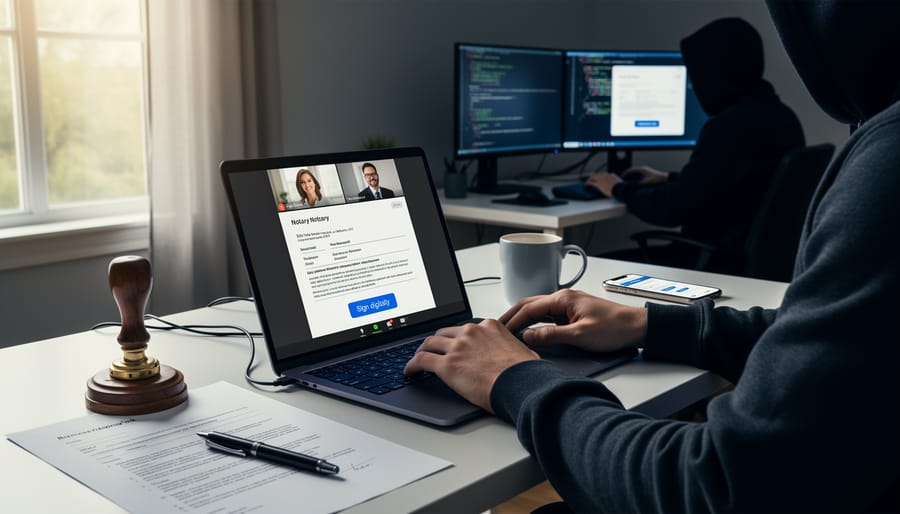
In real estate transactions, fraudsters have discovered a goldmine of opportunity. They’re using deepfakes to impersonate homeowners, attorneys, or even title company representatives during remote closings. The fraud typically unfolds like this: a scammer obtains personal information about a property owner, creates a convincing deepfake video and voice clone, and then appears on video calls to authorize the sale or refinance of a property they don’t actually own.
The shift to digital closings, accelerated by the pandemic, created perfect conditions for this type of fraud. Traditional in-person closings offered multiple verification checkpoints including physical ID checks, notary scrutiny, and face-to-face interactions that built trust. Remote closings, while convenient, compress these safeguards into digital screens where deepfakes can slip through undetected.
These synthetic identity frauds exploit several specific vulnerabilities. First, video call quality varies widely, giving fraudsters convenient cover for any digital artifacts their deepfakes might produce. Second, the remote online notarization vulnerabilities in current systems weren’t designed to detect AI-generated impersonations. Third, the pressure to close deals quickly often causes participants to overlook red flags like awkward video lag or slightly off facial movements.
What makes this particularly insidious is that the technology required to create convincing deepfakes is becoming cheaper and more user-friendly by the month. Fraudsters no longer need sophisticated equipment or extensive technical knowledge. A few photos scraped from social media, some audio samples from public videos, and readily available software can produce results that fool even experienced professionals during high-stakes transactions.


Real Cases: Life Insurance Fraud Tactics Now Targeting Property Transactions
The Fake Death Certificate Scheme Goes Digital
In 2023, a sophisticated fraud ring in Arizona nearly succeeded in stealing a $1.2 million property using a combination of deepfake technology and forged death certificates. The scheme mirrors classic life insurance fraud tactics but with a digital twist that caught everyone off guard.
Here’s how it unfolded: Fraudsters targeted a property owner who lived abroad, creating fake death certificates that appeared legitimate down to the official seals and registration numbers. But they didn’t stop there. Using deepfake audio technology, they impersonated the “deceased” owner’s attorney, providing verification calls to title companies. They even generated deepfake video footage for remote notarization sessions, showing someone who looked and sounded remarkably like the property owner signing documents.
The fraud was only discovered when the actual property owner attempted to refinance their mortgage and found their property had already been sold to a shell company. By that time, the fraudsters had nearly completed a secondary sale to an unsuspecting buyer.
This case demonstrates how traditional fraud tactics are evolving. Just as life insurance fraudsters have long used fake death certificates to claim benefits, real estate criminals are now applying these same strategies to property theft, enhanced by artificial intelligence that makes verification nearly impossible through conventional means.
The incident exposed critical vulnerabilities in our digital verification systems. Standard identity checks, which rely heavily on document authentication and remote verification calls, proved inadequate against sophisticated deepfake technology. Title companies reported that the forged documents passed multiple layers of scrutiny before the scheme unraveled.
Identity Theft Meets Property Theft: The Double Impersonation Con
In 2023, a sophisticated fraud scheme emerged that should alarm anyone involved in high-value transactions. Criminals orchestrated a $2.3 million property closing using deepfake technology to impersonate both the property seller and their attorney during video verification calls. The fraudsters had obtained enough personal information and video footage to create convincing digital doubles that fooled title company representatives conducting what they believed was foolproof identity verification.
This case mirrors a growing concern in life insurance fraud, where criminals use similar tactics to impersonate beneficiaries or even policyholders during claims processes. The connection is clear: when verification happens remotely through digital channels, fraudsters can exploit the same vulnerabilities across multiple industries. Just as someone might use deepfake technology to claim they’re a deceased person’s rightful beneficiary, property fraudsters create fake identities to steal real estate assets worth millions.
The scheme worked because the criminals understood that most verification protocols rely on visual confirmation and basic identity documents, both of which can be fabricated with accessible AI tools. This type of digital signature fraud represents an evolution in criminal tactics that traditional security measures weren’t designed to combat.
What makes this particularly troubling for real estate professionals is that standard title insurance policies may not cover losses from this type of sophisticated identity fraud. The criminals didn’t break into systems or forge paper documents in the traditional sense, they created entirely convincing digital personas that passed through established verification checkpoints.
The Synthetic Seller: Entirely Fabricated Identities Selling Real Properties
In 2023, a sophisticated fraud ring nearly succeeded in selling a $2.3 million property in Austin, Texas, using an entirely fabricated seller identity. The fraudsters created “Robert Mitchell,” a synthetic identity complete with AI-generated driver’s licenses, utility bills, and even a credit history. What made this case particularly alarming was their use of deepfake technology during verification calls with the title company.
The scheme worked like this: criminals identified a property with an absentee owner, then constructed a complete digital persona to impersonate them. They used generative AI tools to create convincing identity documents that passed initial screening. During mandatory verification calls, they deployed voice-cloning software trained on publicly available audio from the real owner’s social media posts and business presentations. The deepfake voice was sophisticated enough to answer security questions and engage in natural conversation.
The fraud only unraveled when an alert title officer noticed inconsistencies in the signature patterns across documents. Upon closer inspection, the metadata on submitted PDFs revealed they were created within hours of each other, despite supposedly spanning several years. Law enforcement traced the scheme to an organized group that had attempted similar frauds in three other states.
This case exposed a critical vulnerability: our verification systems were designed for an analog world. Title companies traditionally relied on document authenticity and voice verification, but these safeguards crumble against AI-powered synthetic identities. The incident prompted industry-wide discussions about implementing multi-factor authentication, blockchain-based property records, and specialized insurance products that specifically cover synthetic identity fraud in real estate transactions.
The $87 Billion Question: Why Traditional Insurance Falls Short
The staggering $87 billion question isn’t just about the losses—it’s about why the insurance industry wasn’t ready for this threat. Here’s the uncomfortable truth: traditional insurance products were built for an analog world, and deepfake fraud has exposed critical gaps that leave real estate professionals dangerously exposed.
Standard title insurance, the bedrock of real estate transaction protection, focuses primarily on ownership disputes, liens, and recording errors. These policies weren’t designed to contemplate scenarios where a fraudster could convincingly impersonate a property owner through AI-generated video and voice. The coverage typically excludes losses arising from wire fraud, identity theft facilitated by technology, or fraudulent instructions given through digital communications. When a deepfake scam redirects closing funds to a criminal’s account, title insurance often provides no recourse because the policy wasn’t designed to protect against this type of digital deception.
E&O insurance presents similar limitations. While errors and omissions policies protect real estate professionals against negligence claims, most contain specific exclusions for criminal acts committed by third parties. When a buyer loses their down payment because a deepfake impersonator provided fraudulent wiring instructions, the agent’s E&O carrier typically denies the claim, arguing this falls outside the scope of professional negligence.
Even specialized fraud protection policies contain outdated language that fails to address AI-enabled crimes. Many policies require physical document forgery or in-person impersonation to trigger coverage, leaving digital fraud in a gray area. The technology evolved faster than policy language could adapt.
Furthermore, data breach insurance addresses the aftermath of stolen information but doesn’t necessarily cover losses when that stolen data enables sophisticated impersonation fraud. These policies focus on notification costs, credit monitoring, and regulatory fines rather than fraudulent fund transfers.
The coverage gaps create a dangerous vacuum where responsibility becomes murky. Title companies, agents, buyers, and sellers each assume someone else’s insurance will respond, only to discover during claims that everyone points fingers while the stolen funds disappear into untraceable cryptocurrency wallets. This fragmented approach to risk management has left the real estate industry uniquely vulnerable to deepfake exploitation.
Deepfake Fraud Insurance: The New Shield for Digital Closings
What This Coverage Actually Protects
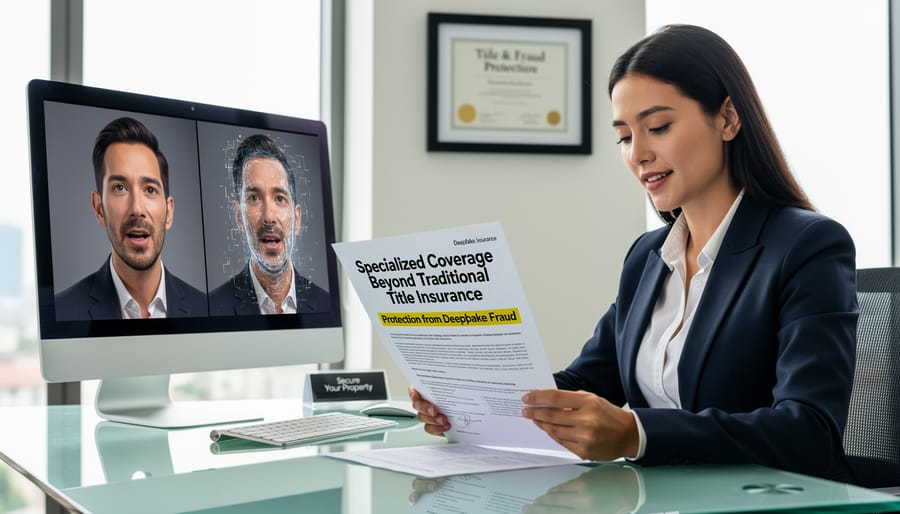
Specialized insurance products designed to combat modern deepfake and synthetic identity fraud offer protection layers that standard title insurance simply wasn’t built to handle. Here’s what these cutting-edge policies actually cover:
Synthetic identity fraud protection addresses criminals who construct entirely fabricated identities using a combination of real and fake information. When someone uses an AI-generated Social Security number alongside a legitimate address to pose as a property owner, this coverage kicks in to cover losses from the fraudulent transaction and associated legal costs.
AI-generated document fraud coverage protects you when fraudsters create convincing fake driver’s licenses, passports, or property deeds using artificial intelligence tools. Unlike traditional forgery protection that assumes physical alterations, this specifically covers digitally manufactured documents that pass initial verification systems. Think of it as a safety net for when technology outsmarts standard authentication processes.
Deepfake video and audio impersonation protection is perhaps the most revolutionary component. This covers losses when criminals use AI-generated videos or voice cloning to impersonate property owners during virtual closings or video verifications. As remote transactions become standard practice, this protection becomes essential rather than optional.
Post-closing fraud discovery extends your coverage window beyond the traditional closing date. Since deepfake fraud often takes months to surface, this component covers financial losses and remediation costs discovered within specified timeframes after closing, typically ranging from 12 to 36 months depending on your policy terms.
Who Should Carry This Insurance (It’s Not Just Title Companies)
This specialized coverage isn’t just for title insurance companies, though they’re obvious candidates. Real estate closing attorneys face significant exposure when verifying identities during transactions, especially as they increasingly rely on remote notarization. If a deepfake artist successfully impersonates a property owner during a closing, your firm could face lawsuits from the actual owner and the defrauded buyer.
Mortgage lenders need this protection because they’re making six or seven-figure decisions based on identity verification. When a fraudulent borrower uses AI-generated documents to secure a loan against property they don’t actually own, lenders face both financial losses and regulatory scrutiny.
Digital notary services represent a particularly vulnerable category. Your entire business model depends on accurate identity verification, making you a prime target for sophisticated fraud schemes. One successful deepfake fraud could destroy your reputation and sink your business.
Even savvy homebuyers should consider this coverage when purchasing high-value properties in markets known for fraud activity. The cost is minimal compared to potential losses if you unknowingly purchase property from an imposter. Real estate agents handling luxury properties might also explore coverage, as your professional liability increases when transaction values climb into the millions.
Cost vs. Risk: What You’ll Actually Pay
Life insurance premiums protecting against deepfake and identity fraud in real estate transactions typically range from $500 to $2,500 annually, depending on property values and coverage limits. For real estate professionals handling multiple transactions yearly, expect to pay 0.1% to 0.3% of total transaction values covered. Compare this to the average deepfake-related fraud loss of $243,000 per incident in real estate deals. Key factors affecting your premium include transaction volume, property values in your portfolio, verification protocols already in place, and claims history in your area. A $1,000 annual policy protecting $5 million in annual transactions offers a 250:1 cost-benefit ratio against a single fraud event. For homebuyers, one-time transaction insurance costs $300-$800 but protects your entire down payment and closing costs from fraudulent wire transfer schemes.
Red Flags Every Real Estate Professional Must Know
During digital closings and remote verification processes, staying alert to specific warning signs can mean the difference between a legitimate transaction and a costly fraud. Here are the critical red flags that should immediately trigger enhanced verification protocols.
Watch for technical anomalies during video calls. Unnatural eye movements that don’t track properly with speech, subtle misalignments between audio and lip movements, or inconsistent lighting on the face compared to the background can indicate deepfake technology. You might also notice pixelation or blurriness around the edges of the face, particularly near the hairline or jawline. If someone’s background appears unusually static or their image seems to lag when they move, take note.
Behavioral inconsistencies often reveal fraud attempts. Be suspicious if a participant insists on keeping their camera off or uses technical difficulties as an excuse to avoid video. Pay attention when someone refuses to turn their head at different angles or avoids spontaneous movements during the call. Legitimate parties typically have no issue with natural interaction. Watch for scripted responses that seem rehearsed or a reluctance to answer unexpected questions that deviate from prepared talking points.
Documentation red flags deserve immediate scrutiny. Multiple versions of the same document with slight variations, signatures that don’t match previous records, or rushed timelines that pressure quick decisions without proper review all warrant concern. If identification documents look overly perfect or too pristine, they might be digitally created rather than genuine worn cards.
Communication patterns matter too. Be wary of last-minute changes to wiring instructions, pressure to bypass standard verification procedures, or requests to use unfamiliar platforms for sensitive communications. When someone avoids in-person meetings despite being local or consistently communicates only through one channel, additional verification becomes essential.
Trust your instincts. If something feels off about the interaction, implement your verification protocols immediately. The few extra minutes spent confirming identity can prevent devastating financial losses and protect your professional reputation.
Protecting Your Transactions: A Multi-Layered Defense Strategy
Building a robust defense against fraud requires more than just purchasing insurance—it demands a systematic approach that layers multiple protective measures. Think of it as constructing a fortress rather than installing a single lock. Here’s how real estate professionals can implement a comprehensive fraud prevention system that significantly reduces vulnerability.
Start with identity verification protocols that go beyond basic document checks. Implement multi-factor authentication for all digital transactions and require video verification calls for high-value deals. During these calls, ask unscripted questions about property details or transaction history that only legitimate parties would know. Record these sessions with consent as additional documentation. This human element remains your strongest defense against deepfake technology, which still struggles with spontaneous, detailed responses.
Next, integrate technology solutions that work alongside human oversight. Deploy blockchain-based transaction tracking systems that create immutable records of every communication and document exchange. Use AI-powered document analysis tools that detect inconsistencies in fonts, metadata, or formatting that might indicate forgery. These systems can flag suspicious patterns that escape human notice, such as unusual transaction timing or atypical communication methods.
Establish mandatory waiting periods for wire transfers, particularly international transactions. This cooling-off period allows time for additional verification and prevents the rush tactics fraudsters often employ. Create a standardized callback procedure where you verify all payment instructions through previously established phone numbers—never use contact information provided in emails or new documents.
Partner with specialized property fraud protection services that monitor for identity theft, forged documents, and suspicious filing activity. These services provide early warning systems that catch fraud attempts before they succeed.
Finally, maintain comprehensive insurance coverage that specifically addresses digital fraud and deepfake schemes. Review your title insurance, errors and omissions coverage, and cyber liability policies annually to ensure they cover emerging threats. Document every verification step taken during transactions—this documentation proves due diligence and strengthens insurance claims if fraud occurs despite precautions.
Remember, fraudsters exploit gaps between protective measures. Your goal is eliminating those gaps through consistent, layered defense strategies that make your transactions substantially harder to compromise than easier targets elsewhere.
The digital transformation of real estate has introduced fraud risks that traditional safeguards simply weren’t designed to handle. Deepfake technology, synthetic identity creation, and AI-powered social engineering aren’t theoretical threats anymore—they’re happening right now, costing the industry millions and eroding trust in transactions that depend on verifying identity and intent.
Hoping your current title insurance or standard verification procedures will protect you against these sophisticated schemes is no longer a viable strategy. The evidence is clear: deepfake fraud has already infiltrated wire transfers, property closings, and remote notarization processes. The question isn’t whether your practice will encounter these tactics, but when.
The good news is that you don’t have to navigate this landscape unprepared. Start by conducting an honest assessment of your current vulnerability. Review your identity verification protocols—are you still relying primarily on video calls and document uploads without deepfake detection tools? Examine your insurance coverage to identify gaps in digital fraud protection.
Next, take concrete action. Implement multi-factor authentication that goes beyond simple video verification. Establish callback procedures using independently verified phone numbers, not those provided in potentially fraudulent communications. Consider specialized deepfake fraud insurance that specifically addresses these emerging threats, filling the coverage gaps left by traditional policies.
The fraud landscape has fundamentally changed. Your protection strategy must change with it. Evaluate, enhance, and insure—before you become the next cautionary example.