
Check your homeowners insurance policy declarations page right now—most standard policies cover TV damage under personal property protection, but only when caused by named perils like fire, lightning, windstorms, or theft. Your flat-screen isn’t automatically protected from accidental drops, power surges, or that coffee spill during your morning Zoom call.
Review your policy’s personal property coverage limit, typically set at 50-70% of your dwelling coverage. A $300,000 home policy generally provides $150,000-$210,000 for belongings, including electronics. However, sub-limits often apply to electronics, capping individual item reimbursement at $1,000-$2,500 unless you’ve purchased additional coverage.
Contact your insurance agent about scheduled personal property endorsements if you own high-value electronics exceeding standard limits. This rider specifically itemizes expensive TVs, home office equipment, and technology, providing broader coverage that includes accidental damage—crucial protection as work-from-home arrangements become permanent fixtures in American households.
Document your electronics immediately with photos, receipts, and serial numbers. Claims adjusters require proof of ownership and value, and memories fade quickly after damage occurs. Create a home inventory using your smartphone camera, storing documentation in cloud storage separate from your physical property.
Consider whether filing a claim makes financial sense given your deductible amount. A $500 TV replacement minus a $1,000 deductible leaves you paying out-of-pocket while potentially raising your premiums. Understanding this calculation protects your wallet and maintains favorable insurance rates for genuinely catastrophic losses that homeowners insurance is designed to cover.
What Homeowners Insurance Actually Covers (And What It Doesn’t)
Covered Perils: When Your TV Damage Gets the Green Light
Good news: most standard homeowners insurance policies provide solid protection for your TV under specific circumstances. Understanding these covered perils helps you know exactly when you can file a claim with confidence.
Fire and smoke damage tops the list of covered scenarios. Whether it’s a house fire or electrical malfunction that sparks a blaze near your home office setup, your policy typically responds. Lightning strikes also qualify—if a surge fries your TV despite having it plugged into a power strip, you’re generally covered.
Theft and vandalism protection extends to your electronics. If burglars break into your home office and steal your TV, or vandals damage it during a break-in, your policy should cover replacement costs. This applies whether you’re using the TV strictly for entertainment or as a second monitor for work presentations.
Weather-related damage from windstorms, hail, or fallen trees usually qualifies for coverage. For instance, if a storm sends a branch through your window, destroying your TV in the process, that’s typically a covered peril.
Water damage gets trickier. Sudden and accidental discharge—like a burst pipe flooding your home office—generally qualifies. However, gradual leaks or flooding from external sources typically don’t make the cut unless you’ve added specific endorsements.
Riots and civil commotion, aircraft or vehicle damage to your home, and falling objects round out the standard covered perils list. The key factor: the damage must be sudden and accidental, not from gradual wear or maintenance neglect.
Common Exclusions That Catch Homeowners Off Guard
Understanding what your homeowners insurance won’t cover can save you from unpleasant surprises when filing a claim. Many homeowners assume their policy covers all TV damage, but several common exclusions frequently catch people off guard.
Accidental damage tops the list of overlooked exclusions. That moment when you knock your TV off its stand while rearranging furniture? Most standard policies won’t cover it. Homeowners insurance typically protects against named perils like fire, theft, or vandalism, but simple accidents often fall outside standard coverage unless you’ve purchased additional accidental damage protection.
Power surges present another gray area. While your policy likely covers damage from lightning strikes, power surges caused by electrical grid fluctuations or faulty wiring typically aren’t included. This distinction matters significantly for home office setups where electronics run continuously. Some insurers offer electronics endorsements that specifically address power surge damage, worth considering if you’re working remotely with expensive equipment.
Manufacturer defects and normal wear and tear always fall outside coverage parameters. If your TV’s screen fails due to a manufacturing flaw or simply stops working after years of use, that’s between you and the warranty provider. Insurance exists to protect against sudden, unexpected events, not predictable equipment failure.
Gradual damage from environmental factors like humidity or temperature fluctuations also won’t make the cut. These exclusions exist because insurance fundamentally covers unforeseen incidents, not maintenance issues or product failures. Understanding these limitations helps you determine whether supplemental coverage or extended warranties better serve your needs, especially in today’s work-from-home landscape.
How Telecommuting Changes Your Home Insurance Landscape
The Blurred Line: Personal vs. Business Property
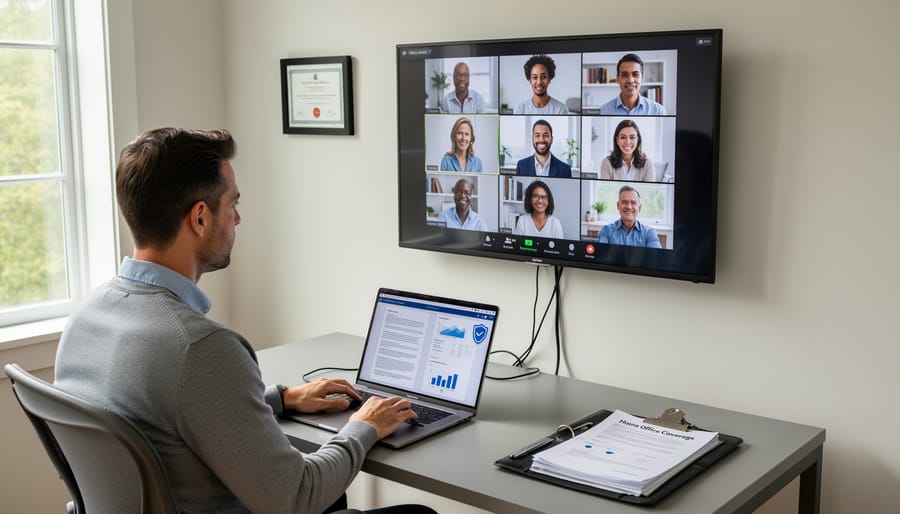
Here’s where things get tricky for remote workers and home-based professionals. That television you’re using for Zoom calls, client presentations, or as a second monitor sits in a gray area that many homeowners don’t realize exists.
Standard homeowners insurance typically covers personal property, meaning items you use for everyday household purposes. When you start using that same TV regularly for business activities, it can potentially be reclassified as business property in the eyes of your insurer. This distinction matters because most homeowners policies explicitly limit or exclude coverage for business equipment and property used to generate income.
The challenge is that there’s no bright-line rule. Using your TV occasionally for a work video call probably won’t trigger business property classification. However, if that television serves primarily as your presentation monitor for daily client meetings or functions as dedicated business equipment, you could face home office coverage gaps when filing a claim.
Insurance companies evaluate these situations case-by-case, considering factors like frequency of business use, whether clients visit your home, and if you claim home office deductions on your taxes. If your TV damage claim is denied due to business use classification, you’d need to file under a business owners policy or home business insurance rider instead.
The smartest approach? Contact your insurance agent before damage occurs to discuss your specific work-from-home setup and ensure you have appropriate coverage in place.
Increased Risk Factors in Home Office Environments
The shift to remote work has fundamentally changed how we use our homes, and insurance companies are taking notice. When you’re running a home office, your TV and electronics face significantly higher risk exposure than traditional homeowners experience.
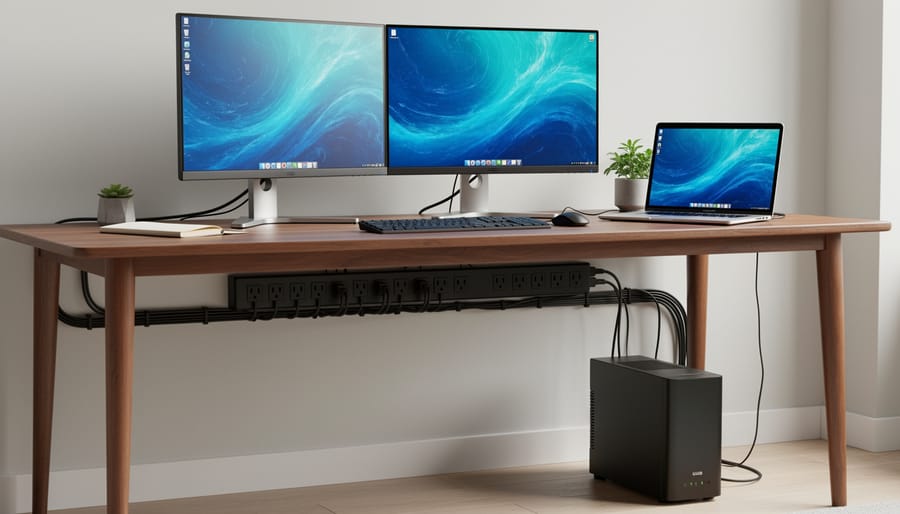
Consider the numbers: telecommuters typically have multiple devices plugged into the same circuits for 8-10 hours daily, increasing both electrical load and overheating potential. Power strips become overloaded with laptops, monitors, printers, and charging stations—all competing for electricity near your entertainment center. This concentrated power usage elevates fire risk and electrical surge probability.
Then there’s the human factor. More time at home means increased foot traffic near electronics, higher chances of accidental bumps or spills, and greater wear on electrical outlets. Kids doing remote learning, pets roaming freely during work hours, and the constant movement of office chairs near entertainment systems all contribute to elevated damage risk.
Most insurers haven’t dramatically altered homeowners policies to address these scenarios yet, meaning your standard coverage terms still apply. However, some carriers now ask about home office setups during policy reviews. They’re particularly interested in whether you’re using commercial-grade surge protectors and how you’ve organized your workspace relative to high-value electronics like TVs.
Special Coverage Options for Your Home Office Equipment
Scheduled Personal Property Endorsements
For high-value televisions—typically those worth $2,500 or more—adding scheduled personal property endorsements to your homeowners policy offers significantly enhanced protection. Unlike standard coverage that’s subject to deductibles and named-peril limitations, scheduling your TV provides all-risk coverage including accidental damage from mishaps like spills, drops, or electrical surges.
The process is straightforward: contact your insurance agent with documentation showing your television’s make, model, and purchase value. You’ll typically need receipts or appraisals for verification. The endorsement cost usually ranges from $10 to $25 annually per $1,000 of coverage—a modest investment for comprehensive protection without deductibles.
This strategy proves especially valuable for homeowners with dedicated home offices featuring premium displays or multiple monitors. When your TV doubles as work equipment, the added protection ensures business continuity and eliminates out-of-pocket replacement costs. Additionally, scheduled items receive full replacement value coverage, meaning you’ll get what you paid rather than depreciated value, making this endorsement particularly smart for recent high-end purchases.
Home Business Insurance Riders
If you’re working from home regularly, here’s something many telecommuters overlook: standard homeowners insurance typically excludes business property and liability claims. That television you’re using for video conferences and presentations? It might not be fully covered under your basic policy if it’s primarily serving business purposes.
This distinction matters because insurance carriers differentiate between personal and business use. If clients or business associates visit your home office and someone gets injured, or if that expensive TV doubles as your primary presentation monitor, you could face coverage gaps. Standard policies generally won’t cover business equipment losses or liability claims arising from business activities conducted on your property.
A home business policy endorsement, sometimes called an in-home business rider, bridges this protection gap. These endorsements typically cost between $150 and $300 annually and extend coverage to include business equipment, business liability, and business property—including electronics used primarily for work purposes. The endorsement essentially acknowledges your dual-use space and provides appropriate protection.
For serious telecommuters with valuable equipment setups, a Business Owner’s Policy (BOP) might be more appropriate. While more comprehensive than a simple rider, BOPs offer broader protection including business interruption coverage and professional liability. Consult your insurance agent to determine which option best matches your work-from-home situation and equipment value.
Filing a Claim for TV Damage: What You Need to Know
Documentation That Makes or Breaks Your Claim
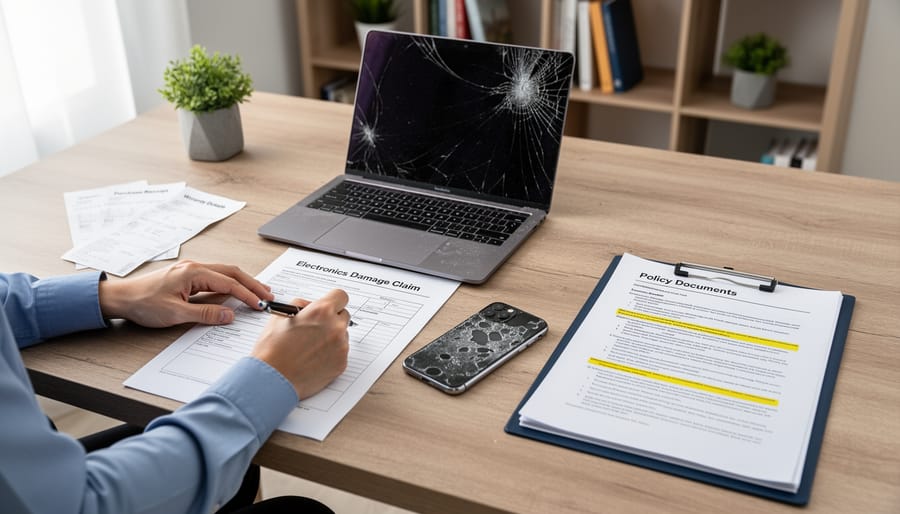
When filing a TV damage claim, solid documentation is your strongest ally. Without proper records, even legitimate claims can face delays or denials—something that becomes particularly critical when claiming business equipment used for telecommuting.
Start with proof of purchase: original receipts, credit card statements, or electronic invoices showing the TV’s make, model, and purchase price. Serial numbers are equally important, so photograph the back of your television where this information is displayed. Take multiple high-quality photos of your TV from different angles, including any distinguishing features or existing wear patterns.
If damage occurs, document everything immediately. Photograph the damaged TV and the surrounding area before moving anything. If the damage resulted from a specific incident—like a storm or theft—file a police or incident report when applicable. For water damage or electrical surges, capture the scene showing the source of the problem.
For telecommuters, maintain a dedicated home office inventory spreadsheet listing all equipment, purchase dates, values, and serial numbers. Update it quarterly and store copies both digitally and in a secure cloud location. Include receipts for any business equipment riders or endorsements you’ve added to your policy. This proactive approach transforms claims from stressful guesswork into straightforward processes, helping adjusters process your claim efficiently while maximizing your recovery potential.
The Deductible Dilemma: When Not to File
Before you pick up the phone to file a claim for your damaged television, pause and run the numbers. The math is straightforward but crucial: subtract your deductible from your TV’s replacement value. If your $800 TV was damaged and you carry a $1,000 deductible, filing makes no financial sense. Even with a $500 deductible, you’d only recover $300—but here’s where it gets tricky.
That modest payout could cost you significantly more over time. Insurance companies track claim frequency, and filing a claim—even a small one—can trigger premium increases that persist for three to five years. Industry data shows premiums can rise 20-40% after a single claim, potentially costing you hundreds or thousands in additional payments.
Real estate professionals often advise their clients to treat homeowners insurance like an emergency safety net, not a maintenance plan. Reserve claims for substantial losses that would genuinely impact your finances. A good rule of thumb: only file if the claim amount exceeds your deductible by at least double, preferably triple.
For work-from-home professionals with high-value equipment, this calculation becomes even more critical. Consider whether a $1,200 claim today is worth potentially higher premiums that could affect your property’s overall insurance costs. Take time to calculate whether filing is worthwhile by factoring in both immediate recovery and long-term premium implications. Sometimes, absorbing a smaller loss protects your financial position better than filing a claim.
Protection Strategies for Telecommuters
Smart Prevention Tactics for Your Home Office
Prevention is always more cost-effective than filing a claim, especially when it comes to protecting your home office equipment. Start with the basics: invest in quality surge protectors and smart devices that can detect power fluctuations and automatically shut down before damage occurs. Position your TV away from windows to minimize sun exposure and reduce accident risks from window-related incidents.
Cable management isn’t just aesthetic—tangled cords create tripping hazards that can send your TV tumbling. Use cable organizers and mount cords securely along walls or under desks. Maintain consistent environmental controls in your home office. Excessive humidity can damage electronics over time, while temperature extremes affect component longevity. Consider a wall mount or sturdy TV stand rated well above your TV’s weight.
Finally, document your setup with photos and keep purchase receipts in a dedicated file. This proactive approach streamlines the claims process if damage does occur and demonstrates to your insurer that you’ve taken reasonable precautions to protect your property.
Insurance Policy Adjustments to Consider Now
Now’s the perfect time to schedule a policy review with your insurance agent, especially if you’ve transitioned to remote work. Start by documenting your home office setup, including the value of your television and other electronics you use for work purposes. This creates a baseline for coverage discussions.
Consider increasing your personal property coverage limits if you’ve added significant electronics since your last policy update. The standard coverage percentage might not adequately protect your current tech investment. Ask your agent specifically about scheduled personal property endorsements for high-value items like premium televisions or multi-monitor setups.
Have an honest conversation about your telecommuting situation. Some insurers offer home-based business endorsements that bridge the gap between personal and professional use, potentially providing broader protection for equipment damage. Inquire about equipment breakdown coverage, which extends beyond standard perils to cover mechanical or electrical failures—particularly valuable for expensive electronics.
Finally, review your deductible in light of your current financial situation. While higher deductibles lower premiums, ensure you can comfortably cover that amount if filing a claim becomes necessary. Document this review annually, as your home office needs and property values will evolve over time.
Understanding whether your homeowners insurance covers TV damage in a telecommuting environment ultimately comes down to the specifics of your policy and the circumstances surrounding the damage. As we’ve explored, standard policies typically cover sudden and accidental damage through personal property protection, but the nuances matter significantly when your television serves dual purposes as both personal entertainment and business equipment.
The key takeaway is this: working from home doesn’t automatically disqualify you from coverage, but it does create a gray area that requires proactive attention. Whether damage results from power surges during video conferences, accidental spills while multitasking, or other home office mishaps, the line between personal and business use can affect your claim outcome.
Don’t wait until disaster strikes to understand your coverage limitations. Review your current homeowners policy carefully, paying special attention to personal property limits, deductibles, and any exclusions related to business equipment. If you regularly use your television for work presentations or client meetings, consider discussing this with your insurance agent. You might need to add a business property endorsement or adjust your coverage limits to ensure adequate protection.
Take action today by scheduling a policy review with your insurer. A fifteen-minute conversation could save you thousands in uncovered losses and provide invaluable peace of mind as you navigate the evolving landscape of remote work. Remember, adequate insurance coverage isn’t just about protection—it’s about maintaining the financial stability of your most important investment: your home.