Split-view image showing a comparison between a traditional urban building and a biophilic-designed property. The biophilic side features lush living walls, ample natural light, and green spaces, illustrating the benefits of integrating natural elements into architectural design.

How Biophilic Design Boosts Property Value and Tenant Well-being

In an era where urbanization increasingly disconnects us from nature, biophilic design emerges as a transformative approach to real estate development and property enhancement. This innovative design philosophy integrates natural elements into built environments, creating spaces that not only look stunning but also deliver measurable returns on investment through improved occupant well-being and increased property values.
Research shows that properties incorporating biophilic design elements command 4-8% higher rental rates and demonstrate significantly lower vacancy rates compared to conventional buildings. Beyond the financial …

Futuristic digital illustration of a smart city with blockchain and data streams securing real estate transactions.

Real Estate Insurance Goes Digital: How Tech is Reshaping Property Transaction Protection

The insurance industry stands at a pivotal digital crossroads, where traditional paper-based processes are rapidly giving way to sophisticated technological solutions. In 2024, insurance companies aren’t just adopting new technologies—they’re fundamentally reimagining how insurance products are designed, sold, and managed. From AI-powered underwriting that delivers instant policy decisions to blockchain-secured smart contracts revolutionizing claims processing, digital transformation is reshaping every aspect of the insurance value chain.
This seismic shift extends beyond mere efficiency gains. Today’s insurance …

Modern home showcasing renewable energy systems including solar panels and a wind turbine, representing energy-efficient tax savings potential.

These Home Improvement Tax Credits Can Save You Thousands in 2024

Transform your home improvements into valuable tax savings through the IRS’s energy-efficient upgrade incentives, which can return up to 30% of qualified expenses. Understanding the difference between tax credits vs deductions is crucial, as credits directly reduce your tax bill dollar-for-dollar. The 2024 Inflation Reduction Act has expanded these opportunities significantly, offering homeowners unprecedented savings on qualifying projects like solar installations, energy-efficient windows, and home …

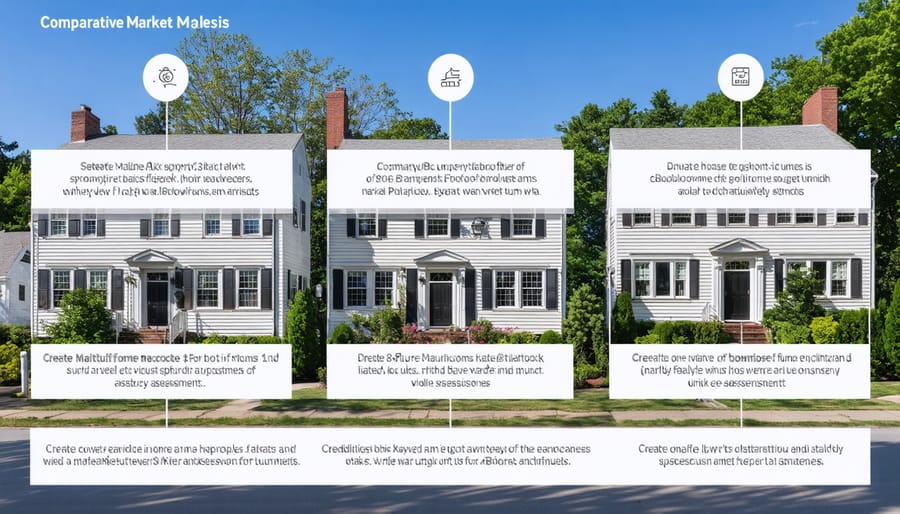
Illustration of a suburban Boston neighborhood showcasing colonial homes with overlay text indicating property features such as square footage, bedrooms, bathrooms, and upgrades, symbolizing the comparative market analysis process.

How This Real Estate Agent Nailed Property Values With Precision (A CMA Case Study)

Imagine stepping into a luxurious $750,000 Colonial home in suburban Boston – a perfect example to demonstrate how comparative market analysis (CMA) shapes real estate decisions. In this detailed walkthrough, we’ll analyze how this property’s value was determined using real-world data from five comparable homes sold within the last 90 days, revealing the precise methodology real estate professionals use to price properties accurately.
A comparative market analysis serves as the cornerstone of intelligent real estate pricing, combining both art and science to deliver accurate property valuations. Whether you’…

Illustration showing a futuristic city with digital data streams and financial symbols merging into smart buildings, representing the integration of technology financing in real estate.

Smart Money: How Property Tech Financing Is Transforming Real Estate Investment

Technology financing in real estate has transformed from traditional bank loans into a sophisticated ecosystem of flexible funding options. The fintech revolution in real estate has created unprecedented opportunities for property owners to modernize their assets without depleting capital reserves.
Smart property investors now leverage specialized technology financing solutions – from equipment leasing and vendor financing to technology-specific credit lines – to implement cutting-edge …

Conceptual depiction of a neighborhood showcasing varying property price tags to illustrate the contrast between market value and assessed value in real estate.

How Property Tax Assessment Actually Impacts Your Home’s Market Value

Understanding the relationship between property tax vs tax assessment forms the foundation of smart property ownership. Tax assessments directly impact your property’s financial obligations while serving as a crucial benchmark for market value estimation. While your home’s assessed value may differ from its market price, this governmental valuation drives your annual property tax obligations and influences your overall real estate investment strategy.
Property assessments reflect a …

Conceptual illustration depicting the 2024 U.S. housing market dynamics, highlighting the interplay of pricing trends, interest rates, and inventory levels, represented through abstract graphs and housing icons.

Housing Market Crash or Correction? What 2024’s Price Charts Really Show

The U.S. housing market’s trajectory tells a compelling story through its graphs, revealing critical patterns that shape investment decisions worth millions. Recent data visualizations showcase dramatic shifts in home prices, interest rates, and inventory levels, creating a complex narrative that demands careful interpretation. From the steep price appreciation curves of 2021 to the market’s current rebalancing phase, these graphs serve as essential tools for understanding market dynamics and predicting future trends.
Whether you’re a seasoned real estate professional analyzing market cycles or a potential …

Digital portrayal of a cybersecurity shield protecting a real estate office, symbolizing the safeguarding of digital assets and client data in the real estate industry.

Real Estate’s New Digital Battleground: Building Your Cybersecurity Shield

Protecting your real estate firm’s digital assets requires a robust cybersecurity strategy that safeguards sensitive client data, financial transactions, and property information. In today’s interconnected real estate market, where digital transactions and cloud-based property management systems have become standard, cybercriminals increasingly target real estate professionals, seeking to exploit vulnerabilities in their digital infrastructure.
A well-crafted cybersecurity strategy isn’t just about preventing data breaches—it’s about maintaining client trust, ensuring business continuity, and protecting …

Conceptual image showing a digital cityscape with circuit-themed buildings, a digital lock, and key above property documents, symbolizing protection from ransomware threats in the real estate industry.

Real Estate Ransomware Insurance: Protecting Your Digital Transactions From Cyber Threats

In today’s digital real estate landscape, ransomware attacks threaten not just data, but the very foundation of property transactions and client trust. Real estate professionals process millions in wire transfers and handle sensitive client information daily, making them prime targets for cybercriminals. Ransomware insurance coverage has evolved from a luxury to a critical safeguard, protecting agencies against devastating financial losses and reputational damage.
Recent statistics reveal that 60% of real estate firms experienced cybersecurity incidents in 2023, with average recovery costs exceeding $500,000. While traditional…

A futuristic digital cityscape showing the intersection of traditional real estate with blockchain technology, illustrating the concept of NFT real estate platforms with digital nodes linking various properties.

NFT Real Estate Platforms Are Reshaping Property Investment – Here’s How

The fusion of blockchain technology and real estate is revolutionizing property transactions through NFT real estate marketplaces, creating a new paradigm where digital ownership meets physical assets. These innovative platforms transform traditional property dealings into streamlined, secure digital transactions, enabling fractional ownership and instant property transfers through tokenization. By converting real estate assets into non-fungible tokens, these marketplaces are democratizing property investment, reducing entry barriers, and introducing unprecedented liquidity to an historically illiquid market.
Picture buying a …