
Home insurance in Winnipeg costs between $1,200 and $2,500 per year for a detached home, with most homeowners paying around $1,000 annually or roughly $80 per month. If you’re shopping for coverage in Manitoba’s capital, you’ll find that your final premium hinges on four main variables: your home’s age and construction type, its replacement value, your claims history, and the coverage limits you select.
What makes Winnipeg’s insurance market different from other Canadian cities comes down to weather. Manitoba’s harsh winters, heavy spring runoff, and flooding history push insurers to price policies more conservatively. The 2022 flooding events in parts of Winnipeg and the Red River Valley reminded carriers why sewer backup coverage isn’t optional here, it’s essential. Winter weather damage from ice dams, frozen pipes, and snow load on roofs drives claims every season, so insurers factor that risk into your rate.
Your coverage should protect more than just your dwelling. Standard policies bundle dwelling protection (the structure itself), contents insurance (your belongings), detached structure coverage (garages, sheds), and liability protection. Liability coverage starts at a recommended minimum of $1 million in Manitoba, though many brokers now suggest $2 million given today’s legal settlement trends. Add-ons like water damage riders, enhanced sewer backup limits, and replacement cost guarantees can push your premium toward the higher end of that $1,200-$2,500 range, but skipping them leaves you exposed to out-of-pocket repair bills that can easily hit five figures after a basement flood or winter pipe burst.
What Home Insurance Costs in Winnipeg: 2026 Price Ranges

Monthly vs. Annual Premium Breakdown
Most Winnipeg homeowners budget around $80 to $210 per month for home insurance, depending on their property type and coverage choices. If your annual premium lands at the average of $1,000, you’re looking at roughly $83 monthly. A detached home policy costing $1,500 annually breaks down to $125 per month, while a $2,400 policy translates to $200 monthly.
Insurers typically offer two payment structures: annual lump-sum or monthly installments. Paying annually often saves you money, some companies charge administrative fees for monthly payments, adding $30 to $50 to your total yearly cost. However, spreading payments across 12 months eases the immediate burden for new homeowners managing mortgage payments, property taxes, and moving expenses simultaneously.
When you calculate costs for your budget, factor in whether your lender requires escrow arrangements (where your mortgage payment includes insurance premiums) or if you’ll pay directly to the insurer. Direct monthly payments give you more control but require consistent cash flow, while annual payments align well with tax refunds or bonuses. Compare average homeowners insurance costs nationally to confirm you’re getting fair Manitoba pricing before committing to a payment plan.
Cost by Home Type
Detached single-family homes in Winnipeg carry the highest premiums, typically ranging from $1,200 to $2,500 annually. These properties require full dwelling coverage for the entire structure, and insurers price them based on square footage, age, and construction quality. A newer 1,500-square-foot detached home with modern building materials might fall toward the lower end of this range, while an older 2,000-square-foot property with outdated electrical or plumbing could push toward the upper limit.
| Home Type | Typical Annual Cost | Key Pricing Factors |
|---|---|---|
| Detached Home | $1,200, $2,500 | Full structure coverage, age, square footage |
| Condo/Apartment | $400, $800 | Contents only, building covered by condo corp |
| Townhouse | $800, $1,400 | Shared walls, partial structure responsibility |
| Older Home (50+ years) | $1,800, $3,000+ | Outdated systems, replacement cost considerations |
Condos and apartments cost significantly less, usually $400 to $800 per year, because the building’s master policy covers the structure itself. Your condo insurance protects only your unit’s contents, interior improvements, and liability exposure. Townhouses fall in the middle at $800 to $1,400 annually, as you’re responsible for your unit’s structure but share walls with neighbors, reducing some risk.
Property age dramatically affects pricing. Homes built before 1970 often face premium surcharges of 30% to 50% compared to newer construction. Insurers view older properties as higher risk due to outdated electrical systems, aging plumbing, and original roofs nearing end-of-life. If you’re buying a charming 1950s bungalow in River Heights, budget for the higher end of the cost spectrum and expect insurers to ask detailed questions about system upgrades.
What Your Premium Actually Covers: Winnipeg Policy Breakdown
Essential Coverage for Manitoba’s Climate
Manitoba’s brutal winters and notorious flooding make three types of coverage non-negotiable for Winnipeg homeowners: winter weather protection, comprehensive water damage coverage, and sewer backup insurance.
Winter Weather Coverage
Winnipeg’s freeze-thaw cycles wreak havoc on homes. Your policy should cover ice dam damage, frozen pipe bursts, and roof collapse from snow load. Standard policies typically include these perils, but verify your coverage limits actually reflect replacement costs. A burst pipe can flood multiple rooms in hours, causing tens of thousands in damage to drywall, flooring, and belongings. Check whether your policy covers sudden pipe failures versus gradual seepage, insurers distinguish between the two.
Water Damage Protection
Given Winnipeg’s spring flooding history, understand exactly what water damage your policy covers. Standard policies protect against sudden internal water events but often exclude overland flooding and groundwater seepage. Your dwelling protection should extend to detached garages and sheds through other structures coverage, since these face the same flood risks as your main home.
Sewer Backup Coverage
This is typically an add-on, not automatic coverage, and it’s critical in Winnipeg. Spring snowmelt overwhelms municipal systems, causing backups that flood basements with contaminated water. A single sewer backup can cost $15,000-$30,000 to remediate. Most insurers cap this coverage at $15,000-$25,000 unless you purchase higher limits. The additional premium runs $50-$150 annually, making it one of the most cost-effective protections you can buy for Winnipeg’s conditions.
8 Factors That Drive Your Winnipeg Home Insurance Rate
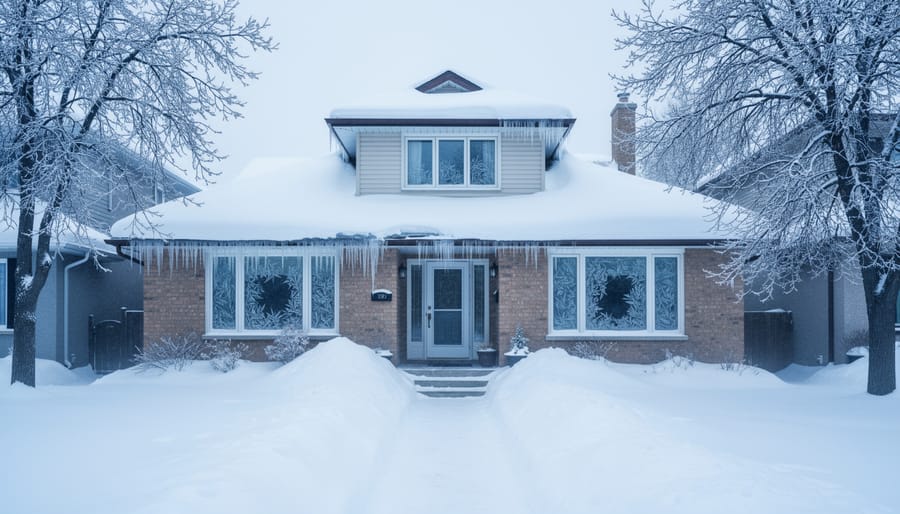
Insurance companies use a sophisticated risk-assessment model to price your Winnipeg home policy, and understanding these levers gives you real negotiating power. Most of these factors are either controllable or can inform smarter coverage choices when you’re shopping for quotes.
- Property Location and Flood Zone: Your postal code matters enormously. Homes in River Heights or near the Red River floodplain pay substantially more because insurers track historical water damage claims by neighborhood. Properties in low-lying areas or designated flood zones can see premiums jump 30-50% compared to homes on higher ground in areas like Charleswood or Tuxedo.
- Home Age and Construction Materials: Aging properties built before 1980 typically cost more to insure because older electrical systems, plumbing, and roofing present higher risk. A 1960s bungalow with original knob-and-tube wiring and galvanized pipes will carry a premium 20-40% higher than a comparable 2015-built home with modern systems. Brick and concrete construction costs less to insure than wood-frame or stucco.
- Coverage Limits and Replacement Cost: The dwelling coverage amount you select, what it would cost to rebuild your home from the ground up, directly impacts your premium. A $400,000 rebuild limit costs significantly more than $250,000, but underinsuring to save money leaves you catastrophically exposed if disaster strikes. Insurers price based on current construction costs in Winnipeg, which have climbed substantially in recent years.
- Deductible Choice: Selecting a $2,500 deductible instead of $500 can cut your annual premium by 15-25%. You’re essentially telling the insurer you’ll handle smaller claims yourself, which reduces their risk exposure. New homeowners should choose the highest deductible they can comfortably afford to pay out-of-pocket in an emergency.
- Claims History: Your personal claims record follows you. Filing two or more claims in three years can increase your premium by 20-50%, and some insurers may refuse to renew your policy. Even claims from a previous address affect your rate. This is why small losses below $2,000 are often better paid out of pocket rather than claimed.
- Security and Safety Features: Monitored alarm systems, deadbolt locks, fire extinguishers, and smoke detectors earn you discounts, typically 5-15% combined. Winnipeg’s property crime statistics make security systems particularly valuable to insurers. Upgrading from a basic smoke detector to a monitored system can save $75-$150 annually.
- Bundling Opportunities: Buying home and auto insurance from the same company typically unlocks a 10-20% discount on both policies. For a Winnipeg homeowner paying $1,500 for home insurance and $1,800 for auto, bundling could save $300-$600 per year, one of the simplest ways to reduce costs without changing coverage.
- Credit Score: In Manitoba, insurers can use credit-based insurance scores as a pricing factor. A strong credit profile (above 750) signals lower risk and can reduce your premium by 10-15%, while poor credit may increase it by a similar margin. This factor is controllable over time through responsible credit management.
When you request quotes, ask each insurer how changing these variables affects your premium. A broker can run scenarios showing exactly what you’d save by increasing your deductible to $1,500, installing a monitored alarm, or bundling policies. The most strategic homeowners treat insurance as a negotiation rather than a fixed expense, adjusting these factors to find the sweet spot between cost and protection.
Should You Handle Insurance Shopping Yourself or Work with a Broker?
New Winnipeg homeowners face a practical choice when shopping for home insurance: handle the research independently or work with a licensed broker. Both paths can lead to solid coverage, but they suit different priorities and skill sets.
The DIY route means using online comparison tools like Kanetix or Ratehub, requesting direct quotes from individual insurers, and evaluating policies yourself. You maintain complete control over the process, see exactly which companies you’re considering, and avoid potential broker steering. This transparency appeals to homeowners who want to understand every coverage detail and feel confident navigating insurance terminology. The trade-off is time, expect to spend several hours comparing quotes, decoding policy documents, and researching what adequate protection looks like in Manitoba’s climate. You’ll need enough insurance literacy to recognize when a cheaper premium actually means weaker coverage for critical risks like sewer backup or water damage.
Brokers bring expertise and market access that DIY shoppers can’t replicate. A good Winnipeg broker knows which carriers offer competitive rates for your neighbourhood’s flood risk, understands Manitoba-specific coverage requirements, and can explain why a $2 million liability limit makes sense even when $1 million is the minimum. They shop multiple insurers simultaneously, potentially surfacing better deals than you’d find independently. When you file a claim, an experienced broker advocates for you rather than leaving you to navigate the process alone. The catch: brokers earn commissions from insurers, which can create subtle incentives to recommend certain carriers or coverage levels. While most operate ethically, you’re trusting their professional judgment rather than controlling every decision.
Pros
- DIY: Complete transparency and control over which insurers you evaluate and what coverage you choose.
- DIY: No commission influence, you make decisions based purely on your research and priorities.
- Broker: Access to multiple carriers and policies you can’t quote directly online.
- Broker: Expert guidance on Manitoba-specific risks like freeze-thaw damage and adequate liability limits.
- Broker: Ongoing claims support and someone who advocates for you during difficult situations.
Cons
- DIY: Requires significant time investment to research, compare quotes, and decode policy language.
- DIY: You need enough insurance knowledge to spot coverage gaps or underinsurance risks.
- DIY: No professional support when filing claims or resolving coverage disputes.
- Broker: Commission structure may influence recommendations, even with ethical practitioners.
- Broker: Less direct control over the specific insurers and options presented to you.
For first-time Winnipeg homeowners with straightforward properties, newer construction, no history of claims, standard risk profile, the DIY approach works well if you’re willing to invest the learning time. If your home has complications (older than 25 years, previous water damage, location in a known flood zone), or if you value ongoing professional support more than controlling every detail, a broker’s expertise typically justifies their involvement. Some homeowners split the difference: research independently to build insurance literacy, then consult a broker to validate their understanding and access additional carrier options.
How to Lower Your Premium Without Sacrificing Protection

Lowering your Winnipeg home insurance premium doesn’t mean accepting inadequate protection. Start with smart home shopping and combine these proven strategies to cut costs while maintaining comprehensive coverage.
Raise your deductible strategically. Moving from a $500 to $1,000 deductible can reduce your annual premium by 10-15%, but only increase it to an amount you can comfortably pay if disaster strikes. This approach works best for new homeowners with solid emergency savings.
Bundle your home and auto insurance with the same carrier. Most insurers offer 15-25% discounts when you consolidate policies, often saving Winnipeg homeowners $200-400 annually. Compare the bundled rate against separate policies to confirm you’re getting genuine savings.
Install monitored security systems. A professionally monitored alarm system that connects to emergency services typically earns you a 5-10% discount. The deterrent effect against theft and the early warning for fire can justify the monitoring cost while reducing your premium.
Update aging electrical and plumbing systems. Replacing outdated wiring, old furnaces, or deteriorating plumbing demonstrates reduced risk to insurers. Many carriers offer discounts for homes with updated mechanical systems, particularly properties over 25 years old.
Maintain a claims-free record. Filing small claims can cost you more in premium increases than the payout is worth. Reserve insurance for significant losses and handle minor repairs out of pocket when feasible. Three to five years without claims often qualifies you for claims-free discounts of 10-15%.
Ask about available discounts you might be missing. Some insurers offer reductions for seniors, non-smokers, new home purchases, membership in professional associations, or loyalty. Review your policy annually to ensure you’re capturing every eligible discount without compromising the coverage Manitoba’s climate demands.
Where the Money Goes
Understanding how insurers calculate your Winnipeg home insurance premium helps you see where your money actually goes. Unlike buying a physical product with clear material costs, your premium funds a complex risk pool and administrative system.
The largest portion, typically 50-60% of your premium, covers claims payouts. This includes dwelling repairs after fire or storm damage, replacement costs for stolen or damaged belongings, and liability settlements if someone gets injured on your property. Winnipeg’s harsh winters and flood risks mean insurers allocate significant reserves for weather-related claims, which directly impacts this line item.
Another 20-30% goes toward operational expenses: underwriting assessments that determine your individual risk profile, policy administration and customer service, technology systems for processing quotes and claims, and routine property inspections. Brokers and agents who help you purchase coverage receive commissions from this allocation, usually 10-15% of your premium.
Regulatory compliance and reserve requirements consume roughly 10-15%. Manitoba’s insurance framework mandates that insurers maintain capital reserves to ensure they can pay future claims, even during catastrophic events affecting multiple policyholders simultaneously.
The remaining portion covers reinsurance, insurance that your insurer buys to protect against massive loss events, and profit margins. For Winnipeg policies, reinsurance costs reflect Manitoba’s specific climate risks, including Red River flooding and severe winter storms that could trigger widespread claims exceeding a single company’s capacity to pay.
DIY vs Hiring a Pro
Shopping for home insurance yourself means using online comparison tools and calling insurers directly to gather quotes. You’ll spend two to four hours researching coverage options, comparing premiums, and reading policy documents. The cost advantage is transparency, you see exactly what each insurer charges without wondering about broker commissions. You control the timeline and can revisit quotes at your own pace. The downside? You need enough insurance literacy to spot coverage gaps, understand Manitoba-specific risks like sewer backup, and evaluate whether that $1,200 quote actually protects you as well as the $1,800 option.
Working with a broker shifts the legwork to someone who knows Winnipeg’s insurance market. They access multiple carriers simultaneously, explain technical terms, and recommend coverage amounts (like that $2 million liability threshold) based on your home’s specifics. Brokers handle renewal negotiations and advocate during claims. You’ll save time, typically one focused conversation versus multiple phone calls, but brokers earn commissions, which may influence recommendations.
For first-time homeowners unfamiliar with dwelling coverage limits or winter weather endorsements, a broker provides education and accountability. If you’re comfortable reading policies and comparing coverage line-by-line, DIY shopping works fine. Either way, prioritize adequate protection over the lowest premium, cutting $200 annually isn’t worth discovering you’re underinsured after a claim.
Common Questions Winnipeg Homeowners Ask About Insurance
New homeowners in Winnipeg often have similar concerns when shopping for insurance. These must-ask questions reflect Manitoba’s unique climate challenges and the practical realities of protecting your investment in a city where winter weather and water damage pose significant risks.
Is flood insurance included in my Winnipeg home insurance policy?
Standard home insurance policies in Manitoba typically exclude overland flooding. You need to purchase separate flood insurance if your property is in a flood-prone area, which matters in Winnipeg given the Red River’s history.
What liability limit should I choose for my Winnipeg home?
Manitoba recommends a minimum of $1 million liability coverage, but most insurance professionals suggest $2 million for homeowners. The higher limit costs only marginally more and provides substantially better protection against lawsuits.
Does my home’s age affect my ability to get insurance in Winnipeg?
Older homes, particularly those with outdated electrical, plumbing, or heating systems, may face higher premiums or require upgrades before insurers will provide coverage. Homes with knob-and-tube wiring or galvanized steel pipes often need modernization.
What happens when I file a claim with my Winnipeg insurer?
After filing, an adjuster assesses the damage, you pay your deductible, and the insurer covers eligible costs up to your policy limits. Filing a claim typically increases your premiums at renewal, though the impact varies by claim type and your history.
Do I really need sewer backup coverage in Winnipeg?
Yes. Winnipeg’s freeze-thaw cycles and heavy spring runoff make sewer backup a common and costly problem. This coverage is optional, not standard, but it protects against damage from water entering through drains and sewers.
Can I switch insurance companies mid-policy if I find a better rate?
You can cancel your policy anytime, but you may face cancellation fees or lose discounts. Most homeowners wait until renewal to switch, which allows you to compare rates without penalties and maintain continuous coverage.
Understanding your deductible choice matters more than many new homeowners realize. A higher deductible lowers your premium but means you pay more out-of-pocket when filing a claim. Most Winnipeg policies offer deductibles ranging from $500 to $2,500, with $1,000 being common for balancing affordable premiums with manageable claim costs.
Water damage coverage deserves special attention in Manitoba. Your policy should clearly specify what types of water damage are covered. Winter weather damage from ice dams or frozen pipes typically falls under standard coverage, while sewer backup and overland flooding require separate endorsements. Given Winnipeg’s climate, clarifying these distinctions before purchasing saves headaches when you actually need the coverage.
Understanding the true cost of home insurance in Winnipeg, that realistic $1,000-$2,500 annual range, is just the starting point for new homeowners building a solid protection strategy. While the average $1,000 policy or $80 monthly payment fits most budgets, the real question isn’t just what you’ll pay, but whether your coverage adequately protects your investment against Manitoba’s unique risks.
Don’t settle for minimum liability limits when $2 million in coverage offers meaningful protection for a marginal premium increase. Your insurance isn’t just a mortgage requirement, it’s your financial safety net against winter weather damage, sewer backup flooding, and the unexpected claims that can derail your homeownership journey.
Shop strategically by comparing quotes from multiple insurers, but prioritize comprehensive climate-appropriate coverage over rock-bottom pricing. A policy that saves you $200 annually but excludes sewer backup or carries inadequate liability limits isn’t a bargain when a single claim exposes you to tens of thousands in out-of-pocket costs.
Building a complete insurance strategy means understanding what you’re paying for, knowing which coverage components matter most in Winnipeg’s freeze-thaw environment, and making informed decisions about deductibles, optional endorsements, and bundling opportunities. Whether you choose the DIY route or work with a broker, the goal remains the same: securing protection that matches both your property’s value and Manitoba’s climate realities without overpaying for unnecessary extras.