
Claim your share of New York’s $250 million energy efficiency incentive pool through NYSERDA programs that reimburse 50-75% of upgrade costs, including air sealing, insulation improvements, and HVAC replacements. New homeowners qualify for expedited rebates when bundling three or more efficiency measures within the first year of ownership.
Schedule a comprehensive home energy audit within 60 days of closing to identify the highest-impact improvements specific to your property. New York utilities subsidize these assessments at $50-100, and the resulting report prioritizes upgrades by payback period, helping you allocate renovation budgets toward modifications that reduce monthly expenses by 20-40%.
Target air sealing and insulation upgrades first, as these foundational improvements deliver 15-25% energy savings regardless of your heating system age. New York’s extreme temperature swings between seasons make thermal envelope deficiencies particularly costly, with the average poorly-insulated home losing $800-1,200 annually through preventable air leakage.
Finance efficiency projects through Property Assessed Clean Energy (PACE) loans or NYSERDA’s on-bill recovery program, both allowing repayment through property tax bills or utility statements over 10-20 years. This financing structure means your monthly energy savings often exceed the loan payment from day one, creating immediate positive cash flow while increasing property value by 3-5% according to recent New York appraisal data.
Document all efficiency improvements for homeowners insurance reviews, as carriers increasingly offer 5-10% premium reductions for homes meeting energy performance certifications like ENERGY STAR or LEED standards.
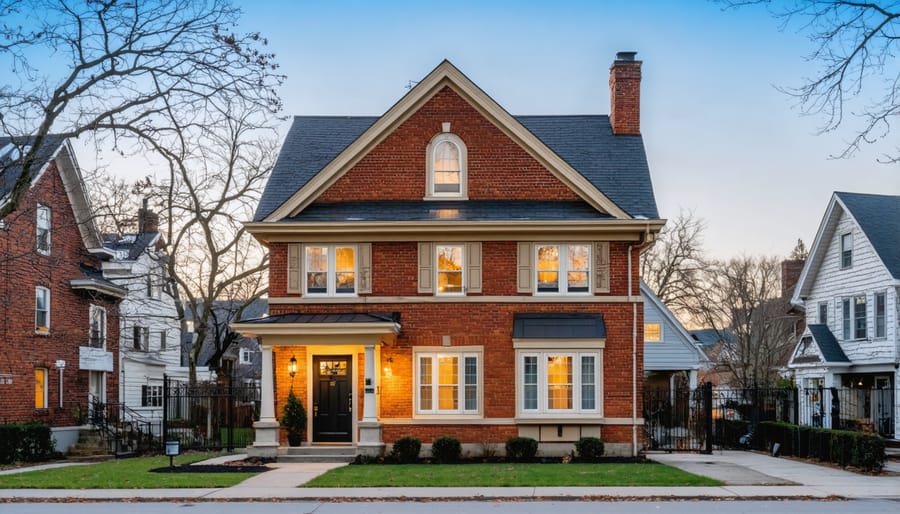
Why Energy Efficiency Hits Different in New York
The Real Cost of Inefficiency in NY Homes
The financial impact of an inefficient New York home hits harder than most new homeowners expect. In the NYC metro area, an average poorly insulated home can rack up $3,500 to $5,000 annually in energy costs, while comparable properties upstate typically range from $2,800 to $4,200. The difference largely stems from urban housing density and aging building infrastructure common in city boroughs.
Winter months deliver the biggest shock to your wallet. Heating an inefficient home from December through March can consume 60-70% of your annual energy budget, with some upstate homeowners seeing monthly bills spike to $600 or more during cold snaps. Summer cooling in the metro area adds another $200-300 monthly for homes lacking proper insulation and modern HVAC systems.
The good news? These aren’t fixed costs. Energy audits consistently show that addressing just the top three efficiency issues like air sealing, insulation upgrades, and outdated heating systems can reduce these expenses by 30-40% within the first year. For a metro area homeowner paying $4,500 annually, that translates to $1,350-1,800 back in your pocket, making efficiency investments some of the fastest-paying home improvements you’ll make.
How Energy Efficiency Impacts Your Home’s Resale Value
In New York’s competitive real estate market, energy efficiency has become a powerful differentiator that directly impacts home values. Recent appraisal data shows that homes with documented energy-efficient features typically command 3-5% higher selling prices compared to similar properties without these upgrades. For a $500,000 home, that translates to $15,000-$25,000 in added value.
Buyers are increasingly savvy about operational costs, especially in New York where heating and cooling expenses can significantly impact monthly budgets. Homes with Energy Star certifications, updated HVAC systems, and improved insulation spend less time on the market and often receive multiple offers. Real estate professionals report that energy upgrades boost value by appealing to environmentally conscious millennials and Gen Z buyers who prioritize sustainability.
From an insurance perspective, energy-efficient homes may qualify for reduced premiums, as upgraded systems often mean newer equipment less prone to failure. Additionally, properties with documented efficiency improvements create a compelling narrative in listing materials, providing tangible proof of lower operating costs that justifies premium pricing in competitive bidding situations.
New York’s Energy Efficiency Programs That Put Money Back in Your Pocket
NYSERDA’s Home Energy Rebates and Incentives
The New York State Energy Research and Development Authority (NYSERDA) offers substantial financial incentives that can significantly reduce the upfront cost of making your home more energy-efficient. As a new homeowner, understanding these programs can translate to thousands of dollars in savings while increasing your property’s value.
NYSERDA’s flagship EmPower+ program provides rebates ranging from $250 to $6,000 depending on the improvement type. For instance, you can receive up to $1,500 for heat pump water heaters, $4,000 for air-source heat pumps, and $6,000 for ground-source heat pumps. Insulation and air sealing improvements typically qualify for rebates covering 50-75% of project costs, with caps at $4,000 for insulation and $1,500 for air sealing work.
The application process is refreshingly straightforward compared to many government programs. You’ll start by having a NYSERDA-approved contractor conduct a home energy assessment, which costs around $50-100 but may be fully rebated. The contractor then submits your application directly after completing approved upgrades, meaning you don’t need to navigate complex paperwork yourself.
Income-qualified homeowners can access even more generous incentives through NYSERDA’s EmPower program, which covers up to 100% of costs for eligible improvements with no out-of-pocket expense. This makes energy efficiency accessible regardless of your financial situation immediately after purchasing your home.
Consider timing these improvements strategically. Combining NYSERDA rebates with federal tax credits can reduce your total project costs by 60-80%, making comprehensive energy retrofits surprisingly affordable while protecting your investment through lower utility bills and enhanced home value.
Utility Company Programs Worth Your Time
New York’s major utilities offer surprisingly robust programs that can slash your energy bills while adding value to your property investment. Con Edison serves NYC and Westchester with their Residential Energy Efficiency Programs, providing free home energy assessments that identify exactly where you’re losing money. They offer instant rebates on ENERGY STAR appliances and can connect you with qualified contractors for larger projects.
National Grid covers parts of upstate New York and Long Island, delivering similar benefits plus their Income Eligible Program for qualifying homeowners. Their online marketplace makes it easy to purchase discounted efficiency products directly. NYSEG and Rochester Gas & Electric blanket much of the remaining state territory, offering free LED bulb distribution and substantial rebates on heat pump installations.
Here’s what makes these programs worth your immediate attention: the free energy audits alone typically cost $300-500 if purchased privately, and they reveal financing-friendly upgrades that boost your home’s resale value. Most utilities also provide instant point-of-sale rebates, meaning you pay the discounted price upfront rather than waiting for reimbursement. Check your utility’s website within your first month of homeownership to schedule that complimentary audit before tackling any major efficiency projects.
Federal Tax Credits and How They Stack
New York homeowners can significantly boost their energy upgrade savings by layering federal tax credits with state-level incentives. The federal Energy Efficient Home Improvement Credit offers up to $3,200 annually for qualifying upgrades like heat pumps, insulation, and efficient windows. Meanwhile, the Residential Clean Energy Credit provides a 30% credit for solar panels and battery storage through 2032.
Here’s where it gets interesting: these federal tax credits and rebates stack directly on top of New York State’s programs. For example, installing a heat pump could qualify for both the federal credit and NYSERDA rebates, potentially covering 50-70% of total costs. The key is timing your projects strategically and maintaining detailed receipts. Many New York homeowners overlook this stacking opportunity, leaving thousands in savings on the table. From a property investment perspective, these combined incentives improve your home’s value while reducing your immediate out-of-pocket expenses, making energy upgrades one of the smartest financial moves for new homeowners.
The High-Impact Upgrades Every New York Homeowner Should Prioritize
Insulation and Air Sealing: Your First Line of Defense
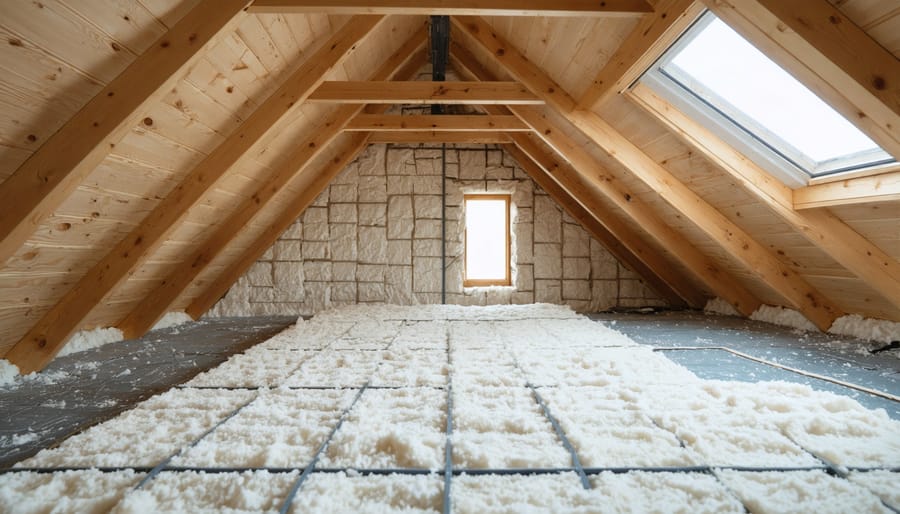
In New York’s challenging climate—where winters demand serious heating and summers require cooling—proper insulation and air sealing should be your priority investment. These upgrades directly impact your energy bills year-round, often reducing heating and cooling costs by 20-30%. The typical New York home loses significant energy through gaps around windows, doors, attics, and basements, essentially heating or cooling the outdoors.
Expect to invest between $1,500 and $5,000 for comprehensive air sealing and insulation improvements, depending on your home’s size and current condition. The good news? New York State offers substantial rebates through programs like NYSERDA’s EmPower+ that can cover 50-100% of costs for eligible homeowners. These upgrades typically pay for themselves within 3-5 years through lower utility bills.
How do you know if your home needs attention? Watch for these red flags: uneven temperatures between rooms, ice dams on your roof in winter, drafts near windows and doors, or unusually high energy bills compared to similar homes. When planning home renovations, schedule a professional energy audit first. This assessment identifies exactly where your home is losing energy and helps you prioritize improvements that deliver maximum financial return while increasing property value.
HVAC Upgrades That Actually Pay Off
New York’s extreme seasonal temperature swings make HVAC upgrades one of the smartest investments for long-term savings. The good news? Modern systems deliver impressive returns while keeping you comfortable year-round.
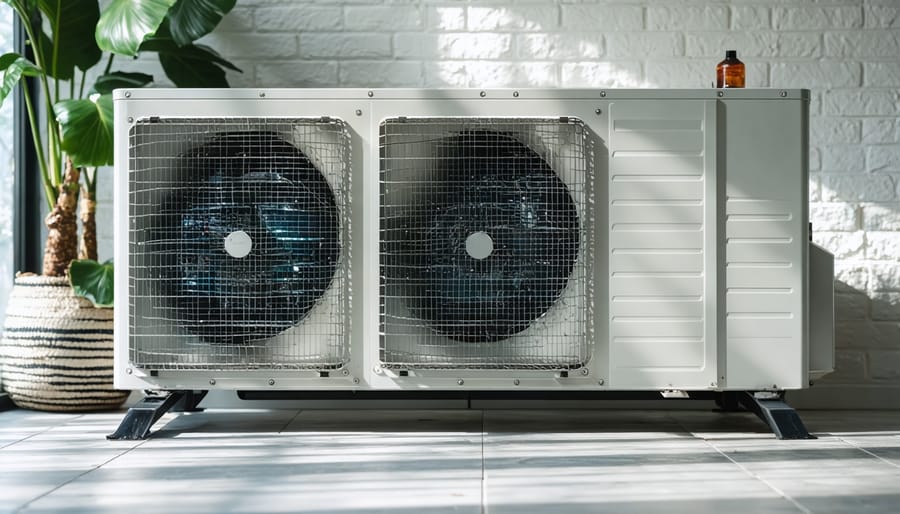
Heat pumps are game-changers in the Northeast, functioning as both heating and cooling systems. Cold-climate models like the Mitsubishi Hyper-Heat or Carrier Infinity can operate efficiently down to -13°F. With NYSERDA incentives covering up to $4,000 per installation, typical payback periods run 5-8 years. Even better, these systems can reduce heating costs by 30-50% compared to traditional oil or electric baseboard heat.
If you’re sticking with traditional heating, high-efficiency furnaces rated at 95% AFUE or higher make financial sense. Brands like Lennox and Trane offer models that qualify for utility rebates and federal tax credits, often paying for themselves within 7-10 years through reduced fuel consumption.
Don’t overlook smart thermostats. The Ecobee SmartThermostat or Google Nest Learning Thermostat costs under $250 but typically saves 10-15% on heating and cooling bills. With payback periods under two years, this is your quickest win.
Many homeowners bundle these upgrades with property refinancing, rolling costs into mortgage payments at favorable rates while immediately reducing monthly energy expenses. This strategy transforms what feels like a major expense into a cash-flow-positive investment.
Windows, Doors, and the Weatherization Trifecta
Not every drafty window needs replacement. Before committing to a $15,000 window overhaul, start with the weatherization trifecta: caulking, weatherstripping, and window film. These three interventions cost under $200 for a typical home and can reduce heating costs by 10-15%. It’s the financial equivalent of getting a 50% return in the first year alone.
That said, replacement makes sense when you’re dealing with single-pane windows in New York’s climate, visible rot or damage, or condensation between double panes. For New York’s Zone 5 and 6 climate designations, Energy Star requirements specify a U-factor of 0.27 or less and a Solar Heat Gain Coefficient appropriate for your heating-dominant climate.
Here’s the cost-benefit reality: quality Energy Star windows run $400-800 per window installed. With NYSERDA rebates covering $200-300 per window and potential utility incentives, your actual cost drops significantly. Factor in annual heating savings of $300-500 for a whole-house replacement, and you’re looking at a 7-12 year payback period. More importantly for homeowners planning to sell, new windows deliver approximately 70% return on investment at resale, making them one of the few upgrades that benefit both your monthly budget and your home’s market value simultaneously.
Financing Your Energy Efficiency Upgrades Without Breaking the Bank
Green Mortgages and Energy-Efficient Home Loans
New York homebuyers have several specialized financing options that help fund energy-efficient improvements while purchasing or refinancing a property. The FHA Energy Efficient Mortgage (EEM) program allows borrowers to include the cost of energy upgrades—up to 5% of the property’s value—into their mortgage without increasing the down payment requirement. This means you can finance new insulation, high-efficiency HVAC systems, or Energy Star windows as part of your home purchase.
Conventional lenders also offer green mortgage products with competitive rates for homes meeting specific energy standards or buyers planning qualifying improvements. These loans often provide better terms than standard home loan options because energy-efficient homes present lower default risks due to reduced utility costs.
To qualify for FHA EEMs, properties must undergo an energy assessment by a certified Home Energy Rating System (HERS) rater, who identifies cost-effective improvements. Conventional green loans typically require minimum credit scores around 620-640 and debt-to-income ratios below 43%. Many New York credit unions and community banks also offer specialized green renovation loans with flexible terms tailored to local energy efficiency programs, making upgrades more accessible than traditional home equity borrowing.
PACE Financing and Other Creative Funding Options
When traditional loans don’t fit your budget, several creative financing options can help fund your energy efficiency upgrades in New York. While Property Assessed Clean Energy (PACE) financing—which allows you to repay improvement costs through property tax assessments—was once available for residential properties in NY, it’s currently only authorized for commercial properties. However, that doesn’t leave homeowners without alternatives.
Consider tapping into your home’s equity through a home equity line of credit (HELOC) or home equity loan. These options typically offer lower interest rates than personal loans since they’re secured by your property, and the interest may be tax-deductible when used for home improvements. Many New York homeowners find this particularly attractive for larger projects like complete HVAC replacements or whole-home insulation upgrades.
Another practical option is on-bill financing, offered by select utilities including NYSERDA partners. This allows you to finance energy improvements and repay them directly through your monthly utility bill, creating a streamlined payment process. The key advantage? Your energy savings often offset the monthly payment, creating immediate cash flow benefits. Some programs even offer zero-percent or low-interest financing for qualifying improvements, making this an especially cost-effective choice for budget-conscious homeowners looking to enhance their property’s efficiency without upfront capital.
How Energy Efficiency Affects Your Homeowners Insurance
Many New York homeowners don’t realize that energy efficiency upgrades can actually influence their insurance premiums and coverage options. As insurers increasingly recognize the risk-reducing benefits of modern, efficient homes, there’s a growing opportunity to leverage your green investments for insurance advantages.
When you install energy-efficient systems, you’re essentially making your home more resilient. For instance, a new ENERGY STAR-rated HVAC system is less likely to malfunction and cause water damage, while upgraded insulation can help prevent ice dams that lead to costly roof damage. Some insurance carriers now offer premium discounts ranging from 5% to 20% for homes with specific green certifications or upgrades like impact-resistant roofing, smart home monitoring systems, or whole-home generators paired with solar panels.
However, it’s essential to update your homeowners insurance coverage when installing renewable energy systems. Standard policies may not fully cover solar panels, battery storage units, or geothermal systems at replacement cost. You’ll likely need to add specific endorsements or increase your dwelling coverage limits to protect these investments adequately.
Before making major energy upgrades, contact your insurance agent to discuss potential premium reductions and ensure proper coverage. Document all improvements with receipts and certifications, as these records prove your investment and help substantiate claims. In New York’s competitive insurance market, being proactive about coverage for energy-efficient features can save you money while protecting your home’s enhanced value.
Your 90-Day Action Plan for New Homeowners
Congratulations on your new New York home! Now let’s turn it into an energy-efficient powerhouse. Here’s your practical 90-day roadmap to start saving money while boosting your property’s value.
Days 1-30: Assessment and Discovery
Your first month is all about understanding what you’re working with. Schedule a Home Performance with ENERGY STAR assessment through NYSERDA—many contractors offer free or low-cost evaluations. While waiting for your appointment, conduct your own walkthrough. Check for drafty windows, inspect insulation in the attic, and note your current utility bills as a baseline. This is also the perfect time to research available rebates and financing options. Create a spreadsheet tracking incentive programs you qualify for, including Con Edison rebates if you’re in NYC or National Grid programs for upstate properties. Don’t forget to review your homeowner’s insurance policy—some insurers offer discounts for energy-efficient upgrades.
Days 30-60: Prioritize and Apply
Armed with your assessment results, prioritize improvements based on ROI and available funding. Air sealing and insulation typically offer the fastest payback, followed by heating system upgrades. Submit applications for EmPower+ if you qualify based on income, or apply for NYSERDA financing for market-rate programs. Request quotes from at least three participating contractors for your top-priority projects. During this phase, tackle no-cost improvements like adjusting thermostat settings and sealing obvious air leaks with caulk.
Days 60-90: Execute and Track
Begin your first major project, whether it’s insulation, HVAC upgrades, or window replacement. Document everything—photos, receipts, and contractor certifications—for rebate claims and potential tax credits. Set up a system to monitor your energy usage monthly, watching for immediate savings from completed improvements.
Investing in energy efficiency isn’t just about lowering your monthly utility bills—it’s a strategic financial decision that pays dividends for years to come. New York homeowners who prioritize energy upgrades see an average increase in property value of 3-5%, making these improvements one of the smartest real estate investments you can make. Beyond the dollars and cents, you’re contributing to New York’s ambitious climate goals while creating a healthier, more comfortable living environment for your family.
The beauty of energy efficiency is that you don’t need to overhaul your entire home overnight. Starting with simple weatherization measures or switching to LED lighting can reduce your energy consumption by 10-20% immediately. These small victories build momentum and demonstrate real savings, making it easier to plan larger investments like HVAC upgrades or solar installations down the road.
Whether you’re a first-time homebuyer or a seasoned property owner, the path to a more efficient home starts with understanding your current energy usage. Schedule a professional home energy audit today—many are available at low or no cost through New York utility programs—and discover exactly where your home is losing money. Armed with this information and the financing options available to you, there’s never been a better time to make energy efficiency work for your wallet and the planet.