
Property insurance data sits scattered across decades of paper files, outdated software systems, and disconnected digital platforms—a fragmented landscape that costs real estate professionals thousands in missed opportunities and inefficient risk assessment. Artificial intelligence is transforming this chaos into clarity, analyzing millions of property records, claim histories, and market trends in seconds to surface insights that would take human analysts months to uncover.
The shift from manual data review to AI-driven analysis represents more than technological upgrade—it fundamentally changes how property investors evaluate risk, how homeowners secure coverage, and how real estate professionals advise clients. Machine learning algorithms now detect patterns in weather damage, neighborhood risk factors, and property characteristics that traditional underwriting methods overlook entirely. These systems consolidate information from building permits, previous claims, geological surveys, and local crime statistics to generate comprehensive risk profiles that were previously impossible to compile.
For real estate professionals navigating today’s complex property market, understanding AI-driven insights isn’t optional—it’s essential competitive intelligence. Property buyers who leverage these tools discover coverage gaps before closing, investors identify undervalued properties with favorable insurance profiles, and homeowners secure more accurate premiums based on actual risk rather than outdated zip code averages. The technology doesn’t replace human expertise; it amplifies it, providing the data foundation for smarter decisions about property acquisition, portfolio management, and insurance strategy. This article explores how AI consolidates insurance data and what it means for your next real estate transaction.
The Data Chaos Problem in Insurance Today
Picture this: A property owner files a water damage claim, but the insurance company can’t immediately access the home’s renovation history stored in one system, the original policy details locked in a legacy database, and the property inspection report sitting in a third-party vendor’s portal. Meanwhile, paper documents from a previous claim five years ago are buried in an off-site storage facility. The result? A claim that should take days stretches into weeks, leaving the homeowner frustrated and the adjuster scrambling to piece together a complete picture.
This scenario isn’t an outlier—it’s the reality of insurance data management today. The industry operates on a patchwork of information sources that rarely communicate with each other effectively. Legacy systems built decades ago house critical policyholder information but can’t integrate with modern platforms. Multiple databases track different aspects of coverage, claims history, and risk assessment, each speaking its own digital language. Paper records still exist in surprising volumes, creating gaps that digital searches simply can’t bridge.
For real estate professionals and property owners, this fragmentation has tangible consequences. When you’re closing on a property, delayed access to comprehensive insurance history can stall transactions. Coverage gaps emerge when insurers lack complete visibility into a property’s risk profile—missing that the “newly renovated” kitchen actually has outdated electrical work documented in an inaccessible system. Premium calculations become less accurate when underwriters can’t quickly access flood claim patterns, local building code compliance records, or property maintenance histories scattered across disconnected platforms.
The stakes are particularly high in property insurance, where timing matters. A commercial real estate investor needs immediate clarity on coverage terms before finalizing a multi-million dollar purchase. A homeowner facing storm damage needs rapid claim resolution to begin repairs. Yet the average insurance company juggles data from dozens of sources, creating inefficiencies that cascade down to everyone involved in property transactions and ownership.

What AI-Driven Insurance Data Consolidation Actually Means
The Three Pillars of AI Integration
Think of AI-driven insights like a three-legged stool—each pillar must be strong for the whole system to work effectively. Let’s break down how these components transform scattered insurance information into actionable intelligence for property professionals.
The first pillar, data collection and aggregation, acts as your digital filing cabinet on steroids. Instead of manually sorting through emails, PDFs, and paper documents from multiple insurance carriers, AI systems automatically gather policy information, claims history, coverage details, and premium data from various sources. This means no more hunting through folders or risking missed renewals—everything flows into one centralized hub without the headache.
Next comes intelligent processing and normalization, which is where the real magic happens. Different insurance companies format their documents differently, use varying terminology, and structure their policies in unique ways. AI algorithms translate this chaos into a standardized format, making apples-to-apples comparisons possible. For instance, what one carrier calls “dwelling coverage” might appear as “building insurance” from another provider. The system recognizes these equivalencies and organizes everything consistently.
The third pillar, real-time analytics and insights generation, transforms organized data into decision-making power. Rather than simply storing information, the AI analyzes patterns, identifies coverage gaps, flags potential savings opportunities, and alerts you to policy changes that could impact your properties or clients. Think of it as having a tireless insurance analyst working around the clock, spotting opportunities and risks you might otherwise miss while juggling a dozen other responsibilities.
From Raw Data to Actionable Intelligence
The transformation from raw data to actionable intelligence happens through sophisticated AI algorithms that process information at scales impossible for human analysis. When property insurance data flows in from multiple sources—claims records, weather patterns, property valuations, inspection reports—AI systems rapidly organize, cross-reference, and analyze this information to reveal hidden insights.
Machine learning models excel at pattern recognition, identifying correlations between seemingly unrelated factors. For instance, AI might connect specific roof materials with claim frequency during certain weather events, or detect geographic patterns in property damage that suggest emerging risks. These systems work continuously, scanning millions of data points to flag anomalies that warrant attention. This same technology powers AI fraud detection, identifying suspicious claim patterns before they escalate.
For real estate professionals and property owners, this means receiving specific, personalized recommendations rather than generic insurance advice. AI can predict which properties face elevated risks, suggest preventive measures that reduce premiums, and identify coverage gaps you didn’t know existed. The system essentially becomes your data analyst, risk assessor, and financial advisor rolled into one intelligent platform.
Real-World Benefits That Actually Impact Your Bottom Line
Faster, More Accurate Property Risk Assessments
When insurers consolidate data from multiple sources—property records, environmental databases, claims history, and even satellite imagery—they gain a comprehensive view of risk that was previously impossible to achieve. This holistic approach transforms how properties are evaluated and priced.
Traditional property insurance assessments often relied on limited data points like basic property characteristics and neighborhood statistics. Today’s AI-powered platforms analyze hundreds of variables simultaneously, from flood zone proximity and wildfire risk to construction quality and maintenance history. AI risk prediction models can identify patterns humans might miss, such as correlations between specific building materials and claim frequency.
For homeowners and real estate investors, this means fairer, more personalized premiums. A well-maintained property in a supposedly high-risk area might qualify for lower rates than a neglected home in a traditionally safe neighborhood. Insurers can now differentiate between properties on the same street based on actual risk factors rather than broad generalizations.
The result? Property owners who invest in risk mitigation—like storm shutters, upgraded roofing, or smart home security systems—see those improvements reflected in their premiums. Investors can make more informed purchase decisions, understanding true insurance costs before closing. This data-driven precision creates a more equitable insurance marketplace where premiums accurately reflect individual property risk.
Claims Processing That Doesn’t Take Forever
Nobody wants to wait weeks or months for an insurance claim to process, especially when you’re dealing with property damage that needs immediate attention. Traditional claims processing involves mountains of paperwork, multiple phone calls, and manual verification across disconnected systems—a process that can stretch 30 to 45 days for even straightforward claims.
AI-powered claims processing changes this equation dramatically. When insurers consolidate data from inspection reports, property records, weather databases, and contractor estimates into unified AI systems, verification happens in real-time rather than real-slow. What previously took weeks now takes days—sometimes hours.
Consider a water damage claim at a rental property. Instead of waiting for adjusters to manually cross-reference maintenance records, previous claims, and repair estimates, AI systems instantly pull relevant data, flag inconsistencies, and calculate appropriate payouts. Some insurers report reducing average processing times from 30 days to just 5-7 days for standard claims.
For property owners, this acceleration means faster access to funds for repairs, reduced vacancy periods for rental properties, and minimized secondary damage from delayed fixes. The technology doesn’t just speed things up—it fundamentally transforms how quickly you can recover from property incidents and get back to business.
Personalized Coverage Options Based on Real Data
Gone are the days of one-size-fits-all insurance policies. AI-driven insights are transforming how insurers evaluate risk and price coverage, creating opportunities for truly personalized protection that reflects your property’s unique characteristics.
Traditional insurance models rely on broad demographic categories and zip codes to determine premiums. While straightforward, this approach often means lower-risk properties subsidize higher-risk ones within the same rating group. AI changes this dynamic entirely by analyzing granular data points specific to your property—from construction materials and roof age to proximity to fire stations and historical weather patterns in your microclimate.
Through predictive insurance analytics, insurers can now assess individual property profiles with remarkable precision. If you’ve invested in impact-resistant windows, upgraded electrical systems, or installed smart home monitoring devices, AI models recognize these risk-reducing features and adjust pricing accordingly. This data-driven personalization means properties with lower actual risk profiles often qualify for reduced premiums that traditional models wouldn’t capture.
For real estate professionals, this shift presents a competitive advantage. Properties with documented upgrades and lower risk factors become more attractive to buyers seeking insurance savings. Homeowners benefit from fairer pricing that rewards proactive property maintenance and smart investments in protective features, creating a more equitable insurance marketplace driven by actual risk rather than broad assumptions.
How This Technology Affects Your Property Insurance Right Now
Smart Underwriting for Home Purchases
The homebuying process has traditionally been a waiting game, especially when it comes to securing mortgage insurance and homeowner’s coverage. But AI is changing that equation by consolidating mountains of data into actionable insights that speed up underwriting decisions while improving accuracy.
Here’s what’s happening behind the scenes: AI systems now pull together property records, claim histories, local environmental data, credit information, and even satellite imagery to create comprehensive risk profiles in minutes rather than days. This means insurance companies can make faster, more informed decisions about mortgage insurance requirements and premium pricing.
For homebuyers, this translates to several practical benefits. First, you’re more likely to receive competitive quotes that accurately reflect your specific situation rather than broad demographic categories. If you’re purchasing a well-maintained home in a low-risk area, AI-driven underwriting will catch those positive signals and potentially lower your insurance costs accordingly.
Real estate professionals are noticing the impact too. Deals that once stalled waiting for insurance approvals are now moving forward more quickly. The AI systems can identify potential issues early in the process, allowing buyers to address concerns before they become deal-breakers. For instance, if the technology flags outdated electrical systems or roof concerns, buyers can negotiate repairs upfront or adjust their insurance expectations.
This consolidated approach also reduces the paperwork burden. Instead of manually gathering documents from multiple sources, AI platforms automatically verify information, creating a smoother experience for everyone involved in the transaction.
Dynamic Pricing and Risk Monitoring
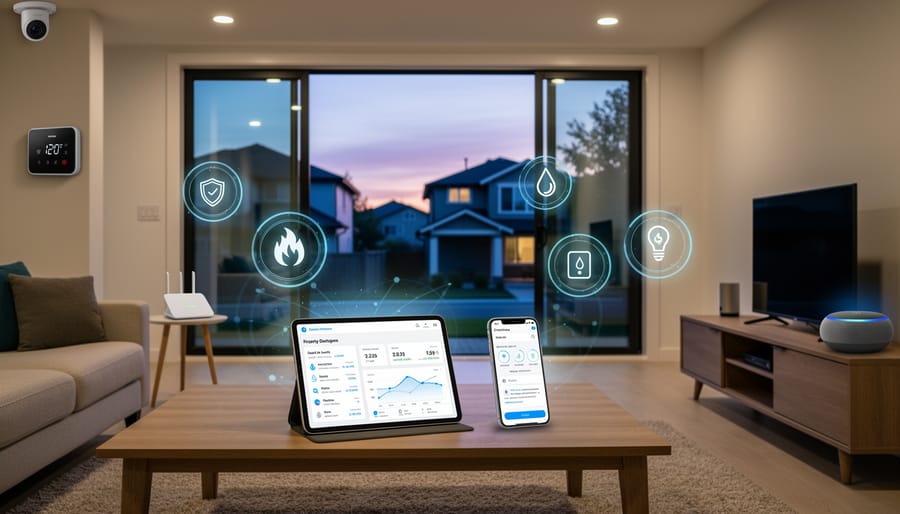
The insurance industry is shifting from static annual premiums to dynamic pricing structures that respond to real-time property conditions and owner behaviors. AI-driven pricing models now analyze continuous data streams from smart home devices, maintenance records, and environmental sensors to calculate premiums that accurately reflect current risk levels.
Think of it like usage-based car insurance, but for your property. IoT devices such as water leak detectors, smart smoke alarms, and security systems feed real-time information to insurers. If your home monitoring system shows you’ve addressed a potential plumbing issue promptly or maintained your HVAC system on schedule, your premium could decrease. Conversely, delayed maintenance or ignored alerts might signal increased risk.
This approach benefits property owners who actively maintain their investments. Property managers can leverage maintenance tracking systems that automatically share compliance data with insurers, potentially reducing costs across entire portfolios. For homebuyers, properties equipped with smart monitoring technology may qualify for immediate premium discounts.
The technology also enables more responsive risk monitoring. Instead of waiting for annual renewals to adjust rates, insurers can provide monthly updates reflecting seasonal risks or recent improvements. This transparency helps property owners understand exactly how their actions influence costs, creating incentives for proactive maintenance while ensuring premiums align with actual exposure rather than broad demographic assumptions.
What Real Estate Professionals Need to Know
As a real estate professional, understanding AI-driven insurance insights isn’t just about staying current—it’s about protecting your clients’ investments and differentiating your services in an increasingly competitive market.
Start by educating yourself on how AI consolidates insurance data to create more accurate risk assessments. When you understand that insurance carriers now analyze everything from local crime statistics to climate patterns and property maintenance history, you can better prepare clients for what insurers will examine during underwriting. This knowledge positions you as a trusted advisor who goes beyond simply showing properties.
Use AI insights proactively during property evaluations. Before listing a home or presenting one to buyers, review factors that AI algorithms prioritize: roof age, electrical system updates, distance from fire stations, flood zone classifications, and neighborhood loss histories. Address potential red flags upfront—recommend pre-listing inspections or highlight recent upgrades that could lower insurance premiums. This approach helps buyers budget accurately and prevents deals from falling through due to insurance sticker shock.
For property managers and investors, leverage AI-driven data to make smarter portfolio decisions. Properties in areas flagged as high-risk by AI models may face rising insurance costs that erode profit margins. Conversely, understanding which property improvements most significantly reduce insurance premiums—like impact-resistant roofing or smart home monitoring systems—allows you to prioritize renovations that deliver measurable returns.
Build relationships with insurance agents who use advanced data analytics platforms. These partnerships enable you to provide clients with preliminary insurance estimates earlier in the transaction process, reducing surprises at closing. Some forward-thinking agents even offer joint consultations where property features and insurance implications are discussed simultaneously.
Finally, incorporate insurance cost projections into your comparative market analyses and investment presentations. As AI makes insurance pricing more dynamic and location-specific, buyers increasingly view insurance as a significant ongoing expense—not an afterthought. Real estate professionals who can discuss both mortgage payments and realistic insurance costs demonstrate comprehensive market expertise that builds client confidence and loyalty.

The insurance landscape is experiencing a technological renaissance, and AI-driven insights stand at the forefront of this transformation. For property owners and real estate professionals, understanding and embracing these innovations isn’t just about staying current—it’s about accessing better coverage, fairer pricing, and more responsive service that reflects the true nature of your assets.
Throughout this exploration, we’ve seen how consolidated data powered by artificial intelligence creates a more complete picture of property risk, moving beyond outdated assumptions to evidence-based assessments. This shift benefits everyone involved: homeowners gain access to more personalized policies that reward proactive maintenance and risk reduction, while real estate professionals can better advise clients on insurance considerations that impact property values and investment decisions.
The key takeaway is simple: don’t accept one-size-fits-all insurance solutions when data-driven alternatives may offer superior value. Ask your insurer direct questions about how they leverage technology in underwriting, what data sources inform your premium calculations, and whether your policy reflects recent property improvements or risk mitigation efforts you’ve undertaken.
As we look ahead, the integration of AI in insurance data consolidation will only deepen. Emerging technologies like Internet of Things sensors, predictive analytics, and real-time risk monitoring promise even more sophisticated approaches to property protection. The insurers who embrace these tools—and the property owners who demand them—will lead the way in creating a more efficient, equitable, and responsive insurance ecosystem for years to come.