
Real estate transactions have entered the digital age, but with convenience comes new vulnerability. When you transfer thousands—or millions—of dollars through electronic signatures and online payment platforms, you’re exposed to cyber fraud, wire transfer scams, and digital impersonation schemes that traditional title insurance never anticipated covering.
E-sign insurance bridges this critical protection gap. It’s specialized coverage designed specifically for electronic real estate transactions, safeguarding against risks like business email compromise, where fraudsters intercept closing instructions and redirect funds to criminal accounts. In 2023 alone, the FBI reported over $396 million in losses from real estate wire fraud—losses that conventional policies typically exclude.
This insurance protects the digital handshake: electronic signatures, digital escrow deposits, wire transfers, and online document exchanges that now form the backbone of modern closings. Whether you’re a title company processing dozens of transactions monthly or a homebuyer navigating your first digital closing, understanding this coverage determines whether a cyberattack means a temporary inconvenience or a catastrophic financial loss.
The stakes are straightforward. Traditional title insurance covers ownership disputes and lien issues. E-sign insurance covers the moment your client clicks “send payment” or signs documents electronically. As real estate transactions migrate entirely online—accelerated by remote work trends and efficiency demands—this isn’t emerging technology protection. It’s essential infrastructure for anyone handling digital closings, protecting the precise moment when transactions are most vulnerable and traditional coverage falls silent.
What E-Sign Insurance Actually Covers (And Why Your Digital Transactions Need It)
E-sign insurance is a specialized coverage designed specifically to protect digital transactions involving electronic signatures, particularly within digital escrow platforms and payment processing systems. Think of it as a safety net that catches the unique risks that emerge when real estate deals, mortgage documents, and financial agreements move from paper to pixels.
Unlike broader cyber insurance coverage that addresses general data breaches and network security, e-sign insurance zeroes in on three critical areas: authentication integrity, document tampering, and transaction validity. This distinction matters because a standard cyber policy might cover the aftermath of a hacked server, but it won’t necessarily address disputes arising from someone claiming they never signed a purchase agreement electronically.
Similarly, traditional E&O coverage protects professionals against negligence claims, but e-sign insurance specifically covers scenarios where electronic signature failures create legal or financial exposure. For example, if a closing document’s digital signature certificate expires before recording, or if authentication logs disappear during a system migration, e-sign insurance steps in to address the resulting complications.
At its core, this coverage protects against four main vulnerabilities in digital transactions. First, it covers authentication failures where identity verification systems malfunction or get compromised. Second, it protects document integrity, ensuring that if files are altered or corrupted during transmission, you’re covered for the resulting disputes. Third, it addresses non-repudiation issues when parties claim they didn’t authorize a signature. Finally, it covers technical failures in the electronic signature infrastructure itself, from timestamp errors to encryption breakdowns.
For real estate professionals managing multiple transactions through digital escrow platforms, this protection becomes essential. When a buyer claims their electronic signature on a time-sensitive contract was forged, or when a title company faces a lawsuit because document metadata was compromised, e-sign insurance provides both legal defense and financial protection. It bridges the gap between traditional insurance products and the digital-first reality of modern real estate transactions, offering peace of mind as the industry continues its rapid technological evolution.

The Hidden Vulnerabilities in Your Digital Real Estate Transactions
When Electronic Signatures Get Challenged
Despite the legal framework supporting electronic signatures, disputes still arise—and when they do, the financial stakes can be substantial. A buyer might claim they never signed a purchase agreement, or a seller could dispute electronically executed listing documents after market conditions shift unfavorably. These signature repudiation scenarios often emerge during contentious transactions where parties experience buyer’s remorse or seek leverage in negotiations.
The most common challenge scenarios include family members contesting estate sales signed electronically by elderly relatives, business partners disputing commercial property agreements, and identity theft cases where someone genuinely wasn’t the signer. Each dispute can trigger legal fees ranging from $10,000 to $50,000, plus potential deal collapse costs including lost deposits, price adjustments, and opportunity costs from extended timelines. For real estate professionals, a single challenged signature can mean months of litigation, damaged reputation, and financial liability—making protection through e-sign insurance increasingly essential in today’s digital transaction environment.
Payment Rail Security Gaps That Cost You Money
Digital payment processing during escrow creates financial exposure that many real estate professionals overlook until something goes wrong. The journey from contract signing to fund disbursement involves multiple touchpoints where money can disappear or get delayed, and understanding these vulnerabilities is essential for protecting your transactions.
Wire fraud remains the most costly threat, with criminals intercepting legitimate escrow instructions and substituting fraudulent banking details. According to the FBI, real estate wire fraud resulted in over $350 million in losses during 2022 alone. The gap typically occurs between e-signature completion and fund transfer—a window where communication shifts from secure platforms to email, creating opportunities for interception.
Payment rail vulnerabilities extend beyond fraud to include processing errors, failed ACH transactions, and delayed wire transfers that jeopardize closing deadlines. When earnest money deposits don’t arrive on time or down payments get routed incorrectly, deals fall apart and parties face financial penalties. Title companies and agents often bear liability for these failures, even when the breakdown occurs at the banking level.
The challenge intensifies because traditional insurance policies weren’t designed for digital-first transactions. Standard errors and omissions coverage may exclude losses from electronic payment failures, leaving you financially exposed during the riskiest phase of the transaction.
Document Integrity Issues That Derail Closings
Digital document integrity represents one of the most overlooked risks in electronic real estate transactions. When contracts, disclosures, or title documents are transmitted through digital escrow platforms, they’re vulnerable to corruption, unauthorized alterations, or even malicious tampering. A single corrupted file during transmission can invalidate signatures, making previously executed agreements legally questionable. Even more concerning, sophisticated actors could potentially modify payment instructions or property details between signing and closing. E-sign insurance specifically addresses these vulnerabilities by covering losses resulting from document integrity failures. This protection becomes crucial when you consider that a tampered wire transfer instruction could redirect hundreds of thousands of dollars to fraudulent accounts. The insurance verifies that documents received match documents sent, using cryptographic hashing and blockchain verification in many cases. For real estate professionals managing multiple transactions simultaneously, this coverage provides peace of mind that digital corruption won’t unravel deals at the eleventh hour, protecting both their commission and their professional reputation.
How E-Sign Insurance Works Within Digital Escrow Systems
The Technology Behind the Protection
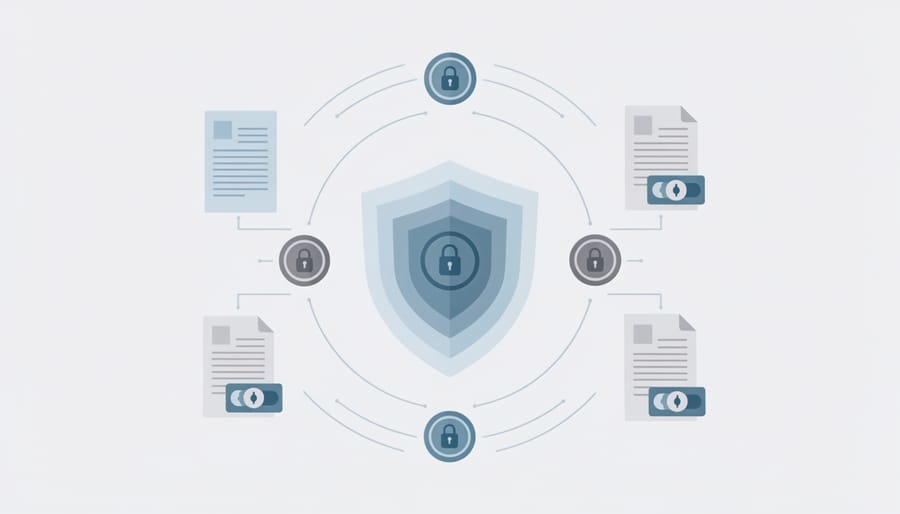
Behind every e-signature on your insurance documents lies a sophisticated security infrastructure designed to protect your real estate transaction from fraud and tampering. When you click that “sign here” button, multiple layers of technology spring into action to verify, record, and safeguard your agreement.
Authentication protocols form the first line of defense. These systems verify your identity through multi-factor authentication, combining something you know (password), something you have (phone or email), and sometimes something you are (biometric data). Insurance companies require this verification to ensure the person signing is actually authorized to do so—critical when dealing with six or seven-figure property transactions.
Next comes blockchain verification, which creates an immutable record of your signature and document. Think of blockchain as a digital ledger that cannot be altered after the fact. Each signature gets timestamped and encrypted, then distributed across multiple secure servers. This means if anyone tries to claim a document was modified or forged, the blockchain record provides indisputable proof of what was actually signed and when.
Finally, comprehensive audit trails track every interaction with your document—who viewed it, when changes occurred, and from which IP address. These digital breadcrumbs become invaluable if disputes arise, giving insurers clear evidence to process claims quickly. This technology stack transforms what once required notaries and file cabinets into a secure, verifiable digital process that actually enhances protection for property transactions.
What Happens When Something Goes Wrong
When a digital transaction goes sideways—whether through fraud, system failure, or unauthorized access—knowing the claims process can save you considerable stress and money. Here’s what to expect when filing an e-sign insurance claim.
Start by immediately notifying your insurance provider, typically within 24 to 72 hours of discovering the issue. Most carriers offer dedicated fraud hotlines and online portals specifically for digital transaction claims. You’ll need to provide documentation including the electronic signatures in question, transaction records, IP addresses, timestamps, and any correspondence related to the disputed transaction.
The investigation phase usually kicks off within 48 hours. Your insurer will assign a claims adjuster who specializes in digital transactions to review the electronic audit trail. They’ll examine authentication logs, verify signature legitimacy, and assess whether proper security protocols were followed. This forensic review typically takes 10 to 30 business days, depending on complexity. For straightforward cases like clear system failures, resolution comes faster. More complex fraud investigations involving multiple parties may extend to 45 days.
During this period, expect regular communication from your adjuster. Many policies include provisions for interim financial relief if the claim involves substantial funds, preventing cash flow disruptions to your real estate transaction.
Once the investigation concludes, approved claims typically see compensation within 5 to 10 business days. Coverage amounts depend on your policy limits and deductible, but most e-sign insurance policies cover direct financial losses, legal fees for dispute resolution, and costs associated with re-executing legitimate transactions. Keep detailed records throughout—documentation is your strongest ally in securing full compensation.
Who Really Needs E-Sign Insurance in Real Estate Transactions
E-sign insurance isn’t a one-size-fits-all product, and understanding who truly benefits from this coverage helps clarify whether it’s worth the investment for your specific situation.
Real estate agents and brokers face direct exposure when facilitating electronic transactions. Consider an agent who guides clients through digital contract signatures only to discover later that a technical glitch prevented proper document execution. Without coverage, that agent could face liability claims when the deal falls apart. Brokerages managing dozens of transactions simultaneously multiply this risk exponentially, making e-sign insurance a smart business protection strategy.
Title companies and escrow officers occupy particularly vulnerable positions in the digital transaction chain. These professionals handle sensitive financial documents and coordinate multiple electronic signatures from various parties. If a cyberattack compromises their e-signature platform during a closing, resulting in fraudulent fund transfers, e-sign insurance can cover both the financial losses and legal defense costs.
Lenders increasingly rely on digital documentation for loan applications, approvals, and closing packages. A mortgage lender processing hundreds of loans monthly faces substantial risk if electronic signature records are questioned or if system failures create gaps in loan documentation. Insurance coverage protects against scenarios where disputed e-signatures delay foreclosures or create regulatory compliance issues.
Buyers and sellers engaging in high-value transactions should also consider this protection, especially when purchasing luxury properties or investment real estate. Imagine a buyer who electronically signs purchase documents worth millions, only to face claims that the digital signature wasn’t legally binding due to platform authentication failures. Individual coverage provides peace of mind during these significant financial commitments.
Even property investors managing multiple simultaneous transactions benefit from coverage, as they’re juggling numerous electronic contracts, addendums, and closing documents. The more frequently you rely on electronic signatures for real estate transactions, the more exposure you accumulate, making insurance coverage increasingly valuable as your transaction volume grows.
Cost vs. Risk: The Real Math Behind E-Sign Insurance for Property Deals
Let’s talk real numbers. E-sign insurance for property transactions typically operates on a tiered pricing model based on transaction value. For a $300,000 residential purchase, expect premiums ranging from $150 to $500 annually, depending on coverage limits and your risk profile. Commercial deals over $1 million might see premiums between $800 and $2,500, reflecting the higher stakes involved.
What drives these costs? Insurers evaluate several factors: transaction frequency (closing one home yearly versus managing dozens monthly), your digital security infrastructure, authentication methods employed, and claims history within your organization. Title companies and brokerages processing high volumes often qualify for better rates through economies of scale, sometimes paying as little as $75 per transaction when bundled into annual policies.
Now consider the flip side. Without coverage, a single compromised digital signature could expose you to catastrophic losses. Picture this scenario: A buyer’s email gets hacked three days before closing on a $450,000 property. The fraudster intercepts wire instructions, rerouting $90,000 in earnest money to an offshore account. Without e-sign insurance, that loss falls squarely on whoever failed to verify the communication—potentially you.
The math becomes crystal clear when you compare a $400 annual premium against potential six-figure exposures. Even in a modest $200,000 transaction, if fraud diverts just the 3% down payment, you’re facing a $6,000 loss—fifteen times your annual insurance cost.
For real estate professionals closing multiple deals monthly, the calculation shifts further. Process 24 transactions annually at $400 for coverage, and you’re paying roughly $17 per deal for protection against losses that average $47,000 according to FBI Internet Crime Complaint Center data. That’s a risk-to-premium ratio exceeding 2,700 to 1.
Bottom line: e-sign insurance isn’t an expense—it’s a leverage play where minimal upfront costs shield you from deal-killing financial disasters.

Choosing the Right E-Sign Insurance Provider for Your Escrow Platform
Selecting the right e-sign insurance provider for your escrow platform requires careful evaluation beyond simply comparing premium costs. The financial security of your transactions depends on partnering with a carrier that understands the unique vulnerabilities of digital real estate workflows.
Start by examining coverage limits closely. A policy should provide sufficient protection relative to your typical transaction values. For residential real estate professionals, consider policies offering at least $1 million in coverage per incident, with aggregate limits reaching $5 million or higher for high-volume operations. Commercial transactions naturally demand substantially higher thresholds.
Pay particular attention to exclusions that could leave you exposed. Many policies exclude coverage for certain cyber incidents, insider fraud, or losses resulting from unencrypted transmissions. Request a comprehensive exclusions list and ask providers to explain each limitation in plain language. Watch for exclusions related to social engineering fraud—one of the most common threats in digital escrow environments.
Platform compatibility matters more than many realize. Your insurance should work seamlessly with your existing e-signature and escrow technology stack. Ask potential providers whether they’ve insured similar platforms and request case studies demonstrating their experience with digital transaction environments. Some carriers specialize in fintech and proptech applications, offering more relevant coverage than traditional E&O policies.
Review the provider’s claims history and response times. A carrier with extensive experience handling digital transaction disputes will process claims more efficiently than one treating e-sign incidents as novel situations. Request data on average claims processing times and settlement rates.
Before purchasing, ask these critical questions: Does the policy cover both fraud and technical failures? What documentation is required to file a claim? Are legal defense costs included in coverage limits or provided separately? Does coverage extend to third-party vendors in your transaction chain? What geographic limitations apply?
Finally, verify that the provider offers risk management resources, including security audits and compliance guidance. The best insurance partnerships extend beyond financial protection to include proactive risk mitigation support that strengthens your entire digital infrastructure.
The digital transformation of real estate transactions isn’t slowing down—it’s accelerating. As blockchain-based title transfers, AI-powered verification systems, and instant payment rails become standard practice, the attack surface for cybercriminals expands exponentially. Forward-thinking professionals recognize that e-sign insurance isn’t just about protecting today’s transactions; it’s about future-proofing your business against threats we haven’t even encountered yet.
The evolution of digital transaction security will increasingly demand layered protection strategies. We’re already seeing insurance carriers incorporate coverage for deepfake fraud, where criminals use AI-generated video to impersonate parties in real estate deals. Tomorrow’s policies will likely address quantum computing threats to encryption and liability from automated smart contract failures. The question isn’t whether you’ll need this coverage—it’s whether you’ll secure it before a claim-triggering event occurs.
Here’s the reality: insurance companies evaluate risk retrospectively. Once your firm experiences a breach or fraud incident, obtaining affordable coverage becomes significantly more challenging. Carriers view you as high-risk, premiums skyrocket, and certain protections may become unavailable altogether.
Take action today by conducting a comprehensive vulnerability assessment of your digital transaction processes. Map every touchpoint where electronic signatures occur, identify weak authentication protocols, and evaluate your current insurance policies for coverage gaps. Schedule consultations with specialized insurance brokers who understand the nuanced risks of digital escrow environments. The investment you make in protection today could save your business—and your professional reputation—tomorrow.