
Your home office just changed everything about the 80% rule, and most remote workers don’t realize they’re dangerously underinsured.
The 80% rule requires you to insure your home for at least 80% of its replacement cost to receive full claim payouts. Fall below this threshold, and your insurance company will only cover a proportional amount of any loss, leaving you to cover the difference out of pocket. For a home with a $400,000 replacement cost, you need at least $320,000 in coverage to avoid penalties.
Remote work complicates this calculation significantly. That spare bedroom converted into an office, the upgraded electrical system for your equipment, the business-grade internet infrastructure, and the additional liability exposure from client meetings at home all increase your property’s replacement cost. Standard policies often exclude or limit coverage for business equipment and liability, meaning your actual coverage gap might be wider than you think.
The stakes are particularly high for real estate professionals working from home. Your MLS access equipment, transaction management systems, and client files represent both property value and liability exposure that traditional homeowners policies weren’t designed to cover. Understanding how the 80% rule interacts with your professional activities isn’t just about compliance, it’s about protecting the financial foundation of both your personal and professional life.
What Is the Home Insurance 80% Rule?
The Math Behind the Rule
Understanding the 80% rule’s math is crucial when filing a claim. Here’s how insurance companies calculate your payout when you fall short of the threshold.
The formula insurers use is straightforward: (Amount of Insurance Carried / Amount of Insurance Required) × Loss Amount = Claim Payment. The catch? If you don’t meet the 80% requirement, you’ll receive the lesser of this calculation or your actual loss minus the deductible.
Let’s break this down with a real example. Suppose your home’s replacement cost is $400,000. Under the 80% rule, you should carry at least $320,000 in coverage (80% of $400,000). But you only purchased $240,000 in coverage, thinking it would save money on premiums.
Now imagine a kitchen fire causes $100,000 in damage. Instead of receiving the full $100,000 (minus your deductible), here’s what happens: ($240,000 / $320,000) × $100,000 = $75,000. You’re underinsured by 25%, so the insurance company only pays 75% of your claim. That’s a $25,000 shortfall you’ll cover out-of-pocket.
This penalty becomes even more painful with larger losses. A $200,000 claim under the same scenario would only net you $150,000 in coverage, leaving you responsible for $50,000. For remote workers with expensive home office equipment and business assets, these gaps can be financially devastating, making proper coverage calculation essential.
Why Insurance Companies Use This Formula
Insurance companies implemented the 80% rule as a safeguard against underinsurance, which creates financial risk for both parties. Here’s the logic: when homeowners insure their property for less than its true replacement value, they’re essentially transferring too much risk to the insurer while paying reduced premiums. The 80% threshold represents the minimum coverage level insurers determined necessary to ensure homeowners maintain adequate protection and pay fair premiums for their coverage. This formula prevents situations where someone insures a $400,000 home for just $200,000, pays minimal premiums, then expects full reimbursement for a $50,000 kitchen fire. The coinsurance penalty encourages proper coverage by reducing claim payouts proportionally when homeowners fall below the 80% mark. For insurers, it’s about maintaining a balanced risk pool and preventing adverse selection, where only underinsured properties file claims. Understanding this industry perspective helps demystify what might seem like an arbitrary rule and reveals it as a practical mechanism protecting everyone’s interests in the insurance marketplace.
How Telecommuting Changes Your Home Insurance Equation
Increased Property Value From Home Office Upgrades
Remote work has transformed spare bedrooms and basements into professional workspaces, but these home office renovations often significantly increase your property’s replacement cost without homeowners realizing it. When you install built-in shelving, custom lighting, soundproofing, or upgrade electrical systems to support multiple monitors and equipment, you’re adding tangible value that your insurance policy should reflect.
Consider the financial reality: professional-grade internet infrastructure installations can cost $2,000-5,000, while converting a garage or attic into functional office space might add $15,000-30,000 to your home’s value. These improvements require more expensive materials and specialized labor to rebuild after a loss. Many telecommuters also invest in climate control upgrades, dedicated circuits, and enhanced security systems for their home offices.
The problem? Most homeowners never notify their insurance provider about these improvements, creating a dangerous gap between actual replacement costs and coverage limits. If you’ve made workspace upgrades totaling even $10,000, you could be underinsured by that amount, potentially violating the 80 percent rule and facing penalties during a claim.
Additional Business Equipment and Electronics
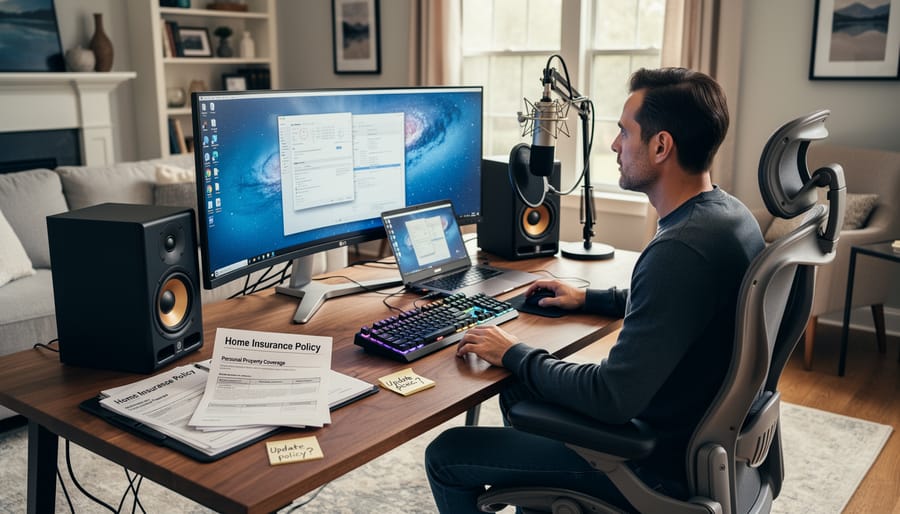
Your home office likely contains more value than you realize. That high-performance laptop, dual 27-inch monitors, ergonomic chair, sit-stand desk, and specialized equipment like cameras or microphones can collectively represent $5,000 to $15,000 in assets. Many remote workers also invest in business-specific electronics such as external hard drives, tablets, printers, and noise-canceling headphones that all contribute to your total home value.
Here’s where the 80 rule becomes particularly relevant: standard homeowners policies typically cap coverage for business equipment at just $2,500 or even less. If you’ve invested substantially in your workspace setup, this limitation means you’re automatically underinsured, regardless of how well you’ve calculated your overall home value. A $10,000 home office protected by only $2,500 in coverage creates a significant gap that could violate the 80% threshold required for full replacement cost benefits.
Beyond computers and monitors, consider specialized tools relevant to your profession. Graphic designers may own expensive tablets and color-calibrated monitors, while consultants might have presentation equipment and multiple devices. These professional assets deserve specific attention in your coverage calculations to ensure you’re meeting insurance requirements and protecting your livelihood.
Higher Risk Exposure and Claim Frequency
When you run a business from home, your property faces significantly higher risk exposure than traditional residences. The constant foot traffic from clients, delivery personnel dropping off supplies, and courier services can accelerate wear and tear on flooring, entryways, and common areas. This increased activity translates directly into higher replacement costs should disaster strike.
Consider the liability dimension too. A client who slips on your front steps or a delivery driver injured on your property could file claims against you. Standard homeowners policies typically exclude business-related claims, leaving you vulnerable if you haven’t properly disclosed your work-from-home setup to your insurer.
The claim frequency also tends to increase. Home-based professionals often invest in expensive equipment, from high-end computers to specialized machinery, increasing both the value at risk and the likelihood of filing claims. Electronic equipment failures, theft during business hours, and damage from increased electrical usage all contribute to this elevated risk profile.
For real estate professionals hosting client meetings, the exposure multiplies. Your home office isn’t just storage space—it’s an active business environment requiring appropriate coverage levels. This makes meeting the 80 percent replacement value threshold even more critical, as underinsurance could leave you covering significant losses out of pocket.
Are You Meeting the 80% Rule as a Remote Worker?
Calculating Your Home’s Current Replacement Cost
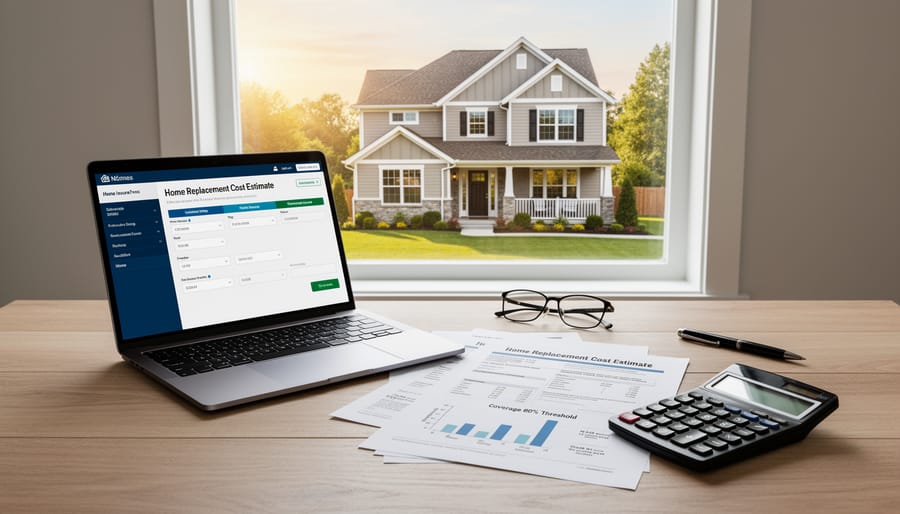
Determining your home’s accurate replacement cost requires more than just checking real estate listings. Start by requesting a professional replacement cost estimate from a certified appraiser who specializes in rebuilding costs, not market value. These professionals calculate per-square-foot construction costs specific to your region, factoring in current labor rates and material prices.
For telecommuters, this calculation demands extra attention to specialized spaces. Document your home office setup, including built-in shelving, electrical upgrades for multiple devices, enhanced HVAC systems for equipment cooling, and any structural modifications. Professional-grade internet infrastructure, dedicated circuits for computers and servers, and soundproofing improvements all increase replacement costs beyond standard residential construction.
Many insurance carriers offer online calculators, but these often underestimate tech-enhanced spaces. Request itemized quotes from contractors for rebuilding your workspace to current specifications. Include costs for permits, architectural fees, and temporary housing during reconstruction. Remember that replacement cost differs dramatically from your home’s purchase price or current market value.
Consider recent upgrades you’ve made to accommodate remote work. That converted garage office or finished basement workspace adds significant rebuilding expense. Smart home systems, security enhancements, and commercial-grade networking equipment represent additional investment that standard calculations frequently overlook. Update your estimate annually as you enhance your telecommuting environment.
Red Flags That You’re Underinsured
Your home office might be putting you at risk without you realizing it. Here are the warning signs that your coverage has likely dropped below the critical 80% threshold:
It’s been more than three years since your last professional appraisal. Construction costs and material prices fluctuate significantly, and your policy limits may no longer reflect current replacement values.
You’ve made substantial improvements without notifying your insurer. That finished basement, upgraded kitchen, or converted garage workspace all increase your home’s value but won’t be covered unless reported.
Your home office contains equipment worth more than $2,500. Standard policies typically cap business property coverage at minimal amounts, leaving you severely underinsured for your remote work setup.
You’ve purchased additional business equipment in the past year. New monitors, specialized furniture, servers, or professional tools quickly add up beyond your policy’s basic coverage.
Your neighborhood has experienced rapid appreciation. Rising property values in your area mean replacement costs have likely increased proportionally.
You haven’t reviewed your policy limits before disaster strikes. Regular reviews ensure your coverage keeps pace with both market changes and your evolving work-from-home needs. If any of these scenarios apply, it’s time to reassess your coverage immediately.
Business Use Exclusions That Catch Telecommuters Off Guard
When Your Home Office Isn’t Covered
Standard homeowners policies typically exclude business property, creating unexpected challenges for remote workers who assume their equipment is protected. That $3,000 laptop, dual monitors, ergonomic chair, and specialized software? They’re often not covered under your personal property limits when used primarily for business purposes.
Many telecommuters discover these working from home coverage gaps only after filing a claim. If your home office suffers fire or water damage, your insurer may deny coverage for business equipment, leaving you personally responsible for replacement costs. This becomes particularly problematic when calculating your 80% coverage threshold, as the actual value of business property in your home increases your total replacement cost but isn’t protected by your policy. The gap widens further if you store inventory, maintain client files, or run a business requiring specialized equipment, creating a dangerous mismatch between your home’s true value and your coverage.
The Gap Between Personal and Commercial Coverage
The line between personal and commercial use isn’t always clear-cut, and that ambiguity can create coverage headaches. Checking emails from your kitchen table occasionally? Most insurers consider that personal use. But when you’re hosting client meetings, storing inventory, or operating a full-time business from your home office, you’ve crossed into commercial territory.
Insurance companies typically evaluate several factors: the frequency of business activities, whether clients visit your property, if you’ve modified your home for business purposes, and the nature of your work. A freelance writer working solo faces different risk considerations than a hair stylist seeing clients or a contractor storing equipment.
Here’s what matters for the 80% rule: business equipment and improvements often have higher replacement values than standard household items. That high-end computer setup, specialized furniture, or renovated workspace increases your home’s insurable value. If you’re calculating replacement costs using only personal property values, you’re likely underinsured and violating the 80% threshold without realizing it.
Smart Coverage Strategies for Telecommuting Homeowners
Endorsements and Riders Worth Considering
Remote workers should carefully evaluate several policy enhancements that can bridge coverage gaps while helping maintain the 80% replacement cost threshold. A home business endorsement is essential if you’re running operations from home, as standard policies typically exclude business equipment and liability. These endorsements generally cost between $150-$300 annually and can protect computers, office furniture, and specialized equipment worth thousands.
Equipment floaters, also called scheduled personal property endorsements, provide broader coverage for high-value items like professional camera gear, musical instruments, or expensive tech setups. Unlike standard coverage with depreciation limits, floaters offer agreed-value protection without deductibles, ensuring you can replace items at current market prices. This becomes particularly important when calculating your home’s total insurable value under the 80% rule.
Consider increased replacement cost coverage options, sometimes called extended or guaranteed replacement cost coverage. These endorsements provide an additional cushion of 25-50% above your policy limit, offering crucial protection if reconstruction costs surge unexpectedly. While they add roughly 10-20% to your premium, they can prevent devastating out-of-pocket expenses and ensure you maintain adequate coverage as your home office investments grow. This extra protection helps you stay compliant with the 80% rule even when property values fluctuate.

When to Consider a Business Owner’s Policy (BOP)
Running a side business from your home office? Here’s where standard homeowners coverage typically reaches its limits. Most policies provide minimal coverage for business equipment—often just $2,500—and zero liability protection for business-related claims. If clients visit your home, if you store substantial inventory, or if your business equipment exceeds $10,000 in value, you’ve likely crossed into BOP territory.
A Business Owner’s Policy combines property and liability coverage specifically designed for home-based operations. This becomes especially relevant when calculating the 80% rule, as your insurer won’t cover business assets under a standard policy anyway. The good news? BOPs are surprisingly affordable, typically ranging from $500 to $1,500 annually for home-based businesses.
Consider coordinating both policies with the same insurer for potential bundling discounts and streamlined claims processing. Your agent can help determine whether your remote work qualifies as casual telecommuting or constitutes a business requiring separate coverage.
Annual Review Checklist for Remote Workers
Establish a systematic review process to maintain compliance as your home office evolves. Schedule an annual coverage assessment each January, ideally aligned with tax preparation when you’re already documenting work-from-home expenses. During this review, photograph and inventory all equipment additions, noting purchase dates and current replacement values. Calculate your home’s total replacement cost, including the appreciated value of office equipment, technology upgrades, and any structural improvements made for remote work.
Contact your insurance agent quarterly if you make significant purchases exceeding $2,000, as these can quickly push you below the 80% threshold. Keep a running spreadsheet of home office assets with purchase prices and estimated replacement costs. When policy renewal approaches, revisit the questions before buying coverage to ensure your policy still addresses remote work needs.
Set calendar reminders for mid-year check-ins, particularly after major life changes like home renovations or business expansion. This proactive approach prevents coverage gaps and ensures you’re never caught underinsured when filing a claim.
As a remote worker, falling below the 80% coverage threshold isn’t just a technical insurance detail—it’s a financial risk that could cost you thousands when you file a claim. The coinsurance penalty means you’ll shoulder a significant portion of replacement costs out-of-pocket, precisely when you can least afford it after experiencing property damage. Your home office equipment, increased liability exposure, and higher replacement costs due to business-use modifications make adequate coverage even more critical than for traditional homeowners.
Don’t wait until disaster strikes to discover you’re underinsured. Take action today by pulling out your current home insurance policy and reviewing your coverage limits. Compare that number against recent construction costs in your area—remember, you need to insure at least 80% of your home’s full replacement cost, not its market value. Schedule a conversation with your insurance agent specifically about your telecommuting situation. Discuss your home office setup, the value of your business equipment, increased liability risks from clients or delivery personnel visiting your property, and any structural modifications you’ve made to accommodate remote work. This proactive approach ensures you’re protected, compliant with the 80% rule, and won’t face unexpected coinsurance penalties when you need your coverage most.