
Document every single item of damage with photographs and video from multiple angles before cleanup crews arrive—this visual evidence becomes your strongest negotiation tool when insurers dispute property values or claim severity. Contact your insurance company within 24-48 hours of the disaster, even if you’re still assessing damages, as most policies contain strict notification deadlines that can void your coverage if missed.
Separate emergency repairs from permanent reconstruction by creating two distinct documentation trails—insurers typically reimburse temporary protective measures like tarping and boarding immediately, while structural repairs require adjuster approval and detailed estimates. Request a copy of your complete policy, including all endorsements and riders, then cross-reference your documented damages against covered perils to identify exactly what qualifies for reimbursement versus exclusions.
Secure at least three independent contractor estimates before accepting the adjuster’s initial settlement offer, as insurance companies routinely lowball first assessments by 20-40% based on outdated pricing databases and depreciation calculations that don’t reflect current market construction costs. Keep meticulous financial records of all disaster-related expenses—temporary housing, storage fees, meal costs, and cleaning supplies—since additional living expenses coverage often provides substantial reimbursement that policyholders overlook.
Challenge any valuation disputes by hiring a public adjuster or independent appraiser who works exclusively for you rather than the insurance company, especially for high-value properties where the difference between actual cash value and replacement cost settlements can exceed six figures. Understanding these strategic moves transforms the claims process from a frustrating bureaucratic maze into a manageable recovery timeline that protects your property investment and financial stability.
Understanding Natural Disaster Insurance Coverage Before Disaster Strikes
What Standard Policies Actually Cover
Standard homeowners insurance typically covers what the industry calls “named perils”—specific disasters explicitly listed in your policy. These usually include fire, lightning, windstorms, hail, and theft. If a wildfire damages your property or a windstorm tears off your roof, your basic policy should respond.
However, there’s a critical gap many property owners discover too late: flood and earthquake damage require separate policies. Your standard coverage won’t pay a cent for water damage from hurricanes, overflowing rivers, or ground movement from seismic activity. This is where specialized disaster coverage becomes essential.
Mudslides and landslides present another gray area. While some policies cover mudslides following a fire, water-induced mudslides typically fall under flood exclusions. Understanding these distinctions before disaster strikes is crucial for real estate investors and homeowners alike. Review your declarations page carefully, and consider your property’s specific risk exposure. Coastal properties need flood coverage, while homes near fault lines require earthquake policies. The time to secure comprehensive protection is well before storm clouds gather.
The Coverage Gaps That Cost Property Owners Thousands
Understanding what your natural disaster policy doesn’t cover can be just as important as knowing what it does. Many property owners discover these gaps only after filing a claim, resulting in unexpected out-of-pocket expenses that can reach tens of thousands of dollars.
Flood damage represents one of the most significant coverage gaps in standard homeowners policies. Even if your property sustained damage during a hurricane or severe storm, water damage from rising floodwaters typically requires separate flood insurance through the National Flood Insurance Program or private insurers. This distinction catches many coastal and riverside property owners by surprise.
Earth movement exclusions also create substantial exposure. Earthquakes, landslides, and sinkholes generally fall outside standard coverage, requiring specialized endorsements. In regions with seismic activity, this gap can prove devastating to your investment portfolio.
Cosmetic damage often faces strict limitations, particularly with wind and hail claims. Insurers may only cover functional repairs, leaving aesthetic damage to siding, roofing, or landscaping as your responsibility. For investment properties where curb appeal directly impacts rental income or resale value, these exclusions matter significantly.
Code upgrade costs present another common pitfall. When rebuilding after a disaster, you must meet current building codes, which may require upgrades beyond your policy’s replacement cost coverage. Some policies offer ordinance or law coverage, but it’s frequently capped at just 10 percent of your dwelling coverage.
Business interruption for rental properties also warrants careful review. Loss of rental income coverage may have strict time limitations or specific triggering events that don’t align with actual reconstruction timelines.
The Critical First 48 Hours: Immediate Post-Disaster Actions
Document Everything: Your Evidence Checklist
Strong documentation is your most powerful weapon when filing a natural disaster insurance claim. The more evidence you provide, the harder it becomes for adjusters to undervalue your loss.
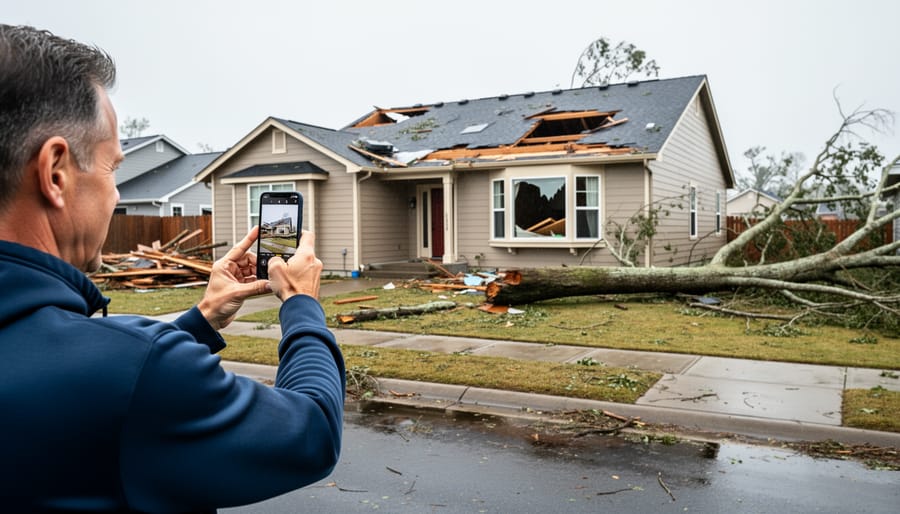
Start with photos and videos immediately after the disaster, but before you begin cleanup. Capture wide-angle shots showing overall damage, then zoom in on specific issues. Document every affected room from multiple angles, including ceiling damage, wall cracks, and flooring issues. Don’t forget less obvious areas like crawl spaces, attics, and exterior structures. Date-stamp everything if possible.
Create a detailed written inventory of damaged or destroyed items. For each item, note the purchase date, original cost, and current condition. Receipts are gold, but credit card statements, warranty documents, or even photos showing the items before the disaster can support your claim. For high-value items like appliances or electronics, include model and serial numbers.
Record conversations with your insurance company. Note the date, time, adjuster’s name, and key discussion points from every phone call. Follow up important conversations with written summaries sent via email to create a paper trail.
Consider hiring a professional photographer or videographer to document extensive damage. This investment often pays dividends during settlement negotiations, as professional documentation carries significant weight with insurance companies. Keep multiple copies of all documentation in cloud storage and physical formats. Remember, in claims disputes, the property owner with superior documentation typically secures better settlements.
Emergency Repairs vs. Permanent Fixes: What You Can Touch
After a natural disaster strikes, you’ll face an important balancing act: protecting your property while preserving your insurance claim. Understanding what you can repair immediately versus what requires adjuster approval can save you thousands in potential claim denials.
You’re generally safe making temporary emergency repairs that prevent further damage. This includes tarping a damaged roof, boarding up broken windows, shutting off water to prevent flooding, or securing openings against weather and intruders. These protective measures are not only allowed but expected by most insurers. Document everything with photos before and after, and keep all receipts.
However, permanent repairs require patience. Don’t replace that roof, remove damaged drywall entirely, or dispose of damaged property until after your adjuster documents the loss. Insurance companies need to verify the extent of damage firsthand. Making permanent fixes prematurely can result in reduced settlements or even claim denials, as adjusters may argue they cannot accurately assess pre-repair conditions.
The key distinction: if it stops additional damage from occurring, proceed carefully and document thoroughly. If it permanently alters or removes evidence of the original damage, wait for approval. When in doubt, photograph extensively, contact your insurer immediately, and err on the side of caution. Your claim’s success depends on preserving that crucial evidence while protecting your investment.
Contacting Your Insurer: Timing and Communication Strategy
Contact your insurer within 24-48 hours of the disaster, even if you haven’t fully assessed the damage. Most policies require prompt notification, and delays can jeopardize your claim. Call your agent’s direct line first, then use the company’s emergency hotline if needed.
Have your policy number, property address, and a preliminary damage description ready. Document the date and time you reported the claim, plus the name of every representative you speak with. Take detailed notes during conversations.
Prepare a basic inventory of damaged items before your first call. You don’t need perfection at this stage, but having room-by-room observations shows you’re organized and serious about the process.
Ask about your policy’s specific requirements for temporary repairs, documentation deadlines, and whether you need multiple contractor estimates. Understanding these expectations upfront prevents costly mistakes that could reduce your settlement or create coverage disputes later.
Navigating the Insurance Adjuster Process
Preparing for the Adjuster’s Visit
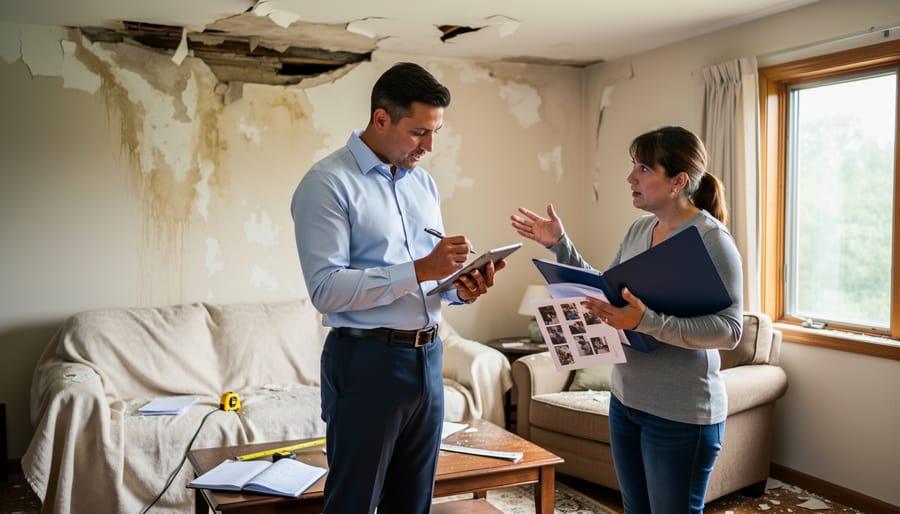
Before the adjuster arrives, thorough preparation can significantly impact your claim’s outcome. Start by organizing all your documentation into a clear, easily accessible format. This includes your initial damage inventory with photos, repair estimates, receipts for emergency repairs, and any temporary living expense records if you’ve been displaced.
Create a written list of all damaged items and areas, organized by room or category. Include the original purchase dates and prices when possible. This serves as your roadmap during the walkthrough, ensuring you don’t overlook anything in the moment.
During the actual visit, accompany the adjuster through every affected area of your property. Point out specific damage, even if it seems minor—water stains, cracks, or structural shifts can indicate more serious underlying issues. Don’t hesitate to ask questions about what’s covered or request clarification on their assessment process.
Take notes and photographs during the inspection to document what the adjuster examines and any comments they make. If they miss something, politely bring it to their attention immediately. Remember, this is your opportunity to present your case comprehensively, so being organized and thorough protects your financial interests and helps expedite the claims process.
When to Hire Your Own Expert
Sometimes the gap between what your insurer offers and what you believe you’re owed becomes too wide to bridge on your own. That’s when bringing in your own expert can shift the balance in your favor.
Public adjusters are licensed professionals who work exclusively for you, not the insurance company. They handle the entire claims process on your behalf, from documenting damage to negotiating settlement amounts. Unlike insurance company adjusters who have a vested interest in minimizing payouts, public adjusters advocate solely for maximizing your recovery. They typically charge between 5-15% of your final settlement, which means they’re financially motivated to secure the highest possible payout.
When is this investment worthwhile? Consider hiring a public adjuster if your claim exceeds $50,000, involves extensive structural damage, or if you’re completely overwhelmed by the process. They’re particularly valuable after major disasters like hurricanes or wildfires when insurance companies dispatch armies of adjusters to close claims quickly, sometimes at the expense of thoroughness.
Independent appraisers serve a different but equally important role. These specialists assess property damage and determine accurate replacement costs. While public adjusters manage the entire claim, independent appraisers focus specifically on valuation disputes. If your insurer’s damage estimate seems unreasonably low, an independent appraisal can provide the documentation needed to challenge their assessment.
The data speaks volumes: policyholders who hire public adjusters typically receive settlements 747% higher than those who navigate claims alone, according to industry research. For real estate investors managing multiple properties or homeowners facing complex damage scenarios, these professionals essentially pay for themselves through increased settlements while saving you countless hours of frustration and paperwork.
Common Claim Denial Reasons and How to Prevent Them

Pre-Existing Damage vs. Disaster Damage
Insurance adjusters face a critical task: determining whether damage existed before the disaster or resulted directly from it. This distinction significantly impacts your claim payout, as insurers only cover new damage from covered perils. Pre-existing issues like roof wear, foundation cracks, or water stains typically appear in your property’s maintenance history, inspection reports, or previous claims.
To establish causation, document everything immediately after the disaster. Take comprehensive photos showing the progression of damage, and obtain professional assessments from contractors or engineers who can provide expert opinions on when damage occurred. Compare your post-disaster documentation against any pre-disaster photos, home inspection reports, or appraisals you have on file.
Insurers often use forensic analysis to distinguish old damage from new. For example, weathered wood versus fresh breaks, or rust patterns on damaged metal components tell different stories. If you’ve maintained detailed property records and conducted regular maintenance, you’re in a stronger position to prove that damage is disaster-related rather than pre-existing. When disputes arise, independent engineering assessments can provide the technical evidence needed to support your claim and counter insurer arguments about pre-existing conditions.
Maintenance Issues That Void Coverage
Insurance carriers routinely deny claims when they determine that damage resulted from deferred maintenance rather than a covered natural disaster event. Common maintenance-related exclusions include roof damage from wear and tear, mold growth from pre-existing leaks, foundation issues from long-term water intrusion, and structural damage from termites or rot. The challenge for property owners is that insurers often argue that storm damage wouldn’t have occurred if the property had been properly maintained.
To protect yourself from maintenance-based denials, documentation is your strongest defense. Create a maintenance log with dated photos, receipts, and contractor invoices showing regular upkeep of your property’s critical systems. Schedule annual roof inspections, particularly before storm season, and keep detailed records of any repairs. If you’ve recently purchased the property, a pre-closing inspection report can prove the condition wasn’t your responsibility.
When disaster strikes, this documentation becomes invaluable evidence that your property was well-maintained and the damage genuinely resulted from the natural disaster. Consider it an investment in your claim’s success. Real estate investors should implement systematic maintenance tracking across their portfolios, as this proactive approach not only preserves property value but also streamlines the claims process when disasters occur.
Policy Lapses and Coverage Disputes
Policy lapses represent one of the most preventable causes of claim denials, yet they catch many property owners off guard. If your premium payment was even one day late when disaster struck, insurers may deny coverage entirely—a harsh reality that has devastated countless homeowners. Payment timing matters significantly, so always maintain documentation of payment confirmations and delivery dates.
Coverage interpretation disputes often arise from ambiguous policy language. For instance, was your property damaged by “wind-driven rain” (typically covered) or “flood” (often excluded)? These seemingly technical distinctions can mean hundreds of thousands of dollars in difference. Insurers may classify damage in ways that minimize their payout obligations, making it crucial to challenge questionable interpretations with your own documentation and expert assessments.
Real estate investors managing multiple properties face additional complexity when policy endorsements or riders aren’t properly updated after renovations or vacancy changes. A vacant property clause violation, for example, can void coverage entirely. Review your policy annually and immediately after any property changes to ensure continuous, comprehensive protection. When disputes arise, don’t hesitate to escalate through your insurer’s internal appeals process before considering external options like mediation or legal action.
Negotiating Your Settlement: Getting What You Deserve
Understanding Your Settlement Offer
When your adjuster’s report arrives, treat it like you would a property appraisal—it requires careful scrutiny. The initial settlement offer represents the insurance company’s assessment of your claim, but it’s not necessarily the final word on what you’re entitled to receive.
Start by reviewing the claim summary page, which outlines the total damages categorized by room or property area. Compare this against your own documentation and inventory list. Pay close attention to line items where values seem surprisingly low or where damage you reported appears absent entirely.
The adjuster’s depreciation calculations often significantly reduce payout amounts for older items. While depreciation is standard practice, challenge calculations that seem excessive, particularly for well-maintained property features or recently updated systems. Your documentation photos and receipts become invaluable here.
Watch for missing damage entirely. Adjusters may overlook secondary issues like water infiltration beneath flooring or structural compromises hidden behind walls. If you’ve had contractors assess the property, their professional estimates carry weight when disputing the initial offer.
Common undervalued categories include landscaping, detached structures, and personal property within the home. Many homeowners accept lowball offers on these items without realizing their actual replacement costs.
Before accepting any settlement, understand the tax implications of payouts and whether the amount truly covers your replacement costs at today’s market prices.
Building Your Counter-Claim Case
When your insurer’s initial offer falls short, building a compelling counter-claim requires solid evidence and strategic documentation. Start by obtaining multiple contractor estimates—aim for at least three detailed quotes from licensed, reputable contractors who specialize in disaster restoration. These professionals understand current material costs and regional labor rates, which often fluctuate significantly after widespread disasters due to increased demand.
Document comparable repair costs by researching similar property damage claims in your area. Many public records and industry databases track settlement amounts, giving you valuable benchmarking data. Real estate professionals can be particularly helpful here, as they often have insight into actual repair costs versus insurance company depreciation schedules.
Consider hiring an independent insurance adjuster or property damage appraiser to provide an expert opinion. Their professional assessment carries significant weight during negotiations, especially when it contradicts your insurer’s evaluation. These experts typically cost between $500-2,000 but can increase your settlement by thousands or tens of thousands of dollars.
Organize all evidence chronologically in a clear presentation format. Include photographs, repair estimates, expert reports, and receipts for temporary repairs or living expenses. This comprehensive approach demonstrates you’re serious about your claim’s true value and prepared to escalate if necessary, strengthening your negotiating position considerably.
When to Escalate: Appeals and Legal Options
The Formal Appeals Process
If your claim is denied or you believe the settlement is inadequate, filing a formal appeal is your next strategic move. Start by carefully reviewing your insurer’s denial letter, which must explain the specific policy provisions they’re citing. Most insurance companies require written appeals within 60 days of the decision, so timing is critical.
Begin your appeal by submitting a detailed letter to your insurer’s appeals department outlining why you disagree with their determination. Include your policy number, claim number, and a point-by-point response to their reasoning. Attach supporting documentation such as independent contractor estimates, additional photographs, expert reports from structural engineers or restoration specialists, and receipts for emergency repairs you’ve made out of pocket.
Consider requesting your complete claim file under your state’s insurance regulations, as this may reveal internal notes or adjuster assessments that strengthen your position. Many property owners find success by having their public adjuster or attorney prepare the appeal documentation, particularly when disputes involve complex property valuations or policy interpretation.
Document every interaction during the appeals process through certified mail with return receipts, and maintain copies of all correspondence. If the internal appeal doesn’t resolve the matter satisfactorily, you’ll have created a solid foundation for external dispute resolution or legal action.
External Options: Regulators and Attorneys
If your insurer denies your claim or offers an unreasonably low settlement, you have two powerful escalation options: state insurance regulators and attorneys who specialize in property claims.
Your state’s Department of Insurance serves as a consumer protection resource. File a complaint when insurers engage in bad faith practices—unreasonable delays, inadequate investigations, or unjustified denials. The department will investigate and can pressure insurers to reconsider their position. This free process often resolves disputes within 30-60 days, though it won’t force a specific settlement amount.
Consider hiring a property insurance attorney when your claim involves significant damages (typically over $50,000), complex coverage disputes, or evidence of bad faith. Most attorneys work on contingency, taking 20-40% of your recovery, meaning you pay nothing upfront. They’ll handle negotiations, file lawsuits if necessary, and pursue bad faith damages that can exceed your policy limits.
Real estate professionals should maintain relationships with claims attorneys to refer clients promptly. Timing matters—statutes of limitations on insurance disputes vary by state but typically range from two to four years from the denial date. For homeowners, attorney involvement often increases settlements by 2-3 times compared to unrepresented claimants, easily offsetting their fees while ensuring your property’s full restoration value.

Real Estate Implications: Property Value and Future Coverage
How Claims History Affects Your Property
Filing a natural disaster claim creates a permanent record that follows your property and can significantly impact your financial future. Insurance companies maintain comprehensive databases tracking claims history, which directly influences your premiums moving forward. Even a single claim can trigger rate increases of 20-40%, while multiple claims within a five-year period may result in policy non-renewal or difficulty securing coverage with other carriers.
Beyond premium costs, claims history raises future insurability concerns that affect property value and marketability. Prospective buyers increasingly request claims history during due diligence, and a pattern of disaster claims can reduce buyer interest or negotiating power. Some lenders may also hesitate to finance properties with extensive claims records, particularly in high-risk zones.
To protect your property’s insurability, consider higher deductibles to avoid filing smaller claims, invest in mitigation measures like storm shutters or flood barriers, and maintain detailed documentation of all preventive improvements. These strategies demonstrate proactive risk management to insurers and can help offset the long-term consequences of filing necessary disaster claims.
Strategic Considerations for Real Estate Professionals
As a real estate professional, your role extends beyond transactions—you’re a trusted advisor during your clients’ most challenging moments. When disaster strikes, being knowledgeable about insurance claims can set you apart and provide genuine value to your clients.
Start by building relationships with reputable public adjusters and insurance attorneys before disasters occur. Having these contacts ready allows you to make immediate, informed referrals when clients need help. Consider creating a disaster preparedness checklist for clients that includes documentation tips like photographing their homes annually and keeping inventory lists in cloud storage.
During active claims, remind clients that their first settlement offer isn’t necessarily their final one. Many homeowners accept lowball offers simply because they don’t realize negotiation is expected. Encourage thorough documentation and professional assessments before accepting any settlement.
For investors and buyers, disaster history should factor into due diligence. Properties with previous claims may face higher premiums or coverage limitations—information that directly impacts investment returns and resale value. Pull CLUE reports (Comprehensive Loss Underwriting Exchange) during your property research to uncover past claims that sellers might not voluntarily disclose.
Finally, understand your state’s disclosure requirements regarding past disasters and insurance claims. This knowledge protects both you and your clients from potential legal complications down the road.
Successfully navigating a natural disaster insurance claim requires equal parts preparation and persistence. The property owners who recover most effectively are those who understood their coverage before disaster struck, documented everything meticulously, and advocated confidently for fair treatment throughout the process.
Remember that your insurance policy is a contract, not a favor. You’ve paid premiums specifically for this protection, which means you have every right to expect thorough evaluation of your losses and appropriate compensation. Don’t let the complexity of the claims process intimidate you into accepting less than you deserve. Keep detailed records of every interaction, photograph everything before any cleanup or repairs, and never assume your insurer will automatically identify all covered damages.
Know when to bring in reinforcements. If your claim exceeds $50,000, involves significant structural damage, or if you’re facing claim denial or lowball settlement offers, consulting a public adjuster or attorney can dramatically improve your outcome. These professionals typically work on contingency, meaning their expertise costs nothing unless they increase your settlement.
The post-disaster claims journey is rarely quick or easy, but armed with knowledge about your policy, rights, and the claims process itself, you’re positioned to secure the financial recovery your property needs. Stay organized, remain persistent, and don’t hesitate to challenge decisions that seem unfair. Your home or investment property is worth fighting for, and understanding the system puts you in control of that fight.