Standby generator running beside a modern California hillside home during a power outage, with smoky golden-hour sky, cleared defensible space, dry grasses, and distant power lines.

When the Lights Go Out During Fire Season: Your Property Protection Plan

Download a comprehensive power outage emergency response plan template immediately and customize it within 24 hours—not next week when Public Safety Power Shutoffs (PSPS) are announced with minimal warning. Property owners in California’s fire-prone regions face average PSPS events lasting 24-48 hours, with some extending beyond five days, making documented emergency protocols essential for protecting both physical assets and property values.
Create your plan by identifying critical systems requiring backup power: security systems, sump pumps, refrigeration units, and medical equipment. Document specific generator capacities…

Homeowner in boots placing sandbags at a suburban home’s front step as shallow floodwater reaches the driveway, with a neighbor across the street installing flood barriers on an overcast day.

How Behavioral Science Could Save Your Property from the Next Flood

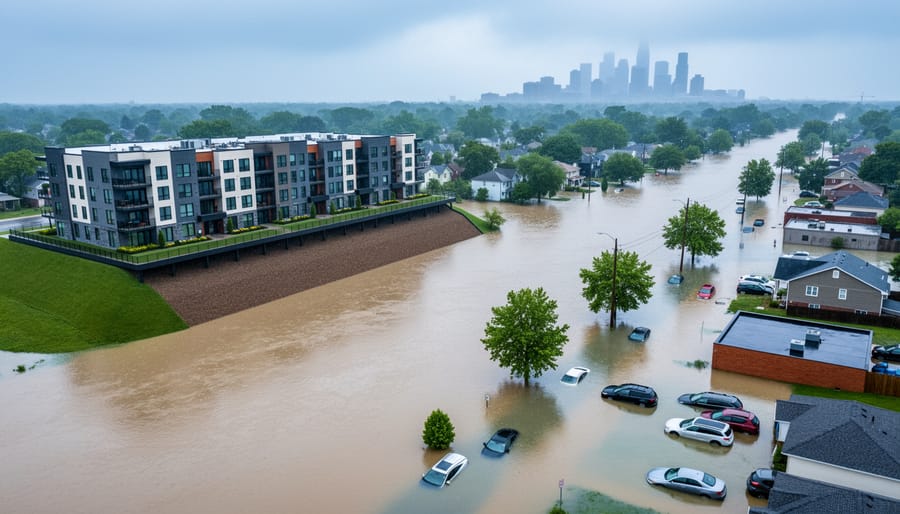
Recognize that homeowners consistently underestimate their flood risk by 80%, creating a dangerous gap between actual vulnerability and protective action. Research published in leading behavioral science journals reveals three cognitive biases blocking flood mitigation: optimism bias (believing disasters happen to others), present bias (prioritizing immediate costs over future losses), and status quo bias (defaulting to inaction despite known risks).
Frame flood insurance and mitigation as financial protection strategies rather than disaster preparation. Property owners respond more favorably when presented with concrete dollar …

Building inspector and contractor in hard hats examine a storm-damaged suburban house with exposed framing, hurricane straps, and sprinkler piping, under bright overcast light; neighboring homes and scaffolding visible in the background.

Why Building Code Violations Could Leave You Without Insurance After a Disaster

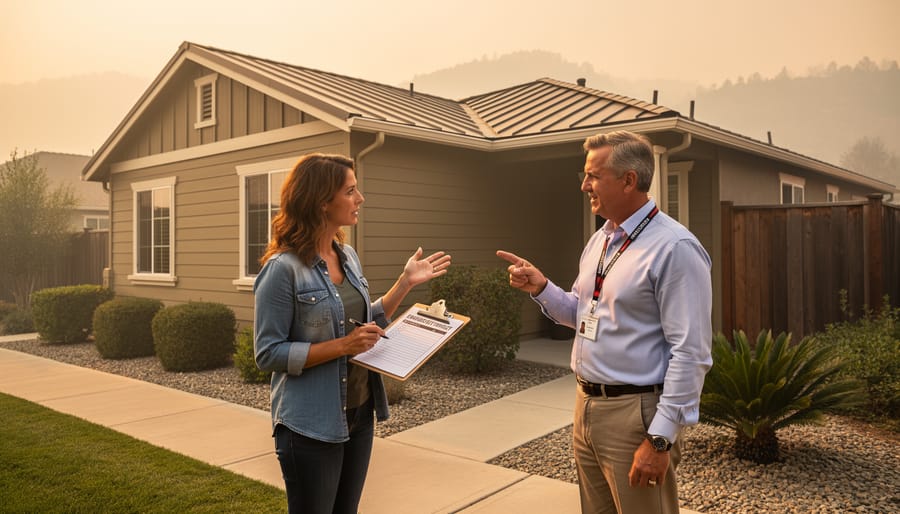
Understand that violating disaster preparedness regulations means your property fails to meet current building codes, fire safety standards, or zoning requirements—a gap that can leave you financially exposed when disaster strikes. Your standard homeowners insurance typically covers only the replacement value of your damaged property as it existed, not the potentially astronomical costs of bringing non-compliant structures up to code during rebuilding.
Review your property immediately for common violations: outdated electrical systems, inadequate fire suppression equipment, substandard roofing materials in hurricane zones, or …

Low drone view of a modern home with rooftop and perimeter sprinklers soaking the roof, eaves, and yard, with a galvanized water tank and pump near the driveway and distant smoky ridge under golden-hour light.

Home Wildfire Defense Systems That Could Save Your Property Investment

Wildfires destroyed over 18,000 structures in the United States last year alone, yet most homeowners in fire-prone areas remain dangerously unprepared. Home wildfire defense systems represent a critical evolution in property protection—automated networks of sprinklers, foam applicators, and water delivery mechanisms designed to create defensive barriers when evacuation becomes your only option.
These systems operate on a simple premise: maintain moisture saturation around your property’s perimeter and vulnerable surfaces during the critical hours when flames approach. Unlike traditional landscaping or firebreaks, modern …

Homeowner in a rain jacket securing sandbags and checking a portable sump pump at a suburban home’s front door during flooding, with pooled street water and an elevated HVAC platform in the background under overcast light.

How Emergency Response Planning Can Save Your Property When Floods Strike

Understand that emergency management operates in four distinct phases—mitigation, preparedness, response, and recovery—each directly impacting your property’s value, insurability, and long-term investment security. Property owners who master this framework reduce flood insurance premiums by up to 45%, protect equity during disasters, and maintain market competitiveness when selling in flood-prone areas.
The mitigation phase involves identifying vulnerabilities before disaster strikes—elevating HVAC systems, installing backflow valves, and securing flood insurance policies that reflect actual risk exposure. Real estate …

Contractors and an excavator demolish the undamaged wing of a storm-damaged older house, with debris piles and neighboring homes in the background under overcast light.

Why Your Home Insurance Won’t Pay to Rebuild After a Natural Disaster

Understand that standard homeowners insurance won’t cover the full cost of rebuilding if local building codes have changed since your home was constructed. When disaster strikes an older property, you’ll face a harsh reality: your insurer pays to restore what existed before, but your municipality requires upgrades to current code—leaving you potentially tens of thousands of dollars short.
Ordinance or law coverage bridges this critical gap by covering three distinct expenses most homeowners don’t anticipate. First, it pays for demolition and debris removal of undamaged portions of your home that must come down …

Elevated coastal single-family home on concrete piers with metal hurricane shutters and flood vents at golden hour, with marshland and distant water softly blurred in the background.

How FEMA’s Hazard Mitigation Assistance Could Save Your Property (and Your Money)

Understand that federal hazard mitigation assistance programs offer property owners substantial financial incentives—including grants up to 75% of project costs—to protect homes from flooding, hurricanes, earthquakes, and wildfires before disaster strikes. The Federal Emergency Management Agency’s Hazard Mitigation Assistance (HMA) portfolio encompasses three distinct grant programs that can fund everything from elevating flood-prone structures to installing hurricane shutters, with direct implications for your property’s insurance premiums, resale value, and long-term financial security.
Property owners who invest …

Modern mountain home with a gravel buffer around the foundation, neatly trimmed shrubs, and pruned trees while a homeowner rakes pine needles; dry brushy hills and scattered pines appear beyond the property line in warm evening light.

How Changing Your Home’s Landscape Could Save It From the Next Wildfire

Physical behavioral adaptations transform wildfire risk from an abstract threat into manageable daily actions that protect your property investment and reduce insurance premiums. Unlike one-time structural modifications, these ongoing practices create defensive zones around your home through consistent vegetation management, debris removal, and landscape maintenance—activities that insurers increasingly scrutinize when calculating premiums and coverage eligibility.
The financial stakes are substantial. Homeowners who demonstrate proactive wildfire adaptation behaviors can qualify for insurance discounts ranging from 10-30%, while …

Family at a temporary apartment kitchen table organizing receipts with a suitcase and pet carrier nearby; outside the window, their home is covered in blue tarps and scaffolding, softly blurred to suggest ongoing repairs.

This Coverage Pays Your Bills When Disaster Strikes Your Home

Understand your homeowners insurance policy’s Additional Living Expenses (ALE) coverage now—this benefit pays for temporary housing, meals, and daily costs when disaster forces you from your home. Review your policy declarations page to identify your ALE limit, typically 20-30% of your dwelling coverage amount, which determines how much you can claim for hotel stays, apartment rentals, increased food costs, and pet boarding while your home undergoes repairs.
Document your normal monthly expenses before crisis strikes by keeping records of typical grocery bills, utility costs, and household spending patterns. When disaster …

Homeowner using a laptop on a porch at golden hour, with a metal-roof home, gravel fire break, and trimmed shrubs in the background indicating defensible space

Online Wildfire Training Could Save Your Property (And Your Insurance Premiums)

Wildfires destroyed over 18 million acres across the United States in recent years, leaving property owners facing devastating financial losses that often exceed insurance coverage limits. The average wildfire claim now surpasses $500,000, yet most homeowners and real estate professionals lack basic preparedness training that could reduce property damage by up to 80%. Online wildfire training programs have emerged as the most accessible solution for communities seeking to protect property values, secure favorable insurance rates, and minimize catastrophic losses.
These digital courses offer flexibility that traditional in-person …