
That blinking red light on your security system might be costing you more than you think—not in protection, but in false confidence that could inflate your insurance premiums and drain your wallet through avoidable fees.
False alarms plague 94-98% of all security system alerts, triggering a cascade of financial consequences that most homeowners never anticipate. Each false dispatch can cost between $50-$500 in municipal fines, and after just three incidents in many jurisdictions, you’ll face escalating penalties. More concerning is what happens behind the scenes: insurance carriers track false alarm patterns and may adjust your premiums accordingly, viewing frequent false alerts as a risk indicator rather than a security asset.
The problem compounds when homeowners assume their security system automatically qualifies them for insurance discounts without understanding the fine print. Many policies require professionally monitored systems that meet specific criteria, and chronic false alarms can actually nullify those discounts entirely. In some cases, repeated false dispatches have led insurers to drop coverage or refuse renewal, leaving property owners scrambling for expensive alternatives in the high-risk market.
The disconnect between perceived security and actual protection creates a dangerous gap. You might believe your system is safeguarding your home and reducing insurance costs, while in reality, poor maintenance, outdated equipment, or incorrect installation transforms your security investment into a financial liability. Understanding this distinction isn’t just about avoiding fees—it’s about making informed decisions that genuinely protect both your property and your financial well-being.
The False Alarm Epidemic: Numbers That Tell a Troubling Story
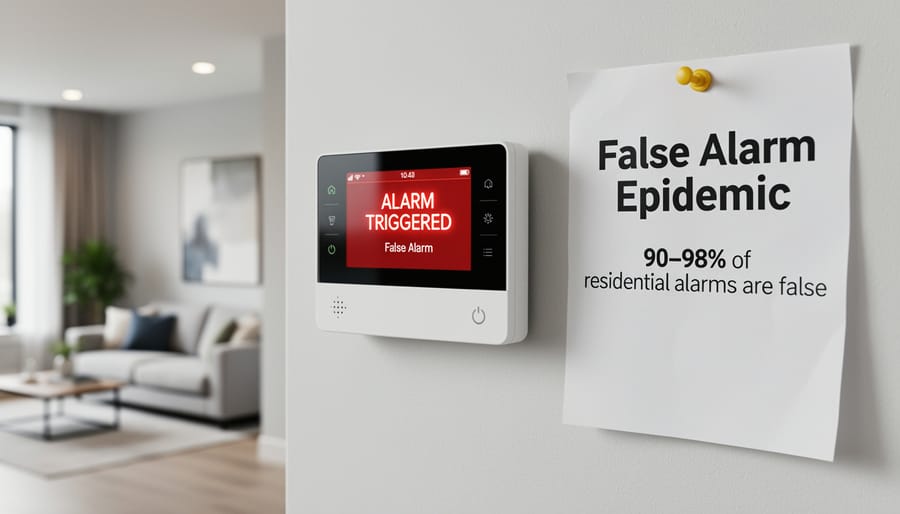
Here’s a sobering statistic that might surprise you: between 90 and 98 percent of all residential security alarms are false alarms. That’s not a typo. For every hundred times your alarm system alerts authorities, only two to ten of those calls represent actual emergencies. This isn’t just an inconvenience—it’s a full-blown epidemic that’s draining resources, straining relationships with local police departments, and costing homeowners in ways they never anticipated.
So what exactly counts as a false alarm? In the security industry, it’s any alarm signal that prompts an emergency response when no actual threat exists. This includes accidental triggers, equipment malfunctions, and environmental factors that trick sensors into thinking there’s an intruder when your home is perfectly safe.
The causes are surprisingly mundane. User error tops the list, accounting for the majority of false alarms. Picture this: you’re rushing out the door, forget to disarm the system before grabbing something you left inside, or simply punch in the wrong code. It happens more often than you’d think. Pets represent another major culprit. That friendly golden retriever or curious cat wandering through a motion sensor’s field of view can trigger a full alarm response.
Faulty or outdated equipment creates its own set of problems. Aging sensors become hypersensitive, door contacts lose their magnetic grip, and control panels develop electronic hiccups. Environmental factors add another layer of complexity—strong winds rattling windows, extreme temperature fluctuations affecting sensors, or even insects crawling across motion detectors can all trigger false alarms.
The scope of this problem extends far beyond mere annoyance. When we’re talking about millions of residential alarms nationwide, with false alarm rates consistently hovering above 90 percent, we’re looking at a systemic issue that impacts everyone from first responders to insurance underwriters to your monthly premium payments.
When Protection Becomes Complacency: The Psychology of False Security
The Normalization of Alerts
When your security system triggers its tenth false alarm in as many weeks, something dangerous happens: you stop taking it seriously. This psychological phenomenon, known as “alarm fatigue,” is precisely what makes false alarms so problematic beyond their immediate nuisance factor.
Consider the typical homeowner’s progression. Initially, every alarm triggers an adrenaline response and immediate action. But after repeatedly discovering that the “intruder” was simply a pet, a draft moving a curtain, or a sensor malfunction, homeowners begin responding more slowly, checking less carefully, or ignoring alerts altogether. Some even leave their systems disarmed to avoid the hassle—completely defeating the purpose of their security investment.
This normalization creates genuine vulnerability. Statistics show that when a real security breach occurs, alarm-fatigued homeowners are significantly slower to respond or call authorities. They’ve been conditioned to assume every alert is another false positive. From an insurance perspective, this behavioral shift is particularly concerning because it undermines your disaster preparedness strategy.
Insurers recognize this risk pattern. When evaluating claims, they may scrutinize whether homeowners maintained proper security protocols. A history of frequent false alarms, combined with evidence that systems were regularly disarmed or ignored, could potentially affect claim outcomes. The financial implications extend beyond false alarm fees—they touch the very foundation of your property protection strategy.
Impact on Emergency Response Times
When your home security system triggers a false alarm, it doesn’t just inconvenience you—it creates a ripple effect that can impact your entire community’s safety. Emergency dispatchers must treat every alarm as potentially legitimate, which means police or fire departments are deployed to your property. This pulls critical resources away from genuine emergencies that may be occurring elsewhere.
Consider the numbers: In municipalities where false alarms account for 90-98% of all security system calls, emergency responders spend countless hours investigating properties where nothing is wrong. During these unnecessary dispatches, response times to actual burglaries, fires, or medical emergencies can increase significantly. For homeowners and real estate investors, this reality presents a hidden risk that goes beyond immediate fines.
Many communities have implemented tiered response systems to manage this problem. After multiple false alarms at a single property, dispatchers may classify future calls as lower priority, meaning officers or firefighters arrive later—or in some cases, not at all without independent verification. This creates a genuine vulnerability in your property’s protection strategy, effectively undermining the very security you’ve invested in.
From an insurance perspective, documented delays in emergency response due to your property’s false alarm history could complicate claims processing. If a real incident occurs and response was delayed because of prior false alarms, insurers may scrutinize the circumstances more closely when evaluating coverage.
The Hidden Premium Price Tag: How False Alarms Hit Your Wallet
Municipal False Alarm Fees and Penalties
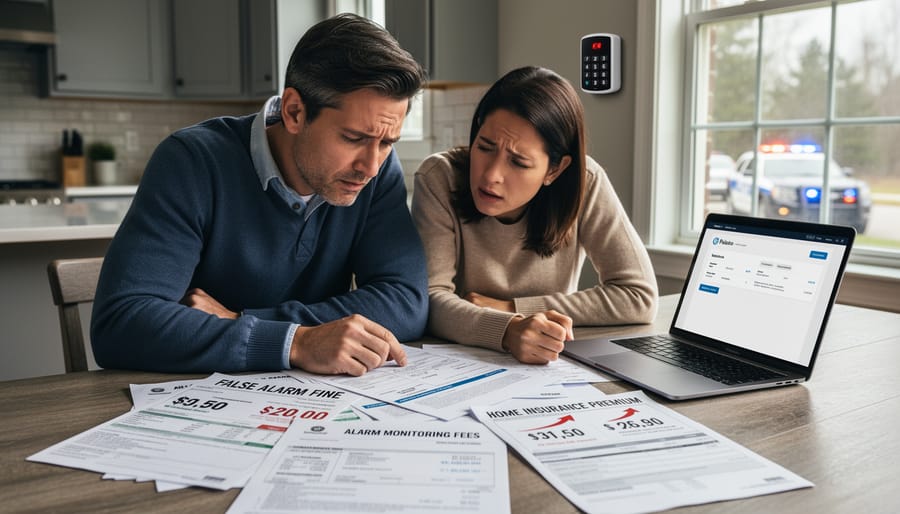
Most municipalities don’t take false alarms lightly, and the financial consequences can add up quickly. City ordinances typically implement escalating fine structures designed to discourage repeat offenders. First-time false alarms often receive a warning or modest penalty around $50, but subsequent violations can climb steeply—second offenses might jump to $100, third to $250, and chronic offenders can face fines exceeding $500 per incident.
What catches many homeowners off guard is how jurisdictions track these violations. Most cities operate on a rolling 12-month calendar, meaning your slate doesn’t automatically clear each January. Some municipalities require alarm permits (typically $25-$75 annually), and excessive false alarms can result in permit suspension or revocation. Without a valid permit, emergency services may refuse to respond to your alarm signals entirely—essentially rendering your security system useless when you need it most.
The fee structures vary significantly by location. Urban areas with stretched emergency resources tend to enforce stricter penalties than suburban communities. Before installing a security system, check your local ordinance requirements. Understanding these regulations helps you budget appropriately and avoid the sticker shock of accumulating fines that insurance policies won’t cover.
Insurance Premium Implications You Weren’t Warned About
What many homeowners don’t realize is that insurance companies are quietly keeping score of your alarm system’s performance, and a pattern of false alarms can significantly impact your bottom line. While you may have initially secured a 5-20% discount on your homeowners insurance for installing a monitored security system, that financial benefit isn’t guaranteed to last if your system becomes a liability rather than an asset.
Insurance carriers increasingly track alarm history through municipal records and direct communication with alarm monitoring companies. When dispatch records show repeated false alarms at your property, underwriters may view this as a red flag during policy renewal. The logic is straightforward: if you can’t maintain your security system properly, what does that say about your overall property maintenance and risk management?
The connection between false alarms and claims risk assessment lies in how insurers evaluate policyholder reliability. Excessive false alarms suggest either equipment malfunction, user error, or general inattentiveness to property management. These factors correlate with higher claims frequency in actuarial models, which directly influences premium calculations during renewal periods.
Here’s the critical disclosure requirement you need to know: many insurance policies require you to report significant changes in your security system’s effectiveness or any circumstances that might increase risk. Failing to disclose a pattern of false alarms or system malfunctions could potentially void coverage during a claim. During policy renewal, expect questions about alarm system performance, and answer honestly to protect your coverage integrity.
Monitoring Service Costs and Contract Complications
Beyond municipal penalties, homeowners often overlook the financial burden imposed by monitoring companies themselves. Many security service contracts include clauses specifically addressing false alarms, and these terms can significantly impact your bottom line. After a certain threshold of false dispatches, typically three to five per year, monitoring companies may impose additional fees ranging from $25 to $100 per incident. These charges aren’t one-time penalties either—they recur with each subsequent false alarm throughout your contract period.
What makes this particularly problematic is how these fees compound with municipal fines. You could be paying double penalties for the same mistake: one to your city and another to your security provider. Even more concerning, some monitoring contracts reserve the right to increase monthly service fees or even terminate service if false alarms persist. Before signing any security monitoring agreement, carefully review the fine print for false alarm language. Understanding these contractual obligations upfront helps you accurately assess the true cost of your security system and avoid unexpected charges that can strain your household budget.
What Insurance Companies Actually Track (And Why It Matters)
Most homeowners assume their insurance company simply checks a box confirming they have a security system, then moves on. The reality is far more nuanced. Insurance underwriters maintain sophisticated databases that track considerably more information than you might expect, and this data directly impacts both your premiums and claim outcomes.
When you report having a monitored security system, insurers typically document the monitoring company, system type, and installation date. However, they’re also increasingly accessing alarm activity reports through partnerships with major security providers. This means they can see patterns in your system’s history, including frequency of false alarms, response times, and whether the system is consistently armed.
During the underwriting process, insurers evaluate what they call your “security profile.” A system that triggers multiple false alarms monthly signals different risk factors than one with minimal activity. Some carriers now request alarm history reports dating back 12 to 24 months before issuing or renewing policies. Frequent false alarms may actually increase your premiums or reduce your security system discount, counteracting the very savings you expected.
The claim settlement phase is where this tracking becomes critical. When processing a burglary or theft claim, adjusters routinely request detailed alarm records for the date of loss. They’re looking for specific data points: Was the system armed? When was it last disarmed? Were there any error codes or maintenance alerts preceding the incident?
Insurance claim denials often hinge on these details. If records show your system wasn’t armed during the loss, or hadn’t been activated for weeks prior, insurers may argue you weren’t maintaining reasonable security measures. Similarly, documentation showing repeated low-battery warnings or sensor malfunctions can support a denial based on negligent maintenance. One study found that roughly 15 percent of home security-related claims face challenges or reductions due to improper system use or maintenance records.
Understanding what insurers track empowers you to maintain documentation that protects your coverage when it matters most.
Breaking the Cycle: Practical Solutions to Reduce False Alarms
Smart Technology Upgrades That Actually Work
Modern smart home technology has dramatically improved alarm system reliability, addressing many traditional false alarm triggers. Today’s advanced motion sensors feature dual-technology detection that combines passive infrared with microwave sensing, effectively distinguishing between human movement and environmental changes like shifting curtains or temperature fluctuations.
Pet-immune motion detectors now accurately differentiate between animals and intruders by analyzing heat signatures and movement patterns, eliminating one of the most common false alarm causes. These systems can typically ignore pets up to 85 pounds, making them practical for most households.
Environmental sensors add another layer of intelligence by monitoring temperature, humidity, and air pressure changes that might trigger traditional sensors. When integrated with your security system, they provide context that prevents weather-related false alarms.
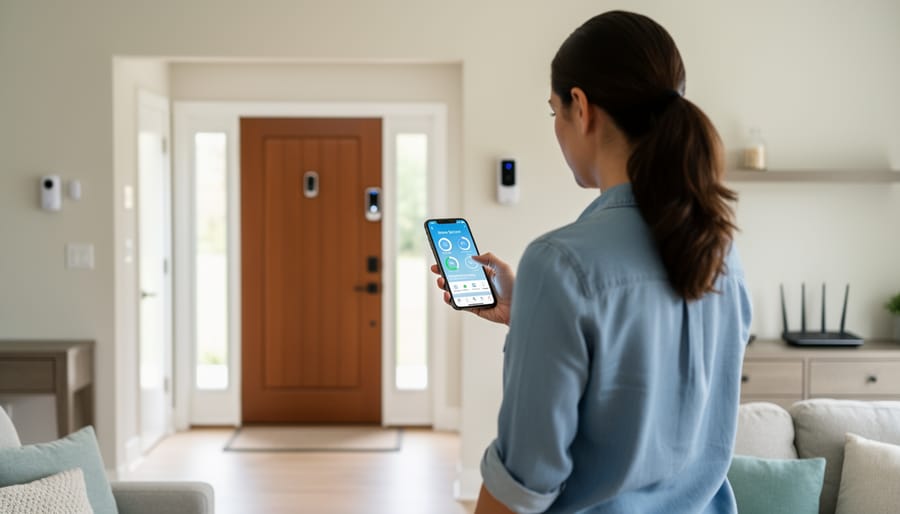
The real game-changer is smart home integration with mobile notifications and remote verification. Instead of immediately dispatching police, you can quickly check live camera feeds when an alarm triggers, reducing unnecessary emergency responses. This user verification capability can lower false alarm rates by up to 70 percent, directly impacting insurance premiums and municipal fine exposure while maintaining genuine security protection.
User Training and System Optimization
The best security system becomes ineffective when users don’t understand how to operate it properly. Human error accounts for a significant portion of false alarms, yet many homeowners receive minimal training beyond a quick installation walkthrough.
Start by mastering your arming procedures. Create a consistent routine for leaving your home, ensuring everyone knows the exact sequence: close all protected doors and windows, verify sensors show “ready,” then arm the system. Entry and exit delays deserve particular attention—most systems default to 30-60 seconds, but you can customize these based on your home’s layout. If your bedroom is far from the main entry, consider extending the disarm delay to prevent rushed, mistake-prone attempts to reach the keypad.
Zone customization is equally crucial. That basement door you use for trash? Program it as a delayed entry point or bypass it when needed rather than triggering repeated false alarms. Motion sensors near pets should be adjusted for animal immunity or repositioned entirely.
Family education shouldn’t be a one-time event. Schedule quarterly refresher sessions, especially after system updates or when new household members arrive. Create simple, laminated instruction cards near keypads with your unique disarm code and procedures. Consider establishing a household protocol for testing sensors monthly—this prevents surprises and keeps everyone familiar with normal system behavior. Remember, insurance carriers view repeated false alarms as negligence, potentially affecting your premiums or coverage terms.
Maintenance Schedules That Prevent Equipment Failures
A well-maintained security system is your best defense against false alarms and potential insurance complications. Monthly testing of all sensors, detectors, and control panels should be non-negotiable, much like you’d maintain systems during home renovations. Most manufacturers recommend replacing backup batteries annually, even if they appear functional, since weak batteries trigger false alerts that can affect your insurance premiums.
Dust and debris are silent saboteurs of motion sensors and smoke detectors. Clean these components quarterly using compressed air or manufacturer-approved methods. Door and window sensors need similar attention, especially after seasonal weather changes that can shift frames and create false triggers.
Schedule professional inspections at least annually. Certified technicians can identify wiring issues, outdated firmware, or component degradation before they become problems. This proactive approach not only prevents false alarms but also provides documentation that insurers value when assessing your risk profile. Keep detailed maintenance records including dates, services performed, and technician certifications. These logs demonstrate responsible system management and can prove invaluable during insurance claims or premium negotiations.
Getting Your Insurance Benefits Right: Questions to Ask Your Provider
Before signing on the dotted line or renewing your policy, having a candid conversation with your insurance agent can save you from costly surprises down the road. Think of these questions to ask your provider as your financial safety net against the hidden costs of security system ownership.
Start by asking: “What specific security system requirements must I meet to qualify for and maintain my discount?” Get this in writing. Some insurers require professional monitoring, while others accept self-monitored systems. Clarify whether your current system meets these standards or if upgrades are necessary.
Next, inquire about false alarm policies: “How do you track false alarms, and at what point do they affect my premiums or coverage?” Understanding whether your insurer communicates with local authorities about your alarm history is crucial. Some carriers will increase rates or reduce discounts after just three false alarms annually.
Ask the premium impact question directly: “Exactly how much am I saving with this security system discount, and what triggers its loss?” If you’re saving 50 dollars annually but risk losing coverage or facing increased premiums after multiple false alarms, the math doesn’t add up.
Finally, discuss documentation: “What maintenance records should I keep to protect myself during a claim?” Request specific guidance on logging professional inspections, battery replacements, and system tests. Store receipts, service reports, and dated photos of your equipment. If your insurer ever questions whether your system was functioning properly during a break-in, this documentation becomes your evidence that you upheld your end of the insurance contract. Consider creating a digital folder specifically for security system records, updating it quarterly with maintenance checks and any service calls.
Home security systems represent a valuable investment in protecting your property and loved ones, but they’re only as effective as the attention you give them. The technology itself doesn’t guarantee safety—it’s the combination of reliable equipment, proper maintenance, and your own vigilance that creates genuine protection. When false alarms become routine, they don’t just drain your wallet through fines and potential insurance premium increases; they erode the very foundation of security you’ve invested in building.
The financial implications extend beyond obvious costs. From municipal false alarm penalties to insurance policy exclusions, the ripple effects can impact your property’s value and your financial stability in ways you might not immediately recognize. Real estate professionals know that homes with documented security issues or excessive false alarm histories can complicate transactions and affect buyer confidence.
Take time today to audit your current security setup. Test each sensor, replace aging batteries, update monitoring contacts, and review your homeowner’s insurance policy to understand exactly what coverage you have. Remember: true security isn’t about installing the most expensive system—it’s about creating a responsive, well-maintained safety net that works when you need it most.