
Verify your home’s green certification status with the Green Home Institute before contacting insurers—carriers typically require third-party documentation like LEED, Energy Star, or GHI’s own Healthy Home certifications to unlock premium discounts ranging from 5% to 20%. Request a detailed energy audit that documents specific upgrades such as impact-resistant roofing, smart home systems, and water-efficient plumbing, as these improvements reduce claim risk and provide negotiating leverage with insurance underwriters.
Contact at least three insurance providers to compare green home discounts, since coverage and savings vary dramatically between carriers—some offer flat percentage reductions while others provide tier-based incentives that increase with certification levels. Document every sustainable feature in your home inventory, including solar panels, high-efficiency HVAC systems, and sustainable building materials, because many homeowners leave money on the table by failing to report eligible improvements during policy reviews.
The Green Home Institute serves as the bridge between environmental responsibility and financial pragmatism, certifying homes that meet rigorous health and sustainability standards while creating quantifiable value for property owners. Unlike traditional green certifications that focus solely on environmental impact, GHI emphasizes indoor air quality, material transparency, and occupant health—factors that directly correlate with lower insurance claims and reduced maintenance costs. For real estate professionals, understanding this certification translates into powerful marketing advantages and helps clients navigate the intersection of sustainable living and financial benefits. The investment in green certification typically pays for itself within 2-3 years through combined insurance savings, reduced utility costs, and increased property values.
What Is the Green Home Institute and Why Should You Care?
The Green Home Institute (GHI) is an independent nonprofit organization that has been setting the standard for healthy, sustainable housing since 2007. Unlike broader green building certifications such as LEED or ENERGY STAR, which focus primarily on commercial structures or energy efficiency alone, GHI zeroes in on what matters most to homeowners: creating living spaces that are both environmentally responsible and genuinely healthier for the people inside them.
At its core, GHI’s mission is straightforward yet powerful—to provide credible, science-based certification for products, services, and practices that contribute to healthier homes. Their flagship Certified Green Home program evaluates properties across multiple dimensions, including indoor air quality, water conservation, energy efficiency, and sustainable materials. This comprehensive approach sets them apart in an industry where certifications can sometimes feel like marketing buzzwords rather than meaningful credentials.
Why should this matter to you? If you’re a homeowner, a GHI certification represents more than environmental bragging rights. It’s a tangible validation that your home meets rigorous standards for health and sustainability—standards that insurance companies increasingly recognize and reward. Real estate professionals should pay attention because GHI-certified homes offer distinct market advantages, from higher resale values to faster sales cycles, particularly among environmentally conscious buyers who now represent a significant market segment.
The institute’s credibility stems from its independence. Unlike certifications backed by manufacturers or industry groups with potential conflicts of interest, GHI maintains strict neutrality in its evaluation processes. Their certification programs undergo regular updates based on emerging research and building science, ensuring relevance in a rapidly evolving field.
For those exploring the intersection of green building and financial benefits, understanding GHI’s role is essential. Their certifications create a documented baseline that insurance underwriters can use when assessing risk and determining premiums. Put simply, a GHI-certified home isn’t just better for the planet—it’s potentially better for your wallet, particularly when negotiating insurance rates or property valuations.
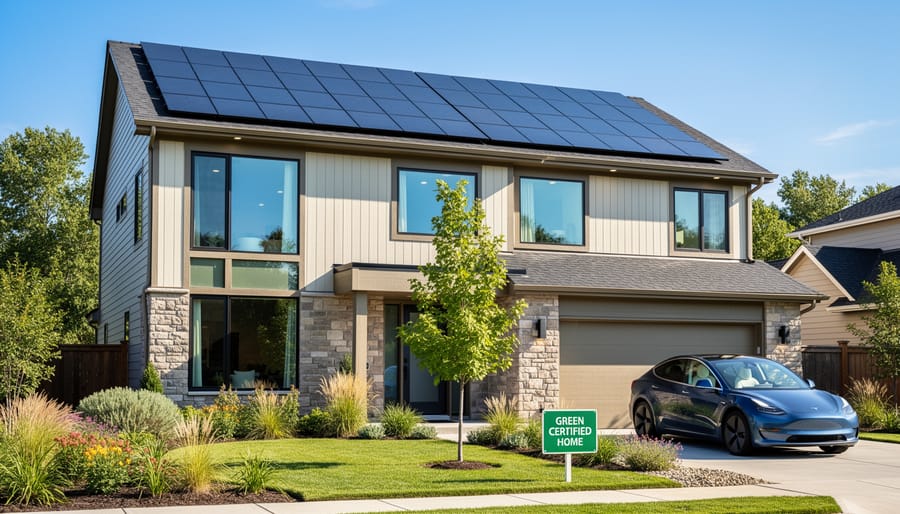
The Insurance-Sustainability Connection You’re Missing
Why Insurers Love Green-Certified Homes
Insurance companies aren’t in the business of sentiment—they follow the data. And the numbers on green-certified homes tell a compelling story that translates directly into lower premiums. Actuarial analysis consistently shows that homes certified by organizations like the Green Home Institute present measurably reduced risks across multiple categories.
First, these homes demonstrate superior storm resilience. Enhanced building envelopes, properly installed insulation, and upgraded windows mean less wind and water infiltration during severe weather events. Insurers have documented 30-50% fewer weather-related claims from certified green homes compared to conventional properties.
Fire risk reduction is another significant factor. Many green certifications require fire-resistant materials, improved electrical systems, and better ventilation—all reducing ignition potential. The green home insurance benefits extend to lower replacement costs too, as durable, high-quality materials mean fewer maintenance claims over time.
From an underwriting perspective, green-certified homeowners also tend to be more responsible property managers who maintain their homes proactively. This behavioral component, combined with superior construction standards, creates a risk profile insurers reward with premium discounts ranging from 5% to 20%, depending on certification level and carrier.
Real Numbers: Premium Reductions You Can Expect
Let’s talk numbers—because that’s what really matters when you’re considering green certification for your home. Insurance carriers are increasingly rewarding eco-conscious homeowners with meaningful premium reductions, though the exact amounts vary by provider and your home’s specific green features.
Most major insurers offer discounts ranging from 5% to 20% for homes with green certifications like those from the Green Home Institute. Fireman’s Fund, for example, has long been an industry leader, offering up to 5% off premiums plus an additional 15% discount on rebuilding costs using green materials after a claim. Travelers provides similar incentives, with discounts up to 10% for LEED-certified or Energy Star-rated homes.
State Farm and Liberty Mutual typically offer 5-10% reductions for qualifying green features, while smaller regional carriers sometimes provide even more competitive rates to attract environmentally conscious clients. Some insurers also waive deductibles for green upgrades after covered losses.
The key is understanding that these aren’t token gestures—on a $2,000 annual premium, a 10% discount saves you $200 yearly, which compounds to $6,000 over a typical 30-year mortgage. When combined with energy savings and potential property value increases, green certification becomes a smart financial play that extends well beyond just doing good for the planet.
Green Home Institute Certifications That Trigger Insurance Discounts
Green Home Institute Certified Products and Materials
Using Green Home Institute certified products and materials can unlock significant insurance advantages that many homeowners overlook. When you build or renovate with GHI-certified materials—think low-VOC paints, sustainable insulation, or water-efficient fixtures—you’re creating a home that insurance companies view as lower risk.
Here’s the financial connection: GHI-certified products often translate to improved durability, better air quality, and reduced moisture problems, which means fewer insurance claims down the road. Many insurers now offer premium reductions ranging from 5% to 15% for homes featuring certified green building materials. Some carriers even provide specialized green upgrade coverage, ensuring that if you file a claim, your eco-friendly materials get replaced with equivalent certified products rather than standard alternatives.
Real estate professionals should note that documenting your GHI-certified materials during construction or renovation is essential. Keep receipts, certificates, and product specifications in a dedicated file. When shopping for insurance, specifically ask carriers about their green building material discounts and provide your documentation upfront. This proactive approach demonstrates you’re a low-risk policyholder who’s invested in long-term home quality, giving you leverage during rate negotiations and potentially saving thousands over your policy’s lifetime.
Healthy Home Certifications and Risk Mitigation
Indoor air quality certifications from organizations like the Green Home Institute serve as powerful risk mitigation tools that directly impact your insurance profile and potential liability exposure. When homes meet rigorous health standards, insurers view them as lower-risk properties with reduced likelihood of health-related claims arising from mold, volatile organic compounds, or poor ventilation systems.
Properties certified for healthy indoor environments demonstrate proactive maintenance and reduced exposure to common claim triggers. This translates to fewer respiratory illness complaints, diminished mold remediation costs, and decreased liability from tenant or buyer health concerns. For real estate investors and landlords, these certifications provide documented proof of environmental due diligence, which can prove invaluable if health-related disputes arise.
Insurance carriers increasingly recognize that homes with verified air quality management systems experience fewer water damage claims and subsequent mold issues, one of the costliest problems in residential insurance. The documentation trail created through certification processes establishes clear maintenance records, strengthening your position during claim investigations. Additionally, some carriers now offer specialized coverage endorsements or premium reductions for certified healthy homes, acknowledging the measurable risk reduction these properties represent in their underwriting portfolios.
Strategic Steps to Maximize Your Green Home Insurance Benefits

Document Everything: Building Your Insurance Case
Securing insurance discounts for your green-certified home requires meticulous documentation. Start by obtaining your official Green Home Institute certification or assessment report—this is your primary proof. Keep the original certificate in a safe location and provide copies to your insurance agent.
Next, gather all receipts and invoices for sustainable upgrades. Your insurer will want documentation for solar panels, energy-efficient HVAC systems, water conservation fixtures, and storm-resistant materials. Create a dedicated folder (digital and physical) containing itemized receipts, contractor licenses, and installation dates.
Photographic evidence strengthens your case significantly. Take before-and-after photos of major improvements, capturing model numbers and efficiency ratings on appliances and systems. These visuals help adjusters understand the true value of your green investments.
Request manufacturer warranties and performance certifications for all energy-efficient equipment. Products carrying ENERGY STAR labels or similar certifications provide additional leverage when negotiating discounts. Many insurers specifically recognize these third-party validations.
Don’t forget utility bills showing reduced consumption—some insurers offer deeper discounts when you demonstrate measurable efficiency gains. Compile 12 months of bills comparing pre-and post-improvement periods.
Finally, schedule a professional home inspection documenting your property’s green features. This independent assessment carries substantial weight with insurance underwriters and may uncover additional discount opportunities you hadn’t considered.
Shopping for Green-Friendly Insurance Carriers
Finding an insurance carrier that truly values your green home investment requires strategic shopping and informed negotiation. Start by requesting quotes from at least three insurers, specifically asking about their green home discount programs and certification requirements. Some companies offer substantial savings for Green Home Institute certifications, while others may provide minimal reductions or none at all.
When comparing policies, inquire about the scope of coverage for sustainable features like solar panels, geothermal systems, and eco-friendly building materials. Standard policies might undervalue these upgrades during claims. Beyond the basic questions to ask insurers, specifically request details about replacement cost coverage for green components and whether they’ll reimburse for equivalent sustainable materials after a loss.
Red flags include vague discount descriptions, reluctance to provide written documentation of green discounts, or pressure to bundle unnecessary coverage. Legitimate insurers will clearly outline their sustainability programs and certification partnerships. Don’t hesitate to negotiate—if you’ve invested significantly in green upgrades, use competing quotes as leverage to secure better rates. Many carriers have flexibility in their discount structures, especially when presented with verified GHI certification and documented energy efficiency improvements that genuinely reduce their risk exposure.
Retrofitting Existing Homes: ROI on Green Upgrades
Retrofitting existing homes with green upgrades offers measurable returns through insurance premium reductions. Energy-efficient windows typically cost $3,000-$8,000 but can reduce premiums by 5-10%, yielding payback in 8-12 years when combined with energy savings. Impact-resistant roofing ($8,000-$15,000) often qualifies for 15-30% discounts in areas prone to severe weather, recovering costs within 5-10 years. Smart water leak detection systems ($200-$500) earn 5-15% discounts while preventing costly claims. Solar panels, though pricier at $15,000-$25,000 after incentives, generate savings through reduced electricity costs and 2-5% insurance discounts. To maximize ROI, prioritize upgrades that address your region’s specific risks—wind mitigation in coastal areas, fire-resistant materials in wildfire zones. Many insurers now offer bundled green upgrade discounts exceeding 25%, significantly shortening payback periods while increasing property value and marketability.
Beyond Premiums: Hidden Insurance Advantages of GHI Standards
While lower premiums grab headlines, Green Home Institute (GHI) certification unlocks a suite of often-overlooked insurance advantages that can significantly impact your financial position and peace of mind.
Enhanced Coverage Terms and Policy Flexibility
Insurance carriers increasingly offer GHI-certified homeowners access to specialized coverage options typically reserved for premium policyholders. These may include guaranteed replacement cost coverage with higher caps, recognizing that green materials and systems often cost more to replace. Some insurers waive standard deductibles for repairs using eco-friendly materials or extend coverage periods for additional living expenses if your home becomes uninhabitable. This flexibility matters because green homes require specialized contractors who understand sustainable building systems—and that expertise takes time to source.
Streamlined Claims Processing
GHI certification creates a documented trail of your home’s features, materials, and systems. When filing claims, this documentation dramatically speeds up the assessment process. Adjusters can quickly verify your home’s specifications without lengthy investigations, reducing settlement delays by weeks or even months. Several major carriers now offer dedicated green claims specialists who understand sustainable construction, eliminating the frustration of explaining why your bamboo flooring or solar panels require specific handling.
Property Valuation Benefits
Perhaps most significantly, GHI standards help establish higher insured values that accurately reflect your property’s worth. Traditional appraisals often undervalue green features, but certified documentation supports appropriate coverage limits. This proves crucial during total loss scenarios—you’ll receive compensation matching your home’s actual replacement cost, not a deflated assessment. Combined with climate-related insurance advantages, these hidden benefits can deliver thousands in additional value while providing superior protection for your sustainable investment.
For Real Estate Professionals: Selling the Green Insurance Advantage
As a real estate professional, you’re always looking for that competitive edge—and green-certified properties with insurance benefits offer exactly that. When you understand how to position these advantages, you transform eco-friendly features from nice-to-haves into compelling financial differentiators that close deals.
Start by integrating insurance savings into your listing descriptions. Instead of simply noting “Green Home Institute certified,” quantify the value: “GHI-certified home qualifies for up to 20% insurance premium reduction—potential savings of $400+ annually.” This immediately translates green features into dollars your clients understand. Include insurance discount potential in property highlights alongside square footage and upgraded appliances.
During showings and consultations, position green certification as a triple win: lower utility bills, reduced environmental impact, and measurable insurance savings. Many buyers don’t realize these certifications directly affect their monthly carrying costs beyond energy efficiency. Having specific insurance carrier partnerships ready to share demonstrates your insurance ecosystem knowledge and positions you as a comprehensive advisor, not just a property matchmaker.
Develop relationships with insurance agents who specialize in green home policies. This creates a referral network that benefits everyone—you can connect buyers with agents who maximize their discounts, those agents appreciate qualified referrals, and your clients receive seamless service. Consider hosting joint information sessions about green certification benefits to attract environmentally conscious buyers.
For property managers, emphasize how green certifications reduce long-term ownership costs for investors. Lower insurance premiums and maintenance expenses improve cap rates and property valuations. When marketing rental properties, highlight that some insurers extend green discounts to landlord policies, not just primary residences.
Marketing materials should feature certification badges prominently and include a dedicated section on financial benefits. Create comparison charts showing traditional versus green-certified home costs over five years, factoring in insurance savings alongside energy reductions. This data-driven approach resonates particularly well with analytical buyers and investors who make decisions based on total cost of ownership rather than purchase price alone.

Pursuing Green Home Institute certification isn’t just an environmentally conscious decision—it’s a smart financial strategy that delivers measurable returns. As we’ve explored throughout this guide, GHI-certified homes offer homeowners the rare opportunity to simultaneously reduce their environmental footprint while cutting insurance premiums by 5% to 20% annually. These savings compound over time, helping offset the initial investment in green upgrades and certifications.
For real estate professionals, positioning properties with GHI certification creates a competitive advantage in today’s market, where buyers increasingly value sustainability alongside financial prudence. The insurance discount becomes a powerful selling point that translates abstract environmental benefits into concrete dollar savings.
Ready to capitalize on these dual benefits? Start by researching GHI certification requirements for your property type and evaluating which green improvements deliver the strongest insurance discount potential. Then, contact your insurance provider directly—ask specifically about their green building discounts and what documentation they require. Many insurers have dedicated programs but don’t actively advertise them, so being proactive is essential.
Whether you’re a homeowner looking to maximize your property investment or a real estate professional seeking cutting-edge strategies to serve clients better, GHI certification represents a convergence of environmental responsibility and financial intelligence that’s too valuable to overlook.