A 45-degree drone view of a coastal suburban block with mixed-risk homes—some elevated with metal roofs and cleared vegetation, others lower near a drainage canal—set against distant coastline, forested hills, and brooding storm clouds.

ERM in Insurance: The Risk Management Strategy That’s Reshaping How Insurers Protect Your Property

Enterprise Risk Management (ERM) in insurance represents the systematic approach insurers use to identify, assess, and mitigate risks across their entire organization—and it directly impacts what you pay for property coverage. Unlike traditional risk management that operates in silos, ERM integrates every potential threat, from catastrophic weather events and cyber vulnerabilities to regulatory changes and investment portfolio fluctuations, into a comprehensive framework that shapes underwriting decisions and premium calculations.
For real estate professionals and property owners, understanding ERM matters because it explains why …


Homeowner couple meeting with an insurance agent at a kitchen table with documents, laptop, ring box, and calculator, soft daylight and blurred background showing a living room and a house with scaffolding outside

Policy Riders Could Save You Thousands on Your Next Property Claim

Understand that insurance policy riders—also called endorsements—are optional add-ons that customize your base policy to fill specific coverage gaps your standard homeowner’s insurance won’t address. A rider for jewelry coverage, for example, protects your $15,000 engagement ring beyond the typical $1,500 limit for valuables, while a water backup endorsement covers the $8,000 in damage when your sewer line fails—an exclusion in most standard policies.
Review your existing policy’s declarations page to identify current coverage limits and exclusions …

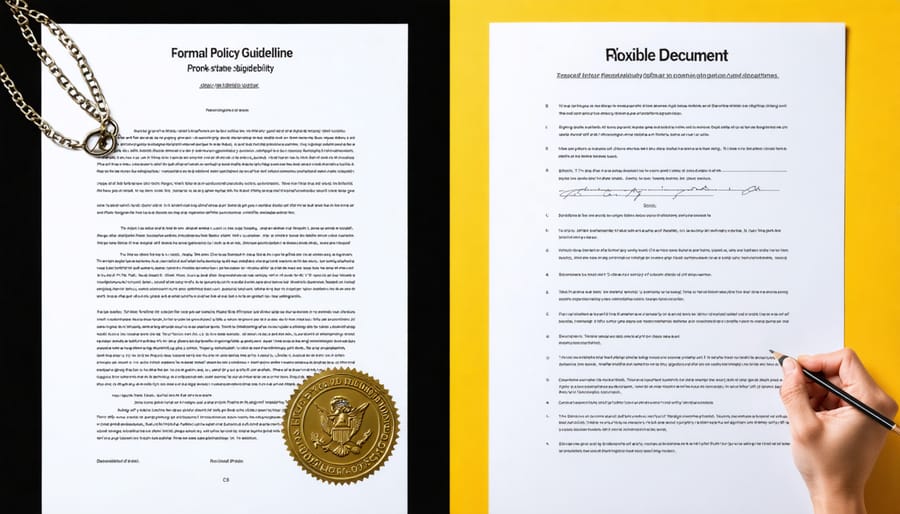
A conceptual illustration contrasting a formal, rigid policy document sealed with an official stamp against a flexible guideline document that allows for adjustments and annotations, symbolizing their roles in real estate transactions.

Why Policies Matter More Than Guidelines (Real Estate Industry Warning)

In the high-stakes world of real estate transactions, understanding the critical distinction between policies and guidelines can mean the difference between a successful deal and a costly misstep. While policies represent non-negotiable rules that must be strictly followed, guidelines offer flexible frameworks that allow for professional judgment and situational adaptation.
Consider a mortgage approval process: a bank’s policy requiring a minimum credit score of 640 is absolute, but their guideline suggesting a debt-to-income ratio below 43% may have some flexibility depending on other compensating factors. This fundamental …

A layered depiction of a standard real estate insurance policy overlaying a highlighted list of exclusions such as natural disasters and specific activities, symbolizing the importance of understanding hidden limitations.

Policy Exclusions That Can Void Your Real Estate Insurance (And How to Avoid Them)

Understanding policy exclusions could save you thousands of dollars and prevent devastating coverage gaps in your real estate investments. These critical clauses in insurance contracts specify what your policy won’t cover – from natural disasters to specific types of property damage. While standard homeowners insurance provides broad protection, exclusions create strict boundaries that can leave property owners exposed to significant financial risks if overlooked.
Think of policy exclusions as the fine print that matters most – they’re not just legal technicalities but fundamental limits that define the …

Graphic representation of a calendar showing highlighted health insurance cancellation deadlines with accompanying insurance documents and a clock symbolizing urgency and importance.

Health Insurance Cancellation Deadlines: Protect Your Coverage Rights

Understanding health insurance cancellation requirements protects both your coverage and legal rights in today’s complex healthcare landscape. Insurance providers must follow strict notification timelines and procedures when terminating coverage, typically requiring 30-90 days’ written notice depending on your state and policy type. Whether you’re managing multiple policies or concerned about individual coverage, knowing these requirements is crucial for navigating the insurance…

A professional insurance investigator analyzing data analytics on a digital interface, symbolizing the fight against property insurance fraud with modern technology and expertise.

Insurance Investigators: The Secret Weapon Against Property Insurance Fraud

Insurance investigations are far more than routine paperwork checks – they’re sophisticated operations that can make or break a claim’s legitimacy. Every year, insurance companies invest billions in investigating suspicious claims, protecting honest policyholders, and helping protect your property investment from fraud-related premium increases.
Behind each investigation lies a complex web of technology, expertise, and methodical analysis. From artificial intelligence that …

Conceptual illustration of a layered shield with real estate buildings, digital tech symbols, financial graphs, and risk protection icons representing a smart insurance strategy for real estate investment protection.

Smart Insurance Decisions That Protect Your Real Estate Investment

Navigate today’s complex insurance landscape by implementing proven strategies that protect your real estate investments while maximizing coverage value. Start by evaluating multiple carriers’ financial strength ratings through independent agencies like A.M. Best and Moody’s, ensuring your provider can withstand major market disruptions. Then, systematically assess coverage gaps by identifying hidden property insurance risks that could devastate your investment portfolio, from …

Conceptual illustration of an umbrella shielding various insurance representations, including a house and financial symbols, signifying smart and versatile property insurance protection.

Smart Insurance Selection: Make Your Property Coverage Work Harder

Navigating the complex world of insurance doesn’t have to feel like solving a puzzle. Smart insurance selection starts with calculating your specific coverage needs – from property value and liability risks to potential catastrophic events in your area. Factor in your financial circumstances, including your emergency fund, risk tolerance, and monthly budget for premiums. Don’t simply choose the lowest premium; evaluate the total cost of ownership by considering deductibles, coverage limits, and potential out-of-pocket expenses.
Whether you’re protecting your home, business, or personal assets, the right …

Homeowner standing in front of a house with an insurance non-renewal notice, illustrating a contrast between a well-maintained side and a neglected side of the property.

Progressive Non-Renewal Notice: What Every Property Owner Must Know Before It’s Too Late

Receiving a progressive non-renewal notice from your insurance company signals a critical turning point in your property coverage that demands immediate attention. These formal notifications, typically issued 30-60 days before policy expiration, indicate your insurer’s decision not to renew your existing coverage due to specific risk factors or changing underwriting guidelines. For property owners and real estate professionals, understanding the implications of this notice is crucial – it’s not just a routine paperwork exercise but a potential threat to your property’s financial protection. Whether you’re a …

A real estate professional attentively examining health insurance policy options on a tablet, with a cityscape as the backdrop, highlighting the connection between real estate and health insurance planning.

Smart Health Insurance Choices: What Real Estate Professionals Need to Know

Navigating health insurance decisions impacts your financial security as profoundly as any real estate investment. Compare monthly premiums against annual deductibles to calculate your true out-of-pocket costs before selecting a policy. Examine provider networks carefully – a plan with a lower premium but out-of-network doctors could cost thousands more annually than one with slightly higher monthly costs. For self-employed professionals and real estate agents working on commission, consider plans with health savings account (HSA) options to create tax advantages while building a medical expense safety net.
Map out your …