
Secure comprehensive general liability coverage immediately—this foundational policy protects your vape shop against customer injury claims, product liability lawsuits, and property damage incidents that could otherwise bankrupt your business overnight. Even the best vape shop in Canada faces exposure to slip-and-fall accidents, defective product allegations, or adverse reactions to vaping products.
Add product liability insurance as a non-negotiable second layer, specifically designed for the vaping industry’s unique risks. Unlike traditional retail, vape shops face heightened scrutiny around health claims, product safety standards, and rapidly evolving regulatory compliance requirements. This coverage shields you from costly legal defense fees and settlement payments when customers allege harm from products you sold.
Protect your physical assets and inventory with commercial property insurance that accounts for specialized vaping equipment, e-liquids, batteries, and devices. Standard policies often exclude or undervalue vaping inventory due to its classification as tobacco-related products, leaving gaps that could cost you tens of thousands in uninsured losses during theft, fire, or natural disasters.
Include business interruption coverage to replace lost income when forced closures occur—whether from property damage, regulatory shutdowns, or supply chain disruptions affecting vaping products. Canadian vape shops operate in a heavily regulated environment where sudden policy changes at federal or provincial levels can halt operations unexpectedly, making income protection essential for survival during these mandated closures.
The Real Risks Vape Shop Owners Face in Canada
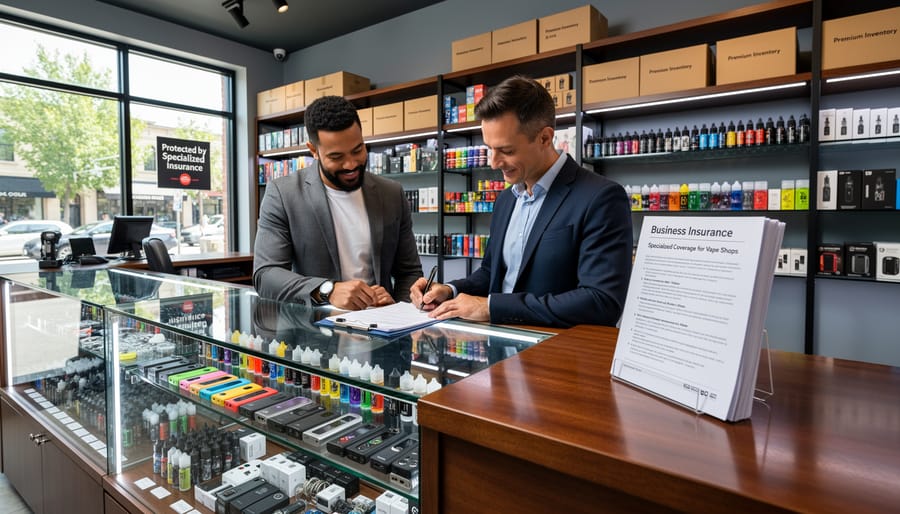
Product Liability Exposure
Vape shop owners face unique product liability challenges that go well beyond typical retail operations, similar to other self-employed insurance needs. When customers purchase vaping devices and e-liquids, they’re buying products that directly impact their health and safety, creating substantial liability exposure for your business.
The most significant risk stems from battery malfunctions. Lithium-ion batteries in vaping devices can overheat, explode, or catch fire, causing serious injuries. In 2019, a Toronto resident suffered severe burns when a vape pen battery exploded in their pocket, leading to a costly claim against the retailer. These incidents aren’t rare—Health Canada has documented numerous reports of battery-related injuries across the country.
Health-related claims present another major concern. While regulations have tightened around vaping products, customers who experience adverse health effects may pursue legal action against retailers. Claims can arise from nicotine poisoning, allergic reactions to e-liquid ingredients, or respiratory issues. Even if your products comply with all Health Canada regulations, you could still face litigation costs defending your business.
Defective product claims also pose substantial financial risks. Manufacturing defects in devices, contaminated e-liquids, or improperly labeled nicotine concentrations can all trigger expensive lawsuits. A Vancouver vape shop faced a significant claim when a customer alleged that mislabeled nicotine strength caused severe health complications.
Without adequate product liability coverage, a single claim could financially devastate your vape shop, making this protection essential rather than optional.
Provincial Regulations and Compliance Risks
Canada’s vape industry operates under a complex patchwork of provincial regulations that vary significantly from coast to coast. Each province maintains its own rules regarding product sales, licensing requirements, age restrictions, and promotional activities. For instance, some provinces allow vape product displays while others mandate plain packaging and restrict flavors. This regulatory landscape creates substantial compliance risks for vape shop owners who must navigate multiple layers of legislation.
Non-compliance with these provincial regulations can result in serious financial consequences. Regulatory bodies can impose hefty fines ranging from thousands to tens of thousands of dollars for violations such as selling to minors, improper product labeling, or unauthorized advertising. In severe cases, shops may face license suspension or permanent closure. These enforcement actions can also trigger lawsuits from affected parties or regulatory agencies seeking damages.
This is where comprehensive liability insurance becomes essential for vape shop owners. While insurance doesn’t excuse non-compliance, it can provide crucial financial protection against legal defense costs, regulatory fines, and settlement expenses arising from unintentional violations. Many business insurance policies include regulatory defense coverage specifically designed to help businesses manage the financial burden of compliance-related legal challenges, making it a vital safeguard in this heavily regulated industry.
Property and Inventory Challenges
Vape shops face unique property and inventory challenges that standard commercial policies often overlook. Your inventory—including e-liquids, devices, and accessories—represents significant value, typically ranging from $30,000 to $100,000 for an average shop. This specialized merchandise is highly attractive to thieves, with vape products ranking among the most frequently stolen retail items in Canada due to their high resale value and compact size.
Beyond theft concerns, your inventory requires specific coverage considerations. E-liquids contain nicotine and flavorings that can deteriorate if refrigeration fails, and lithium batteries in vaping devices pose fire risks that standard property insurance may exclude. Additionally, display cases, specialized storage units, and point-of-sale systems designed for age verification need protection.
Standard business property insurance typically won’t adequately cover these specialized assets. You’ll need endorsements or separate policies that specifically account for vape inventory’s unique characteristics, including coverage for product spoilage, contamination, and the higher replacement costs associated with rapidly evolving technology in the vaping industry.
Essential Insurance Coverage Types for Vape Shops
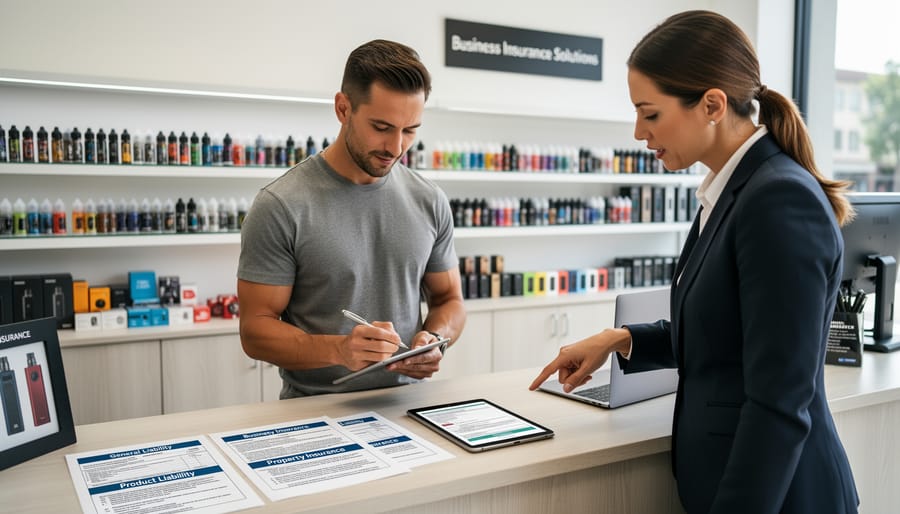
General Liability Insurance
General liability insurance forms the foundation of protection for your vape shop, covering bodily injuries to customers and damage to third-party property. If a customer slips on a wet floor near your display cases or an employee accidentally knocks over a laptop belonging to a visiting sales representative, this coverage handles the medical expenses and replacement costs. It also protects you from the financial fallout of lawsuits arising from these incidents.
For vape shops, standard liability limits of $1 million per occurrence may fall short of adequate protection. The unique nature of your business presents elevated risks that insurers recognize. Product-related incidents, even when covered separately, can trigger liability claims that quickly exceed basic coverage thresholds. A serious injury on your premises could result in damages and legal fees surpassing $1 million, leaving you personally exposed to the difference.
Consider increasing your general liability coverage to $2 million or higher, especially if your shop experiences high foot traffic or hosts in-store events and product demonstrations. The incremental cost for enhanced limits typically represents a modest investment compared to the catastrophic financial consequences of being underinsured. Many Canadian insurers now recommend these higher thresholds specifically for vape retailers, acknowledging the industry’s particular liability landscape.
Product Liability Insurance
Product liability insurance stands as your frontline defense against one of the vape industry’s most significant financial threats. Given the ongoing health discussions surrounding vaping products, this coverage protects your business when customers claim that products you sold caused illness, injury, or other harm.
This insurance typically covers legal defense costs, settlements, and judgments arising from product-related claims. For vape shops, this means protection if a battery malfunctions and causes burns, if e-liquid triggers an allergic reaction, or if customers allege long-term health effects from products purchased at your store. The coverage extends beyond manufacturer defects to include claims about inadequate warnings or instructions.
When evaluating policies, pay close attention to coverage limits, which typically range from $1 million to $5 million per occurrence in Canada. Higher limits cost more but provide better protection given the potential severity of health-related claims. Like other forms of self-employed insurance coverage, understanding exclusions is crucial. Most policies exclude claims related to products you’ve modified or mixed yourself, counterfeit goods, and products lacking proper Health Canada compliance. Some insurers also exclude coverage for specific ingredients or product types, so review policy language carefully before purchasing.
Commercial Property Insurance
Your vape shop’s physical assets represent a substantial investment that needs protection. Commercial property insurance covers your storefront, specialized fixtures like climate-controlled display cases, vaping bars where customers sample products, and your entire product inventory. This coverage becomes your financial safety net when unexpected events like fire, theft, vandalism, or water damage strike.
For vape shop owners, accurate inventory valuation is particularly critical. E-liquids, mods, tanks, and accessories can quickly add up to tens of thousands of dollars in stock value. Many shop owners underestimate their inventory worth, which creates problems during claims when they discover they’re underinsured. Work with your insurance provider to conduct regular inventory assessments, especially after restocking or adding new product lines.
Consider replacement cost coverage rather than actual cash value policies. While replacement cost premiums run slightly higher, they ensure you can replace damaged inventory at current market prices without depreciation deductions eating into your claim settlement.
Business Interruption Insurance
When a fire forces your vape shop to close for repairs, your bills don’t stop. Business interruption insurance acts as a financial safety net, replacing lost income during mandatory closures. This coverage kicks in when covered perils like fire, water damage, or even certain regulatory actions prevent you from operating. For vape shops, this protection proves particularly valuable given the industry’s regulatory volatility—a sudden municipal bylaw change could temporarily shutter your doors while you adjust operations. The policy typically covers lost revenue, ongoing expenses like rent and utilities, and even employee wages during the closure period. Consider this scenario: a sprinkler malfunction floods your inventory and requires two months of repairs. Without business interruption coverage, you’d face zero income while still paying your lease. With it, you maintain cash flow to survive the setback and reopen stronger.
Cyber Liability Insurance
Vape shops process countless customer transactions daily through digital payment systems and often collect personal information for loyalty programs or age verification. Cyber liability insurance protects your business if this sensitive data is compromised through hacking, malware, or system breaches. This coverage typically handles notification costs, credit monitoring services for affected customers, legal expenses, and regulatory fines. Given that payment terminals and customer databases are prime targets for cybercriminals, this protection has become essential for modern retail operations. Many Canadian insurers now bundle cyber liability with general business policies, recognizing that even small retailers face significant digital risks in today’s connected marketplace.
What Makes Vape Shop Insurance Different (and More Expensive)
The High-Risk Classification Problem
Insurance companies place vape shops in a high-risk category, grouping them with cannabis dispensaries and tobacco retailers. This classification stems from several concerns that underwriters evaluate when assessing potential clients.
The primary reason involves product liability. Vaping products have faced scrutiny due to health concerns and incidents of device malfunctions, which increases the potential for customer injury claims. Additionally, the evolving regulatory landscape surrounding vaping products creates uncertainty for insurers, as changes in legislation can impact a business’s operations overnight.
Another factor is the retail environment itself. Vape shops typically stock inventory with street value and handle cash transactions, making them targets for theft. The industry’s relative youth compared to traditional retail also means insurers have less historical data to accurately predict risk patterns.
This high-risk designation directly impacts both availability and pricing of specialized business insurance. Many standard commercial insurers simply won’t write policies for vape retailers, forcing owners to seek coverage through specialty markets. Those who do offer coverage typically charge higher premiums—sometimes two to three times what a comparable low-risk retail business might pay. Deductibles are often elevated, and policy limits may be restricted, requiring vape shop owners to be strategic and persistent in securing adequate protection.
Factors That Impact Your Premium
Insurance providers evaluate several key factors when calculating your vape shop’s premium, and understanding these can help you anticipate costs and potentially reduce them.
Your business location plays a significant role in pricing. Urban vape shops typically face higher premiums than rural locations due to increased foot traffic, theft risk, and higher property values. Additionally, provincial regulations vary across Canada, affecting coverage requirements and costs.
Years in operation matter considerably to insurers. Established vape shops with three or more years of stable operation generally receive better rates than startups, as they demonstrate proven business viability and risk management capabilities.
Your claims history directly impacts premiums. A clean record with no previous claims signals lower risk to insurers, while multiple past claims can substantially increase costs. This applies to both general liability and property damage claims.
Product mix is particularly important for vape shops. Businesses that sell e-liquids with nicotine face higher premiums than those selling hardware and accessories only, reflecting the increased regulatory scrutiny and potential liability. Similarly, shops offering on-site mixing or manufacturing services encounter additional costs.
Annual revenue affects your coverage needs and costs proportionally. Higher revenue businesses require increased coverage limits, which naturally results in higher premiums. However, this also reflects your shop’s growth and success in the market.
Finding the Right Insurance Provider in Canada
Specialized vs. Standard Commercial Insurers
Vape shops fall into what insurers call “high-risk retail,” meaning many standard commercial insurance providers either decline coverage entirely or charge premiums that don’t reflect nuanced risk management strategies. Working with specialized insurers who understand the vape industry makes a substantial difference in both coverage quality and cost.
Specialized insurers recognize that not all vape shops operate identically. They assess factors like your inventory controls, staff training protocols, and compliance measures rather than applying blanket risk ratings. These providers understand provincial regulations affecting vape retailers and can tailor policies accordingly, whereas standard insurers often lack this expertise.
To identify vape-savvy providers, ask potential insurers about their experience with similar businesses. Request references from other vape shop clients and inquire about their claims handling process for product liability issues. Brokers specializing in retail or hospitality insurance often maintain relationships with underwriters familiar with high-risk categories. Don’t hesitate to shop around—the insurer offering the lowest premium may not provide the most comprehensive protection for your specific business model, and those with industry experience typically offer better claims support when you need it most.
Questions to Ask Before You Buy
Before committing to a vape shop business insurance policy, you need clarity on several critical aspects. Start by asking about coverage limits for product liability claims, as these can vary significantly between insurers. Given the evolving regulations surrounding vaping products in Canada, inquire specifically about what exclusions apply to your policy. Will it cover claims related to specific ingredients or devices that may face future restrictions?
Understanding the claims process is equally important. Ask how quickly claims are typically processed and what documentation you’ll need to provide. Request real examples of common vape shop claims and how they were handled. Don’t overlook questions about your business interruption coverage either, particularly how it applies if regulatory changes temporarily halt your operations.
Clarify the renewal terms upfront. Will your premiums increase after filing a claim? What happens if new provincial regulations impact your business model? Finally, ask whether the insurer has experience with vape shops specifically or if they’re simply applying generic retail coverage. The nuances of your industry demand an insurer who understands the unique challenges you face, from battery-related incidents to ingredient liability concerns.
Cost-Saving Strategies Without Sacrificing Protection
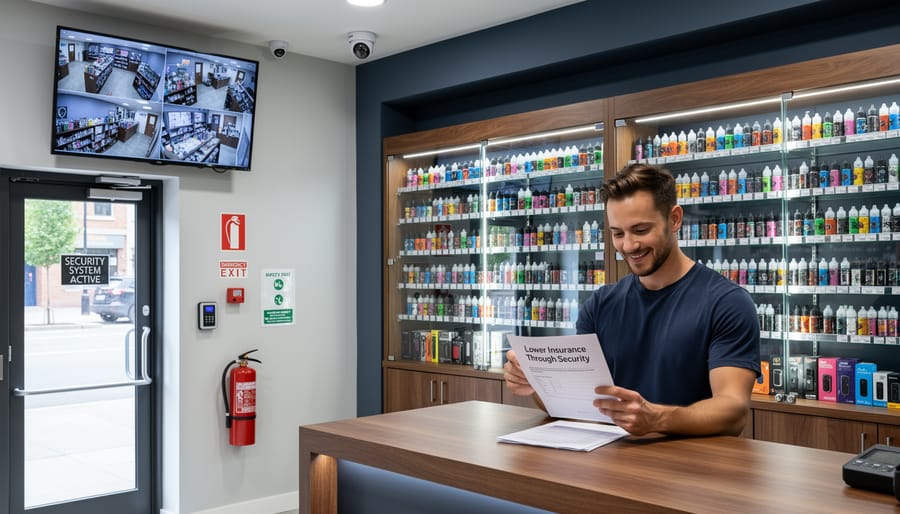
Risk Management Practices Insurers Reward
Canadian insurers recognize that proactive vape shop owners who implement robust risk management practices deserve premium reductions. Installing comprehensive security systems—including surveillance cameras, alarm systems, and secure storage for high-value inventory—can significantly lower your insurance costs. Many providers offer discounts ranging from 5-15% for documented security measures that reduce theft and vandalism risks.
Employee training programs are equally valuable. When your staff understands proper handling of vaping products, age verification protocols, and emergency response procedures, you’re demonstrating operational excellence that insurers reward. Maintaining detailed compliance documentation, including age verification logs, product testing records, and safety inspection reports, proves you’re serious about risk mitigation.
Additional premium-reducing measures include implementing strict inventory controls, installing fire suppression systems beyond basic requirements, and establishing formal customer incident reporting procedures. Consider working with a loss control specialist who can identify specific improvements for your location. Regular policy reviews ensure you’re maximizing available discounts as you enhance your risk management framework. These investments typically pay for themselves through reduced premiums while protecting your business from costly claims.
Bundling and Policy Structuring Tips
Combining multiple coverages under a single Business Owner’s Policy (BOP) typically delivers better value than purchasing individual policies separately. Most Canadian insurers offer bundled packages that include general liability, property insurance, and business interruption coverage at reduced premiums—often 15-25% less than standalone options.
Consider adjusting your deductibles strategically to balance premium costs with manageable out-of-pocket expenses. Higher deductibles on property coverage (perhaps $2,500 instead of $1,000) can significantly lower your monthly payments while still protecting against catastrophic losses. Reserve lower deductibles for liability coverage where claims could escalate quickly.
Many vape shop owners find cost-effective coverage options by working with brokers who specialize in retail operations. These professionals understand package customization and can identify coverage overlaps that waste money. For instance, if your commercial lease includes building coverage, you can eliminate redundant property protection and focus premiums on inventory and equipment protection instead. Request annual policy reviews to adjust coverage limits as your inventory values and business operations evolve.
Proper insurance coverage for your vape shop isn’t just another line item on your expense sheet—it’s a strategic investment in your business’s longevity and your personal peace of mind. The specialized risks facing vape retailers in Canada, from product liability concerns to evolving regulations, demand protection that generic business policies simply can’t provide. Without adequate coverage, a single incident could compromise everything you’ve built.
Now is the time to take action. Schedule a comprehensive audit of your current insurance policies to identify gaps in your coverage. Are you protected against product recalls? Does your policy account for THC and CBD products if applicable? Is your coverage limit sufficient for your inventory value and revenue? These questions deserve clear answers.
Don’t navigate these complexities alone. Connect with insurance brokers who specialize in vape shops and understand the unique Canadian regulatory landscape. They can customize policies that align with your specific operations, whether you’re running a single storefront or managing multiple locations.
Your vape shop represents significant investment—both financial and personal. The right insurance coverage protects your assets, your employees, and your customers while giving you the confidence to focus on growth. Take that next step today and secure the comprehensive protection your business deserves.