
Understand blockchain infrastructure as the foundational technology layer that enables secure, transparent property transactions without traditional intermediaries—think of it as digital plumbing that makes digital assets tradable, verifiable, and accessible 24/7. Evaluate how this technology creates fractional ownership opportunities in commercial buildings, rental properties, and development projects that were previously only accessible to institutional investors with millions in capital.
Recognize that infrastructure blockchain differs fundamentally from cryptocurrency speculation—it’s the underlying system that records property ownership, automates lease agreements through smart contracts, and enables instantaneous cross-border real estate transactions. This technology reduces closing times from weeks to days, cuts transaction costs by eliminating multiple intermediaries, and provides immutable records that simplify title searches and ownership verification.
Consider how major real estate firms are already deploying blockchain infrastructure to tokenize properties, allowing investors to purchase shares in premium assets for as little as $1,000 instead of requiring full property purchases. This democratization of real estate investment creates liquidity in traditionally illiquid markets, enabling you to diversify portfolios across multiple properties and geographic locations without the complexity of managing physical assets.
The insurance sector is simultaneously leveraging this infrastructure to automate claims processing, verify property conditions through tamper-proof records, and reduce fraud through transparent transaction histories. For real estate professionals, understanding blockchain infrastructure isn’t about riding cryptocurrency trends—it’s about preparing for fundamental shifts in how properties are bought, sold, managed, and insured in an increasingly digital marketplace where efficiency and accessibility define competitive advantage.
What Makes Infrastructure Blockchain Different from Regular Crypto
Think of infrastructure blockchain like the electrical grid powering your city, while cryptocurrencies like Bitcoin are more like individual appliances plugged into that grid. Most people focus on the appliances—the flashy cryptocurrencies making headlines—but savvy investors are increasingly interested in the grid itself: the foundational technology that makes everything possible.
Infrastructure blockchain refers to the underlying protocols, networks, and systems that enable blockchain technology to function. These are the platforms that developers build upon, creating everything from digital assets to tokenized real estate holdings. Unlike consumer-facing cryptocurrencies designed primarily for transactions or speculation, infrastructure blockchains serve as the backbone for actual business applications.
Consider this practical example: When you invest in a tokenized property, you’re not just buying cryptocurrency. You’re leveraging an infrastructure blockchain that securely records property ownership, automates dividend distributions through smart contracts, and ensures transparent transaction history. The cryptocurrency you might use for payment is simply one component riding on top of this sophisticated infrastructure.
For real estate professionals, this distinction matters enormously. Infrastructure blockchains like Ethereum, Solana, or Polkadot provide the technological foundation for fractional property ownership, automated escrow services, and streamlined title transfers. They’re the construction materials, not the finished building.
The key difference lies in purpose and functionality. Consumer cryptocurrencies primarily facilitate value transfer—they’re digital money. Infrastructure blockchains, however, enable programmable agreements, verifiable credentials, and immutable record-keeping. They’re solving real-world problems in property transactions: reducing settlement times from weeks to minutes, cutting intermediary costs, and creating transparent audit trails.
Understanding this distinction helps you evaluate investment opportunities more critically. When someone pitches a blockchain real estate solution, you should ask: which infrastructure blockchain supports this platform? How mature and secure is that underlying technology? This knowledge separates legitimate innovations from speculative ventures riding the cryptocurrency hype wave.
How Alternative Investment Vehicles Are Embracing Blockchain Technology
Tokenized Real Estate: Fractional Ownership Made Simple
Imagine owning a piece of a luxury downtown condo tower or a prime commercial property without needing millions in capital. That’s the promise of tokenized real estate, powered by infrastructure blockchain technology. Think of tokenization as converting a property’s value into digital shares—similar to how companies issue stock, but for buildings.
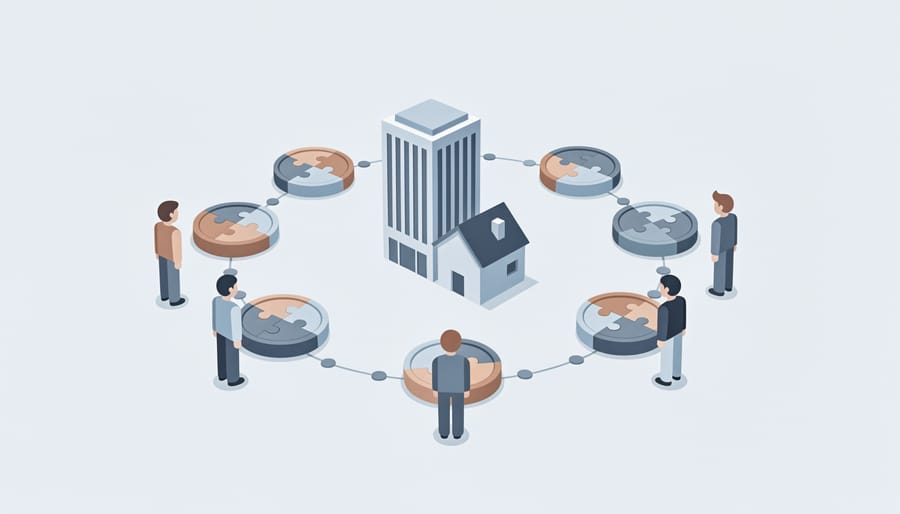
Here’s how it works: A property owner uses blockchain infrastructure to divide their asset into digital tokens, each representing a fractional ownership stake. These tokens are recorded on an immutable ledger, ensuring transparent ownership records that can’t be disputed or altered. Investors can then purchase as few or as many tokens as their budget allows, making blockchain real estate investment accessible to everyday people, not just institutional players.
The benefits are substantial. Entry barriers drop dramatically—you might invest a few thousand dollars instead of hundreds of thousands. Liquidity increases because tokens can potentially be traded on secondary markets, unlike traditional properties that take months to sell. Property owners benefit too, gaining access to broader investor pools and faster capital deployment.
From an insurance perspective, tokenized properties still require standard coverage, but the ownership structure may necessitate specialized policies that recognize multiple fractional stakeholders. As this technology matures, expect new insurance products designed specifically for tokenized assets, protecting both individual token holders and the underlying property itself against various risks.
Smart Contracts Replacing Traditional Investment Paperwork
Smart contracts are essentially self-executing programs that automatically carry out agreed-upon actions when specific conditions are met, eliminating the mountain of paperwork typically involved in real estate investments. Think of them as digital agreements that don’t need lawyers or accountants constantly monitoring and processing transactions.
In blockchain-based real estate investments, these smart contracts handle the tedious administrative tasks that traditionally consume time and money. When rental income flows in from a tokenized property, the smart contract automatically calculates each investor’s share based on their token holdings and distributes payments directly to their digital wallets. No more waiting weeks for manual processing or paying intermediaries to cut checks.
The same automation applies to dividend distributions and voting rights. Property owners can instantly poll token holders on major decisions like renovations or tenant policies, with voting power automatically weighted by ownership percentage. The results are transparent and tamper-proof.
The cost savings are significant. Traditional real estate syndications often charge 1-2% annually for administrative overhead, but smart contracts reduce these expenses to fractions of a percent. For a $1 million investment, that’s potentially $10,000-$20,000 saved each year. Plus, distributions that once took days or weeks now happen in minutes, improving cash flow for all investors involved.
Real Benefits for Property Investors and Homeowners
Faster Transactions, Lower Costs
Traditional real estate transactions involve numerous intermediaries—lawyers, title companies, escrow agents, and banks—each adding time and cost to the process. Blockchain infrastructure streamlines this by creating a shared, transparent ledger that all parties can access simultaneously. This eliminates redundant verification steps and reduces the need for multiple middlemen to validate information.
The impact on settlement times is dramatic. Property transactions that typically take 30 to 90 days can potentially close in just days or even hours using blockchain-based systems. Smart contracts automatically execute agreements when predetermined conditions are met, removing the back-and-forth delays inherent in traditional paper-based processes.
Transaction costs drop significantly as well. By cutting out intermediary fees, blockchain can reduce closing costs by thousands of dollars per transaction. Title insurance premiums, escrow fees, and administrative charges all decrease when verification happens instantaneously on the blockchain rather than through multiple manual reviews. For real estate professionals, this means more competitive pricing for clients. For homebuyers, it translates to meaningful savings at the closing table—money that can go toward improvements or building equity instead of administrative overhead.
Enhanced Transparency and Security
One of blockchain’s most compelling advantages in real estate is its ability to create an unchangeable digital ledger of every transaction. Think of it as a permanent, tamper-proof record book that no single person or entity controls. When a property changes hands or liens are recorded, that information gets locked into the blockchain permanently, making it virtually impossible to alter or falsify records after the fact.
This immutable record-keeping dramatically reduces fraud risk in property transactions. Traditional systems rely on paper documents and centralized databases that can be manipulated, lost, or contain errors. With blockchain, investors and homebuyers can instantly verify property ownership, review complete transaction histories, and confirm there are no hidden claims or disputes tied to a property. This transparency eliminates the weeks-long title search process and reduces the need for expensive title insurance premiums.
For real estate professionals, this means fewer closing delays and greater client confidence. Homebuyers gain peace of mind knowing they can independently verify ownership chains within minutes rather than days. The technology essentially creates a single source of truth that all parties can access and trust, streamlining due diligence while protecting everyone involved from costly mistakes or fraudulent schemes that plague traditional property markets.
Access to Previously Unavailable Investments
Blockchain infrastructure is breaking down barriers that previously kept everyday investors out of lucrative property markets. Traditionally, commercial real estate deals, high-end international properties, and institutional-grade investments required hundreds of thousands or even millions in capital. Only accredited investors or ultra-wealthy individuals could participate in these opportunities.
Now, blockchain-powered platforms are changing this landscape entirely. Through tokenization, expensive properties are divided into digital shares that investors can purchase for as little as a few hundred dollars. This means you can own a fraction of a Class A office building in Manhattan or a luxury development in Dubai without needing massive capital reserves.
This democratization extends beyond real estate crowdfunding. Blockchain infrastructure enables direct ownership through secure digital tokens, providing transparency and liquidity that traditional investment vehicles lack. You can diversify across multiple properties and geographic markets with smaller amounts, spreading risk while accessing professional-grade assets. From an insurance perspective, this accessibility also means more investors need to understand property-level coverage and how tokenized ownership affects policy structures, creating new considerations for both investors and industry professionals navigating this evolving landscape.

The Insurance and Lending Connection
Streamlined Title Insurance and Verification
Title insurance has long been a necessary but expensive component of real estate transactions, protecting buyers and lenders against ownership disputes and hidden claims. Traditional title searches require exhaustive manual review of public records, creating opportunities for errors and fraud while driving up costs. Blockchain technology offers a compelling solution by creating immutable, transparent ownership registries that dramatically simplify verification processes.
When property titles are recorded on a blockchain, every transaction creates a permanent, time-stamped record that cannot be altered or deleted. This creates a complete ownership history accessible to all authorized parties in real-time. Title companies can instantly verify ownership chains that previously required days or weeks of research through multiple jurisdictions and record systems.
The result? Significant cost reductions for homebuyers and property investors. Some blockchain-based title platforms have reduced title search costs by up to 80% while simultaneously decreasing the risk of title defects. Insurance premiums may eventually decline as the risk profile improves with more reliable record-keeping.
For real estate professionals, this means faster closings and fewer delays caused by title issues. The technology essentially creates a self-verifying system where ownership authenticity is built into the infrastructure itself, transforming title insurance from a complex necessity into a streamlined, cost-effective safeguard.
Blockchain-Enabled Mortgage Processing
Blockchain is transforming how mortgages get processed, making what traditionally takes weeks happen in days—or even hours. Think of blockchain platforms as digital conveyor belts that automatically verify your credentials, check your credit history, and assess your loan eligibility without the endless paperwork shuffle between banks, title companies, and credit bureaus.
Here’s how it works in practice: When you apply for a mortgage through a blockchain-enabled platform, your financial information lives on a secure, shared ledger that authorized parties can access instantly. Instead of manually pulling credit reports and verifying employment three separate times, the system does it once—accurately and transparently. Smart contracts then automatically trigger the next steps in underwriting based on preset criteria, reducing human error and processing delays.
Several platforms are already piloting automated underwriting systems that pull from blockchain-verified credit histories and property records. This means faster pre-approvals for buyers and reduced operational costs for lenders—savings that often translate to lower fees for borrowers. The technology also creates an immutable audit trail, which is particularly valuable for insurance underwriters who need to verify property ownership history and outstanding liens before issuing title insurance policies.
Challenges and Considerations Before You Jump In
While blockchain infrastructure offers exciting possibilities for real estate investment, it’s essential to approach this emerging space with clear eyes and realistic expectations.
The regulatory landscape remains one of the biggest question marks. Different jurisdictions are still figuring out how to classify and govern blockchain-based property investments. What’s permitted in one region might be restricted in another, and alternative investment regulations continue to evolve rapidly. This uncertainty can complicate due diligence and create unexpected compliance hurdles for real estate professionals and their clients.
Technology adoption presents another practical challenge. Despite the hype, blockchain infrastructure for real estate is still relatively young. Not all platforms have proven track records, and the integration with traditional property systems, title companies, and legal frameworks remains incomplete in many markets. You may find limited inventory of quality properties available through blockchain-based platforms compared to conventional channels.
Liquidity assumptions deserve scrutiny too. While tokenization promises easier entry and exit from real estate investments, secondary markets for these digital assets are still developing. The ability to quickly sell your stake isn’t guaranteed, particularly for niche properties or smaller platforms with fewer active traders.
Technical complexity also shouldn’t be underestimated. Understanding digital wallets, private keys, and blockchain security requires a learning curve. Lost credentials can mean lost investments, with no customer service hotline to recover your access.
Finally, consider the fee structures carefully. Some platforms charge technology fees on top of traditional real estate costs, potentially eroding returns. Always calculate total costs before committing capital to ensure the investment aligns with your financial goals and risk tolerance.
What Real Estate Professionals Need to Know Now
The blockchain revolution won’t wait for anyone to catch up, but the good news is that you don’t need a computer science degree to stay relevant. Start by educating yourself through accessible resources specifically designed for real estate professionals. Organizations like the National Association of Realtors now offer blockchain-focused webinars and certification programs that translate technical concepts into practical applications you’ll actually use.
Consider partnering with proptech companies already piloting blockchain solutions in your market. Early adopters gain invaluable experience while building relationships with innovative platforms before they become industry standards. Look for opportunities to participate in tokenized property deals, even in small capacities, to understand the investor experience firsthand.
Position yourself as a forward-thinking professional by developing fluency in blockchain terminology without drowning in technical details. When clients ask about digital ownership or fractional investments, you should confidently explain how these mechanisms work and their implications for property transactions and insurance coverage.
Connect with title companies and escrow services exploring blockchain integration. These partnerships will give you front-row seats to how the technology streamlines closings and reduces fraud risk. Some forward-looking professionals are even creating educational content for their clients, establishing themselves as trusted guides through this technological transition.
The most practical step? Start following blockchain real estate case studies and pilot programs in major markets. Understanding what worked, what failed, and why will help you advise clients intelligently when blockchain-based opportunities emerge in your area. Remember, you don’t need to become a blockchain expert overnight, but maintaining informed awareness positions you as a valuable resource rather than an obsolete intermediary.

Infrastructure blockchain represents more than just a technological buzzword—it’s a genuine shift in how real estate alternative investments can be structured, accessed, and managed. From tokenizing physical properties to creating transparent ownership records, this foundational technology has the potential to democratize investments that were once available only to institutional players or ultra-high-net-worth individuals. The ability to fractionalize assets, reduce transaction costs, and increase liquidity could fundamentally reshape your investment portfolio options.
That said, it’s essential to maintain realistic expectations. Infrastructure blockchain is still maturing, and regulatory frameworks continue to evolve. Not every blockchain-based real estate opportunity will deliver on its promises, and traditional due diligence remains as important as ever. The technology solves certain problems exceptionally well—transparency, security, and accessibility—but it doesn’t eliminate investment risk or replace sound financial judgment.
For real estate professionals, staying informed about these developments isn’t optional anymore. Whether you’re advising clients, managing properties, or building your own investment strategy, understanding how blockchain infrastructure works gives you a competitive edge. Consider which specific pain points in your current practice or portfolio this technology might address. Is it liquidity? Access to diverse markets? Operational efficiency?
The question isn’t whether blockchain will impact real estate investments, but how quickly and in what ways. By educating yourself now, you position yourself to capitalize on opportunities as they emerge while avoiding overhyped pitfalls.