
Assess your property’s climate vulnerability using digital risk mapping tools that combine FEMA flood zones, wildfire probability data, and heat island indexes to identify specific threats to your investment. These platforms, increasingly integrated into real estate tech trends, provide granular analysis that traditional appraisals miss, revealing whether your asset faces storm surge risks, drought conditions, or extreme temperature exposure.
Implement property-level mitigation strategies based on your vulnerability assessment, such as installing flood barriers, upgrading to impact-resistant windows, or retrofitting HVAC systems for extreme heat performance. Document these improvements thoroughly, as insurers now offer premium discounts up to 25% for verified climate adaptations, directly improving your property’s cash flow while reducing replacement costs.
Integrate climate projections into your acquisition and portfolio management decisions by analyzing 10-30 year risk forecasts for target markets. Cities investing in seawalls, upgraded drainage systems, and resilient infrastructure maintain stronger property values, while areas ignoring climate adaptation face mounting insurance costs and declining marketability.
The urgency is clear: climate-related property losses exceeded $165 billion in 2023 alone, with insurance companies withdrawing coverage from high-risk markets entirely. Property owners who treat climate resilience as a core investment strategy, not an afterthought, protect their equity while gaining competitive advantages in markets where buyers increasingly demand proof of climate preparedness. The intersection of property technology, insurance innovation, and forward-thinking risk management creates unprecedented opportunities for real estate professionals to safeguard assets and maintain profitability despite environmental uncertainty. Understanding how to leverage these tools transforms climate risk from an abstract threat into manageable, quantifiable factors within your investment framework.
Understanding Climate Risk in Real Estate: Beyond Weather Forecasts
The Financial Stakes: Insurance Premiums, Property Values, and Lending Standards
Climate change isn’t just an environmental concern anymore—it’s hitting property owners squarely in the wallet. The financial implications of climate risk are reshaping how we think about real estate investments, often in ways that catch people off guard.
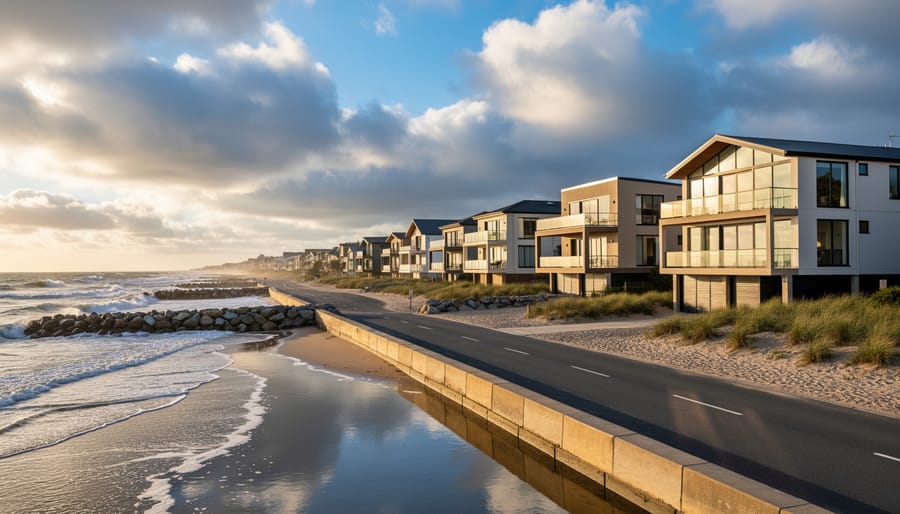
Let’s start with insurance premiums, which have become one of the most immediate pain points. Homeowners in flood-prone areas have watched their annual premiums jump by 30-50% in recent years, and that’s if they can secure coverage at all. Coastal properties and wildfire zones are seeing insurers pull out entirely, forcing owners into state-backed insurance pools that often cost two to three times standard market rates. Some property owners are now spending as much on insurance as they do on their mortgage payment—a reality that fundamentally changes the economics of homeownership.
Property values are taking a hit too, particularly in high-risk zones. Recent studies show that homes in FEMA-designated flood plains sell for 5-10% less than comparable properties just outside these areas. This “climate discount” is becoming more pronounced as buyers grow savvier about long-term risks. Waterfront properties that once commanded premium prices are now struggling to maintain value as potential buyers factor in rising sea levels and storm surge potential.
Banks are also tightening the purse strings. Major lenders now incorporate climate risk assessments into their underwriting processes, which means mortgages in vulnerable areas may require larger down payments or carry higher interest rates. Some financial institutions are even declining to finance properties in extreme-risk zones altogether, effectively limiting the pool of potential buyers and further depressing property values. Understanding these interconnected financial pressures is essential for anyone looking to protect their real estate investments in an era of increasing climate uncertainty.
How PropTech Climate Risk Modeling Works
Key Metrics PropTech Platforms Measure
PropTech platforms have transformed how we evaluate climate risks, turning complex environmental data into actionable property intelligence. These sophisticated tools measure specific metrics that directly impact your investment decisions and insurance costs.
Flood probability scores rank among the most critical measurements. These platforms analyze historical flood data, rainfall patterns, watershed dynamics, and drainage infrastructure to assign risk ratings—typically on scales from 1 to 10 or minimal to extreme. A property with a score above 7 generally faces significant flood insurance premiums and may require flood mitigation investments before purchase.
Wildfire risk zones use proximity calculations, vegetation density, topography, and prevailing wind patterns to determine danger levels. Properties in high-risk zones (often designated as red zones) can see insurance premiums triple or face coverage denials altogether. Understanding these designations helps you negotiate purchase prices that reflect true risk exposure.
Heat stress indices measure how rising temperatures will affect property habitability and operating costs. These metrics project cooling demands, energy expenses, and infrastructure strain over 10 to 30-year horizons. For commercial properties, high heat stress scores translate directly to increased operational costs that affect net operating income calculations.
Sea-level rise projections provide timeline-based risk assessments, showing whether a coastal property faces inundation threats within 10, 25, or 50 years. These long-term forecasts are essential for mortgage underwriting and exit strategy planning, as properties with near-term sea-level vulnerability face declining marketability.
Storm surge vulnerability assessments combine elevation data, coastal proximity, and historical hurricane patterns to predict potential damage from major weather events. Properties in high-vulnerability zones require specific insurance riders and may need structural reinforcements that significantly impact renovation budgets.
Each metric serves as a financial planning tool, helping you calculate true cost of ownership beyond the purchase price and standard insurance premiums.

Building Your Climate Resilience Plan: A Practical Framework
Physical Property Adaptations That Make a Difference
Protecting your property investment from climate threats doesn’t have to be overwhelming or prohibitively expensive. Let’s break down some proven physical adaptations that deliver real value.
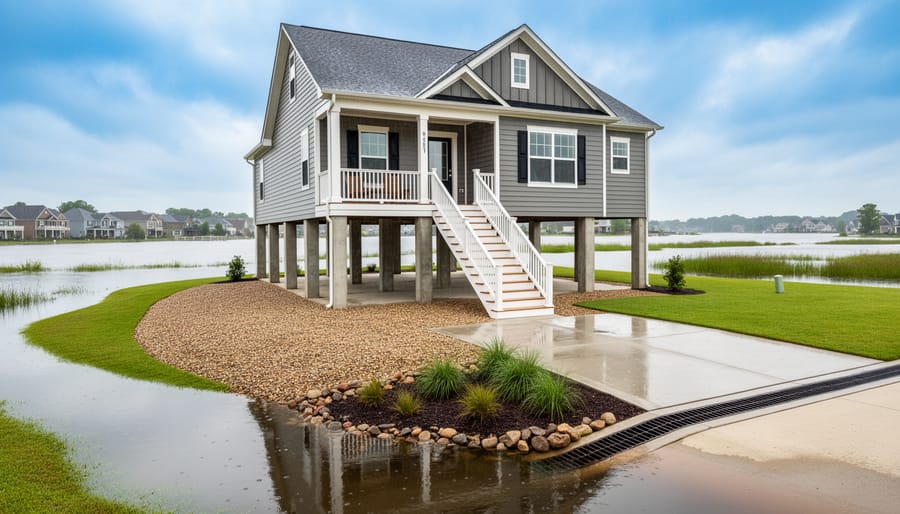
Flood barriers represent one of the most direct interventions available. Deployable flood barriers for residential properties typically cost between $3,000 and $15,000 depending on perimeter size, while permanent landscaping solutions like berms or retention ponds range from $5,000 to $25,000. The ROI? Properties in FEMA flood zones can see insurance premium reductions of 20-40% with certified mitigation measures, recovering costs within 5-10 years.
Fire-resistant landscaping has become essential in wildfire-prone regions. Converting traditional yards to defensible space with native, fire-resistant plants costs approximately $2,500 to $8,000 for an average property. Beyond the obvious safety benefits, homeowners insurance providers in high-risk areas often mandate these improvements or offer premium discounts of 10-25%, making this adaptation financially sensible.
Improved drainage systems address both flooding and foundation protection. French drains, grading improvements, and permeable paving typically require $3,000 to $12,000 investments. These upgrades prevent costly water damage while potentially adding 3-5% to property valuations in areas with documented drainage issues.
Backup power solutions have evolved significantly. Whole-home generators range from $7,000 to $15,000 installed, while battery systems integrated with smart building technology cost $10,000 to $25,000. These systems increasingly qualify for tax incentives and can reduce business interruption losses for rental properties.
Cooling infrastructure upgrades include reflective roofing ($8,000-$15,000), upgraded HVAC systems ($5,000-$12,000), and exterior shading ($2,000-$8,000). In heat-vulnerable markets, these improvements deliver immediate utility cost savings of 15-30% annually while enhancing tenant retention and property marketability.
The key consideration? Prioritize adaptations based on your specific climate risks and insurance exposure. Many improvements pay for themselves through premium reductions, energy savings, and enhanced property values.
Insurance and Financial Planning Strategies
Climate risk data has become essential currency when negotiating with insurance providers. Before approaching insurers, gather comprehensive documentation including flood zone maps, wildfire risk assessments, wind exposure studies, and any resilience upgrades you’ve completed. This proactive approach demonstrates your awareness and can significantly strengthen your position during coverage discussions.
In high-risk areas, securing affordable coverage requires strategic planning. Consider working with specialized brokers who understand climate-exposed properties and have relationships with carriers willing to write policies in challenging markets. Bundling multiple properties, increasing deductibles strategically, and documenting mitigation efforts like storm shutters or fire-resistant landscaping can all improve your insurability. Some property owners are also exploring surplus lines insurers, though these typically come at premium costs.
Parametric insurance represents a cutting-edge solution gaining traction in climate-vulnerable markets. Unlike traditional policies that pay based on actual damage assessment, parametric products trigger automatic payouts when specific conditions occur, such as wind speeds exceeding predetermined thresholds or rainfall amounts reaching certain levels. This means faster claims processing and greater certainty, particularly valuable for investors managing multiple properties or those in areas where traditional coverage has become scarce or prohibitively expensive.
When conducting investment analysis, incorporating climate risk is no longer optional. Factor in projected insurance cost increases over your hold period, potential appreciation impacts in high-risk zones, and liquidity concerns if climate events make properties harder to sell. Forward-thinking investors are also evaluating properties based on 20-30 year climate projections rather than historical data alone, recognizing that past performance increasingly fails to predict future risk in our changing climate.
PropTech Platforms Leading the Climate Resilience Revolution
Several PropTech platforms have emerged as leaders in helping property professionals and owners navigate climate risks, each offering distinct approaches to resilience planning.
Climate risk assessment platforms like First Street Foundation’s Risk Factor and Jupiter Intelligence provide detailed flood, fire, and heat exposure data down to individual property addresses. Risk Factor offers free consumer-facing reports showing 30-year climate projections, making it invaluable for homebuyers conducting due diligence. Jupiter Intelligence caters more to institutional investors and insurance companies with sophisticated modeling that factors in various climate scenarios, typically through enterprise pricing arrangements.
For real estate professionals managing portfolios, platforms such as ClimateCheck and Climate Alpha integrate climate data directly into property valuations. ClimateCheck assigns properties climate scores based on five risk categories and costs around $50-100 per report for individual assessments, with volume discounts available. This transparency helps agents advise clients more effectively and price properties appropriately given their risk profiles.
On the adaptation side, CubicFort and Urban Sky focus on resilience planning features. These platforms help property managers identify specific vulnerabilities and prioritize retrofit investments, from flood barriers to cooling system upgrades. Most operate on subscription models ranging from $500 to several thousand dollars annually, depending on portfolio size.
Insurance-focused platforms like Cape Analytics use aerial imagery and AI to assess property conditions remotely, helping insurers price policies more accurately while giving property owners insights into how structural improvements might reduce premiums. Understanding these risk assessments becomes increasingly important as carriers adjust coverage in high-risk areas.
When selecting a platform, consider your primary need: Are you assessing risk before purchase, managing an existing portfolio, or planning specific adaptations? Most platforms offer trial periods or demo reports, allowing you to evaluate which data presentation and features align with your decision-making process before committing financially.
Regulatory Trends and Disclosure Requirements You Need to Know
The regulatory landscape around climate risk disclosure is evolving rapidly, and if you’re in real estate, you need to pay attention. What was once considered optional “nice-to-have” information is quickly becoming mandatory disclosure territory.
The Securities and Exchange Commission has introduced climate disclosure rules that directly impact Real Estate Investment Trusts (REITs) and publicly traded real estate companies. These regulations require detailed reporting on climate-related risks that could materially affect property values, including physical risks like flooding or wildfire exposure and transition risks related to regulatory changes. While the final rules have faced legal challenges and delays, the direction is clear: investors want transparency about climate vulnerabilities.
At the state level, things are moving even faster. California leads the pack with Senate Bill 253, requiring large companies to disclose their greenhouse gas emissions. New York has implemented similar requirements through its climate disclosure act. Several coastal states are developing mandatory flood risk disclosure requirements for property transactions, going well beyond traditional FEMA flood zone designations.
For real estate professionals, these regulatory trends are fundamentally reshaping the due diligence process. Buyers increasingly expect comprehensive climate risk assessments before closing, not just basic environmental reports. This means pulling together data on everything from historical flooding patterns to projected temperature increases over a 30-year mortgage period.
The practical impact? You’ll need to integrate climate risk analysis into your standard transaction workflows. This includes obtaining specialized risk reports, understanding how different climate scenarios might affect property insurance costs and availability, and being prepared to explain these factors to clients. Forward-thinking professionals are already incorporating PropTech solutions that aggregate climate data and translate it into actionable insights for property decisions.
These regulations aren’t just compliance boxes to check. They’re changing what buyers value and how properties are priced, making climate resilience planning an essential component of responsible real estate practice.
Making Climate Resilience a Competitive Advantage
The conversation around climate resilience is evolving rapidly, and savvy real estate professionals are discovering that what once seemed like a costly obligation can actually become a powerful market differentiator. Properties that demonstrate robust climate resilience aren’t just protecting against future risks—they’re commanding premium prices today.
Recent market data tells a compelling story. Climate-resilient properties consistently achieve 7-15% higher valuations compared to similar properties without protective measures. Why? Because buyers and tenants increasingly recognize that flood barriers, backup power systems, and advanced HVAC technologies aren’t luxuries—they’re essential features that protect their investment and ensure uninterrupted operations.
The tenant attraction advantage is equally significant. Quality commercial tenants, particularly those with business continuity requirements, actively seek properties with documented resilience plans. They understand that operational downtime from climate events translates directly to revenue loss. For residential properties, discerning renters are willing to pay premium rents for peace of mind, knowing their homes can weather the next major storm.
Perhaps most importantly, ESG-conscious investors are actively prioritizing climate-resilient properties in their portfolios. These investors recognize that resilience directly impacts long-term asset performance and aligns with their sustainability mandates.
Marketing your property’s climate resilience requires strategic positioning. Highlight certifications like LEED, FORTIFIED Home, or the Insurance Institute for Business & Home Safety’s verification programs. These third-party validations provide credibility and differentiate your property in listings. Create a resilience narrative that emphasizes proactive protection rather than reactive repairs. Document your climate risk assessments, mitigation measures, and ongoing monitoring systems—transparency builds trust and justifies premium pricing.
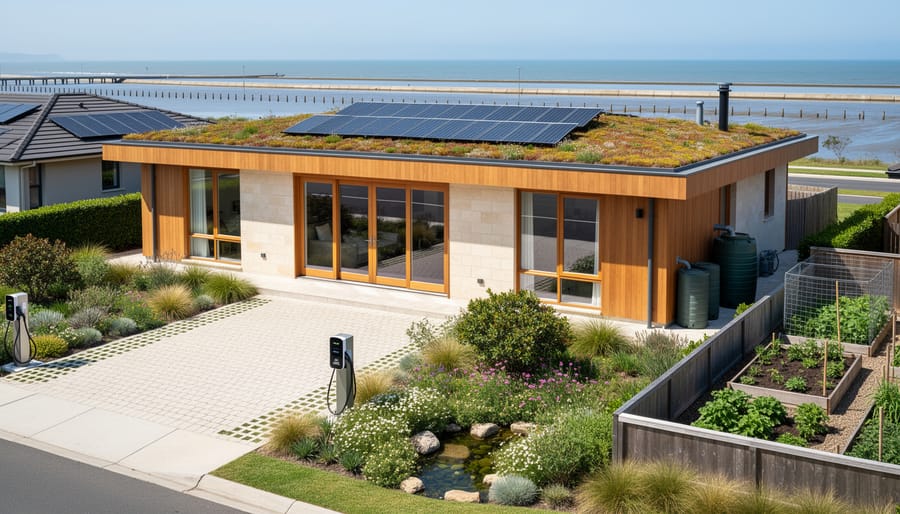
Climate resilience planning has shifted from a forward-thinking option to an absolute necessity for anyone holding real estate assets. The evidence is clear: properties exposed to climate risks face declining values, rising insurance costs, and potential uninsurability. The good news? You don’t need to be a climate scientist to protect your investments.
Start by taking tangible first steps. Use free online tools like FEMA’s flood maps or the First Street Foundation’s Risk Factor database to assess your properties’ vulnerabilities. These resources provide immediate insights without requiring specialized knowledge. Next, schedule a consultation with a climate-informed insurance broker who understands emerging coverage gaps and can recommend policies that actually protect against evolving risks, not just yesterday’s threats.
Most importantly, integrate climate resilience metrics into your investment decisions from day one. When evaluating properties, consider elevation data, wildfire proximity, heat island effects, and infrastructure adaptability alongside traditional factors like location and price. PropTech platforms are making this easier than ever, embedding climate data directly into listing information and valuation models.
Looking ahead, climate-aware real estate isn’t a niche market—it’s becoming the standard. Properties with documented resilience features will command premiums, while vulnerable assets without adaptation plans will struggle to maintain value. The transition is already underway, and early adopters are positioning themselves advantageously. Whether you own one home or manage a diverse portfolio, the time to act is now. Your future self, and your investment returns, will thank you for taking climate resilience seriously today.