
Executive Summary: What Toronto Buyers Will Learn in This Guide
Toronto buyers will learn how to separate everyday listing language from legal ownership structure, so they can compare condo-style units with more confidence. This guide also shows how to assess total monthly cost when reviewing apartments for sale, including fees, taxes, and commute trade-offs, helping first-time buyers in Toronto make decisions that fit both budget and long-term plans.
Apartment Vs Condo in Canada: Why These Terms Get Confusing
People in Canada often use apartment and condo as if they mean the same thing, especially when they are talking casually about buildings with multiple units. That is where buyers get confused. A unit can look like an apartment but still be sold as a condo, and that changes the ownership details and monthly costs. While searching apartments for sale, many Toronto buyers also mix up condo Vs apartment Canada terms, which can lead to weak comparisons and the wrong shortlist.
The Real Difference Between an Apartment and a Condo in Canada
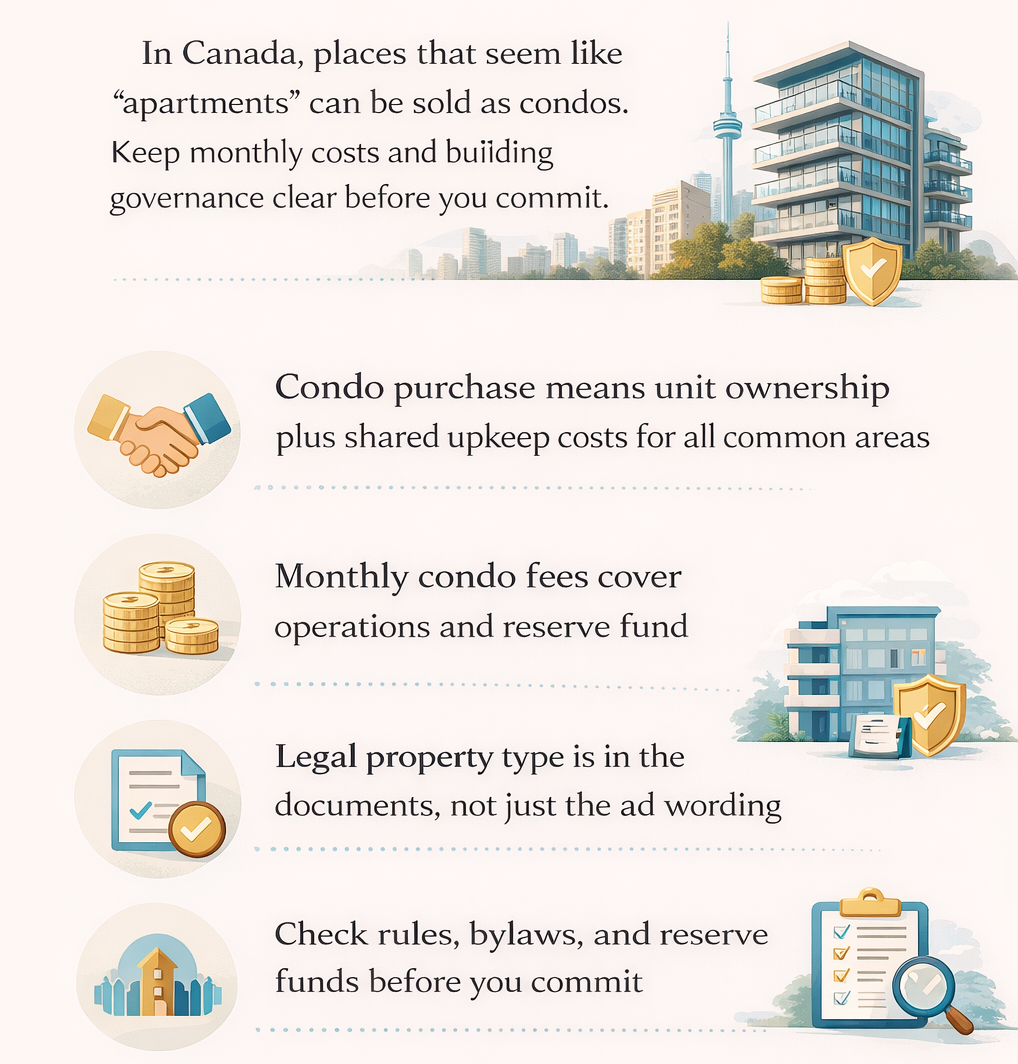
Most buyers get the best clarity by ignoring the building’s look and focusing on who legally owns the unit and who pays for shared upkeep. In Canada, a place that feels like an “apartment” can still be sold as a condo, and that change affects fees, rules, and your ability to renovate, rent out, or sell smoothly.
Toronto buyers can use this quick check when comparing apartments for sale and condo listings, keeping monthly carrying costs and building governance front and centre:
- A condo purchase means you own the unit and share responsibility for common areas through a condo corporation
- Monthly condo fees usually cover building operations and reserve fund contributions
- Listing wording can be casual, so confirm the legal property type in the documents, not just the ad
- Review bylaws, reserve fund strength, and restrictions before you commit
What Toronto First-Time Buyers Should Compare Beyond Apartment Vs Condo
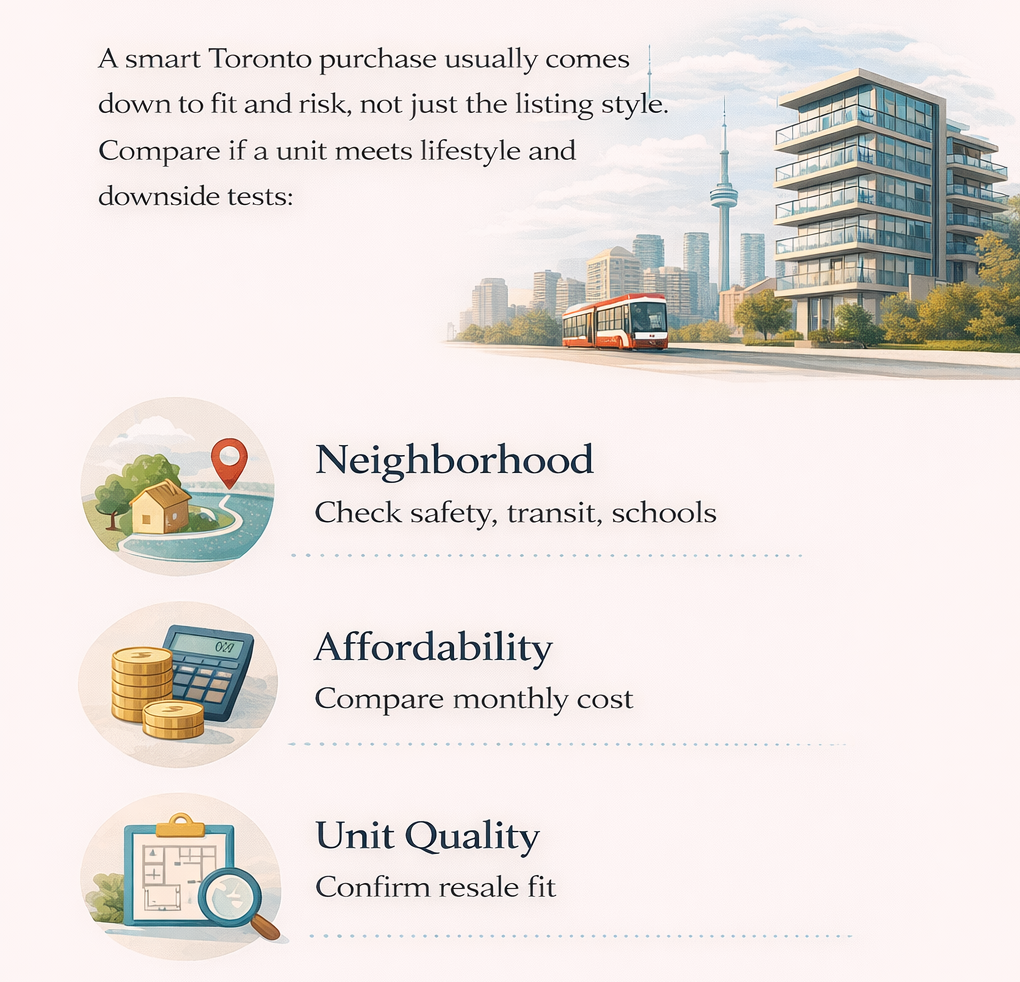
A smart Toronto purchase usually comes down to fit and risk, not just whether a listing is described as an apartment or a condo. For first-time buyers comparing apartments for sale, the better question is how the unit will perform in daily life and over the next five to seven years.
Neighbourhood and daily routine
Start with neighbourhood safety and commute reality, because these affect lifestyle and resale at the same time. Check street lighting, foot traffic, nearby essentials, and TTC access during the hours you will actually travel. If children may be part of your plan later, review school catchment boundaries early rather than treating them as a future problem.
Budget and total ownership cost
Focus on total monthly cost, not only the list price. A lower-priced unit can become harder to carry once condo fees, property taxes, utilities, and insurance are added. First-time home buyers in Toronto should compare mortgage affordability using a realistic payment range, not the maximum approval amount.
Unit quality and future flexibility
Look closely at layout efficiency and long-term usability. Natural light, bedroom placement, storage, building age, and noise exposure can matter more than square footage on paper. When comparing condo Vs apartment Canada-style listings, choose the option that supports resale potential and everyday comfort together.
Hidden Costs Buyers Miss When Comparing Apartments for Sale
Buyers often feel confident after comparing a few prices, then get hit with extra charges that were never part of the headline number. To avoid that, treat the sticker price as a starting estimate and build a real monthly budget early. If you want a faster way to sanity check your shortlist, you can browse apartments for sale in Canada while keeping your Toronto filters and must-haves in mind.
- Condo fees can rise, and unusually low fees may point to maintenance catching up later
- Taxes, utilities, and insurance can push your monthly carrying cost higher than expected
- Parking, lockers, and move-in or elevator booking charges may be billed separately
- Legal fees, adjustments, and land transfer taxes are common closing costs first-time buyers miss
How to Search Apartments for Sale in Toronto Without Rental Confusion
A lot of buyers waste hours at the search stage because rental pages and for-sale listings get mixed together, and the results start to look useful when they are not. The fix is simple. Build a buyer-first filter set and a shortlist checklist before you click too deep. Start with price range, bedrooms, neighbourhoods, and commute time, then screen for building type and monthly cost.
Once a listing looks promising, confirm it is actually for sale and not rental inventory copied into broad search pages. Toronto buyers reviewing apartments for sale should also note parking, maintenance fees, and status certificate flags in one tracking sheet, so each comparison stays fair and easier to review later.
Quick Checklist Before You Choose a Condo or Apartment-Style Unit
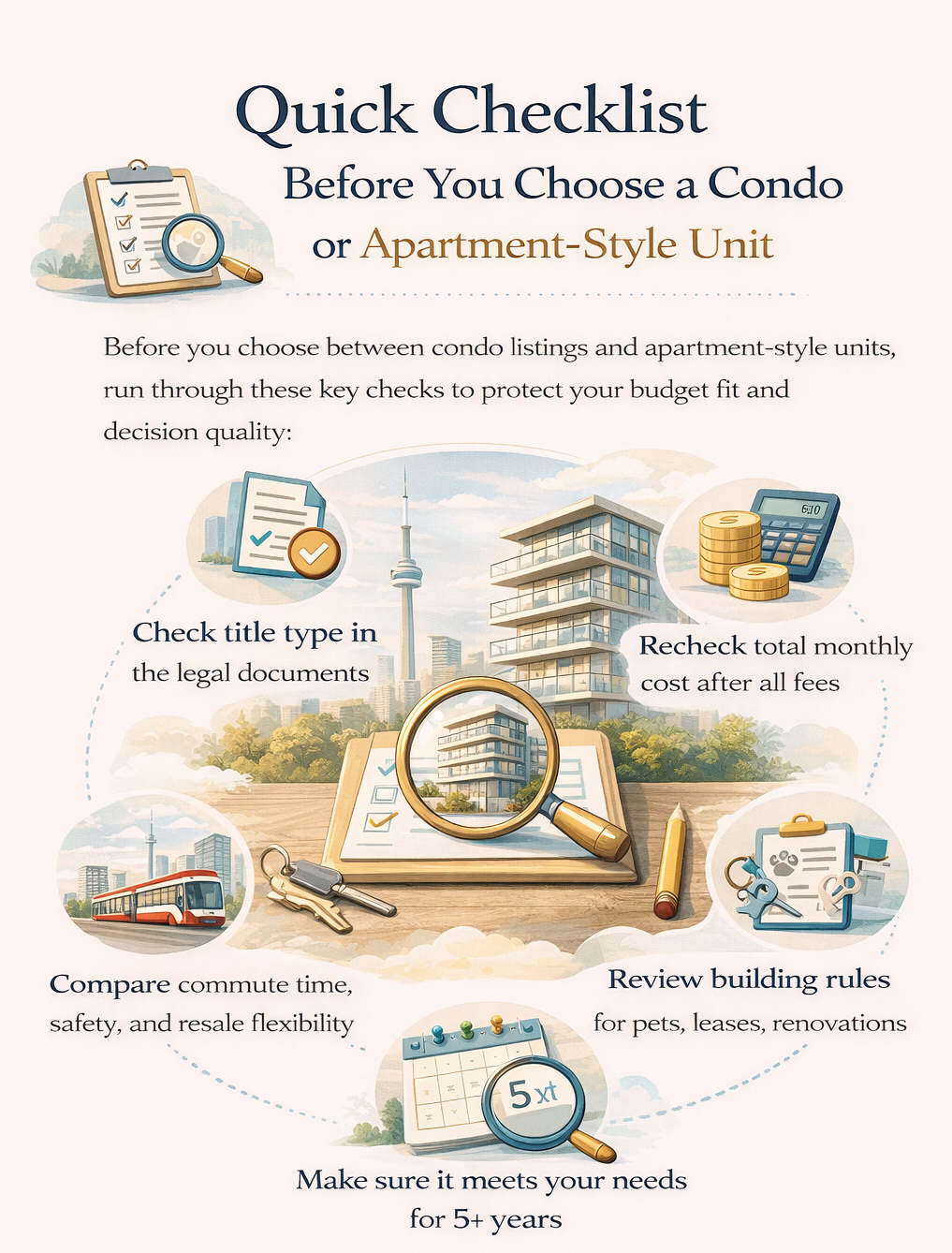
Before you choose between condo listings and apartment-style units, run a quick check that protects your budget fit and decision quality. This step helps Toronto buyers avoid rushed offers and compare apartments for sale with a more consistent standard.
- Confirm the unit type in the legal listing details, not only the headline wording
- Recheck total monthly cost after fees, taxes, insurance, and utilities
- Review building rules that may affect pets, leasing, or renovations
- Compare commute time, neighbourhood safety, and resale flexibility together
- Make sure the unit still fits your needs over the next five years
Final Takeaway for First-Time Buyers in Toronto
For many first-time buyers in Toronto, the smarter choice is not the listing that sounds better on paper. It is the one you can comfortably live in and carry month after month. When comparing apartments for sale, keep your real-life needs and five-year plan in view, so your decision works not only at closing, but also after you move in.
FAQs
Can you buy an apartment in Canada, or are buyers usually purchasing a condo?
In most Canadian home-buying situations, the unit people call an apartment is legally a condo. What matters is the title type and the ownership documents, because those define your rights, shared responsibilities, and ongoing costs.
Do condo fees mean a unit is a bad deal?
Not necessarily. Condo fees should be judged based on building condition, amenities, and reserve planning. A lower fee can look attractive, but weak maintenance or underfunding can create future costs and buyer risk later.
What should first-time buyers in Toronto check before making an offer?
A smart review includes financing comfort, building rules, parking, and status certificate details. Buyers comparing apartments for sale should also confirm the monthly carrying costs and resale flexibility before deciding.
Is “apartment Vs condo in Canada” mostly a language issue?
In many cases, yes. The bigger issue for buyers is not the label but the legal setup, fees, and restrictions attached to the unit.