
Review your property tax assessment notice within 30 days of receipt to identify calculation errors, incorrect property characteristics, or outdated square footage that could inflate your bill by thousands of dollars annually. Contact your local assessor’s office immediately if you spot discrepancies—most jurisdictions allow informal reviews before formal appeals become necessary.
Compare your assessed value against recently sold comparable properties in your neighborhood using public records or real estate databases. If your assessment exceeds market value by 10% or more, you have strong grounds for an appeal. Document everything with photographs, recent appraisals, and repair estimates for any property damage that affects value.
Research available exemptions that could significantly reduce your tax burden. Homestead exemptions typically save primary residents 20-50% on taxable value, while senior, veteran, disability, and agricultural exemptions offer additional relief. Many homeowners—particularly first-time homebuyers—leave thousands unclaimed simply because they don’t know these programs exist or assume they don’t qualify.
Understand your payment options before facing penalties. Most jurisdictions offer quarterly or semi-annual installment plans that ease cash flow pressure, while some provide deferral programs for those experiencing financial hardship. Missing deadlines typically triggers interest rates of 8-18% annually plus penalties, transforming manageable obligations into financial crises.
Property taxes fund essential services but shouldn’t remain a mystery. Knowing how assessments work, when to challenge them, which exemptions apply, and how to manage payments strategically protects your investment and prevents unnecessary financial stress.
How Property Tax Is Actually Calculated (And Why Your Bill Seems Wrong)

The Assessment Factor Nobody Explains
Here’s the truth most homeowners miss: your property’s assessed value rarely matches what you could sell it for today. Understanding this distinction is crucial to making sense of your tax bill.
Assessment is the behind-the-scenes process where municipal assessors determine your property’s value for taxation purposes. They typically evaluate your home every one to four years, depending on your jurisdiction, using three main approaches: comparing recent sales of similar properties in your area, calculating the cost to rebuild your home, or analyzing potential income if it’s a rental property. The assessor considers factors like square footage, lot size, location, age, condition, and recent renovations.
The key confusion lies in the difference between property tax vs tax assessment. Your assessed value is what the municipality says your property is worth for tax calculation purposes, while market value is what a buyer would actually pay in today’s real estate market. These numbers can diverge significantly.
Many jurisdictions apply an assessment ratio, valuing properties at a percentage of market value. For example, if your municipality uses an 80% assessment ratio and your home’s market value is $500,000, your assessed value would be $400,000. This assessed value then gets multiplied by the local tax rate to determine your actual property tax bill. Understanding this formula empowers you to spot errors and potentially challenge unfair assessments.
When Tax Rates Change (And When They Don’t)
Property tax rates don’t change simply because your home’s value increases. Here’s what actually triggers rate adjustments: local government budgets. When your city, county, or school district needs more revenue to cover expenses like infrastructure improvements, teacher salaries, or public safety services, they may increase the tax rate (often called the millage rate). Conversely, if property values across your area rise substantially, municipalities might actually lower rates to collect the same total revenue, a concept called revenue neutrality.
The key distinction many homeowners miss is that your individual tax bill can climb even when rates stay flat, if your assessed value increases faster than your neighbors’ properties. Think of it this way: rates are set collectively based on community-wide budget needs, while your specific bill reflects your property’s portion of that total pie. Most jurisdictions adjust rates annually during budget approval processes, typically in spring or summer. You’ll find proposed rate changes in public notices or on your local government’s website. Understanding this timing helps you anticipate changes and budget accordingly, rather than being caught off guard when your bill arrives.
Can You Challenge Your Property Tax Assessment?

Red Flags That Your Assessment Is Too High
Understanding when your property assessment is inflated can save you thousands of dollars annually. Here are the key warning signs that warrant a closer look at your property tax bill.
Start by comparing your assessed value to recent sales of similar homes in your neighborhood. If your assessment is 10% or more above what comparable properties sold for in the past six months, you may have grounds for an appeal. Pay special attention to homes with similar square footage, lot size, age, and condition. Remember, tax assessment impacts market value perception, so accuracy matters for future resale.
Check your assessment notice for factual errors. Common mistakes include incorrect property dimensions, wrong number of rooms, misclassified property type, or improvements listed that don’t exist. Even small data errors can significantly inflate your valuation.
Watch for dramatic year-over-year increases that don’t align with market trends. While property values fluctuate, a sudden 20% jump when neighborhood sales only increased 5% deserves investigation.
Consider neighborhood-wide patterns too. If your assessment rose substantially more than your neighbors’ homes without corresponding improvements, this inconsistency suggests potential overassessment.
Finally, recent damage or deterioration not reflected in your assessment is a clear red flag. If your property condition has declined due to foundation issues, roof damage, or other problems since the last assessment, your valuation should account for these changes.
The Appeal Process: What Actually Works
Successfully appealing your property tax assessment requires preparation and strategy, not just frustration. Here’s what actually works.
Start by requesting your property record card from the assessor’s office. This document shows exactly how your home was valued, including square footage, number of rooms, and condition ratings. Review it carefully for errors—incorrect lot size, wrong number of bathrooms, or outdated improvement records are surprisingly common and can inflate your assessment.
Next, gather comparable sales data. Pull recent sale prices for three to five similar homes in your neighborhood that sold for less than your assessed value. Focus on properties with similar square footage, age, and condition that sold within the past 6-12 months. County assessor websites and real estate platforms make this research accessible to everyone.
Document any issues affecting your property’s value. Take dated photographs of structural problems, needed repairs, or neighborhood factors like nearby commercial development or traffic. Professional appraisals strengthen your case but aren’t always necessary for informal reviews.
Most jurisdictions offer an informal review before formal appeals. This meeting with an assessor can resolve obvious errors quickly without legal proceedings. Come prepared with your evidence organized in a simple folder or binder.
If informal review fails, file a formal appeal within your jurisdiction’s deadline—typically 30-90 days from assessment notice. Present your case factually, focusing on data rather than personal financial hardship. Assessors respond to comparable evidence and documented errors, not emotional appeals about affordability.
Property Tax Exemptions You Might Be Missing
Homestead Exemptions Explained
A homestead exemption can significantly reduce your property tax burden by lowering your home’s taxable value. This benefit is designed to protect your primary residence from excessive taxation, making homeownership more affordable. Understanding how these exemptions work is essential for maximizing your savings.
Homestead exemptions typically reduce your property’s assessed value by a specific dollar amount or percentage before taxes are calculated. For example, if your home is assessed at $300,000 and you qualify for a $50,000 exemption, you’ll only pay taxes on $250,000. The actual savings depend on your local tax rate and exemption amount.
Eligibility requirements vary by jurisdiction, but generally you must own and occupy the property as your primary residence by a specific date, usually January 1st of the tax year. Most states require proof of ownership, such as a deed, and residency documentation like a driver’s license or voter registration. Some jurisdictions offer enhanced exemptions for seniors, veterans, or disabled homeowners.
The application process differs across locations. Some counties automatically apply exemptions once you establish residency, while others require you to file paperwork with your local assessor’s office. Deadlines are crucial and missing them could cost you a year’s worth of savings. Contact your county tax assessor to obtain the necessary forms and understand specific requirements.
Beyond homestead exemptions, explore other tax credits for homeowners that can further reduce your overall tax liability and improve your property investment’s financial performance.
Special Exemptions for Seniors, Veterans, and Disabled Homeowners
Many jurisdictions recognize that certain groups face unique financial circumstances and deserve property tax relief. If you fall into one of these categories, you could significantly reduce your annual tax burden.
Senior citizen exemptions typically require homeowners to reach a specific age threshold, usually 65 or older, and often include income limitations. These exemptions can freeze your assessed value at current levels or provide percentage reductions ranging from 20% to 50% of your home’s taxable value. Some states even offer “circuit breaker” programs that cap property taxes as a percentage of your income.
Veterans frequently qualify for exemptions based on service-connected disabilities. A 100% disabled veteran might receive complete property tax exemption in certain states, while partial disabilities correspond to proportional reductions. Surviving spouses of veterans killed in action often inherit these benefits, providing crucial financial stability.
Disabled homeowners who meet specific criteria, such as Social Security disability qualification or state-determined disability standards, can access exemptions similar to those available to seniors. Documentation requirements vary but generally include medical certifications and income verification.
Application deadlines matter tremendously. Most jurisdictions require annual filing before specific cutoff dates, typically between January and April. Missing these deadlines means waiting another full year for relief, costing you thousands in unnecessary taxes. Contact your county assessor’s office immediately to determine eligibility requirements, necessary documentation, and filing deadlines specific to your situation.

What Happens If You Can’t Pay Your Property Taxes?
Payment Plans and Relief Options
If you’re struggling to pay your property tax bill, don’t panic. Most local tax authorities offer structured solutions to help homeowners avoid foreclosure or liens. The key is to act quickly and communicate with your tax collector’s office before deadlines pass.
Installment agreements are the most common relief option, allowing you to spread payments over several months or even years. Many jurisdictions charge interest on unpaid balances, but the rates are typically lower than credit card debt. Contact your county treasurer’s office directly to inquire about their specific payment plan terms and eligibility requirements.
Hardship programs provide additional support for homeowners facing genuine financial distress due to job loss, medical emergencies, or natural disasters. These programs may temporarily defer payments, reduce interest penalties, or waive late fees entirely. Documentation of your financial situation is usually required, so gather pay stubs, medical bills, or unemployment records before applying.
Some states also offer property tax deferral programs for seniors, disabled homeowners, or veterans. These programs essentially function as loans secured by your home, with repayment due upon sale or transfer of the property. While this protects your home in the short term, remember that interest accrues, potentially reducing your equity over time.
Understanding Tax Liens and Foreclosure Timelines
When property taxes go unpaid, the consequences unfold in predictable stages that every property owner should understand. The timeline from delinquency to potential foreclosure varies significantly by state, but the fundamental progression remains consistent.
Initially, when you miss your property tax deadline, you enter delinquency status. Most jurisdictions impose penalties and interest immediately, typically ranging from 1-2% per month. Within 30-90 days of non-payment, the county may file a tax lien against your property. This lien becomes public record, damaging your credit score and preventing you from selling or refinancing without settling the debt.
Here’s where state laws diverge considerably. In tax lien states, counties sell these liens to investors who pay your taxes in exchange for earning interest on the debt—sometimes as high as 18-36% annually. You retain ownership but must repay the investor with accumulated interest within a redemption period, usually 1-3 years.
In tax deed states, the process accelerates. After 1-3 years of delinquency, counties may auction your actual property to recover unpaid taxes. Some states offer hybrid approaches combining both methods.
The critical takeaway: foreclosure timelines generally span 2-5 years from initial delinquency, giving property owners meaningful opportunities to resolve debts through payment plans, exemptions, or hardship programs before losing their homes. Acting promptly when facing payment difficulties significantly improves your options.
Property Taxes When Buying or Selling Real Estate
How Property Tax Prorations Work at Closing
Property tax prorations represent one of the more confusing aspects of real estate closings, yet understanding them protects both parties financially. Here’s how it works: since property taxes cover a specific period (typically a calendar or fiscal year), when a home changes hands mid-period, those taxes must be divided proportionally between seller and buyer.
The calculation is straightforward. You determine the daily tax rate by dividing the annual tax amount by 365 days, then multiply by the number of days each party owns the property during that tax period. For example, if annual taxes are $3,650 and you close on July 1st, the seller owes $1,825 for their six-month ownership period.
The proration appears as a credit or debit on the closing settlement statement. If the seller hasn’t yet paid that year’s taxes, they’ll credit the buyer at closing. If they’ve already paid, the buyer reimburses the seller for their portion going forward. Your title company or closing attorney handles these calculations, but savvy buyers and sellers verify the math beforehand. This ensures nobody overpays and prevents post-closing disputes. Understanding prorations helps you budget accurately for closing costs and avoid surprises at the settlement table.
Escrow Accounts: Should You Use One?
An escrow account offers a convenient autopilot approach to property tax payments. Your mortgage lender collects a portion of your estimated annual property taxes with each monthly payment, then pays the tax bill directly to your local government when it’s due. This arrangement eliminates the stress of remembering payment deadlines and helps you avoid the sticker shock of large lump-sum payments.
The primary advantage is budgeting simplicity. Instead of scrambling to find several thousand dollars twice a year, you spread the cost over twelve manageable installments. Your lender also monitors tax increases and adjusts your payment accordingly, ensuring you’re never caught off guard. For first-time homeowners or those who prefer hands-off financial management, escrow provides valuable peace of mind.
However, escrow accounts aren’t without drawbacks. You’re essentially giving your lender an interest-free loan, since they hold your money until taxes come due. If you’re financially disciplined and could earn returns by investing those funds elsewhere, you might prefer paying taxes independently. Additionally, lenders sometimes miscalculate escrow amounts, leading to unexpected payment adjustments or shortfalls.
Many lenders require escrow accounts, particularly when your down payment is less than twenty percent. Once you build sufficient equity, you may request to handle property taxes yourself, though some lenders charge fees for this privilege.
How Home Improvements Affect Your Property Taxes
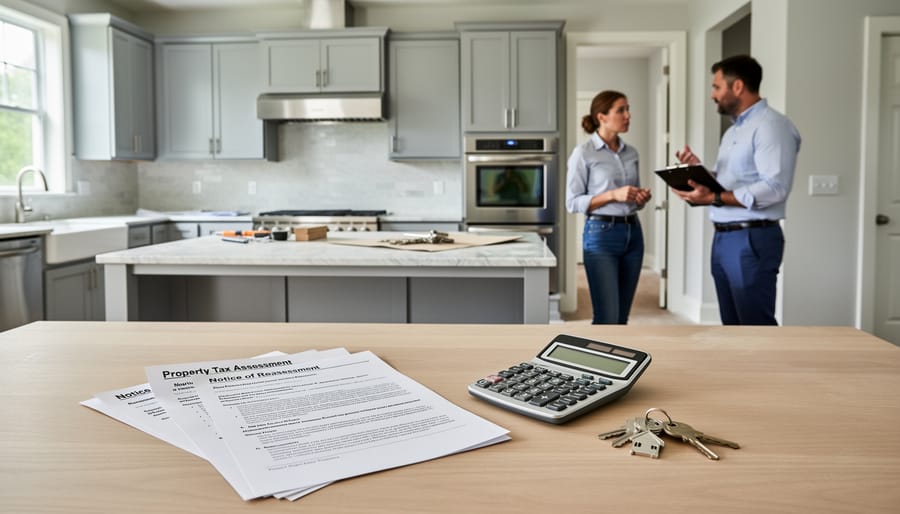
Yes, most significant home improvements will trigger a property tax reassessment, though the impact varies based on your location and the type of renovation. Understanding which changes affect your tax bill is essential planning information before renovating your home.
Major structural additions almost always increase your assessed value and property taxes. This includes adding square footage through room additions, finishing a basement, building a garage, or constructing a pool. These improvements directly enhance your property’s market value, which assessors factor into their calculations. Expect reassessments within 12 to 18 months of completing permitted work, as building departments typically share permit data with tax assessors.
Kitchen and bathroom remodels also trigger increases, though usually more modest than additions. High-end upgrades with quality materials signal greater property value, while basic updates may have minimal tax impact. The key factor is whether the improvement meaningfully increases what a buyer would pay for your home.
Routine maintenance typically doesn’t affect your assessment. Replacing a roof, repainting, or updating HVAC systems maintains existing value rather than adding new value. However, this distinction varies by jurisdiction, so check with your local assessor’s office about specific projects.
Some jurisdictions offer temporary tax exemptions or caps for certain improvements, particularly energy-efficient upgrades or renovations in designated redevelopment zones. These programs encourage property investment while limiting immediate tax burden. Contact your municipal tax office to explore available incentives before starting major projects.
Keep detailed records of all improvements, including costs and completion dates. If your reassessment seems disproportionate to the actual value added, this documentation supports potential appeals. Remember, while improvements increase taxes, they also build equity and enhance your property’s long-term investment value.
State-by-State Differences in Property Tax Laws
Property tax laws vary dramatically across the United States, making location a critical factor in your overall housing costs. If you’re considering a move or investment property, understanding these differences can save you thousands annually.
Some states offer surprisingly generous property tax breaks. Hawaii consistently ranks as having the lowest effective property tax rate in the nation at around 0.28%, while Alabama follows at approximately 0.41%. These low rates can significantly reduce your annual housing expenses compared to high-tax states.
On the opposite end, New Jersey regularly tops the charts with effective rates exceeding 2.47%, followed closely by Illinois at about 2.27% and New Hampshire at 2.18%. For a home valued at $400,000, that difference between Hawaii and New Jersey translates to roughly $8,760 more per year in property taxes.
Interestingly, while no state completely eliminates property taxes, some offer substantial exemptions. Alaska has no state-level property tax, leaving taxation to local municipalities, and several states provide full exemptions for certain groups like disabled veterans or seniors meeting income requirements.
States also differ in assessment frequency, calculation methods, and appeal processes. Texas and Florida, despite having no state income tax, compensate with higher property taxes. Understanding your specific state’s approach helps you budget accurately and identify potential savings through exemptions or homestead protections. Before purchasing property, research your target state’s property tax structure to avoid unwelcome surprises and optimize your real estate investment strategy.
Understanding property tax laws isn’t just about compliance—it’s about protecting your financial interests and ensuring you’re not leaving money on the table. Whether you’re a homeowner navigating your first assessment or a real estate professional advising clients, staying informed about your local tax system can translate into significant savings over time.
Don’t let confusion or inaction cost you thousands of dollars. Take the time to review your property assessment annually, research available exemptions you might qualify for, and don’t hesitate to file an appeal if your valuation seems unfair. The appeal process exists for a reason, and successful challenges happen more often than you might think.
Property tax laws evolve constantly, with jurisdictions adjusting rates, introducing new exemptions, and changing assessment methodologies. Make it a habit to stay current with your local tax authority’s announcements and deadlines. Missing a filing window for an exemption or appeal could mean paying more than necessary.
While many property tax questions can be resolved through research and direct communication with your assessor’s office, complex situations warrant professional guidance. Consider consulting with a tax advisor or property tax attorney when facing significant disputes, dealing with commercial properties, or navigating complicated exemption eligibility. The investment in expert advice often pays for itself through reduced tax liability and peace of mind.