
Your daily commute to the home office instead of across town could slash your insurance premiums by 10-25% while simultaneously reducing your carbon footprint. Eco insurance coverage—also called green insurance, low-mileage discounts, or environmental policyholder programs—rewards remote workers and telecommuters who drive less frequently with substantial cost savings. Insurance carriers recognize that fewer miles driven means fewer accident claims, translating directly to lower risk profiles and reduced premiums for work-from-home professionals.
The financial incentive extends beyond simple mileage tracking. Modern eco insurance programs evaluate your entire environmental impact, including home energy efficiency, renewable energy usage, and sustainable property improvements. Homeowners who install solar panels, energy-efficient HVAC systems, or electric vehicle charging stations often qualify for additional coverage discounts ranging from 5-15%. These programs create a compelling intersection between property investment strategy and environmental responsibility.
For real estate professionals and homeowners, understanding eco insurance becomes particularly valuable during property transactions. Homes equipped with green certifications like LEED or ENERGY STAR frequently qualify for preferential insurance rates, adding another dimension to property valuations and buyer negotiations. Remote workers purchasing homes can leverage their telecommuting status as a negotiating advantage, potentially offsetting closing costs through immediate insurance savings. The key lies in proactively documenting your reduced mileage, sustainable home features, and remote work arrangements when requesting quotes from carriers offering these specialized programs.
What Exactly Is Eco Insurance Coverage for Telecommuters?
The Insurance Industry’s Green Awakening
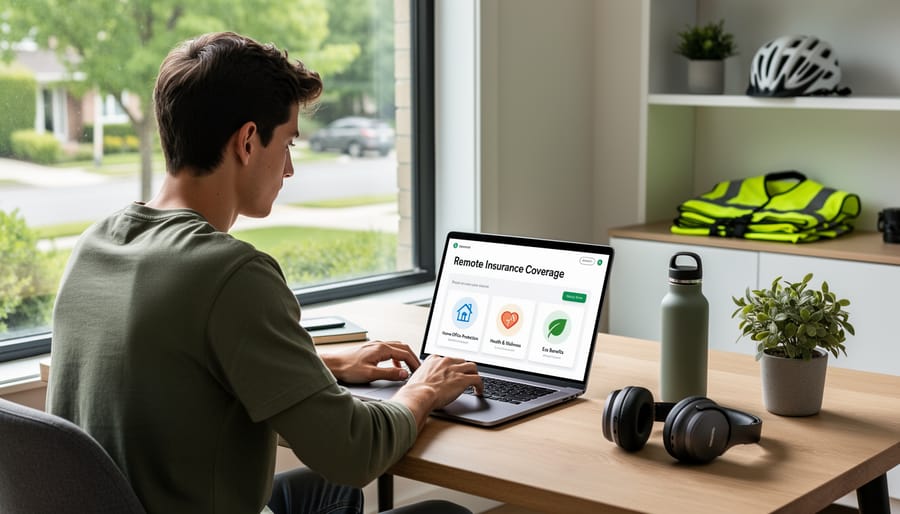
The insurance industry is undergoing a significant transformation, driven by mounting climate concerns and changing work patterns. Insurers are recognizing that remote workers present a different risk profile than traditional commuters, and they’re developing products to reflect this reality. When you work from home, you’re logging fewer highway miles, reducing accident exposure, and often maintaining a more stable daily routine around your property.
Climate change has pushed insurers to innovate beyond traditional coverage models. Rising claims from extreme weather events have forced companies to rethink risk assessment, leading many to reward policyholders who minimize their carbon footprint. For remote workers, this creates a perfect storm of opportunity. Your reduced commute directly translates to lower emissions, making you an attractive customer for insurers looking to build more sustainable portfolios.
Major carriers now view eco-friendly coverage as both a competitive advantage and a risk management strategy. By incentivizing behaviors that reduce environmental impact, they’re simultaneously decreasing their exposure to climate-related claims while appealing to environmentally conscious consumers. This shift represents a fundamental change in how insurers evaluate property and auto coverage, particularly for home-based professionals who blur the lines between residential and commercial risk profiles.
How Telecommuting Reduces Insurance Risk
Insurance companies calculate premiums based on statistical risk, and telecommuters present measurably lower exposure across multiple categories. The most significant factor is automotive risk. Remote workers typically drive 30-40% fewer miles annually than traditional commuters, translating directly into reduced collision probability. Actuarial models show that eliminating a daily 30-mile roundtrip commute can lower your annual auto insurance risk profile by 15-25%, which insurers increasingly reflect in premium adjustments.
Property insurance considerations add another layer. While you’re home more often, this actually reduces certain risks like undetected break-ins, water damage, and fire spread. Insurers recognize that occupied homes experience fewer catastrophic losses, though your homeowners policy may require adjustments for business equipment coverage.
The environmental component connects these factors through carbon footprint calculations. Each commute mile eliminated prevents approximately one pound of CO2 emissions. Eco-focused insurers incorporate this environmental impact into their underwriting models, rewarding policyholders who demonstrate sustained low-mileage patterns. Some carriers now offer specialized green policy endorsements that bundle reduced auto usage with energy-efficient home improvements, creating a comprehensive discount structure that benefits both your wallet and the planet. Documentation through odometer readings or telematics devices helps verify your reduced driving for maximum savings.
The Real Dollar Savings: What Telecommuters Can Expect
Auto Insurance Discounts for Reduced Mileage
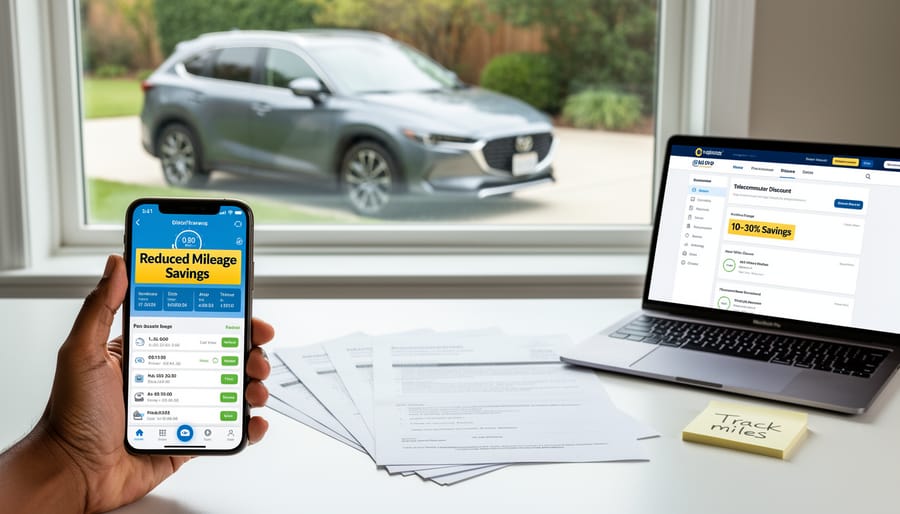
If you’re working from home or simply driving less, your auto insurance should reflect that reduced risk—and fortunately, many insurers are catching on. Low-mileage discounts reward drivers who log fewer annual miles, typically offering savings of 10-30% depending on how much you’ve cut back. Most carriers define “low mileage” as driving under 7,500-10,000 miles annually, though thresholds vary.
For even more precision, pay-per-mile programs have emerged as game-changers for remote workers and occasional drivers. These usage-based insurance models charge a small base rate plus a per-mile fee, often monitored through a telematics device or smartphone app. This approach can dramatically reduce premiums for those who’ve permanently reduced their commute or sold a second vehicle.
To maximize savings, track your actual mileage for a few months and contact your insurer with documentation. Many companies now offer self-reporting options or automatic tracking through mobile apps. Combining low-mileage discounts with eco-friendly vehicle insurance can compound your savings while supporting environmental goals. For homeowners considering downsizing to a single vehicle or transitioning to remote work permanently, these programs represent meaningful long-term cost reductions that align perfectly with sustainable living choices.
Home Office Coverage Benefits
Working from home doesn’t just change your daily commute—it transforms your insurance needs, especially when your workspace incorporates eco-friendly features. Enhanced home office coverage now extends beyond basic equipment protection to include specialized benefits for environmentally conscious professionals.
Modern eco insurance policies typically cover green office equipment, including energy-efficient computers, solar-powered charging stations, and LED lighting systems. If your sustainable tech gets damaged by covered perils like fire or theft, you’re protected up to your policy limits. Many insurers also recognize that eco-efficient equipment often costs more upfront, offering replacement cost coverage rather than actual cash value.
Liability protection is equally important. If a client visits your home office and gets injured, your enhanced coverage responds—a crucial consideration for real estate professionals who occasionally host property consultations at home. Some policies even extend to cover data breaches or professional liability incidents occurring in your green workspace.
The real advantage? Insurers often discount premiums for home offices that meet specific environmental standards, like LEED certification or documented energy efficiency improvements. This creates a win-win scenario where your commitment to sustainability actually reduces your insurance costs while providing comprehensive protection for your work-from-home setup.
Bundle Opportunities and Green Home Credits
Maximize your eco insurance savings by bundling your home, auto, and umbrella policies with insurers that prioritize sustainability. Many carriers offer additional discounts—sometimes 15-25%—when you consolidate coverage under one provider, creating a win-win for your wallet and the planet.
Beyond bundling, specialized green home credits reward environmentally conscious property improvements. Insurers increasingly recognize that green home upgrades like energy-efficient windows, upgraded insulation, and LEED certification reduce claim risks while benefiting the environment. Homeowners can typically save 5-20% on premiums for these enhancements.
Solar installations deserve special mention, as they often qualify for both premium reductions and specialized coverage that protects your investment in renewable energy. Some insurers even offer guaranteed replacement cost coverage for solar panels and battery systems.
When shopping for eco insurance, ask carriers about their complete suite of green incentives. Document all sustainable improvements with receipts and certifications to ensure you’re receiving every available discount. Real estate professionals should highlight these potential savings when marketing energy-efficient properties to environmentally minded buyers.
Qualifying for Eco-Driven Telecommuting Insurance Incentives
Documentation Requirements
To qualify for eco insurance discounts based on remote work, you’ll need to provide specific documentation that proves your telecommuting status and reduced vehicle usage. Most insurers require an employer letter on company letterhead confirming your remote work arrangement, including details about how many days per week you work from home and the effective dates of this arrangement. Self-employed individuals should prepare business registration documents and client contracts that demonstrate a home-based operation.
Mileage verification is equally important. Insurers typically request odometer readings or mileage logs covering the past six months to a year, showing your actual driving patterns. Many companies now accept digital documentation through telematics apps that automatically track your vehicle usage, making verification seamless and accurate.
For homeowners with dedicated home offices, you may also need to provide documentation of your workspace, such as photos or a floor plan indicating the area used exclusively for work. This information helps insurers understand your full remote work setup and can sometimes unlock additional coverage options for home-based business equipment. Property tax records or utility bills showing your primary residence address will further support your application. Keep all documentation current, as insurers often require annual renewals to maintain your eco-friendly discount eligibility.
Green Certification and Energy Audits
Pursuing green certifications like LEED (Leadership in Energy and Environmental Design), ENERGY STAR, or National Green Building Standard can significantly boost your insurance discount eligibility. These third-party validations prove your home meets rigorous environmental standards, giving insurers confidence in offering reduced premiums. Many carriers provide an additional 5-10% discount specifically for certified green homes on top of standard eco-friendly coverage benefits.
Professional home energy audits represent another powerful tool for unlocking savings. These assessments, typically costing $300-500, identify inefficiencies and provide detailed improvement recommendations. Insurers value these audits because they document your home’s actual performance rather than relying on general assumptions. When you implement suggested upgrades based on audit findings, you create a clear roadmap toward becoming one of the growing number of energy-efficient homes that qualify for premium reductions.
Some insurance companies even partner with auditing firms to offer subsidized or free assessments for policyholders. These programs benefit everyone: you gain actionable insights to reduce utility costs and insurance premiums, while insurers reduce their risk exposure by encouraging property improvements that prevent weather-related claims and system failures.
Telematics and Tracking Programs
Telematics and tracking programs represent the cutting edge of eco-friendly insurance, using technology to reward environmentally conscious driving. These usage-based insurance (UBI) plans install a small device in your vehicle or utilize a smartphone app to monitor driving behaviors like hard braking, acceleration, speed, and total mileage. The data collected helps insurers calculate personalized premiums based on your actual driving patterns rather than generalized risk categories.
For remote workers and homeowners who’ve reduced their commute, these programs offer substantial savings. Since you’re driving less frequently, the technology documents your reduced road time, translating to lower premiums that reflect your actual vehicle use. Most programs reward smooth, efficient driving habits that minimize fuel consumption and emissions. Discounts typically range from 10% to 30%, with some safe drivers seeing even higher reductions.
Popular telematics programs include Progressive’s Snapshot, State Farm’s Drive Safe & Save, and Allstate’s Drivewise. Beyond immediate savings, these programs encourage eco-conscious habits that benefit both your wallet and the environment, making them an ideal complement to your work-from-home lifestyle.
Real Estate Implications: How This Affects Property Values and Buyers

Location Flexibility and Suburban Migration
The insurance savings gained through telecommuting eco-discounts are creating unexpected opportunities for homebuyers to rethink their location priorities. When commute distance no longer dictates your daily routine, and your auto insurance premiums reflect those reduced miles, suddenly that charming suburban or rural property becomes financially feasible. Real estate professionals are noticing this trend: buyers who once needed proximity to downtown offices are now expanding their search radius by 20-30 miles or more.
This shift carries significant implications for property markets. Suburban and exurban communities are experiencing increased demand, while some urban centers face softening prices. For homebuyers, this location flexibility means more house for your money, often with larger yards and green spaces that align with eco-conscious lifestyles. The combined savings from lower property prices, reduced commuting costs, and eco-insurance discounts can amount to substantial monthly budget relief.
Property investors should pay attention to these migration patterns. Communities with strong internet infrastructure and appealing quality-of-life amenities are becoming hot spots. Meanwhile, insurance carriers are adapting their risk models to reflect changing population distributions, potentially affecting coverage rates in both growing and declining markets.
Marketing Your Property to Remote Workers
If you’re selling a property or working with clients who’ve invested in sustainable upgrades, strategically marketing these features to remote workers can significantly expand your buyer pool and potentially accelerate sales. Today’s telecommuters are actively seeking homes that support both their professional needs and environmental values—and they’re often willing to pay a premium for properties that deliver on both fronts.
Start by creating marketing materials that explicitly connect eco-friendly features with insurance savings. Rather than simply listing solar panels or energy-efficient windows, quantify the financial benefits. For example, specify that LEED-certified features or smart home systems could qualify buyers for 10-20% insurance discounts, translating to hundreds of dollars in annual savings.
Highlight dedicated office spaces with abundant natural light, proper ventilation, and proximity to sustainable features that insurers reward. Professional photography should showcase these work-from-home areas alongside green upgrades like programmable thermostats or water-efficient fixtures.
When crafting property descriptions, include language that resonates with remote workers’ priorities: reduced carbon footprint, lower utility costs, and insurance incentive eligibility. Consider creating a one-page summary documenting all sustainable certifications, recent green upgrades, and estimated insurance savings to share during showings.
Partner with insurance providers offering eco-discounts to telecommuters and include their contact information in your listing materials. This proactive approach demonstrates you understand the complete value proposition, positioning you as a knowledgeable advisor rather than just a salesperson. Remote workers appreciate professionals who help them maximize both environmental impact and financial benefits.
Top Insurers Offering Eco-Driven Telecommuting Programs
Several major insurance carriers have recognized the environmental and financial benefits of telecommuting, developing specialized programs that reward remote workers with premium discounts. Understanding what each insurer offers can help you maximize savings while supporting your eco-conscious lifestyle.
State Farm leads the pack with its Distant Student and Low Mileage Discount programs, which can reduce premiums by up to 20% for drivers logging fewer than 7,500 miles annually. Their Drive Safe & Save program uses telematics to track actual mileage, making it particularly attractive for full-time remote workers. Enrollment is straightforward through their mobile app, requiring only a smartphone and willingness to share driving data.
Nationwide’s SmartMiles program takes a pay-per-mile approach, charging a low base rate plus a per-mile fee. This innovative structure can slash costs by up to 40% for telecommuters who primarily use their vehicles for local errands rather than daily commutes. The program requires installing a small device in your vehicle’s diagnostic port, which automatically reports mileage to calculate your monthly premium.
Progressive offers a Snapshot program that monitors both mileage and driving habits, with significant discounts available for low-mileage drivers. Their HomeQuote Explorer bundle also provides additional savings when you combine reduced auto coverage with enhanced home insurance, recognizing that remote workers spend more time protecting their property.
Allstate’s Milewise program mirrors Nationwide’s pay-per-mile model, ideal for urban dwellers and telecommuters who’ve transitioned to primarily virtual work environments. Installation takes minutes, and the company provides transparent tracking through a user-friendly dashboard.
To access these programs, contact your current insurer first to inquire about available telecommuting discounts. Many carriers offer stackable incentives, combining low-mileage discounts with safe driving bonuses and multi-policy bundles for maximum savings.
Potential Pitfalls and Coverage Gaps to Watch For
The Home Office Liability Gap
While telecommuting reduces insurance costs in many areas, it can create a significant coverage gap that many remote workers overlook. Your standard homeowner’s policy typically excludes business-related liability claims, meaning if a client visits your home office and sustains an injury, or if work-related activities cause property damage, you might be personally liable for substantial costs. This protection shortfall becomes even more critical for real estate professionals who frequently meet clients at home. Your eco-friendly insurance program should include a business liability endorsement or in-home business policy rider, typically costing between $150 and $400 annually. This relatively small investment protects against lawsuits from injured visitors, damaged client property, or professional errors occurring in your home workspace, ensuring your environmentally conscious insurance strategy doesn’t leave you financially vulnerable.
Equipment and Data Protection Concerns
Working from home brings unique risks that your standard homeowners policy might not adequately address. That expensive standing desk, dual-monitor setup, and high-end laptop you invested in for remote work? They could push you beyond typical personal property coverage limits. Most homeowners policies cap electronics and computer equipment at $2,500 to $5,000, which might not replace your entire home office setup if disaster strikes.
Beyond equipment value, cybersecurity presents another layer of concern. If you’re handling client data or proprietary company information from your dining room table, a data breach could expose you to liability that standard policies don’t cover. Business pursuits endorsements or separate cyber liability coverage can fill these gaps, typically costing $150 to $300 annually for basic protection.
The good news? Many insurers now offer telecommuter endorsements specifically designed for remote workers. These additions expand coverage for business equipment and may include limited liability protection for work-related activities. When shopping for eco-friendly insurance options that reward your reduced commute, ask whether their telecommuter coverage includes equipment replacement at current value rather than depreciated cost. This ensures your sustainable work-from-home lifestyle is protected comprehensively.
As the landscape of work continues to evolve, eco-driven telecommuting insurance incentives represent a compelling convergence of financial prudence and environmental stewardship. These programs offer more than just reduced premiums—they’re a practical acknowledgment that your work-from-home lifestyle genuinely reduces risk exposure while lightening your carbon footprint. For real estate professionals and homeowners alike, understanding these dual benefits positions you to make smarter decisions about both your property investments and insurance portfolio.
The actionable path forward is straightforward. Start by reviewing your current insurance policy to identify your baseline coverage and premium structure. Next, contact your insurer directly to inquire about telecommuting discounts, mileage-based programs, or eco-friendly policy options they may not actively advertise. Don’t hesitate to shop around—insurance markets are increasingly competitive in this space, and comparing offerings can reveal significant savings opportunities you might otherwise miss.
If you’ve recently transitioned to remote work or are considering a property purchase with telecommuting in mind, factor these insurance incentives into your financial calculations. The savings may seem modest initially, but compounded over years of homeownership, they represent meaningful financial relief while supporting sustainability goals that benefit everyone.
The growing importance of these programs isn’t just a passing trend—it reflects fundamental shifts in how we work, live, and interact with our properties. By optimizing your coverage today, you’re not only protecting your investment but also participating in a broader movement toward responsible, cost-effective homeownership in the modern era.