
A wire transfer fraud scheme stole $272,000 from a Florida homebuyer in 2023 when criminals intercepted closing emails and redirected funds to fraudulent accounts. The transaction appeared legitimate until it was too late. This scenario repeats across the country as digital criminals exploit vulnerabilities in real estate transactions, targeting the largest financial exchanges most people make in their lifetimes.
Private digital investigations have emerged as essential protective measures in high-stakes property deals. These specialized services trace digital footprints, verify online identities, and uncover concealed fraud attempts before money changes hands. Unlike traditional background checks, digital investigators analyze email communications, examine transaction patterns, and authenticate wire transfer instructions through forensic examination of digital channels.
The question isn’t whether fraud exists in real estate transactions, it’s whether you’ll detect it before closing. Digital investigators employ advanced techniques to identify spoofed email addresses, compromised accounts, and social engineering tactics that bypass standard security measures. They reconstruct communication chains to verify legitimacy and flag anomalies that suggest criminal interference.
Understanding when to deploy these investigative resources connects directly to comprehensive insurance strategies. Forward-thinking real estate professionals now integrate digital investigation protocols into their transaction workflows, treating them as preventive measures rather than reactive responses. The cost of investigation pales against potential losses, particularly when certain insurance policies now recognize and even subsidize these protective services as risk mitigation tools.
The convergence of digital threats and real estate transactions demands informed action. Knowing what investigators uncover and how insurance responds determines whether your next property deal proceeds securely or becomes another cautionary tale.
The Growing Threat: Why Virtual Property Transactions Need Digital Protection
Common Digital Fraud Schemes in Real Estate
Real estate transactions have become prime targets for sophisticated cybercriminals, with digital real estate scams costing buyers millions annually. Understanding these threats is your first line of defense.
Email interception remains the most common and devastating fraud tactic. Scammers compromise email accounts of real estate agents, lawyers, or title companies, monitoring conversations about upcoming transactions. At the critical moment before closing, they send fraudulent wire transfer instructions that appear entirely legitimate. The buyer unknowingly sends their down payment—often hundreds of thousands of dollars—directly to the criminals.
Fake escrow accounts represent another prevalent scheme. Fraudsters create convincing websites and documentation mimicking legitimate escrow companies, complete with professional-looking paperwork and phone numbers. These operations can be so sophisticated that even experienced professionals initially fail to spot the deception.
Synthetic identity fraud has emerged as a growing concern in property transactions. Criminals combine real and fabricated information to create entirely new identities, which they then use to secure mortgages or purchase properties. These synthetic identities often include genuine Social Security numbers paired with fake names and addresses, making detection particularly challenging through traditional verification methods.
Wire fraud variations continue evolving, with scammers exploiting the urgency and high stakes of real estate closings. They know buyers are stressed and eager to complete transactions, making them vulnerable to last-minute changes in payment instructions.
The Insurance Gap: What Standard Policies Miss
Most property owners assume their standard insurance policies protect them from fraud, but there’s a significant gap when it comes to digital threats. Traditional title insurance primarily covers historical ownership disputes and pre-existing liens—not sophisticated wire fraud schemes or identity theft that occur during your transaction. Similarly, homeowners insurance focuses on physical property damage and liability, leaving digital vulnerabilities completely unaddressed.
Here’s the reality: if a hacker intercepts your closing communication and redirects your down payment to a fraudulent account, your title insurance won’t reimburse you. If cybercriminals steal your identity to secure a fraudulent mortgage against your property, standard policies offer minimal recourse. These policies were designed before digital fraud became the dominant threat in real estate transactions.
This protection void has created demand for specialized coverage. Data breach insurance and cyber fraud endorsements now fill these gaps, often including provisions for private digital investigations when fraud is suspected. Understanding what your current policies exclude is the first step toward comprehensive protection in today’s digital real estate environment.
What Private Digital Investigators Actually Do
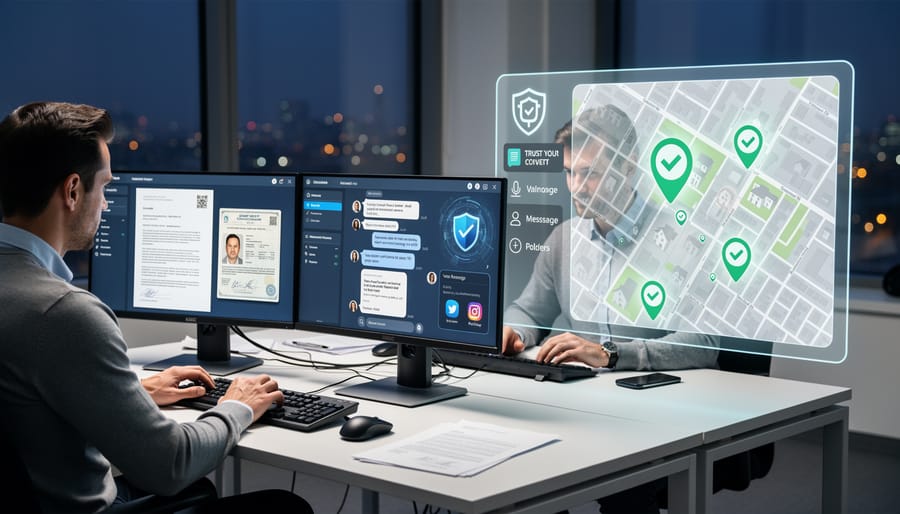
Pre-Transaction: Proactive Fraud Prevention
The best time to stop fraud is before it happens. In real estate transactions, private digital investigators work behind the scenes to verify everyone involved is exactly who they claim to be—before a single dollar moves.
Identity verification forms the foundation of pre-transaction protection. Investigators cross-reference personal information against public records, social media profiles, and digital footprints to confirm legitimacy. If your seller claims to be an elderly widow in Florida but their digital trail shows a 30-year-old in Eastern Europe, that’s a massive red flag worth catching early.
Communication authentication represents another critical checkpoint. Wire fraud schemes often involve spoofed email addresses that look nearly identical to legitimate ones—think “jonsmith@realtygrup.com” instead of “realtygroup.com.” Investigators analyze email headers, IP addresses, and communication patterns to detect these subtle manipulations. They’ll verify that the person emailing you wiring instructions is actually your title company representative, not a sophisticated imposter.
Transaction party validation goes deeper than surface-level checks. Investigators confirm that companies involved in your deal are registered entities with verified business addresses and legitimate operational histories. They’ll scrutinize vendor relationships, examine corporate structures, and identify beneficial owners who might be hiding behind shell companies.
This proactive approach costs a fraction of what you’d lose to fraud. Many title insurance policies now include or offer riders for these investigative services, recognizing that prevention delivers better outcomes than post-fraud recovery efforts. Think of it as a professional second set of eyes protecting your largest financial investment before you’re locked into an irreversible transaction.
Post-Incident: Digital Forensics and Recovery
When fraud strikes during a real estate transaction, time becomes your most valuable asset. Private digital investigators specialize in tracing the electronic breadcrumbs left behind by fraudsters, working methodically to reconstruct what happened and potentially recover stolen funds.
The investigation typically begins by examining email headers, IP addresses, and metadata from fraudulent communications. Think of it as following a digital trail—investigators can often determine where emails actually originated, even when scammers use sophisticated spoofing techniques to impersonate your real estate agent or title company. They’ll analyze transaction timestamps, payment routing information, and any documents exchanged during the fraud.
Fund recovery efforts focus on identifying where wire transfers landed and working with financial institutions to freeze accounts before money disappears across international borders. While success isn’t guaranteed, quick action significantly improves recovery odds. Investigators document every step meticulously, creating comprehensive reports that satisfy both law enforcement requirements and insurance claim protocols.
This documentation proves essential when filing claims under digital fraud coverage policies or pursuing criminal prosecution. The forensic evidence collected—including communication logs, financial transaction records, and technical analysis—builds the foundation for your case. Many insurance providers now require professional forensic reports to process claims, making these investigations not just helpful but often necessary for financial recovery after real estate fraud incidents.
How Digital Fraud Coverage Works with Private Investigations
Coverage Triggers: When Insurers Deploy Investigators
Insurance providers typically activate private digital investigation services when specific red flags appear or claim values cross predetermined thresholds. For real estate transactions, this threshold often starts at $50,000, though policies vary by provider and coverage level.
Common triggers include transaction irregularities such as last-minute wire transfer changes, unusual communication patterns from supposedly known parties, or discrepancies between verbal and written instructions. When buyers report suspected digital wallet fraud or email compromise during closing processes, insurers immediately deploy investigators to preserve digital evidence and trace fund movements.
Multiple failed authentication attempts, unexpected escrow account modifications, or reports of phishing targeting real estate professionals also prompt investigation activation. Property investment frauds involving synthetic identities or forged documentation automatically trigger enhanced scrutiny.
Understanding these triggers helps real estate professionals recognize when to contact their insurer immediately. The faster you report suspicious activity, the better investigators can track digital footprints before criminals cover their tracks. Most digital fraud policies include investigation coverage without separate deductibles, meaning the insurer absorbs these costs when legitimate concerns arise. This makes early reporting financially risk-free while maximizing recovery potential.
What These Policies Actually Cover
Understanding what your insurance policy actually covers when it comes to private digital investigations can mean the difference between financial recovery and significant loss. Let’s break down the typical coverage elements you’ll encounter.
Most policies that include digital investigation coverage will reimburse investigation costs themselves, typically ranging from $5,000 to $25,000 per incident. This covers the fees charged by licensed cybersecurity professionals who trace fraudulent wire transfers, verify suspicious identities, or investigate phishing schemes targeting your real estate transaction.
Fund recovery expenses represent another crucial component. When investigators locate your stolen funds, there are often legal and administrative costs involved in actually retrieving that money. Quality policies cover these expenses up to a specified limit, usually $10,000 to $50,000, which can include court filing fees, international recovery efforts, and forensic documentation.
Legal fees are frequently covered separately, recognizing that fraud cases often require attorney involvement. Expect coverage between $15,000 and $100,000 for legal representation, depending on your policy tier and the complexity of your case.
Finally, loss reimbursement limits define the maximum amount you’ll receive if funds cannot be recovered despite investigation efforts. For real estate transactions, these limits typically range from $50,000 to $500,000, though some policies offer higher coverage for luxury properties or commercial deals. Always review your policy’s aggregate annual limit, as multiple incidents throughout the year may be subject to a combined maximum rather than per-incident coverage.
When Should You Hire a Private Digital Investigator?
Red Flags That Demand Professional Investigation
Property transactions involve substantial financial exposure, making early detection of suspicious activity crucial. Certain warning signs should trigger immediate consultation with property fraud protection services or private digital investigators.
Communication irregularities often signal trouble. Be wary when sellers or buyers insist on using only personal email addresses, avoid phone calls, or refuse video conferencing. Legitimate parties have nothing to hide. Similarly, sudden changes in communication channels—switching from corporate email to Gmail mid-transaction—deserve scrutiny.
Pressure tactics are classic fraud indicators. If someone demands immediate wire transfers, claims competing offers require instant decisions, or creates artificial urgency around closing dates, pause and investigate. Fraudsters thrive on rushed decisions that bypass normal verification procedures.
Documentation discrepancies warrant professional review. Mismatched signatures across forms, inconsistent property details between listings and legal documents, or suspiciously pristine title histories could indicate forged records or identity theft.
Financial red flags include unusual payment requests like cryptocurrency transfers, requests to wire funds to foreign accounts, or instructions that differ from official closing documents. Any request to bypass your attorney or title company demands immediate investigation.
Finally, trust your instincts. If the deal feels too good to be true, property details change frequently, or online research reveals conflicting information about parties involved, these gut feelings often have merit. Professional investigators can quickly verify legitimacy, protecting your investment before irreversible financial commitments.
Cost-Benefit Analysis: Is It Worth It?
Private digital investigations typically range from $1,500 to $10,000 depending on complexity, with comprehensive real estate transaction investigations averaging $3,000-$5,000. Before dismissing this as expensive, consider the alternative: fraud losses in real estate average $300,000 per incident, according to FBI data.
The math becomes straightforward when protecting six or seven-figure property transactions. Spending $4,000 to verify a seller’s identity and detect potential wire fraud schemes offers exceptional value compared to losing your entire down payment or investment capital. Many title insurance policies now include investigation benefits or discounts when you proactively conduct due diligence, potentially offsetting 20-30% of investigation costs.
For real estate professionals managing multiple transactions annually, investigation services become even more cost-effective. A $5,000 annual retainer might cover 3-4 investigations, protecting your reputation and preventing devastating liability claims that could exceed hundreds of thousands in legal fees and settlements.
The decision point is simple: investigations justify their cost when transaction values exceed $100,000, red flags appear during preliminary research, or you’re dealing with unfamiliar parties in competitive markets. Think of it as insurance for your insurance, a small premium for substantial peace of mind.
Choosing the Right Investigation Partner and Coverage

Credentials and Certifications That Matter
When evaluating a private digital investigator for real estate transactions, focus on three essential credential categories. First, look for industry-recognized certifications such as Certified Fraud Examiner (CFE), Computer Hacking Forensic Investigator (CHFI), or Certified Information Systems Security Professional (CISSP). These demonstrate technical competency in uncovering digital evidence and analyzing complex financial schemes.
A law enforcement or government agency background adds significant value, as investigators with this experience understand legal procedures, evidence handling, and courtroom testimony requirements. This becomes critical if your case escalates to litigation or insurance claims.
Cybersecurity expertise is equally important in today’s digital landscape. Investigators should demonstrate proficiency in analyzing email headers, tracing cryptocurrency transactions, and identifying deepfake technology—all increasingly common in real estate fraud schemes. Ask potential investigators about their continuing education practices, as digital fraud techniques evolve rapidly. Membership in professional organizations like the National Association of Legal Investigators or ASIS International indicates commitment to ethical standards and ongoing professional development. Remember, the right investigator protects not just your transaction, but also ensures any findings will hold up under scrutiny by insurance carriers and legal authorities.
Questions to Ask Before Signing a Policy
Before committing to any policy that includes digital fraud protection, arm yourself with the right questions. Start by asking what specific types of digital fraud are covered—does the policy extend to wire fraud, phishing scams, identity theft related to property transactions, and title fraud? Understanding the scope of coverage prevents unpleasant surprises when you need it most.
Next, clarify what investigation services come with your policy. Will the insurer provide access to licensed private digital investigators, or must you hire your own and seek reimbursement? Ask about response times—when fraud is suspected, how quickly can investigators begin their work? Time is critical in digital fraud cases where evidence can disappear in hours.
Dig into the claim process details. What documentation do you need to file a claim? Are there specific reporting deadlines after discovering suspicious activity? Understanding these requirements upfront helps you act swiftly when facing potential fraud.
Don’t overlook coverage limits and deductibles. What’s the maximum payout for investigation services versus actual fraud losses? Some policies cap investigative expenses at surprisingly low amounts, leaving you responsible for additional costs.
Finally, ask about preventative resources. Does the insurer offer fraud monitoring tools, educational materials, or risk assessments for high-value transactions? The best policies don’t just respond to fraud—they help you avoid it altogether. These proactive features can prove invaluable, especially for real estate professionals managing multiple transactions simultaneously.
Protecting Yourself: Best Practices for Virtual Property Transactions
Digital Hygiene Essentials for Every Transaction
Whether you’re closing on your dream home or finalizing a commercial property deal, protecting yourself digitally is non-negotiable. Think of digital hygiene as the equivalent of locking your front door—it’s basic protection that prevents major headaches.
Start with verification protocols before every transaction. Always confirm wire transfer instructions through a known phone number, not one provided in an email. Fraudsters frequently intercept closing communications and redirect funds to their accounts. Call your title company or attorney directly using contact information you’ve independently verified. This simple step prevents wire fraud, which cost real estate buyers over $350 million in 2022 alone.
For secure communication, use encrypted email services or secure client portals provided by your title company or financial institution. Standard email is surprisingly vulnerable to interception. When sharing sensitive documents like tax returns or bank statements, password-protect PDFs and share the password through a separate communication channel, like a phone call.
Authentication procedures matter tremendously. Enable two-factor authentication on all accounts related to your transaction—banking apps, email, mortgage lender portals, and real estate platforms. This adds a critical security layer that stops unauthorized access even if passwords are compromised.
Before transferring large sums, establish a verification phrase with your title company. This shared code word confirms you’re speaking with legitimate representatives. Additionally, request small test transfers before sending six-figure amounts. While it adds a day to closing, it’s worth the peace of mind knowing your funds reach the correct destination.
As digital real estate transactions become the norm rather than the exception, private digital investigators serve as essential guardians of your property investments. These specialists bridge a critical gap in protection that traditional insurance policies may not fully address, offering proactive defense against increasingly sophisticated fraud schemes targeting virtual transactions. Think of them as your cybersecurity partner working alongside your title insurance and fraud coverage to create a comprehensive safety net.
The relationship between digital investigations and insurance coverage is complementary, not redundant. While insurance policies provide financial recovery after fraud occurs, investigators help prevent losses before they happen by identifying red flags, verifying identities, and authenticating documents throughout the transaction process. This dual-layered approach significantly reduces your vulnerability during wire transfers, document exchanges, and digital closings.
For real estate professionals and homebuyers navigating today’s digital marketplace, taking action is straightforward. Start by evaluating your current insurance coverage to understand its limitations regarding cyber fraud. Next, research reputable private digital investigation firms that specialize in real estate transactions, checking their credentials and client reviews. Finally, budget for investigative services as part of your transaction costs, particularly for high-value properties or transactions involving unfamiliar parties. The modest investment in professional digital oversight today can prevent devastating financial losses tomorrow, protecting what may be your most valuable asset.