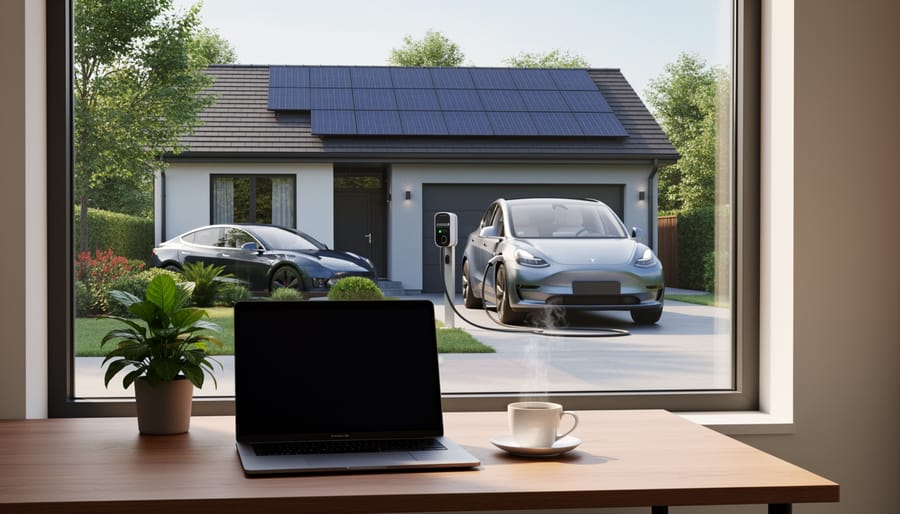
Home office desk with laptop and coffee by a window showing a parked car in the driveway, an electric vehicle plugged into a charger, and rooftop solar panels under soft daylight.

How Working From Home Could Slash Your Insurance Premiums (While Saving the Planet)

Your daily commute to the home office instead of across town could slash your insurance premiums by 10-25% while simultaneously reducing your carbon footprint. Eco insurance coverage—also called green insurance, low-mileage discounts, or environmental policyholder programs—rewards remote workers and telecommuters who drive less frequently with substantial cost savings. Insurance carriers recognize that fewer miles driven means fewer accident claims, translating directly to lower risk profiles and reduced premiums for work-from-home professionals.
The financial incentive extends beyond simple mileage tracking. Modern eco …

Homeowner shaking hands with an insurance agent in front of a modern house with rooftop solar panels, a small backyard wind turbine, and a heat pump unit at golden hour.

How Clean Energy Incentives Can Slash Your Home Insurance Costs

Leverage insurance premium reductions of 5-20% by documenting your solar panels, wind turbines, or geothermal systems with your home insurance provider before your policy renewal date. Most carriers offer immediate discounts when you submit proof of renewable energy installation through their online portals or mobile apps, yet fewer than 15% of eligible homeowners actually claim these savings.
Stack multiple incentive layers to maximize returns on your clean energy investment. Beyond federal tax credits, insurance-specific programs provide cash-back rebates, deductible waivers for storm damage to renewable equipment, and enhanced …

Modern coastal house with metal roof, impact-resistant windows, a deployed flood barrier at the front entry, permeable paver driveway, and elevated HVAC and standby generator, photographed after rain with breaking storm clouds in the distance.

How Climate-Resilient Infrastructure Protects Your Property Investment (And Your Wallet)

Fortify your property against extreme weather by upgrading roofing systems to withstand 130+ mph winds, installing flood barriers rated for 500-year events, and elevating critical building systems above projected flood zones—measures that can reduce insurance premiums by 15-45% while protecting your investment from climate-related losses. These improvements aren’t just protective barriers; they’re financial instruments that lower risk profiles and unlock better coverage terms.
Integrate impact-resistant windows, permeable hardscaping, and emergency power systems into your property infrastructure to meet insurance …

Modern coastal house with impact-resistant windows, closed storm shutters, and a reinforced garage door, photographed wide with dunes, palm trees, and approaching storm clouds over the ocean.

How Hurricane Storm Damage Systems Are Revolutionizing Property Insurance Costs

Evaluate your property’s exposure to hurricane wind fields and storm surge zones using FEMA flood maps and local building code requirements—properties within designated High Velocity Hurricane Zones face premium increases of 30-60% compared to standard coastal ratings. Install engineered storm damage reduction systems including impact-resistant windows rated for 140+ mph winds, reinforced garage doors, and hurricane straps connecting your roof to the frame, which can reduce insurance premiums by 15-45% depending on your carrier and location. Document all upgrades with receipts, engineering certifications, and inspection reports to …

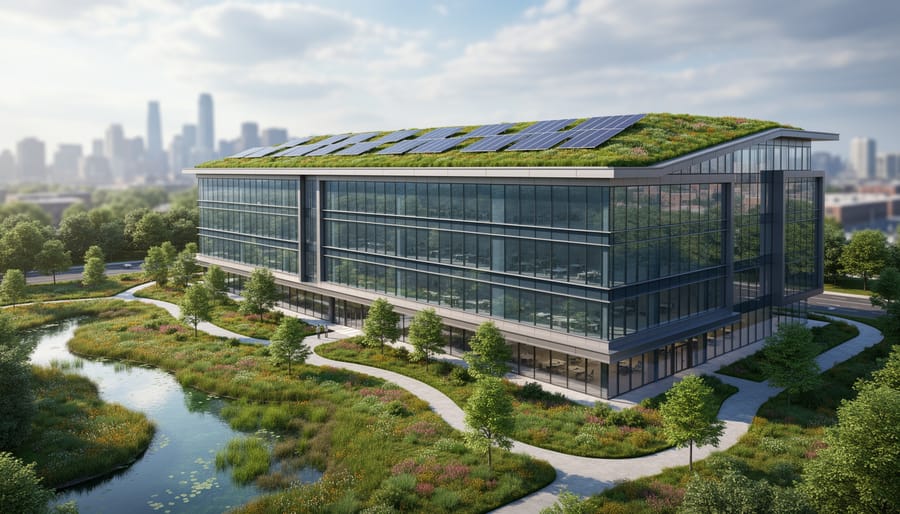
Modern mid-rise commercial building with rooftop solar panels, a vegetated green roof, and reflective glass facade, photographed at a slight angle with a landscaped rain garden in the foreground and a softly blurred city skyline in the background under gentle morning light.

Why Green Building Upgrades Could Slash Your Insurance Premiums

Leverage LEED, ENERGY STAR, or Green Globes certifications to unlock premium discounts of 5-15% on commercial property insurance—insurers recognize these third-party validations reduce risk exposure from water damage, fire hazards, and system failures common in conventional buildings. Install smart building systems including leak detection sensors, energy-efficient HVAC units, and automated fire suppression technologies that both lower operating costs and qualify you for additional policy reductions with carriers like FM Global and Nationwide. Document your green improvements meticulously through energy audits, utility bills, and …

Business traveler in a suit with carry-on and laptop bag beside a reusable bottle at airport windows, with solar panels, EV charging bays, wind turbines, and a city skyline with green roofs visible outside in warm golden light.

Why Eco-Conscious Travel Insurance Saves You Money (And the Planet)

Travel insurance protects your professional investments while reducing your environmental footprint—a dual benefit that savvy real estate professionals increasingly prioritize when booking property viewing trips, investment scouting expeditions, and client relationship-building travel. The right policy safeguards not just your personal belongings and health, but also your business continuity when unexpected disruptions threaten time-sensitive property deals or client commitments.
Green travel insurance providers now offer carbon-offset coverage options that automatically neutralize your trip’s environmental impact while …

Facility manager and business professional shake hands outside a hospital with a green roof and rooftop solar panels at golden hour, with EV chargers in the background.

How Healthcare Facility Insurance Can Save Money While Saving the Planet

Healthcare facilities that embrace sustainability aren’t just protecting the environment—they’re unlocking substantial insurance savings and competitive advantages that directly impact their bottom line. Property owners and facility managers who implement green building standards, energy-efficient systems, and climate-resilient designs are discovering that insurers increasingly reward these investments with premium reductions of 5-15% and enhanced coverage terms.
The connection between environmental responsibility and financial performance has never been clearer in healthcare real estate. Sustainable facilities …

Insurance agent consulting with homeowners in front of a suburban house featuring rooftop solar panels and a wall-mounted home battery, with warm evening light and a wind turbine in the background.

How Insurance Incentives Are Slashing Renewable Energy Costs for Property Owners

Contact your insurance provider to request a comprehensive list of their renewable energy discounts—many carriers offer 5-15% premium reductions for solar panel installations, wind turbines, or geothermal systems, but these incentives rarely appear automatically on your policy. Document your green energy equipment with professional installation certificates, manufacturer warranties, and energy production data, as insurers typically require verification before applying rate adjustments.
Stack multiple financial incentives by combining insurance premium discounts with federal Investment Tax Credits (currently 30% for solar …

Modern commercial office building with rooftop solar panels under a subtle glass-like protective glow, with distant wind turbines and a managed forest softly blurred in the background.

How Carbon Offset Insurance Can Actually Protect Your Real Estate Investment

Achieving zero-carbon emissions in real estate requires a dual-pronged approach: strategic carbon offsetting paired with specialized insurance protection. Real estate professionals and property investors face mounting pressure to decarbonize their portfolios while managing the financial uncertainties that come with transitioning to net-zero operations. The challenge isn’t simply reducing emissions—it’s protecting your investment against the risks of failed offset projects, regulatory changes, and carbon credit volatility.
Calculate your property’s baseline carbon footprint by conducting a comprehensive emissions …

Suburban house with solar panels and metal roof, drought-tolerant landscaping, and sandbags by the front door as floodwater rises on the driveway; distant orange wildfire smoke and storm clouds over nearby rooftops.

Why Your Disaster Insurance Policy Won’t Cover Climate Damage (And What Will)

**Audit your current homeowner’s policy for climate-related exclusions immediately.** Most standard policies contain surprising gaps—flood damage typically requires separate coverage, earthquake protection isn’t automatic, and “acts of God” clauses may deny claims for wind-driven rain or wildfire smoke damage. Request a complete list of excluded perils from your insurer, then cross-reference against climate risks specific to your property’s location.
**Prioritize carriers offering green rebuilding endorsements and climate resilience incentives.** These eco-friendly policies go beyond traditional …