
Peer-to-peer lending operates legally in the United States under strict federal and state regulatory frameworks, revolutionizing how real estate investors access capital while transforming property investment opportunities. The Securities and Exchange Commission (SEC) classifies P2P loans as securities, requiring platforms to register and comply with federal securities laws. This innovative financing model emerged following the 2008 financial crisis, filling crucial lending gaps as traditional banks tightened their requirements.
Today, legitimate P2P platforms must maintain specific licenses, undergo regular audits, and implement robust security measures to protect both lenders and borrowers. State-specific regulations add another layer of compliance, with some jurisdictions imposing additional requirements on loan amounts, interest rates, and investor qualifications. Understanding these legal parameters is crucial for anyone looking to participate in P2P lending, whether as a platform operator, investor, or borrower.
The regulatory landscape continues to evolve, with federal agencies actively monitoring and adjusting oversight to balance innovation with consumer protection. This dynamic environment creates opportunities while demanding careful attention to compliance requirements and risk management strategies.
The Legal Framework of P2P Real Estate Lending
Federal Regulations and Oversight
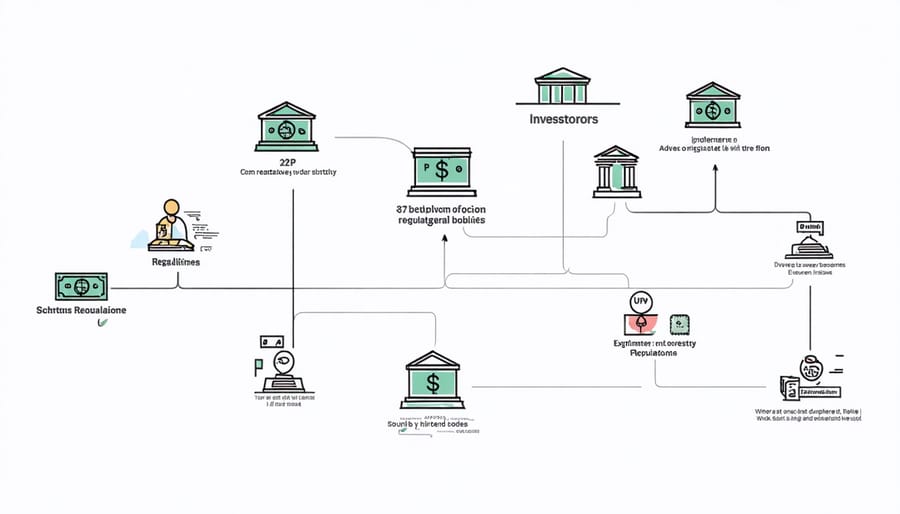
Peer-to-peer lending platforms operate under strict federal oversight, primarily regulated by the Securities and Exchange Commission (SEC). Since these platforms facilitate the sale of securities, they must register their offerings with the SEC and comply with the Securities Act of 1933. This requirement ensures transparency and investor protection, making P2P lending a legitimate option among alternative funding methods.
The Dodd-Frank Wall Street Reform and Consumer Protection Act of 2010 added another layer of regulation, placing P2P lending platforms under the supervision of the Consumer Financial Protection Bureau (CFPB). This oversight ensures borrower protection and fair lending practices, particularly important in real estate transactions.
Platform operators must maintain strict compliance with federal securities laws, including:
– Regular filing of financial statements
– Detailed disclosure of lending practices and risks
– Implementation of robust identity verification systems
– Anti-money laundering (AML) procedures
– Know Your Customer (KYC) protocols
Additionally, the JOBS Act of 2012 introduced provisions affecting how P2P platforms can market their offerings and who can invest. While these regulations may seem stringent, they’re designed to protect both lenders and borrowers, establishing P2P lending as a legitimate financial instrument in the real estate market.
State-Level Regulations
State regulations for P2P lending vary significantly across different jurisdictions, creating a complex landscape for platforms and investors to navigate. Each state maintains its own set of requirements for lending licenses, interest rate caps, and investor qualifications.
California, for instance, requires P2P platforms to obtain a California Finance Lender’s License and comply with strict disclosure requirements. New York has some of the most stringent regulations, mandating detailed registration processes and requiring platforms to obtain specific licenses before operating within the state.
Some states impose strict usury laws that limit interest rates on P2P loans. For example, Texas caps interest rates at 10% unless otherwise specified by statute, while Illinois allows rates up to 9.5% for written contracts. These variations can affect both lenders’ potential returns and borrowers’ costs.
Several states also maintain specific investor requirements. For instance, Massachusetts and Maryland restrict P2P investments to accredited investors only, while other states allow broader participation with certain limitations.
Platform operators must carefully consider these state-by-state differences when expanding their operations. This often means implementing state-specific compliance programs and maintaining separate regulatory frameworks for each jurisdiction where they operate. For investors and borrowers, understanding local regulations is crucial for ensuring compliant participation in P2P lending activities.
Legal Requirements for P2P Platforms
Registration and Licensing
Operating a P2P lending platform requires strict compliance with various regulatory requirements and licensing obligations. At the federal level, platforms must register with the Securities and Exchange Commission (SEC) and comply with securities laws, as P2P loans are typically considered securities. This registration process involves detailed documentation of the platform’s business model, risk management practices, and financial controls.
State-level requirements add another layer of complexity, as platforms need to obtain specific lending licenses in each state where they operate. These licenses often include mortgage broker licenses, consumer lending licenses, or specialized P2P lending permits, depending on the state’s regulations. As fintech innovations in real estate continue to evolve, platforms must stay current with changing regulatory requirements.
Additional registrations may include:
– Money transmitter licenses
– Debt collection permits
– Bank partnership agreements
– Anti-money laundering (AML) program registration
– Know Your Customer (KYC) compliance documentation
Platforms must also maintain ongoing compliance through regular audits, reporting, and updates to their registration status. This includes submitting annual reports to regulatory bodies, maintaining proper insurance coverage, and ensuring adequate capital reserves. Non-compliance can result in severe penalties, including fines and potential platform shutdown.

Investor Protection Measures
To safeguard investor interests in peer-to-peer lending, platforms must implement several protective measures mandated by regulatory authorities. These include comprehensive risk disclosure statements, standardized reporting of borrower creditworthiness, and transparent fee structures. Investors are entitled to detailed information about default rates, historical returns, and potential risks associated with each investment opportunity.
Platforms are required to verify borrower identities and maintain strict documentation of all transactions. They must also establish secure escrow accounts to handle investor funds and implement robust cybersecurity measures to protect sensitive financial information. Many platforms are required to maintain specific capital reserves as a safety net against potential losses.
For real estate P2P lending specifically, additional protections include property valuations by licensed appraisers, title insurance requirements, and proper documentation of liens. Investors typically receive monthly or quarterly statements detailing their investment performance, and platforms must provide clear channels for dispute resolution.
The SEC requires platforms to register securities offerings and provide regular financial reports. Some platforms also offer contingency funds to help protect against defaults, though these are not guaranteed safeguards. To further protect investors, many platforms impose investment limits based on income and net worth, preventing overexposure to high-risk investments.
It’s crucial for investors to understand that while these protections exist, P2P lending still carries inherent risks, and returns are never guaranteed. Working with established platforms that maintain strict compliance with these protective measures can help minimize potential investment risks.
Legal Considerations for Investors
Investor Eligibility Requirements
To participate in peer-to-peer lending investments, investors must meet specific regulatory requirements established by the Securities and Exchange Commission (SEC). Most P2P lending platforms require investors to be “accredited investors,” meaning they must have an annual income of at least $200,000 ($300,000 for joint income) for the past two years or a net worth exceeding $1 million, excluding their primary residence.
However, some platforms have opened opportunities for non-accredited investors through Regulation A+ offerings. These investors face certain limitations, typically restricting their investment to no more than 10% of their annual income or net worth, whichever is greater.
State-specific requirements add another layer of eligibility criteria. Some states maintain stricter investment limits or completely prohibit non-accredited investors from participating in P2P lending. Investors must also meet minimum age requirements (usually 18) and be U.S. residents with a valid Social Security number.
Many platforms impose their own additional requirements, such as:
– Minimum investment amounts (typically $1,000 to $5,000)
– Maximum investment limits per loan
– Mandatory diversification across multiple loans
– Identity verification and bank account validation
– Investment experience documentation
Before participating, potential investors should carefully review platform-specific eligibility requirements and consult with financial advisors to ensure compliance with all applicable regulations.

Risk Disclosure Requirements
P2P lending platforms must adhere to strict risk disclosure requirements to protect investors and maintain regulatory compliance. The Securities and Exchange Commission (SEC) mandates that platforms clearly communicate all potential risks associated with peer-to-peer lending investments, including default rates, market conditions, and platform-specific challenges.
These platforms are required to provide comprehensive offering circulars or prospectuses that detail investment risks, borrower qualification criteria, and historical performance data. Investors must acknowledge their understanding of these safety considerations for P2P lending before participating in any transactions.
Key disclosure requirements include:
– Clear explanation of the investment’s nature and risks
– Detailed borrower default statistics
– Platform fees and cost structures
– Investment illiquidity warnings
– Platform operational risks
– Credit assessment methodologies
Platforms must also maintain transparent communication channels and provide regular updates about loan performance and any material changes affecting investments. Additionally, they need to verify that investors meet accreditation requirements where applicable and understand the potential for capital loss.
These disclosure requirements serve as crucial investor protection mechanisms while helping platforms maintain regulatory compliance. For real estate P2P lending specifically, platforms must also disclose property-related risks, valuation methodologies, and any liens or encumbrances affecting the underlying assets.
Legal Compliance Best Practices
To ensure legal compliance in peer-to-peer lending, both lenders and borrowers should follow these essential best practices. First, thoroughly research and verify the legitimacy of any P2P platform before engaging in transactions. Licensed platforms should display their registration information and regulatory compliance details prominently on their websites.
Document everything meticulously. Keep detailed records of all transactions, communications, and agreements. This includes loan agreements, payment schedules, and any correspondence with borrowers or the platform. These records are crucial for tax purposes and potential legal situations.
Implement robust identity verification procedures. Lenders should verify borrowers’ identities through multiple channels and maintain proper documentation. Similarly, borrowers should ensure they’re working with legitimate lenders through verified platforms.
Stay current with regulatory changes. The P2P lending landscape evolves rapidly, and regulations can vary by state. Subscribe to industry newsletters and regularly consult with legal professionals specializing in financial services to ensure ongoing compliance.
For real estate P2P lending specifically, ensure compliance with state-specific property laws and lending regulations. Some states have additional requirements for real estate transactions and secured loans. Work with local real estate attorneys to review loan agreements and security instruments.
Maintain transparency in all dealings. Clearly disclose all terms, fees, and potential risks to all parties involved. This includes interest rates, payment terms, default consequences, and any platform-specific requirements. Use standardized documentation approved by legal counsel.
Establish proper risk management protocols. This includes conducting thorough due diligence on properties and borrowers, implementing secure payment systems, and having clear procedures for handling defaults or disputes.
Finally, consider working with compliance consultants or legal advisors who specialize in P2P lending. They can help establish comprehensive compliance programs and conduct regular audits to ensure adherence to all applicable regulations. This investment in professional guidance can prevent costly legal issues down the road.
Peer-to-peer lending in real estate is indeed legal but operates within a complex regulatory framework that requires careful navigation. As we’ve explored, successful participation depends on understanding and adhering to federal securities laws, state-specific regulations, and platform requirements. For investors and borrowers alike, working with registered platforms, maintaining proper documentation, and conducting thorough due diligence are essential steps for legal compliance. Remember that regulations continue to evolve, making it crucial to stay informed and work with qualified legal professionals when entering the P2P lending space. By following these guidelines and maintaining transparency in all transactions, you can confidently participate in this innovative financing method while staying within legal boundaries. Consider starting with established platforms and gradually expanding your P2P lending portfolio as you become more familiar with the regulatory landscape.