
Cryptocurrency is revolutionizing real estate transactions, emerging as a powerful force in an industry traditionally dominated by conventional financing methods. As the fintech revolution in real estate accelerates, digital currencies are creating unprecedented opportunities for buyers, sellers, and investors alike. Smart contracts powered by blockchain technology now enable secure, transparent property transactions without traditional intermediaries, while tokenization platforms transform real estate investments into accessible digital assets.
This convergence of cryptocurrency and property markets isn’t just reshaping how we buy and sell real estate—it’s fundamentally altering the landscape of property ownership and investment. From Bitcoin-backed mortgages to blockchain-verified property titles, innovative financial instruments are emerging that combine the stability of real estate with the efficiency of digital currencies. For property professionals and investors, understanding this technological evolution isn’t just advantageous—it’s becoming essential for staying competitive in a rapidly digitalizing market.
As regulations evolve and adoption increases, cryptocurrency is positioned to become an integral part of real estate transactions, offering enhanced liquidity, reduced costs, and streamlined processes for all stakeholders in the property ecosystem.

How Cryptocurrency Is Transforming Property Transactions
Smart Contracts and Property Transfers
Smart contracts are revolutionizing real estate transactions by automating and securing property transfers through blockchain technology. These self-executing contracts contain all the terms and conditions of a real estate deal, automatically enforcing them when predetermined conditions are met.
In a traditional property transfer, multiple intermediaries handle various aspects of the transaction, from title verification to fund transfers. Smart contracts streamline this process by creating a transparent, tamper-proof system that can automatically verify ownership, process payments, and transfer property titles once all conditions are satisfied.
Here’s how it works in practice: When a buyer and seller agree to terms, these conditions are coded into a smart contract. The contract might specify requirements such as successful mortgage approval, property inspection results, and payment completion. Once these conditions are met, the smart contract automatically executes the transfer of both property ownership and funds.
The benefits are significant: reduced transaction times from weeks to hours, lower closing costs by eliminating multiple intermediaries, and enhanced security through blockchain’s immutable record-keeping. Additionally, smart contracts can automatically handle complex elements like earnest money deposits and escrow arrangements.
However, it’s important to note that while this technology is promising, its implementation requires careful consideration of legal frameworks and local property laws. Many jurisdictions are still adapting their regulations to accommodate these digital innovations in real estate transactions.
Tokenization of Real Estate Assets
Real estate tokenization represents a groundbreaking shift in how property ownership is structured and traded. By leveraging blockchain technology, properties can be divided into digital tokens, each representing a fraction of the asset’s value. This innovation in property investment technology is democratizing access to real estate investments.
Through tokenization, investors can purchase portions of high-value properties that might otherwise be out of reach. For example, instead of needing millions to invest in a commercial building, individuals can buy tokens worth smaller amounts, perhaps as little as $1,000. These tokens can be traded on specialized digital platforms, providing unprecedented liquidity in what has traditionally been an illiquid market.
The benefits extend beyond accessibility. Smart contracts automatically handle dividend distributions, voting rights, and ownership transfers, reducing administrative overhead and costs. Property managers can efficiently track ownership, while investors enjoy greater transparency in their investments through immutable blockchain records.
However, it’s important to note that real estate tokenization is still evolving. Regulatory frameworks are being developed to ensure investor protection while maintaining the benefits of this innovative approach. Success stories are emerging, with several properties already tokenized and trading actively, demonstrating the viable future of fractional ownership in real estate.
Practical Applications in Real Estate Financing
Crypto Mortgages and Lending
Crypto mortgages represent an innovative addition to alternative real estate financing methods, offering borrowers unique opportunities to leverage their cryptocurrency holdings for property purchases. These loans allow investors to use their digital assets as collateral while maintaining potential appreciation benefits of their crypto portfolio.
Several crypto-native companies now offer mortgage products where borrowers can secure loans of up to 100% of the property value using cryptocurrencies like Bitcoin or Ethereum as collateral. The process typically involves locking up crypto assets worth 150-300% of the loan value to account for market volatility. Interest rates generally range from 5.5% to 7%, comparable to traditional mortgage rates.
One significant advantage of crypto mortgages is the speed of processing – many lenders can complete the entire process within days rather than weeks. However, borrowers must carefully consider the risks, particularly the potential for margin calls if cryptocurrency values drop significantly.
Crypto lending platforms also offer various other real estate-focused products, including construction loans and refinancing options. These services often feature smart contracts that automatically manage loan terms and collateral requirements, reducing administrative overhead and potentially lowering costs for borrowers.
For real estate professionals and investors, understanding these emerging financial products is becoming increasingly important as they represent a growing segment of the mortgage market, particularly among tech-savvy and cryptocurrency-invested clients.
Down Payments and Closing Costs
Cryptocurrency is revolutionizing how buyers approach down payments and closing costs in real estate transactions. Several forward-thinking lenders now accept digital assets as a source of funds, provided buyers convert them to fiat currency before closing. This process typically involves liquidating cryptocurrency holdings through regulated exchanges and documenting the transaction trail for mortgage underwriters.
Many buyers are leveraging their crypto gains to meet the substantial upfront costs of home purchases. For instance, some platforms allow buyers to borrow against their cryptocurrency holdings without selling them, providing the necessary cash for down payments while maintaining their crypto positions. This strategy can be particularly attractive during bull markets when investors want to retain their crypto exposure.
However, timing is crucial when using cryptocurrency for real estate transactions. The volatile nature of digital assets means buyers need to carefully plan their conversion to traditional currency, typically allowing extra time before closing to account for market fluctuations and transfer delays. Lenders generally require cryptocurrency funds to be seasoned in a traditional bank account for at least 60 days before they can be used for closing.
Real estate professionals should note that cryptocurrency transactions require additional documentation and scrutiny. This includes detailed records of crypto-to-fiat conversions, proof of ownership, and transaction histories to satisfy anti-money laundering (AML) requirements. Working with crypto-savvy title companies and escrow services can help streamline these processes.
Risk Management and Insurance Considerations
When incorporating cryptocurrency into real estate transactions, proper risk management and insurance coverage become crucial considerations. Traditional property insurance policies may not adequately address the unique risks associated with crypto transactions, requiring specialized coverage options.
One primary concern is the volatility of cryptocurrency values during the transaction period. Real estate professionals and buyers should consider implementing hedging strategies or using stablecoins to minimize exposure to price fluctuations. Smart contracts, while efficient, can also present risks if not properly coded or audited, potentially leading to transaction disputes or financial losses.
Cyber security insurance has become increasingly important, as cryptocurrency transactions are vulnerable to hacking, fraud, and digital theft. Property buyers and sellers should ensure their digital wallets and transaction platforms are covered under comprehensive cyber insurance policies that specifically address cryptocurrency assets.
Title insurance companies are also adapting to cryptocurrency transactions, developing new policies that protect against blockchain-related title defects and smart contract failures. Some insurers now offer specialized coverage for digital asset custody and transfer errors during real estate transactions.
Industry professionals should maintain detailed transaction records and implement robust security protocols to minimize risks. This includes multi-signature wallets, secure key storage solutions, and regular security audits of smart contract implementations. Working with insurance providers who understand both real estate and cryptocurrency markets is essential for comprehensive protection.
Regulatory Framework and Compliance
Legal Requirements and Documentation
When using cryptocurrency in real estate transactions, proper documentation and compliance with legal requirements are essential. Both buyers and sellers must maintain detailed records of the cryptocurrency’s value at the time of transaction, including screenshots of exchange rates and transfer confirmations. These records are crucial for tax purposes and potential future audits.
A comprehensive purchase agreement must explicitly state the terms of cryptocurrency payment, including the specific digital currency being used, the agreed-upon exchange rate mechanism, and the timing of transfers. Many jurisdictions now require additional disclosures related to cryptocurrency transactions, including source of funds documentation and anti-money laundering (AML) compliance.
Real estate professionals should work with attorneys experienced in both property law and cryptocurrency to ensure all documentation meets current regulatory requirements. This includes preparing escrow agreements that accommodate digital currency holdings and ensuring title companies are willing to handle crypto transactions.
Key legal documents typically required include:
– Cryptocurrency addendum to purchase agreement
– Digital wallet verification documents
– Exchange rate documentation
– AML compliance statements
– Source of funds declaration
– Smart contract terms (if applicable)
– Digital transfer receipts
Additionally, both parties should maintain records of any conversion fees or associated costs, as these may impact the final transaction value and tax implications. Working with qualified professionals who understand both real estate and cryptocurrency regulations will help ensure a smooth, compliant transaction.
Tax Implications and Reporting
Using cryptocurrency in real estate transactions introduces unique tax implications that both buyers and sellers must carefully consider. The IRS classifies cryptocurrency as property rather than currency, meaning every crypto transaction could trigger a taxable event.
When purchasing real estate with cryptocurrency, you’ll need to report any capital gains or losses from the crypto used in the transaction. For example, if you bought Bitcoin at $30,000 and used it to buy property when it was worth $45,000, you’d need to report a $15,000 capital gain, subject to either short-term or long-term capital gains tax rates depending on how long you held the crypto.
Real estate sellers accepting cryptocurrency should be aware that they’ll need to report the fair market value of the crypto received on the date of the transaction as part of their proceeds. This value becomes their cost basis for any future transactions using that cryptocurrency.
For rental property transactions involving cryptocurrency, landlords must report rental income based on the cryptocurrency’s fair market value when received. Additionally, property investors using crypto for real estate investments should maintain detailed records of all transactions, including acquisition dates, cost basis, and conversion values.
Working with a tax professional familiar with both cryptocurrency and real estate is highly recommended to ensure proper compliance with current tax regulations and to optimize your tax strategy.
Future Outlook and Recommendations
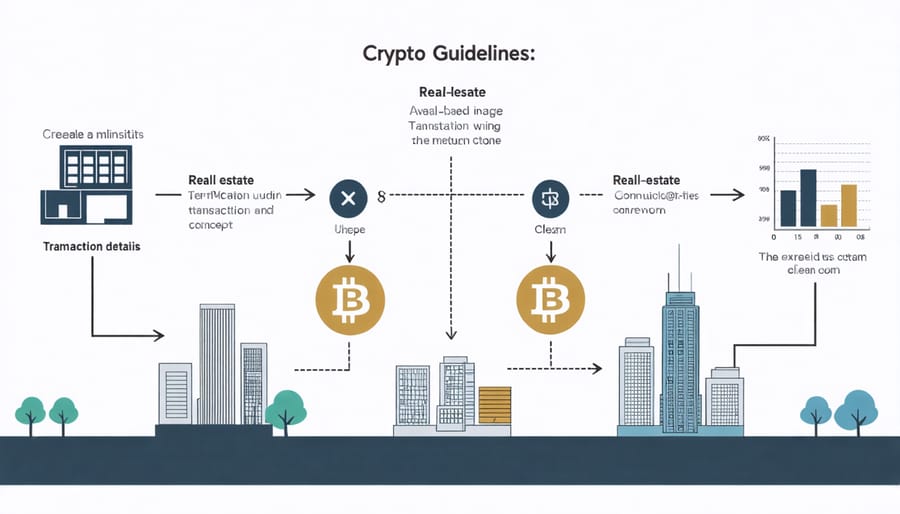
The integration of cryptocurrency and blockchain in real estate is poised to revolutionize property transactions over the next decade. Industry experts predict a significant shift towards tokenized real estate assets, making property investment more accessible and liquid. This transformation, coupled with emerging property tech financing solutions, will likely reshape traditional real estate operations.
For real estate professionals looking to stay ahead of the curve, we recommend:
1. Developing cryptocurrency literacy and understanding blockchain basics
2. Partnering with tech-savvy legal professionals familiar with smart contracts
3. Establishing relationships with crypto-friendly title companies and escrow services
4. Creating digital wallets and familiarizing yourself with major cryptocurrency exchanges
5. Implementing blockchain-based document verification systems
The adoption of these technologies is expected to accelerate, particularly in markets with younger, tech-savvy buyers. Real estate professionals should prepare for increased demand in crypto-based transactions and tokenized property investments. Security tokens representing fractional property ownership could become commonplace, potentially opening up new investment opportunities for smaller investors.
However, it’s crucial to approach these innovations with careful consideration of regulatory compliance and risk management. Stay informed about evolving regulations and maintain strong cybersecurity practices. Consider obtaining specialized insurance coverage for crypto transactions and maintaining detailed digital transaction records.
The successful integration of cryptocurrency in real estate will depend on building trust through transparency, education, and proper due diligence. Real estate professionals who embrace these changes while maintaining traditional business principles will be best positioned to thrive in this evolving landscape.
The intersection of cryptocurrency and real estate represents a transformative shift in how we think about property transactions and investment. As we’ve explored, blockchain technology and digital currencies are creating new opportunities for property buying, selling, and financing while addressing traditional pain points in real estate deals.
To get started in this evolving landscape, consider these key steps: First, educate yourself about cryptocurrency basics and blockchain technology as they relate to real estate. Next, connect with real estate professionals and legal advisors who have experience in crypto transactions. Finally, stay informed about regulatory changes and market developments that could impact cryptocurrency use in property dealings.
Remember that while cryptocurrency offers exciting possibilities for real estate, it’s essential to approach this integration carefully and strategically. Whether you’re a real estate professional, investor, or property buyer, understanding both the opportunities and challenges of crypto in real estate will be crucial for success in this emerging market.
The future of real estate transactions is likely to involve a hybrid approach, combining traditional methods with cryptocurrency innovations. By staying informed and adaptable, you’ll be well-positioned to leverage these technological advances while managing associated risks effectively.