
Understand that every insurance premium you pay reflects a sophisticated risk assessment process that directly impacts your property’s protection costs and coverage limits. Insurance companies don’t arbitrarily set rates—they follow a structured seven-step risk management framework that evaluates everything from your home’s construction materials to local crime statistics and natural disaster exposure.
This systematic approach determines whether your property qualifies for coverage, at what price, and under which conditions. For real estate professionals negotiating deals and homeowners seeking optimal protection, knowing how insurers think transforms you from a passive policy buyer into an informed negotiator who can strategically reduce premiums and improve coverage terms.
The framework operates like a diagnostic system: insurers first establish the context of your property’s unique risk profile, then identify potential threats ranging from hurricanes to liability claims. They analyze the likelihood and financial impact of each risk, evaluate current protective measures like security systems or hurricane shutters, and decide which risks to accept, transfer, or mitigate through policy conditions.
What makes this relevant to you? When you understand that insurers assess risks through established protocols, you gain leverage. You’ll recognize why certain property improvements slash premiums while others don’t register. You’ll anticipate underwriting questions before they arise. You’ll know which documentation strengthens your position during claims.
This framework isn’t just industry theory—it’s the operational blueprint driving every coverage decision and premium calculation affecting your real estate investments. Master these seven steps, and you’ll navigate property insurance with the same strategic advantage insurers possess, making smarter protection decisions that preserve both your assets and your budget.
What Makes a Risk Management Framework Essential for Property Insurance
A risk management framework serves as the backbone of sound property insurance practices, creating a systematic approach to identifying, assessing, and mitigating potential losses. Think of it as a blueprint that guides both insurance companies and property owners through the complex landscape of real estate risks, from natural disasters to liability claims.
For property owners, understanding these frameworks isn’t just academic knowledge. It directly impacts your insurance premiums, coverage options, and ultimately, your financial protection. Insurance companies use structured risk management processes to determine how much risk your property presents, which influences everything from whether you’ll be approved for coverage to what you’ll pay for it. When you grasp how insurers evaluate risk, you’re better equipped to present your property favorably and negotiate terms that work in your favor.
These frameworks protect insurers by ensuring they maintain financial stability while pricing policies appropriately. Without systematic risk assessment, insurance companies would either charge too much, pricing out good customers, or too little, risking insolvency when claims pile up. For policyholders, this translates to more stable premiums and reliable claim payments when disasters strike.
Modern enterprise risk management strategies have evolved beyond simple checklists into sophisticated systems that consider interconnected risks. A coastal property, for instance, isn’t just evaluated for hurricane damage potential but also for flood risk, market volatility, and even climate change impacts over the policy term.
The real value emerges when property owners actively participate in this process. By implementing risk mitigation measures that align with insurance frameworks, such as installing modern fire suppression systems or reinforcing structures against earthquakes, you demonstrate lower risk profiles. This proactive approach often results in reduced premiums and enhanced coverage options, creating a win-win scenario where both parties benefit from structured risk management thinking.
Step 1: Establishing the Context – Understanding Your Property’s Unique Risk Profile
Before insurers can effectively manage risk, they must first understand the unique circumstances surrounding your property. Think of this as creating a detailed snapshot of everything that makes your property distinctly yours—from its physical location to how you use it daily.
Insurance companies begin by examining location-specific factors that significantly influence risk exposure. Geographic considerations include proximity to flood zones, wildfire-prone areas, coastal regions vulnerable to hurricanes, or earthquake fault lines. Your property’s zip code alone can reveal exposure to specific natural disasters and even crime rates that affect insurance premiums. Additionally, local building codes, emergency response times, and historical weather patterns all factor into this assessment.
Property type and usage represent another critical dimension of context. A single-family home faces different risks than a multi-unit investment property or a mixed-use building. Is your property owner-occupied or rented? Do you run a home-based business? These usage patterns fundamentally alter the risk profile. A rental property, for instance, introduces tenant-related risks and liability considerations that wouldn’t apply to your primary residence.
Environmental considerations extend beyond natural disasters. Insurers evaluate vegetation management around your property, drainage systems, building materials, roof condition, and even the age of major systems like electrical and plumbing. Older homes with outdated wiring or plumbing present elevated risks compared to newer construction with modern safety features.
As a property owner, understanding your context empowers you to communicate effectively with insurers. Before meeting with your insurance agent, document your property’s features, recent upgrades, and risk mitigation measures you’ve implemented. This preparation demonstrates risk awareness and can potentially unlock better coverage terms or premium reductions. Remember, insurers reward proactive property owners who understand and actively manage their unique risk contexts.

Step 2: Risk Identification – Spotting Threats to Your Real Estate Assets
Once you’ve established your property’s context and objectives, the next crucial step is systematically identifying what could potentially go wrong. Think of this as creating a comprehensive threat inventory for your real estate assets—because you can’t protect against risks you haven’t identified.
Start with the most obvious environmental hazards. Is your property located in a flood zone? According to FEMA data, properties in high-risk flood areas have a 26% chance of experiencing flood damage during a 30-year mortgage—far higher than the 9% chance of fire. Check elevation certificates and flood maps to understand your exposure. Similarly, wildfire risk has intensified in recent years, particularly in Western states where the wildland-urban interface continues to expand.
Natural disasters extend beyond water and fire. Evaluate earthquake vulnerability if you’re in seismically active regions, hurricane exposure for coastal properties, and even tornado likelihood in the Midwest. Each hazard requires different protective measures and insurance considerations.
Next, examine property-specific vulnerabilities. Aging electrical systems pose fire risks, while outdated plumbing can lead to catastrophic water damage. Foundation issues, roof condition, and HVAC system age all represent potential loss exposures. For commercial properties or rental units, consider liability risks from slip-and-fall accidents, inadequate security, or code violations.
Don’t overlook human-related threats. Theft and vandalism statistics vary dramatically by neighborhood—research local crime data. For investment properties, tenant-related risks include property damage, rental income interruption, and legal disputes.
Create a methodical checklist covering environmental hazards, structural vulnerabilities, mechanical system failures, liability exposures, and financial risks like market downturns or vacancy periods. Document everything with photos, inspection reports, and historical data. This thorough identification process becomes the foundation for everything that follows in your risk management framework, ensuring no critical vulnerability slips through the cracks when you’re developing your protection strategy.

Step 3: Risk Analysis – Measuring What Could Go Wrong (and How Badly)
Once you’ve identified potential risks to your property, the next crucial step is figuring out two things: how likely each risk is to actually happen, and how much damage it could cause if it does. This is where insurance companies roll up their sleeves and start crunching numbers—a process that directly impacts what you’ll pay for coverage.
Insurers use two main approaches to analyze risk. Qualitative analysis is the more straightforward method, using descriptive scales like “low,” “medium,” or “high” to rate both likelihood and impact. For example, a home in a well-maintained neighborhood with modern electrical systems might be rated “low risk” for fire, while a century-old property with outdated wiring could be “high risk.” This approach works well for initial assessments and situations where precise data isn’t available.
Quantitative analysis takes things further by assigning actual numbers to risks. Here, insurers examine historical claims data, actuarial tables, and property-specific factors to calculate probability percentages and potential dollar losses. For instance, if data shows that properties in a particular flood zone have a 2% annual chance of flooding, with average damages of $50,000, insurers can model their exposure with mathematical precision.
The real magic happens when these analyses combine. A risk might be low probability but high impact—like a major earthquake in a moderately active zone. Conversely, minor water damage from aging pipes might be relatively likely but lower in cost. Insurance companies map these scenarios to determine their overall risk exposure.
This analysis directly shapes premium calculations and deductibles. Higher-risk properties naturally command higher premiums because the insurer’s mathematical models predict more frequent or severe claims. Coverage limits also reflect this analysis—your insurer wants to ensure they’re adequately protected while offering you comprehensive coverage. Understanding this connection helps you appreciate why seemingly small property improvements, like updating your roof or installing a security system, can meaningfully reduce your insurance costs.
Step 4: Risk Evaluation – Deciding Which Risks Demand Immediate Attention
After identifying and analyzing potential risks, the next crucial step involves determining which threats deserve your immediate attention and resources. Think of this as insurance triage for your property portfolio.
Risk prioritization relies on two fundamental factors: severity and probability. Severity measures the potential financial impact if a risk materializes, while probability assesses how likely that event is to occur. A devastating fire might have high severity but relatively low probability in a well-maintained property, whereas minor water damage from aging pipes might present moderate severity with higher probability.
This is where the concept of risk tolerance comes into play. Risk tolerance represents the level of uncertainty you’re willing to accept regarding potential losses. For instance, a real estate investor with multiple properties and substantial cash reserves might tolerate higher deductibles, while a first-time homeowner stretching their budget should prioritize comprehensive coverage with lower out-of-pocket exposure.
Insurance professionals use risk matrices to plot threats on a grid, creating visual representations that help property owners understand which risks fall into critical, moderate, or low-priority categories. A coastal property faces high-probability, high-severity hurricane risks, demanding immediate attention through specialized windstorm coverage. Meanwhile, meteor damage, though catastrophic, remains so improbable it rarely warrants specific insurance consideration.
Acceptance criteria help establish clear thresholds for action. These predetermined benchmarks define when you’ll accept a risk, transfer it through insurance, or implement mitigation measures. For property owners, this might mean accepting minor cosmetic damage risks while transferring liability exposure and structural damage risks to insurers. Understanding these priorities ensures your insurance dollars protect against the threats that could genuinely derail your real estate investment strategy, rather than spreading coverage too thin across unlikely scenarios.
Step 5: Risk Treatment – Your Options for Managing Property Threats
Once you’ve identified and analyzed the risks to your property, it’s time to decide how you’ll handle them. This is where risk treatment comes into play—essentially your game plan for managing threats. Think of it as choosing your defensive strategy based on the opponent you’re facing.
There are four primary risk treatment strategies available to property owners, and understanding each one helps you build a comprehensive protection plan.
Risk Avoidance means eliminating the risk entirely by not engaging in the risky activity. For property owners, this might mean deciding not to purchase a home in a flood-prone area or choosing not to rent to short-term vacation guests if you’re concerned about property damage. While avoidance is the most foolproof strategy, it’s not always practical—sometimes the benefits outweigh the risks.
Risk Reduction involves taking steps to minimize either the likelihood or impact of a risk. This is where proactive property management shines. Installing a monitored security system reduces theft risk, updating electrical systems decreases fire hazards, and maintaining your roof prevents water damage. These investments don’t eliminate risks entirely, but they significantly lower your exposure and often result in insurance premium discounts.
Risk Transfer is the strategy most property owners know best—it’s purchasing insurance. When you transfer risk, you’re essentially paying someone else (the insurer) to assume the financial consequences of specific threats. Beyond standard homeowners insurance, you might explore additional coverage options like flood insurance, earthquake coverage, or umbrella policies for high-value properties.
Risk Acceptance means acknowledging a risk and choosing to retain it, often because the cost of other strategies outweighs the potential loss. Selecting higher deductibles is a form of risk acceptance—you’re accepting responsibility for smaller claims in exchange for lower premiums. You might also accept the risk of minor cosmetic damage in a rental property rather than insuring every possible scenario.
Most sophisticated property owners use a combination of these strategies, creating layered protection that balances cost with security.
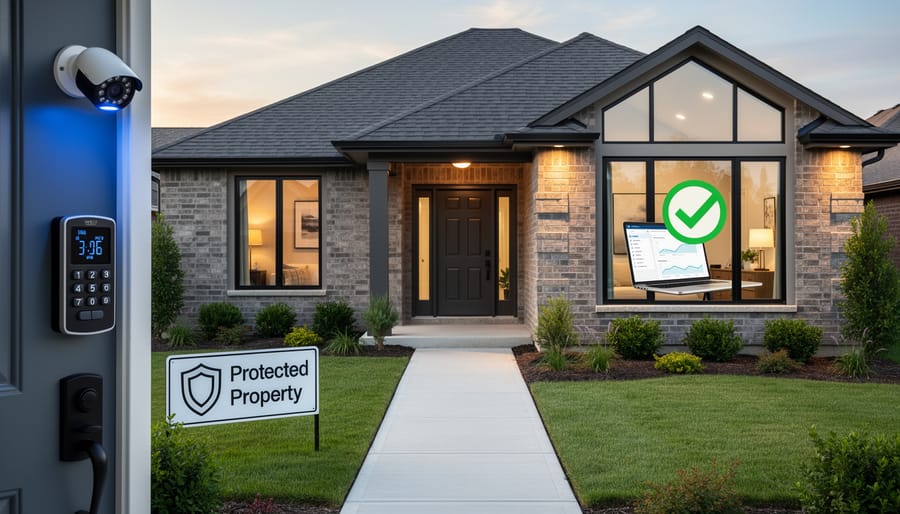
Step 6: Implementation – Putting Your Risk Management Strategy Into Action
After identifying and evaluating risks, it’s time to put your strategy into motion. Implementation transforms your risk management plan from theory into tangible protection for your real estate investments.
Start by selecting the right insurance policies that align with your risk profile. This means comparing coverage options, deductibles, and exclusions across multiple carriers. Don’t simply renew existing policies automatically. Review them annually to ensure they still match your property portfolio’s current needs, especially after renovations or market value changes.
Next, establish systematic premium payment schedules. Consider setting up automatic payments to avoid coverage lapses, which can leave properties vulnerable during gaps. Many insurers offer discounts for annual payments versus monthly installments, potentially saving you hundreds of dollars across multiple properties.
Installing protective measures is where proactive risk management truly shines. Implement physical safeguards like security systems, fire suppression equipment, impact-resistant windows in hurricane zones, or water leak detection systems. Document these installations with photos and receipts, as they often qualify you for premium reductions while genuinely reducing loss probability.
For real estate professionals managing multiple properties, create a centralized documentation system. Maintain digital files for each property containing policy documents, inspection reports, improvement receipts, and correspondence with insurers. Cloud-based property management software can streamline this process, making it easier to track renewal dates and coverage details across your portfolio.
Schedule regular property inspections to identify emerging risks before they escalate. A quarterly walkthrough can catch issues like deteriorating roofs, outdated electrical systems, or drainage problems that could lead to expensive claims.
Finally, communicate your risk management procedures to tenants, property managers, and maintenance teams. Everyone involved should understand their role in protecting the property and know the proper protocols for reporting potential hazards or filing claims.
Step 7: Monitoring and Review – Keeping Your Protection Current as Markets Change
Risk management isn’t a set-it-and-forget-it exercise. Markets evolve, property values fluctuate, and new risks emerge constantly. That’s why monitoring and review form the critical final step in protecting your real estate investments effectively.
Think of your insurance portfolio as a living document that requires regular attention. Property values in hot markets can increase 10-20% annually, meaning yesterday’s coverage limits may leave you significantly underinsured today. Conversely, in cooling markets, you might be overpaying for protection you don’t need. Conducting annual insurance reviews ensures your coverage accurately reflects current replacement costs and market realities.
Major property changes demand immediate policy reassessment. Completed that kitchen renovation? Installed solar panels? Added a swimming pool? Each improvement alters your property’s value and risk profile. Failing to update your insurer about these changes could result in claim denials or inadequate payouts when you need protection most.
Climate patterns are shifting dramatically, introducing new risk considerations. Areas previously considered low-risk for flooding now face increased exposure. Wildfire zones are expanding. Severe weather events are becoming more frequent and destructive. Your risk management strategy must adapt accordingly, potentially requiring additional coverage types or higher limits.
For property investors managing multiple properties, establish a systematic review calendar. Schedule quarterly check-ins for high-value assets and annual reviews for all properties. Document changes, track market trends, and maintain open communication with your insurance professionals.
Remember that insurers also reassess their risk appetite regularly. What they covered comfortably last year might trigger non-renewal notices today. Staying proactive with monitoring helps you anticipate these shifts and secure alternative coverage before gaps emerge, protecting both your properties and your financial future.

How This Framework Saves Property Owners Money (and Headaches)
Understanding how insurers evaluate and manage risk isn’t just academic knowledge—it directly impacts your bottom line. When you grasp the 7-step framework, you’re equipped to negotiate better premiums, avoid coverage gaps, and make smarter investment decisions.
Consider this common scenario: a property investor purchases a rental property without understanding that their insurer has already identified flood risks in that area. Because they didn’t review the risk identification process beforehand, they end up paying significantly higher premiums or facing limited coverage options. By understanding how insurers assess risks upfront, you can factor these costs into your investment analysis before signing purchase agreements.
The framework also helps you spot red flags in policy documents. When you know insurers must implement specific risk treatment strategies, you can question why certain coverages seem inadequate or why premiums seem unusually high. This knowledge creates leverage during policy negotiations and renewals.
Property owners who follow this systematic approach typically avoid three costly mistakes. First, they don’t over-insure low-risk properties while under-insuring high-value assets. Second, they understand which risk mitigation measures—like installing fire suppression systems or upgrading electrical panels—actually reduce premiums rather than just assuming they will. Third, they maintain proper documentation that aligns with insurer requirements, preventing claim denials due to technicalities.
The financial impact is measurable. Property owners who actively engage with this framework report saving 15-30% on annual premiums through strategic risk management and informed policy selection. More importantly, they sleep better knowing their coverage actually matches their risk exposure, not just what a sales agent recommended.
Understanding the 7-step risk management framework empowers you to think like an insurance professional, giving you a strategic advantage whether you’re protecting your home, evaluating investment properties, or advising clients. This systematic approach transforms risk from an abstract concern into a manageable series of decisions, helping you identify vulnerabilities before they become costly problems.
Now is the perfect time to put this knowledge into action. Start by conducting your own risk assessment of your current properties using the framework as your guide. Review your existing insurance policies through this lens—are you addressing the right risks with appropriate controls? When acquiring new properties, walk through each step before finalizing your purchase to anticipate potential issues and secure proper coverage from day one.
Consider scheduling a policy review with your insurance agent, armed with informed questions about how their risk management process aligns with your property’s specific exposures. Remember, effective risk management isn’t a one-time task but an ongoing commitment to protecting your real estate investments. By applying these principles consistently, you’ll make smarter decisions, potentially reduce premiums, and gain peace of mind knowing your properties are truly protected.