
Document your home’s defensible space improvements with photos and receipts—insurers increasingly reward homeowners who clear vegetation within 30 feet of structures, install ember-resistant vents, and use fire-rated roofing materials with premium discounts up to 20%. Request a FAIR Plan evaluation immediately if your carrier has issued a non-renewal notice, as California’s insurer of last resort now covers over 400,000 properties and must accept qualified applicants regardless of wildfire risk scores. Create a replacement cost inventory using your phone’s video function, walking through each room while narrating details about electronics, furnishings, and renovations—this simple 20-minute task becomes invaluable evidence when filing claims in the aftermath of a total loss.
The wildfire insurance crisis has transformed from a West Coast problem into a national real estate concern. Major carriers have withdrawn from fire-prone markets across California, Colorado, and Texas, leaving homeowners scrambling for coverage while facing premium increases exceeding 300% in some zip codes. For real estate professionals, this shift fundamentally changes property valuations and buyer qualifications. A $600,000 home becomes effectively unmarketable when annual insurance costs jump from $2,000 to $8,000, pushing monthly housing expenses beyond conventional debt-to-income ratios.
Understanding essential insurance strategies now separates savvy property investors from those facing catastrophic financial exposure. The solution requires combining traditional coverage options with emerging alternatives like parametric policies, surplus lines carriers, and state-backed programs. Equally important are home hardening investments that directly reduce insurance costs while protecting your largest asset. This comprehensive approach addresses both immediate coverage needs and long-term financial sustainability in our new wildfire reality.
The Wildfire Insurance Crisis: What’s Really Happening
Why Major Insurers Are Pulling Out of Fire-Prone States
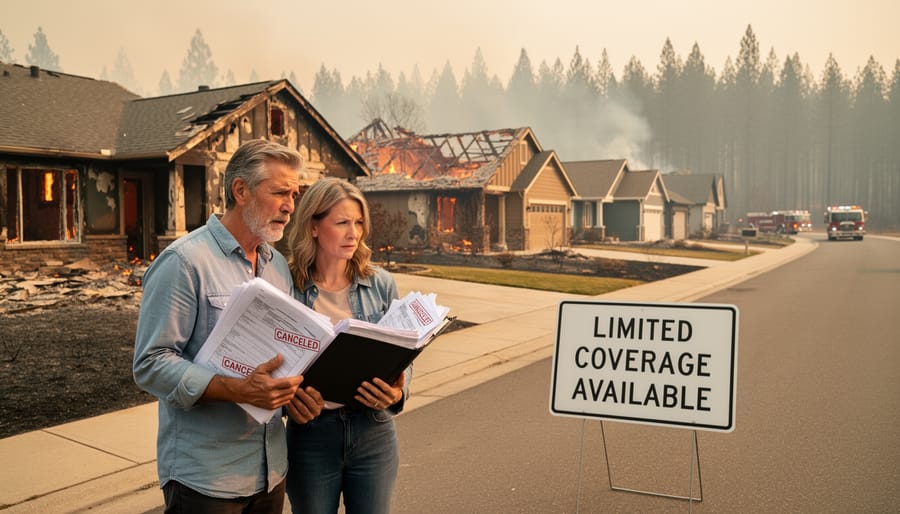
The wildfire insurance crisis isn’t a distant threat—it’s happening right now, and major carriers are making dramatic exits from high-risk markets. State Farm, California’s largest home insurer, stopped accepting new applications in the state in May 2023, citing wildfire exposure and rapidly increasing construction costs. This decision affected not just homeowners but the entire real estate market in America’s most populous state.
Allstate followed suit, pausing new homeowners, condo, and commercial insurance policies in California. The impact? Over 500,000 homeowners saw their policies dropped or non-renewed between 2020 and 2022 in California alone, forcing them into the state’s FAIR Plan—a bare-bones insurer of last resort that typically costs significantly more while providing less coverage.
Colorado has experienced similar market contractions. Following the Marshall Fire in 2021, which destroyed over 1,000 homes in Boulder County, several insurers either raised premiums by 20-40% or stopped writing new policies in wildfire-interface communities. Nationwide and Farmers have both restricted coverage in specific Colorado ZIP codes.
The climate change impacts driving these decisions are clear in the numbers: insurers paid out $13.5 billion in wildfire claims in California between 2017 and 2022. When losses consistently exceed premiums collected—and state regulations limit how quickly companies can raise rates—the business model simply doesn’t work. For homeowners and real estate professionals, this means reduced property values, stalled sales, and the urgent need for alternative coverage strategies.
The Real Cost: What Homeowners Are Paying Now
The financial impact of wildfire risk on homeowners is staggering. Traditional insurance premiums in high-risk California zones have surged by 40-60% over the past three years, with some properties seeing annual costs jump from $2,000 to over $5,000. When standard carriers withdraw coverage, homeowners often turn to California’s FAIR Plan as a last resort, but the protection comes at a steep price. FAIR Plan policies typically cost 2-3 times more than conventional insurance while providing significantly less coverage, often capping at $3 million for dwelling protection.
The disparity creates serious financial strain. A typical homeowner with a traditional policy might pay $3,500 annually for comprehensive coverage, while a comparable FAIR Plan policy could exceed $8,000 with bare-bones protection. To achieve adequate coverage, many homeowners must purchase supplemental wrap-around policies, pushing total annual costs beyond $12,000. For real estate professionals, these numbers are critical when advising clients on property purchases in wildfire-prone areas. The hidden insurance costs can eliminate affordability advantages and significantly impact property values, making transparent cost discussions essential during transactions.
Understanding Residential Wildfire Insurance Options
Traditional Homeowners Policies: What’s Covered (and What Isn’t)
Standard homeowners insurance (HO-3 policies) typically covers fire damage under the “dwelling coverage” section, which means your home’s structure is generally protected if a wildfire strikes. The good news: insurers don’t usually distinguish between wildfire damage and other fire types when processing claims. Your kitchen fire and a wind-driven wildfire receive the same coverage treatment.
However, here’s where things get tricky. While the structure itself is covered, many policies cap or exclude certain items that wildfire victims frequently lose. Landscaping coverage often maxes out at 5% of dwelling coverage (usually $500-$1,000 per tree or shrub), which barely scratches the surface of replanting mature trees. Detached structures like sheds, fences, and guest houses typically receive only 10% of your dwelling coverage—potentially leaving you underinsured.
The real limitation isn’t in claim processing but in policy availability. As wildfire risk intensifies, insurers aren’t denying claims for existing policyholders; they’re simply refusing to renew policies or write new ones in high-risk zones. This leaves homeowners scrambling for alternatives before understanding what their traditional policy actually covered. Additionally, if you’ve made home hardening improvements but haven’t documented them with your insurer, you’re missing potential premium discounts that could make coverage more affordable.
FAIR Plans and Last-Resort Coverage
When traditional insurers reject your application due to wildfire risk, state-sponsored FAIR Plans (Fair Access to Insurance Requirements) become your safety net. Operating in 13 states including California, Colorado, and Florida, these programs guarantee coverage to property owners who’ve been denied in the standard market.
Here’s what you need to know: FAIR Plans function as insurers of last resort, meaning you’ll typically pay 20-50% more than conventional policies while receiving significantly less coverage. Most FAIR Plans cap dwelling coverage around $1.5-3 million—problematic if you own a high-value property in fire-prone areas like Malibu or Lake Tahoe.
Coverage limitations extend beyond dollar amounts. FAIR Plans often exclude additional living expenses, liability protection, and personal property coverage that standard policies include. You’ll likely need to purchase separate policies for these essentials, driving your total insurance costs even higher.
For real estate professionals advising clients, understanding these constraints is crucial. A $2 million home with only FAIR Plan coverage faces a substantial protection gap. Many homeowners supplement FAIR Plans with excess coverage from specialty insurers, though availability varies by location. Before purchasing property in wildfire zones, calculate whether combining FAIR Plan base coverage with supplemental policies fits your client’s budget and adequately protects their investment.
Specialty Wildfire Insurance: Is It Worth It?
As traditional insurers retreat from fire-prone regions, specialty wildfire insurance has emerged as a critical safety net. These supplemental policies, offered by specialized high-risk carriers and state FAIR Plans, fill coverage gaps when standard policies are unavailable or canceled.
Specialty policies typically cost 2-4 times more than conventional insurance, with annual premiums ranging from $3,000 to $10,000 depending on location and property value. While expensive, they prevent the catastrophic financial exposure of going uninsured. Some carriers now offer hybrid products combining basic dwelling coverage with enhanced wildfire protection.
These policies make sense for homeowners who have exhausted traditional options, own properties in high-value wildfire zones, or need coverage during home hardening improvements. Before committing, compare FAIR Plan coverage limits against specialty carriers, as FAIR Plans often cap dwelling coverage below market value. Real estate professionals should educate clients that specialty insurance, though costly, protects both investment equity and mortgage requirements, making it an essential consideration rather than an optional expense in fire-prone markets.
Mitigation Incentives That Actually Lower Your Premiums
Home Hardening Upgrades Insurers Reward
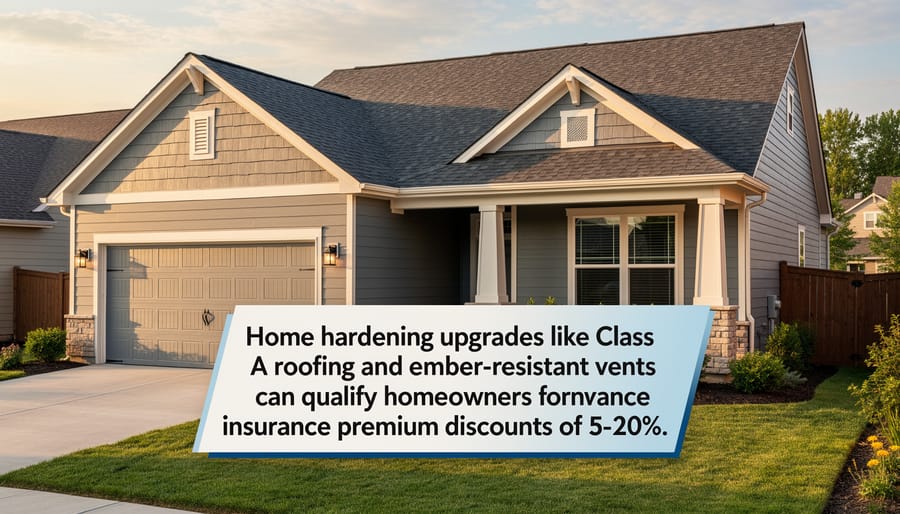
Taking proactive steps to fortify your home against wildfire can deliver substantial insurance savings while dramatically improving your property’s survivability. Insurers increasingly reward these investments with premium discounts typically ranging from 5% to 20%, depending on the specific upgrades and your carrier.
Installing Class A fire-rated roofing represents one of the most impactful improvements. These materials—including asphalt composition shingles, metal roofing, and clay tiles—offer the highest fire resistance rating and can earn you 10-15% discounts. As we’ve seen, roof upgrades reduce premiums significantly across multiple carriers.
Ember-resistant vents are another critical upgrade since embers cause the majority of wildfire home ignitions by infiltrating attic spaces. Installing metal mesh screens with openings no larger than 1/8 inch typically earns 5-10% discounts and costs just a few hundred dollars for most homes.
Tempered or dual-pane windows with fire-resistant frames prevent radiant heat from igniting interior furnishings. This upgrade usually qualifies for 5-8% premium reductions while enhancing overall energy efficiency.
Non-combustible siding materials like stucco, fiber cement, or brick provide essential exterior protection and can reduce premiums by 10-15%. Some insurers bundle these improvements into comprehensive hardening programs offering up to 20% total savings.
Contact your insurance agent for specific discount details and approved contractor lists. Many carriers now require professional certification that upgrades meet wildfire resistance standards before applying discounts.
Creating Defensible Space: The 0-5-30-100 Rule
The 0-5-30-100 rule provides a straightforward framework for creating defensible space that insurers increasingly require for coverage eligibility. Here’s how it works: maintain zero flammable materials within five feet of your home’s exterior, ensuring this immediate zone uses only hardscaping like gravel or concrete. Within thirty feet, keep vegetation lean by spacing plants appropriately, removing dead material, and trimming tree branches at least ten feet from structures. The final zone extends to one hundred feet, where you’ll manage larger vegetation by removing ladder fuels that allow ground fires to climb into tree canopies.
Documentation matters significantly for insurance purposes. Take dated photographs showing your compliance with each zone, maintain receipts for professional vegetation management services, and request written confirmation from local fire departments conducting home assessments. Many insurers now accept this documentation as evidence of reduced risk, potentially qualifying you for premium discounts ranging from 5-20 percent. Some companies require annual proof of maintenance to avoid non-renewal notices. Property owners who complete certified Firewise assessments often gain additional leverage during coverage negotiations, particularly when working with surplus lines carriers who evaluate risk more individually than standard market insurers.

Documentation That Proves You’re Protected
Protecting your home from wildfires is only half the battle—you also need to prove these efforts to your insurance company. Comprehensive documentation can mean the difference between securing coverage and facing non-renewal.
Start by photographing every mitigation measure you implement. Take clear images of your defensible space from multiple angles, showing specific clearances around structures. Document ember-resistant vents, Class A roofing materials, and any hardscaping that creates fuel breaks. Date-stamped photos with detailed descriptions create a timeline that demonstrates your ongoing commitment to fire safety.
Consider enrolling in third-party inspection programs like Wildfire Defense Systems or the Insurance Institute for Business & Home Safety’s Wildfire Prepared Home program. These independent assessments provide credible validation that underwriters trust. Some insurers even offer premium discounts for homes that pass these rigorous evaluations.
Maintain detailed receipts for all fire-resistant upgrades, from specialized siding to new windows. Keep copies of contractor invoices, building permits, and compliance certificates. Create a digital portfolio that’s easily shareable with underwriters during renewal periods. Many property insurance companies now have mobile apps for submitting documentation, streamlining the verification process and potentially expediting coverage decisions or premium reductions.
Financial Assistance and Tax Breaks for Wildfire Mitigation
State and Federal Grant Programs
When traditional insurance markets tighten, government grant programs can provide crucial financial support for wildfire mitigation efforts. The Federal Emergency Management Agency (FEMA) offers several programs worth exploring, particularly the Hazard Mitigation Grant Program (HMGP), which becomes available after presidential disaster declarations. These grants can cover up to 75% of eligible mitigation project costs, including defensible space creation and home hardening improvements.
At the state level, California leads with innovative programs like the Home Hardening Program, which provides grants up to $5,000 for homeowners in high-risk fire zones to install ember-resistant vents, dual-pane windows, and non-combustible roofing materials. Similar initiatives exist in Colorado, Oregon, and other fire-prone states, each with unique eligibility criteria typically based on wildfire risk assessment scores and household income thresholds.
The application process generally requires property documentation, cost estimates from licensed contractors, and proof of primary residence status. Many programs prioritize low-to-moderate income households or properties in recently burned areas. Real estate professionals should note that completed mitigation projects funded through these grants often translate to improved insurance eligibility and lower premiums for clients, making properties more marketable. Processing times vary from 60 to 180 days, so early application is essential for homeowners facing coverage challenges.
Tax Deductions and Credits for Fire Safety Improvements
Investing in fire safety improvements doesn’t just protect your property—it can also deliver tangible tax benefits that offset your upfront costs. While the IRS doesn’t currently offer a specific deduction exclusively for wildfire mitigation, several existing tax provisions can help reduce the financial burden of these crucial upgrades.
Home improvements that enhance fire resistance may qualify for deductions under energy-efficiency credits when they overlap with fire safety goals. For instance, installing Class A fire-rated metal roofing or upgrading to impact-resistant windows with fire-resistant properties might qualify for the Energy Efficient Home Improvement Credit, which covers up to 30% of costs for qualifying improvements, subject to annual caps.
Property owners should also explore state-level incentives, as many fire-prone states offer additional tax credits or property tax reductions for defensible space maintenance and home hardening measures. California, for example, has periodically offered tax deductions for brush clearance expenses.
For investment properties, fire mitigation expenses may qualify as deductible repairs and maintenance costs, while capital improvements that increase property value can be depreciated over time. Self-employed individuals working from home might deduct a portion of fire safety upgrades through the home office deduction.
Consult a tax professional familiar with your state’s provisions to maximize available benefits. Documentation is essential—keep detailed receipts and before-and-after photos of all improvements to substantiate your claims during tax season.

How Real Estate Professionals Should Advise Clients in Fire Zones
Disclosure Requirements and Buyer Protection
In most states, sellers have legal obligations to disclose known wildfire risks and previous fire damage to prospective buyers. California’s Natural Hazard Disclosure Statement, for instance, requires sellers to reveal if a property sits within a High or Very High Fire Hazard Severity Zone. Real estate professionals should familiarize themselves with local disclosure laws, as failing to inform buyers can result in serious legal consequences.
Beyond legal requirements, ethical agents help buyers understand the full financial picture of homeownership in fire-prone areas. This means discussing not just the purchase price, but ongoing insurance costs that might reach $5,000 to $10,000 annually or more in high-risk zones. Some buyers may discover their dream home is uninsurable through traditional carriers, forcing them into the FAIR Plan market with limited coverage and higher premiums.
Transparency builds trust and protects all parties. Provide buyers with resources to obtain insurance quotes before closing, recommend home inspections that identify fire vulnerabilities, and connect them with mitigation specialists. When clients understand the true cost of ownership including escalating insurance premiums and required home hardening improvements, they can make informed decisions that prevent financial hardship down the road.
Impact on Property Values and Marketability
Insurance availability has become a critical factor in property valuations within wildfire-prone areas. Homes without adequate coverage or those located in high-risk zones where carriers have withdrawn are experiencing measurable declines in market value, sometimes dropping 10-15% compared to similar properties with readily available insurance options. This creates a significant challenge for sellers and real estate agents alike.
For professionals marketing properties in wildfire zones, transparency is essential. Disclosing the insurance landscape upfront—including which carriers still serve the area and average premium costs—builds trust and prevents deals from falling through during due diligence. Many successful agents now provide potential buyers with pre-vetted insurance contacts and detailed information about state FAIR Plans or surplus lines options before properties hit the market.
Here’s where opportunity emerges: mitigation-ready homes command premium pricing. Properties with defensible space already established, ember-resistant vents installed, and fire-resistant roofing materials documented can sell faster and for higher prices. These features directly translate to lower insurance premiums and improved coverage availability, making them attractive selling points. Some forward-thinking sellers are even obtaining pre-inspections from Firewise USA assessors or Insurance Institute for Business & Home Safety evaluators, using these certifications as marketing differentiators that demonstrate reduced risk and long-term insurability.
Action Plan: Securing and Maintaining Coverage
Taking control of your wildfire insurance situation requires a systematic approach that addresses both immediate concerns and long-term protection. Here’s how to secure and maintain your coverage.
Start by conducting a thorough coverage audit. Pull out your existing policy and examine your dwelling coverage limits, contents protection, and additional living expenses provisions. Compare these figures against current replacement costs in your area, which have likely increased due to construction inflation. If you’re underinsured, you’re leaving yourself financially exposed even if you maintain coverage.
Next, schedule a property assessment focused specifically on wildfire risk. Walk your perimeter and identify vulnerabilities: overhanging tree branches within 30 feet, wooden fence sections connecting to your home, combustible mulch near foundations, and unscreened vents. Document everything with photos. This creates your mitigation roadmap and establishes a baseline for insurance conversations.
Implement high-impact, cost-effective improvements first. Installing ember-resistant vents typically costs a few hundred dollars but dramatically reduces ignition risk. Clearing vegetation in the immediate five-foot zone around your home is essentially free labor that delivers measurable results. Consider this strategic disaster preparedness planning that protects both your property and your insurability.
Document every mitigation measure you complete. Take before-and-after photos, save receipts, and obtain any relevant certifications like Firewise USA recognition. This documentation becomes negotiating leverage when discussing premiums or seeking new coverage.
Finally, establish an annual insurance review schedule. Market conditions change rapidly in fire-prone areas. What’s unavailable today might become accessible next quarter through new insurers entering the market or existing carriers adjusting their risk models. Staying proactive rather than reactive puts you ahead of potential coverage disruptions.
The wildfire insurance landscape presents real challenges, but it’s far from hopeless. The key takeaway is this: homeowners who take strategic, proactive steps to mitigate wildfire risk stand the best chance of securing affordable coverage and maintaining their property’s insurability for years to come.
Insurance companies are increasingly using sophisticated risk assessment models that reward defensive actions. Creating defensible space, upgrading to fire-resistant roofing and siding, installing ember-resistant vents, and maintaining your property aren’t just good safety practices—they’re financial investments that directly impact your ability to obtain coverage. Many insurers now offer premium discounts ranging from 5% to 20% for homes that meet specific mitigation standards, and some won’t even consider properties that lack basic protections.
For real estate professionals, understanding this connection between mitigation and insurability has become essential for serving clients effectively. When advising buyers in fire-prone areas, emphasize that a property’s fire-hardening features aren’t optional amenities—they’re necessary elements that affect both insurability and long-term property value.
The bottom line is straightforward: while you can’t control wildfire frequency or insurer market decisions, you can control your property’s risk profile. Homeowners who invest in mitigation today are positioning themselves to access better coverage options tomorrow. In an increasingly challenging insurance market, that proactive approach isn’t just smart—it’s essential for protecting what’s likely your most significant financial asset.