
Examine established platforms like tZERO, which tokenized a $150 million apartment complex in South Carolina, demonstrating how blockchain technology transforms physical property into digital securities accessible to retail investors. Study the St. Regis Aspen Resort tokenization, where a luxury hotel property worth $18 million became available through tokens representing fractional ownership, lowering entry barriers from millions to approximately $10,000 per share. Review the Harbor platform’s tokenization of student housing portfolios, which converted traditional real estate holdings into compliant digital securities while maintaining full regulatory oversight and investor protections.
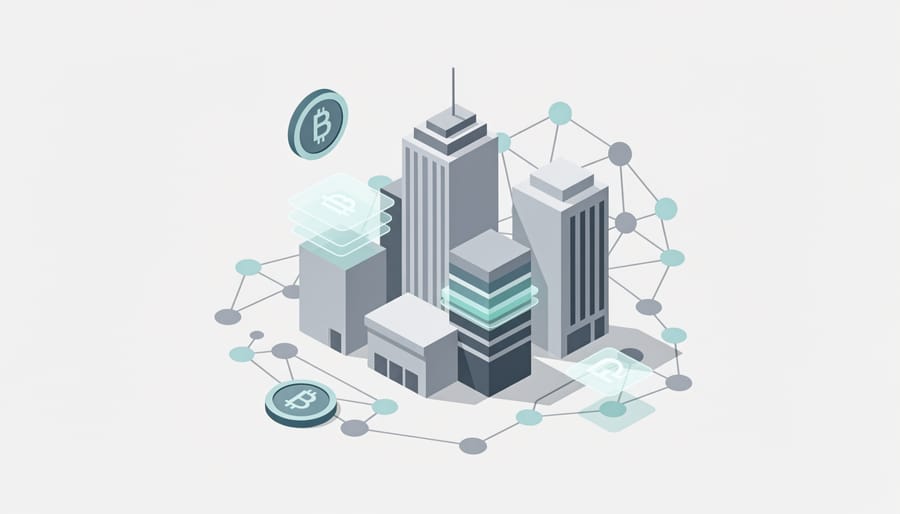
Security tokens represent a fundamental shift in how real estate ownership operates, converting traditional property rights into programmable digital assets that trade on specialized exchanges. Unlike cryptocurrencies designed for payments, these tokens embody actual ownership stakes in tangible properties—each token holder possesses legal rights to income distributions, appreciation, and voting privileges proportional to their holdings.
The evolution from paper certificates to digital tokens accelerates transaction speeds, reduces intermediary costs, and enables 24/7 global trading of real estate assets previously locked in illiquid markets. Real estate professionals increasingly recognize that tokenization democratizes access to institutional-grade properties, allowing investors to diversify portfolios across multiple properties with lower capital requirements than conventional real estate investing demands.
Understanding concrete examples clarifies how this technology operates beyond theoretical concepts. From commercial office buildings and luxury resorts to residential apartment complexes and mixed-use developments, tokenized properties demonstrate practical applications reshaping investment accessibility. These examples reveal standardization protocols, regulatory compliance mechanisms, and investor protections that make security tokens viable alternatives to traditional real estate investment vehicles like REITs or direct property ownership.
What Makes a Security Token Different from Traditional Real Estate Investment
Think of traditional real estate investment like buying a whole pizza—you either purchase the entire thing or nothing at all. Security tokens, on the other hand, let you buy just a slice or two, fundamentally changing who can participate in property investment.
Traditional real estate ownership typically comes in three flavors. Direct ownership means you buy a property outright, controlling everything but tying up substantial capital. REITs (Real Estate Investment Trusts) allow smaller investments but trade like stocks, meaning you’re investing in a company that owns properties rather than owning the real estate directly. Partnerships split ownership among select investors, but they’re often illiquid and involve complex legal agreements that can take months to navigate.
Security tokens represent a new category altogether. Built on blockchain in real estate, these digital assets represent fractional ownership in actual properties or real estate portfolios. Here’s what makes them different: instead of needing hundreds of thousands for direct ownership or settling for indirect exposure through REITs, you can own a verified fraction of a specific building.
The blockchain foundation provides three game-changing advantages. First, fractional ownership becomes seamless—a luxury apartment building can be divided into thousands of tokens, each representing a proportional stake. Second, liquidity improves dramatically. While traditional real estate transactions can take months, tokenized shares can potentially trade on specialized platforms within days or hours. Third, transparency reaches new levels since blockchain records every transaction permanently, creating an immutable ownership history.
From an insurance perspective, this transparency matters tremendously. Clear ownership records reduce title disputes and streamline claims processing. Traditional property transfers involve multiple intermediaries—lawyers, notaries, title companies—each adding time and cost. Security tokens consolidate much of this process digitally, reducing friction while maintaining regulatory compliance. You’re still buying real estate with all its legal protections, just through a more efficient delivery mechanism that makes property investment accessible to a broader range of investors.
The Standards That Make Real Estate Security Tokens Work
ERC-20: The Foundation Standard
ERC-20 tokens represent the original Ethereum token standard, and they’ve played a surprisingly important role in early real estate tokenization efforts. Think of ERC-20 as the basic building block—it’s straightforward, widely understood, and compatible with most cryptocurrency wallets and exchanges.
In real estate, several pioneering projects used ERC-20 tokens to represent property ownership. For instance, some commercial building fractionalizations relied on this standard because of its simplicity and broad acceptance. Each token represented a specific percentage of ownership in the property, allowing investors to buy and sell shares much like trading stocks.
However, here’s where things get interesting—and limiting. ERC-20 tokens were originally designed for simple cryptocurrencies, not regulated securities representing actual property. They lack built-in compliance features that real estate transactions require. For example, they can’t automatically verify that a buyer meets accreditation requirements or restrict transfers to comply with securities regulations.
Despite these limitations, some platforms still use ERC-20 for property tokens because the infrastructure is mature and investors are familiar with it. It’s like using a basic hammer when you might eventually need a specialized tool—it works, but it’s not ideal.
The main drawbacks become apparent quickly: no automatic compliance checks, no built-in transfer restrictions, and no way to embed property-specific rights like voting on building improvements or receiving rental income distributions. This is precisely why newer standards emerged, specifically designed to address the unique needs of tokenizing real estate assets while maintaining regulatory compliance.
ERC-1400: Built for Security and Compliance
When tokenizing real estate assets, you can’t simply create a digital token and call it done. Real property transactions involve complex regulations, investor qualifications, and transfer restrictions that standard cryptocurrency tokens weren’t designed to handle. This is where ERC-1400 becomes a game-changer for the industry.
ERC-1400 is a security token standard specifically built to bridge the gap between blockchain technology and traditional financial regulations. Think of it as the sophisticated cousin of basic crypto tokens, one that comes equipped with built-in compliance features that real estate transactions actually need.
The standard addresses three critical challenges in property tokenization. First, it enforces transfer restrictions automatically. Unlike Bitcoin or Ethereum that anyone can trade freely, ERC-1400 tokens can be programmed to only transfer between verified, qualified investors. This means a tokenized apartment building in New York won’t accidentally end up in the hands of someone who doesn’t meet accredited investor requirements or who’s from a restricted jurisdiction.
Second, ERC-1400 handles investor verification seamlessly through on-chain identity management. The technology can verify that buyers meet specific criteria before allowing a transaction to complete, satisfying Know Your Customer and Anti-Money Laundering regulations that govern real estate deals.
Third, it supports document management and off-chain data connections. Property ownership involves extensive documentation, from deeds to inspection reports. ERC-1400 creates verifiable links between the token and these essential documents, maintaining the paper trail regulators and title companies require.
What makes this particularly valuable for real estate professionals is the standard’s partition feature. A single property can be divided into different token classes with varying rights, perfect for structures where some investors hold voting rights while others receive only income distributions.

ERC-3643 (T-REX): The Compliance-First Approach
Think of ERC-3643 as the security token standard built specifically for navigating regulatory mazes. While ERC-1400 focuses on making securities compatible with blockchain infrastructure, the Token for Regulated EXchanges (T-REX) protocol takes a different approach: it bakes compliance requirements directly into the token’s DNA from day one.
Here’s what makes ERC-3643 stand out in real estate applications. The protocol creates an identity layer that verifies investor eligibility before any transaction occurs. Imagine a property token that automatically checks whether a potential buyer meets accreditation requirements, residency restrictions, or investment limits before allowing a transfer. That’s T-REX in action. It uses on-chain identity verification combined with smart contracts that enforce these rules at the code level, not just during initial purchase.
The key difference from ERC-1400 lies in its modular compliance framework. Real estate platforms dealing with cross-border investments particularly appreciate this feature. For instance, a luxury hotel project tokenized under ERC-3643 can simultaneously enforce SEC regulations for U.S. investors, MiFID II requirements for European participants, and local property ownership laws, all through customizable compliance modules.
This approach resonates with real estate developers working in heavily regulated markets like Switzerland or Luxembourg, where securities laws intersect with property regulations. The protocol’s permissioned transfer system means tokens won’t accidentally end up in the wrong hands, potentially violating securities laws or triggering unwanted tax consequences. For real estate tokenization projects where regulatory compliance isn’t optional but mission-critical, ERC-3643 offers a more prescriptive, structured path forward.
Real Security Token Examples Reshaping Property Investment
Tokenized Commercial Properties
Commercial real estate has emerged as one of the most exciting frontiers for security token applications, transforming how investors access traditionally illiquid markets. Let’s explore some groundbreaking examples that demonstrate this technology’s real-world potential.
The St. Regis Aspen Resort represents a landmark moment in property tokenization. In 2018, this luxury Colorado property became one of the first major commercial real estate assets to be tokenized, raising $18 million through Elevated Returns. The project divided ownership into security tokens, allowing investors to purchase fractional shares in this premium asset that would have been financially out of reach for most individual investors. This deal proved that tokenization platforms could handle complex, high-value transactions while maintaining regulatory compliance.
Harbor, a prominent blockchain company, has facilitated multiple commercial property tokenizations. Their platform enables property owners to digitize ownership stakes while ensuring compliance with securities regulations. One notable example involved a $100 million student housing portfolio, demonstrating how tokenization works beyond luxury properties and extends to income-generating commercial assets.
Manhattan’s 17 John Street became another significant case study when it was tokenized in 2021. This commercial building in New York’s financial district was divided into digital shares, making ownership accessible to accredited investors who could purchase tokens representing fractional ownership. The structure provided investors with potential rental income and appreciation benefits without requiring millions in capital.
European markets have also embraced commercial tokenization. A Swiss hotel property was tokenized through BrickMark, allowing investors to purchase shares starting at relatively modest amounts. This democratization of commercial real estate investment represents a fundamental shift in how these markets operate.
These examples illustrate how security tokens are breaking down traditional barriers in commercial real estate, offering liquidity, transparency, and accessibility that conventional ownership structures simply cannot match.

Residential Real Estate Tokens
Residential real estate has emerged as one of the most accessible entry points for security token investments, transforming how everyday investors can participate in property ownership. Unlike traditional real estate investing that requires substantial capital for down payments and closing costs, tokenized residential properties allow investors to purchase fractional shares starting at surprisingly low minimums—sometimes as little as $50.
RealT stands out as a pioneering platform in this space, offering tokenized single-family homes and multi-family properties primarily in markets like Detroit, Cleveland, and other midwestern cities. Each property is broken into thousands of tokens, with investors receiving their proportional share of rental income distributed weekly via blockchain technology. The platform conducts thorough property vetting, handles management responsibilities, and provides complete transparency about property performance and expenses.
Lofty takes a similar approach but emphasizes user-friendly access for newcomers to both real estate and cryptocurrency. Their marketplace features tokenized rental properties with detailed analytics showing historical returns, occupancy rates, and neighborhood data. Investors can buy and sell their tokens on Lofty’s secondary market, adding liquidity that traditional real estate investments simply cannot match.
These platforms demonstrate how residential tokenization addresses real-world investor pain points. Property management headaches disappear since the platforms handle tenant relations, maintenance, and repairs. Geographic diversification becomes effortless—you can own fractions of properties across multiple states without ever leaving your home. Tax reporting remains straightforward, with platforms providing necessary documentation for rental income.
The residential token sector particularly appeals to younger investors seeking portfolio diversification beyond stocks and bonds. However, investors should understand that these tokens remain securities subject to regulatory oversight, and property values can fluctuate based on local market conditions. Due diligence remains essential, including reviewing property condition reports, understanding fee structures, and assessing the platform’s track record before committing capital.
REITs Going Digital
Real Estate Investment Trusts have traditionally operated through conventional stock exchanges, but that’s changing rapidly as several major players explore tokenization. This shift represents more than just a technological upgrade—it’s fundamentally transforming how investors access real estate portfolios.
Traditional REITs like Fundrise and RealtyMogul are experimenting with tokenized versions of their holdings, allowing investors to purchase fractional ownership through blockchain-based security tokens rather than traditional shares. The key difference? These tokens can trade 24/7 on digital securities exchanges, offer near-instant settlement, and provide transparent, immutable ownership records on the blockchain.
Take tZERO, for instance, which launched one of the first SEC-compliant tokenized REIT offerings. Their platform allows investors to trade digital securities representing real estate portfolios with significantly lower minimum investments than traditional REITs require. Instead of needing thousands of dollars to meet minimum investment thresholds, some tokenized REITs accept investments starting at just a few hundred dollars.
What makes blockchain-native REITs particularly compelling is their operational efficiency. Smart contracts automate dividend distributions, reducing administrative costs and ensuring investors receive payments automatically when rental income flows in. This automation can mean higher returns since less money goes toward management fees and paperwork.
Harbor, another pioneer in this space, has tokenized commercial real estate portfolios worth hundreds of millions, demonstrating institutional confidence in this model. Their platform ensures compliance with securities regulations while offering the flexibility and accessibility of blockchain technology.
For investors, the advantages are clear: lower barriers to entry, enhanced liquidity compared to traditional private real estate investments, transparent transaction histories, and the potential for fractional ownership in premium properties previously accessible only to institutional investors. While these tokenized REITs still must comply with the same regulations as traditional REITs, the technology enables a more democratic and efficient investment experience.
How Security Token Standards Protect Real Estate Investors
Security token standards function as digital gatekeepers, ensuring that real estate investments maintain the same investor protections required in traditional markets while leveraging blockchain’s efficiency. These standards aren’t just technical specifications—they’re built-in safeguards that automatically enforce regulatory compliance at every transaction.
The most critical protection involves Know Your Customer and Anti-Money Laundering protocols. Unlike cryptocurrency tokens that anyone can purchase, security tokens embed identity verification directly into their code. Before you can acquire tokenized real estate shares, you must prove your identity and investment eligibility through verified channels. The token itself remembers who owns it and won’t transfer to unverified wallets, creating an impenetrable barrier against fraud and illegal activity.
Transfer restrictions represent another essential layer of protection. Security token standards can encode rules that prevent sales during lock-up periods or restrict trading to accredited investors only. Think of it as an automated compliance officer working 24/7. If someone tries to transfer tokens to an unqualified buyer, the blockchain simply rejects the transaction. This automation eliminates the manual oversight costs that plague traditional real estate investments while ensuring compliance requirements are never compromised.
Regulatory reporting happens transparently on the blockchain itself. Every transaction creates an immutable record that regulators can audit without disrupting your investment. This transparency benefits investors too—you can verify ownership, track dividends, and monitor your portfolio in real-time without waiting for quarterly statements or calling your broker.
For qualified investors, these standards create a paradox of freedom within structure. You gain liquidity and fractional ownership opportunities that traditional real estate rarely offers, but within a framework that maintains market integrity. The technology ensures only eligible participants enter the market while providing unprecedented visibility into your holdings. This combination of accessibility and protection represents a fundamental improvement over both unregulated crypto assets and cumbersome traditional real estate transactions.
What Real Estate Professionals Need to Know About Token Standards
As a real estate professional, understanding token standards is becoming essential as clients increasingly ask about blockchain-based property investments. Think of token standards as the universal language that allows different security tokens to communicate across platforms—similar to how standardized property listing formats make your job easier when working with multiple MLS systems.
The two primary standards you’ll encounter are ERC-20 and ERC-1404. ERC-20 tokens function like traditional securities with automated compliance features, while ERC-1404 tokens include built-in transfer restrictions that ensure regulatory compliance automatically. When a client asks about tokenized real estate, they’re typically referring to properties divided into digital shares using one of these standards.
Here’s what you need to know for client conversations: Security tokens don’t replace traditional ownership documents—they represent fractional ownership interests in property-holding entities like LLCs or REITs. This means your role in due diligence, property evaluation, and transaction facilitation remains crucial. However, the settlement process becomes faster, potentially completing in days rather than weeks.
Common client questions include concerns about liquidity, regulatory compliance, and how these tokens affect property insurance requirements. You should know that tokenized properties still require standard property insurance, title insurance, and liability coverage. The tokens themselves may need additional cyber insurance coverage, creating new opportunities for insurance-focused conversations.
For practical application, familiarize yourself with blockchain platforms like Securitize and tZERO that facilitate tokenized real estate transactions. Understanding how these platforms verify accredited investor status and handle KYC requirements will position you as a knowledgeable advisor. Remember, clients aren’t necessarily looking to replace traditional real estate transactions—they’re exploring additional investment vehicles that offer flexibility, fractional ownership, and potentially improved liquidity in markets that have traditionally been illiquid.

The Future: Where Security Token Standards Are Heading
The security token landscape is evolving rapidly, and property investors who stay informed will have a competitive edge. Over the next 2-3 years, expect to see significant movement toward universal token standards that allow seamless trading across multiple platforms. Think of it like being able to use your debit card at any ATM worldwide—that’s the level of interoperability developers are targeting for tokenized real estate.
The ERC-3643 standard is gaining traction as a potential industry favorite because it addresses compliance challenges head-on, automatically enforcing transfer restrictions based on investor qualifications. Meanwhile, traditional finance institutions aren’t sitting on the sidelines. Major banks and investment firms are quietly building infrastructure to integrate tokenized assets into their existing systems, which could unlock institutional capital that’s currently sidelined by regulatory uncertainty.
For property investors, watch for three key developments: first, the emergence of hybrid securities that combine traditional ownership structures with blockchain efficiency; second, cross-border tokenization frameworks that simplify international real estate investment while maintaining compliance; and third, secondary market liquidity platforms that make buying and selling tokenized property shares as straightforward as trading stocks.
The insurance sector is also adapting, with specialized policies emerging to cover smart contract risks and digital asset custody. Bottom line? The technology is maturing from experimental to practical, and early adopters who understand these evolving standards will be positioned to capitalize on new investment opportunities that weren’t possible just a few years ago.
Security token standards are reshaping how real estate investments work, opening doors that were previously accessible only to institutional investors or high-net-worth individuals. For real estate professionals and investors, this means fractional ownership opportunities are becoming more mainstream, portfolio diversification is easier to achieve, and geographic barriers are diminishing. These blockchain-based solutions offer improved transparency, faster transaction settlements, and potentially lower fees compared to traditional methods.
However, it’s important to maintain perspective. Traditional real estate transactions, deeds, and conventional investment vehicles aren’t vanishing overnight. Instead, security tokens represent an additional tool in your investment toolkit, complementing rather than replacing established practices. The market is still evolving, regulations continue to develop, and adoption rates vary significantly by region and property type.
As you explore tokenized real estate opportunities, due diligence remains paramount. Verify the legitimacy of platforms, understand the underlying assets, review regulatory compliance, and assess liquidity considerations carefully. Stay informed about emerging standards, regulatory changes, and market developments. Whether you’re a seasoned professional or newcomer to real estate investing, understanding security tokens positions you to capitalize on innovative opportunities while making educated decisions about when traditional methods better serve your goals.