
Evaluate your property’s exposure to hurricane wind fields and storm surge zones using FEMA flood maps and local building code requirements—properties within designated High Velocity Hurricane Zones face premium increases of 30-60% compared to standard coastal ratings. Install engineered storm damage reduction systems including impact-resistant windows rated for 140+ mph winds, reinforced garage doors, and hurricane straps connecting your roof to the frame, which can reduce insurance premiums by 15-45% depending on your carrier and location. Document all upgrades with receipts, engineering certifications, and inspection reports to submit directly to your insurance underwriter during policy renewal, as many carriers offer immediate discounts for verified wind mitigation improvements.
Hurricane storm damage risk reduction systems represent more than just physical protection—they’re strategic financial tools that directly impact your property’s insurability and long-term value. In hurricane-prone regions from Florida to the Carolinas, insurance carriers increasingly refuse coverage or price policies beyond affordability for properties lacking modern protection infrastructure. Understanding how these systems work and their measurable impact on insurance costs is essential for making informed real estate decisions.
These engineered solutions range from simple retrofits like roof-to-wall bracing to comprehensive whole-building hardening strategies. When combined with effective disaster preparedness strategies, they create a defensible property profile that insurance underwriters reward with lower premiums and more favorable coverage terms. The question isn’t whether to invest in storm damage reduction systems—it’s which combination delivers the optimal balance between upfront cost and long-term insurance savings while protecting your most valuable asset.
What Hurricane Storm Damage Risk Reduction Systems Really Are
The Three Layers of Protection
Hurricane protection operates as a three-tiered defense system, each layer reducing both physical damage and insurance costs. Understanding these layers is essential for effective property risk management and making informed real estate decisions.
Regional systems form the outermost layer, protecting entire communities through large-scale infrastructure. In Louisiana, the Greater New Orleans Hurricane and Storm Damage Risk Reduction System includes 133 miles of levees, floodwalls, and surge barriers built after Hurricane Katrina. These massive investments have directly influenced flood insurance rates across the region. Similarly, Miami Beach’s $500 million stormwater pump system has reduced flood risk premiums by demonstrating active protection measures to insurers.
Neighborhood infrastructure creates the second defensive ring. Coastal communities in the Carolinas have invested in retention ponds, elevated roadways, and advanced drainage systems that prevent widespread flooding. Planned developments like WaterColor in Florida incorporate natural dune preservation and strategic vegetation that buffer storm surge. Properties within these protected neighborhoods often qualify for lower insurance rates because the collective infrastructure reduces claim likelihood across multiple homes.
Individual property fortifications represent the final layer where homeowners have direct control. Impact-resistant windows, reinforced garage doors, and hurricane straps can reduce wind damage premiums by 20 to 45 percent in Florida. In Texas, homes with flood vents and elevated utilities demonstrate proactive protection that insurers reward with discounts. The key is documentation: homeowners must provide proof of these improvements to unlock insurance savings.
Real estate professionals should evaluate all three layers when assessing property value and insurance costs. A home with individual fortifications in an unprotected neighborhood faces higher premiums than a moderately protected property within comprehensive regional and neighborhood systems. This layered approach directly impacts both insurability and long-term property investment returns.

Why These Systems Matter for Your Property’s Insurance Future
The Insurance Premium Connection
Insurance companies don’t just pull premium numbers out of thin air—they rely on sophisticated risk assessment models that evaluate your home’s vulnerability to hurricane damage. When you install certified storm protection systems, you’re essentially speaking the language insurers understand: reduced risk equals reduced premiums.
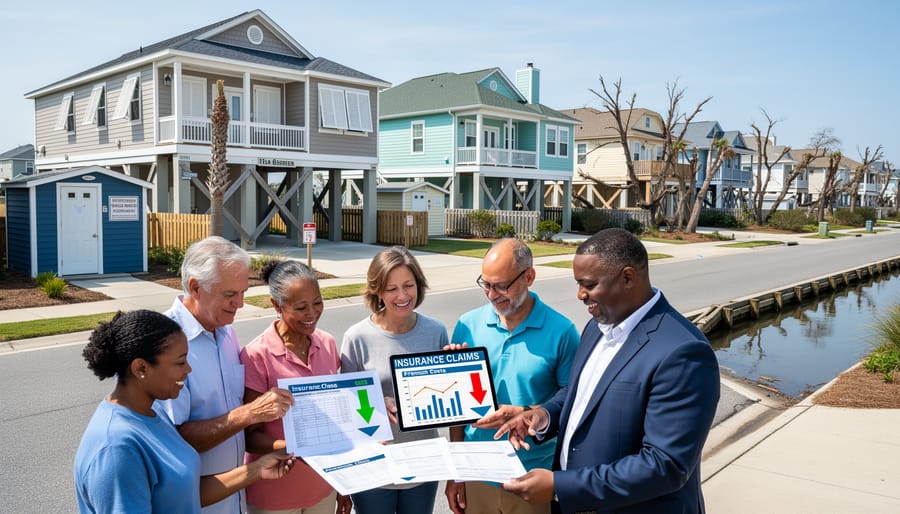
Most major insurance carriers offer discounts ranging from 10% to 45% on wind coverage when your property features approved hurricane mitigation systems. The exact percentage depends on several factors, including your location’s wind zone rating, the specific protective measures installed, and your insurer’s internal algorithms. For example, impact-resistant windows and doors typically qualify for 15-25% discounts, while comprehensive systems combining reinforced roof attachments, storm shutters, and structural bracing can push savings toward the upper range.
To qualify for these discounts, you’ll need a Wind Mitigation Inspection conducted by a licensed inspector. This assessment documents everything from your roof shape and covering to your window protection and wall-to-roof connections. The inspection generates a standardized form that insurers use to recalculate your premium—think of it as your home’s storm-worthiness report card.
Here’s where it gets interesting for real estate professionals: properties with documented mitigation systems and current inspection certificates become more marketable. Buyers increasingly factor insurance costs into their purchasing decisions, and a home that comes with built-in premium savings stands out in competitive markets. Some savvy investors are even retrofitting properties specifically to capture this premium reduction advantage, improving both cash flow and resale value simultaneously.
Property Value Protection Beyond Coverage
Installing a hurricane storm damage risk reduction system isn’t just about protecting your property during the next big storm—it’s a strategic investment that pays dividends in the real estate market. Properties equipped with these protective measures consistently command higher resale values and sell faster in hurricane-prone regions, even when the market softens.
Think of it this way: when a potential buyer compares two similar homes in a coastal area, the one with impact-resistant windows, reinforced roofing, and documented storm mitigation features becomes the clear winner. These upgrades signal responsible ownership and translate into tangible financial benefits for the new buyer through lower insurance premiums and reduced deductibles.
Real estate professionals report that homes with certified storm protection systems can sell for 5-10% more than comparable properties without these features. Equally important, they spend less time on the market. In high-risk zones where insurance availability is becoming increasingly scarce, having a documented risk reduction system can mean the difference between a property that’s insurable and marketable versus one that languishes unsold.
Appraisers are also taking notice, increasingly factoring storm mitigation improvements into property valuations, recognizing that these systems provide measurable risk reduction that protects the investment long-term.
Sustainable Disaster Risk Insurance: The New Model
How Insurers Are Rewarding Prevention
Insurance companies are increasingly offering tangible financial incentives to homeowners who invest in hurricane damage prevention systems. These programs recognize that proactive protection reduces claim frequency and severity, creating a win-win situation for both insurers and policyholders.
Many major carriers now provide premium discounts ranging from 10% to 45% for homes equipped with certified storm mitigation features. These reductions typically apply when properties have impact-resistant roofing, reinforced garage doors, storm shutters, or whole-house protection systems. Some insurers offer immediate policy credits upon system installation verification, while others provide anniversary rebates for claim-free years.
Leading insurance providers have developed specialized climate resilience insurance products specifically designed for fortified homes. These policies often include enhanced replacement cost coverage, reduced deductibles for wind damage, and expedited claims processing. Several carriers have introduced multi-tier discount structures where homeowners earn progressive savings as they add more protective features.
State-sponsored programs complement private insurance incentives. Florida’s My Safe Florida Home program, for example, provides matching grants for mitigation upgrades and connects homeowners with insurers offering additional discounts. Louisiana’s Fortify Homes program similarly rewards prevention investments with premium reductions up to 60%.
Documentation is essential for securing these benefits. Homeowners should obtain professional wind mitigation inspections, maintain installation certificates, and provide insurers with detailed system specifications. Many insurers now accept digital verification through photos and contractor affidavits, streamlining the discount application process and making prevention-based savings more accessible than ever.
Parametric Insurance and Storm Systems
Parametric insurance represents a game-changing approach for property owners in hurricane-prone regions. Unlike traditional insurance that assesses actual damage before paying claims, parametric policies trigger automatic payouts when predetermined storm metrics are met, such as wind speed exceeding 130 mph or a hurricane reaching Category 4 status within a specific radius of your property.
Here’s where storm damage risk reduction systems become financially strategic. Insurance carriers increasingly factor these protective measures into their parametric policy structures. When your property features reinforced roofing, impact-resistant windows, or comprehensive storm surge barriers, insurers may lower the intensity threshold required for payouts or increase the payout amounts themselves. Think of it as earning better terms because you’ve proven you’re serious about protection.
The qualification process typically involves documented installation of certified systems meeting specific building codes. For instance, homes with hurricane-resistant garage doors and properly anchored roof systems might qualify for parametric policies with more favorable triggers, perhaps activating at Category 3 instead of Category 4 storms.
This creates a compelling value proposition for real estate investors and homeowners alike. You’re not just reducing physical damage risk but also improving your insurance position with faster claim resolution and predictable payouts. Since parametric policies pay based on storm data rather than claims adjusters’ evaluations, you receive funds within days rather than months, providing crucial liquidity for immediate repairs and business continuity. For property portfolios in coastal markets, this combination of protection systems and parametric coverage offers sophisticated risk management that traditional policies simply cannot match.
Real Estate Investment Strategies in Hurricane Zones
Due Diligence Checklist for Buyers
When purchasing a home in hurricane-prone areas, evaluating existing storm protection systems is essential for both safety and financial planning. Start by requesting documentation of all installed systems, including impact-resistant windows, reinforced garage doors, and roof-to-wall anchor systems. Verify that installations meet current building codes and include manufacturers’ warranties.
Examine the property’s storm shutters or hurricane panels for damage, proper storage, and ease of deployment. Check that roof coverings display the wind resistance rating appropriate for your region—typically FBC (Florida Building Code) certifications or similar state-specific approvals.
Don’t overlook drainage systems. Inspect for French drains, proper grading away from the foundation, and functional gutters that prevent water intrusion during heavy rainfall. Request maintenance records showing regular system inspections and upgrades.
Obtain a Wind Mitigation Inspection report, which insurance carriers use to determine premium discounts. This professional assessment documents roof geometry, deck attachment, wall construction, and opening protections. Properties with completed reports often qualify for immediate insurance savings of 10-45 percent.
Finally, review the seller’s insurance claims history for storm damage. Multiple claims could indicate inadequate protection systems or signal future coverage challenges. This due diligence protects your investment while positioning you for optimal insurance rates.
Financing Storm Upgrades
Upgrading your property with hurricane risk reduction systems doesn’t have to drain your savings all at once. Several financing options exist specifically for storm protection improvements. The Federal Housing Administration (FHA) offers Title I Property Improvement Loans up to $25,000 for single-family homes, covering storm shutters, reinforced roofing, and impact-resistant windows. These loans typically feature competitive interest rates and don’t require home equity.
Many insurance companies now provide premium financing programs or grants for policyholders installing approved mitigation systems. Companies like State Farm and Allstate often offer discounts that can offset installation costs within 5-7 years, essentially making these upgrades self-financing over time. Some insurers even provide upfront cash grants ranging from $5,000 to $10,000 for qualifying improvements.
State-sponsored programs also deserve attention. Florida’s My Safe Florida Home program, for example, has historically provided matching grants for hurricane retrofitting. Check with your state’s emergency management division for similar opportunities.
Home equity lines of credit (HELOCs) remain another popular choice, offering flexible borrowing as you complete phased installations. The interest may be tax-deductible when used for substantial home improvements, though you should consult your tax advisor to confirm eligibility based on recent tax law changes.
Case Studies: Communities Getting It Right
Looking at real-world success stories helps illustrate just how effective comprehensive storm damage risk reduction systems can be, both in terms of physical protection and financial benefits.
In Miami-Dade County, Florida, the Pinecrest community invested $12 million in an integrated flood management system that includes elevated roadways, upgraded stormwater infrastructure, and mandatory green space ratios for new developments. Within three years of completion, participating properties saw insurance premium reductions averaging 18-25%. More importantly, during Hurricane Irma in 2017, the protected areas experienced 60% less flood damage compared to neighboring communities without these systems. Property values in protected zones have increased 12% faster than surrounding areas, creating a clear financial incentive for both current homeowners and prospective buyers.
The Bolivar Peninsula in Texas offers another compelling example. After devastating losses from Hurricane Ike, the community implemented a comprehensive dune restoration project combined with elevated building codes and a network of engineered drainage systems. The $8.5 million investment led to an unexpected windfall: major insurers that had previously pulled out of the market returned with competitive rates. Properties meeting the new standards qualified for premium discounts of up to 30%, and the improved insurability made homes significantly more marketable to out-of-state buyers.
Charleston, South Carolina’s downtown historic district demonstrates how storm risk reduction works in established neighborhoods. Their $20 million seawall enhancement project, combined with smart drainage technology and building retrofit incentives, created a protective envelope around vulnerable properties. Insurance carriers responded by offering preferred rates to properties within the protected zone, with some homeowners reporting savings exceeding $2,000 annually. Real estate professionals noted that properties could now secure financing more easily, as lenders viewed the reduced risk favorably. The project essentially transformed insurance availability from a barrier to a selling point, proving that strategic infrastructure investment pays dividends beyond simple storm protection.
Investing in hurricane storm damage risk reduction systems represents more than just physical protection—it’s a strategic financial decision that can yield substantial returns through lower insurance premiums, broader coverage options, and enhanced property values. As climate patterns shift and insurers reassess their risk models, properties equipped with proven mitigation measures will increasingly stand apart in the marketplace. The insurance landscape is evolving rapidly, with carriers offering more sophisticated pricing that rewards proactive risk management, making now the ideal time to evaluate your property’s vulnerabilities.
Start by scheduling a professional property assessment to identify your home’s specific exposure points and prioritize improvements that deliver the strongest insurance discounts. Contact your insurance agent to understand exactly which mitigation measures qualify for premium reductions under your policy, as these vary significantly between carriers. Review your coverage annually, especially after implementing new protective systems, to ensure you’re capturing all available savings.
The future of disaster risk management lies in proactive, sustainable strategies that protect both your investment and your community’s resilience. By taking action today, you’re not just reducing immediate costs—you’re positioning your property for long-term financial stability in an increasingly unpredictable climate environment.