
Achieving zero-carbon emissions in real estate requires a dual-pronged approach: strategic carbon offsetting paired with specialized insurance protection. Real estate professionals and property investors face mounting pressure to decarbonize their portfolios while managing the financial uncertainties that come with transitioning to net-zero operations. The challenge isn’t simply reducing emissions—it’s protecting your investment against the risks of failed offset projects, regulatory changes, and carbon credit volatility.
Calculate your property’s baseline carbon footprint by conducting a comprehensive emissions audit covering Scope 1, 2, and 3 emissions from operations, energy consumption, and tenant activities. This establishes the exact tonnage you need to offset and identifies where emission reductions deliver the highest return on investment. Most commercial properties discover that HVAC upgrades and renewable energy installations eliminate 40-60% of emissions before offsetting becomes necessary.
Secure parametric insurance policies specifically designed for carbon credit investments to protect against offset project failures, such as forest fires destroying carbon sequestration initiatives or renewable energy projects underperforming. These policies trigger automatic payouts when predefined conditions occur, ensuring your zero-carbon commitments remain funded even when individual offset projects collapse.
Structure your carbon strategy using a portfolio approach: combine high-quality, certified offset credits with physical emission reductions and insurance riders that cover price fluctuations in carbon markets. This diversification minimizes exposure to any single point of failure while creating verifiable progress toward zero-carbon goals that satisfy ESG requirements and increasingly stringent building regulations.
What Zero-Carbon Emissions Really Means for Property Owners
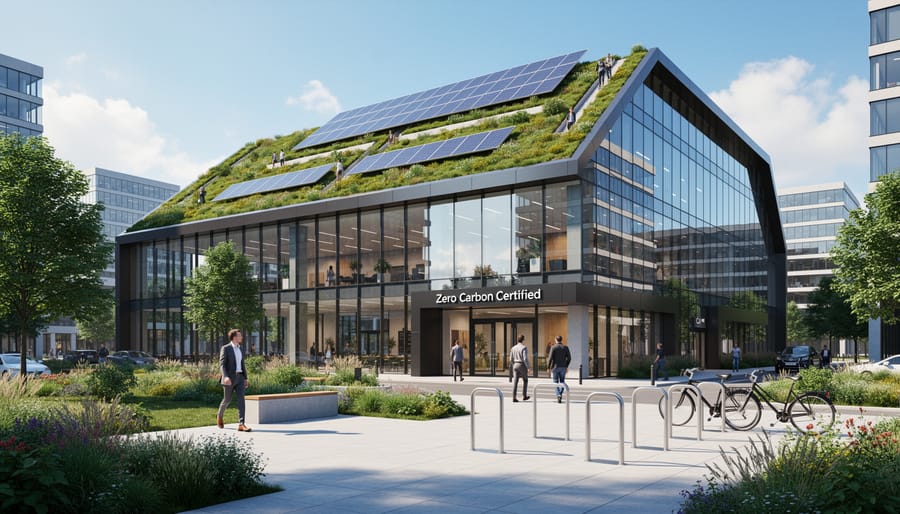
The Difference Between Net-Zero and Carbon-Neutral Properties
Understanding the distinction between net-zero and carbon-neutral properties is essential for real estate professionals navigating today’s sustainability landscape. Carbon-neutral properties achieve balance by offsetting their emissions through carbon credits—essentially paying for environmental projects elsewhere that compensate for the building’s carbon footprint. Think of it as balancing your carbon checkbook by investing in reforestation or renewable energy projects.
Net-zero properties, however, take a more comprehensive approach. These buildings produce as much clean energy as they consume annually, typically through on-site renewable sources like solar panels or geothermal systems. They dramatically reduce emissions at the source before considering any offsets. While carbon-neutral status can be achieved relatively quickly through purchasing offsets, net-zero requires significant upfront investment in building design and technology.
For property owners and investors, this distinction matters financially. Net-zero developments often qualify for superior financing terms and substantial green home insurance benefits, while carbon-neutral properties may face more scrutiny regarding offset quality and permanence. Insurance providers increasingly differentiate between these approaches when assessing risk and determining premiums, making the terminology more than just semantic—it directly impacts your bottom line.
Regulatory Pressures Driving Zero-Carbon Requirements
The regulatory landscape for carbon emissions is shifting rapidly, creating both challenges and opportunities for real estate stakeholders. Building codes worldwide are increasingly mandating energy performance standards, with jurisdictions like California and the European Union leading the charge on near-zero emission requirements for new construction and major renovations. These standards aren’t just suggestions—they’re becoming prerequisites for development approvals and occupancy permits.
Beyond building codes, mandatory disclosure requirements are transforming how properties are valued and traded. Cities like New York now require large buildings to publicly report their carbon emissions, with non-compliance resulting in substantial fines. This transparency affects property marketability and insurance premiums, making carbon performance a financial consideration rather than merely an environmental one.
Carbon pricing mechanisms, including cap-and-trade systems and carbon taxes, are adding direct costs to high-emission properties. Some insurers are beginning to factor carbon liability into premium calculations, similar to how climate resilience insurance addresses physical climate risks. For investors, understanding these regulatory pressures is essential—properties that don’t meet evolving standards may face declining values, restricted financing options, and higher operational costs, making proactive decarbonization strategies financially prudent.
Carbon Offset Strategies That Make Financial Sense

How Real Estate Developers Are Using Carbon Credits
Forward-thinking developers are moving beyond promises to practical implementation of carbon reduction strategies. One notable approach involves purchasing carbon offsets from verified registries to compensate for unavoidable construction emissions. For instance, luxury condominium projects in Toronto and Vancouver have purchased offsets from reforestation projects in British Columbia, effectively neutralizing their carbon footprint during the building phase.
Renewable Energy Credits (RECs) have become another popular tool. These tradable certificates represent proof that electricity was generated from renewable sources. Developers are bundling RECs with new residential and commercial properties, allowing buyers to claim their building operates on clean energy even when connected to the traditional grid. This strategy works particularly well when paired with comprehensive renewable energy insurance strategies that protect the investment value of these credits.
Nature-based solutions are gaining traction as well. Several master-planned communities across North America now incorporate mandatory green space requirements that generate carbon credits. These developments preserve wetlands, plant urban forests, and create bioswales that naturally sequester carbon while enhancing property values. Some developers are even creating carbon credit revenue streams by registering their preserved land with verification bodies like Verra or Gold Standard.
The financial advantage is clear: properties with documented zero-carbon credentials command premium prices and attract environmentally conscious buyers who view sustainability as a risk mitigation strategy rather than just an amenity.
The True Cost of Going Zero-Carbon (And Who Pays)
Achieving zero-carbon status comes with real financial implications that vary significantly depending on your role in the real estate ecosystem. For developers, upfront costs typically increase 5-10% when incorporating zero-carbon design elements like high-efficiency HVAC systems, solar arrays, and advanced insulation. However, these investments often pay dividends through premium pricing and faster sales cycles, as environmentally conscious buyers increasingly seek certified green properties.
Landlords face a different calculation. Retrofitting existing buildings for zero-carbon performance can range from $15,000 for basic efficiency upgrades to $100,000+ for comprehensive transformations including renewable energy systems. The good news? Many jurisdictions now offer substantial property tax abatements for carbon-neutral buildings, sometimes reducing tax bills by 15-25% for up to 15 years. Operating cost savings through reduced energy consumption typically deliver 20-30% annual reductions in utility expenses, which can offset retrofit investments within 7-12 years.
Homeowners have the most accessible entry point, with residential solar installations and efficiency upgrades averaging $20,000-40,000. Federal tax credits currently cover up to 30% of solar system costs, while various state and local programs offer additional rebates. Creative financing options like Property Assessed Clean Energy (PACE) loans allow property owners to repay improvements through property tax assessments, eliminating upfront capital requirements.
The hidden cost everyone should understand: transition risk. Properties that fail to adapt face potential devaluation as carbon regulations tighten and buyer preferences shift decisively toward sustainable options.
Insurance Products That Cover Your Carbon Commitments

Carbon Credit Insurance: Protection Against Offset Failures
When you purchase carbon offsets to achieve zero-carbon goals for your property portfolio, you’re making a financial investment that carries risk. Carbon credit insurance has emerged as a specialized protection mechanism that safeguards your offset investments against invalidation or devaluation.
Here’s what can go wrong: the forest conservation project you’ve funded might suffer from wildfires, the renewable energy credits could be double-counted, or regulatory changes might render your offsets worthless. These scenarios aren’t hypothetical—they’ve happened to real estate investors who thought their carbon-neutral claims were secure.
Carbon credit insurance policies typically cover several key risks. First, they protect against offset project failures, such as when a reforestation initiative doesn’t sequester the promised carbon. Second, they guard against verification issues if third-party auditors later determine your offsets don’t meet standards. Third, they provide coverage for regulatory invalidation when government bodies change certification requirements.
For property owners investing significant capital in offset programs—particularly those making public carbon-neutral commitments—this insurance functions like title insurance for your environmental claims. It ensures that the money you’ve spent on offsets delivers the carbon reduction you’re counting on, protecting both your financial investment and your reputation in an increasingly eco-conscious real estate market.
Compliance Liability Coverage for Building Emissions
As cities and states tighten zero-carbon regulations, property owners face real financial exposure if their buildings miss emission targets or fail disclosure requirements. Compliance liability coverage is emerging as a specialized insurance solution that protects against penalties, fines, and legal costs stemming from carbon-related regulatory violations.
These policies typically cover financial losses when buildings exceed permitted emission levels, miss mandatory reporting deadlines for carbon disclosures, or fail energy performance benchmarking requirements. Think of it as professional liability insurance, but specifically tailored for the evolving landscape of climate regulations.
For real estate professionals managing portfolios in jurisdictions with strict climate laws like New York’s Local Law 97 or California’s emissions standards, this coverage addresses a genuine risk. Penalties can reach hundreds of thousands of dollars annually for non-compliant properties.
Coverage usually includes defense costs if regulatory agencies challenge your emissions calculations or reduction strategies. Some insurers also offer risk assessment services, helping identify compliance gaps before they trigger penalties. Premiums vary based on building type, location, current emissions levels, and your decarbonization roadmap’s credibility. Properties with documented reduction plans and third-party verification typically secure better rates, incentivizing proactive climate action while managing downside risk.
Performance Guarantee Insurance for Green Buildings
When green building systems underperform, the financial implications can be significant. Performance guarantee insurance steps in to protect property owners when their energy-efficient systems or emissions reduction technologies fail to meet contractually promised benchmarks.
This specialized coverage addresses the gap between expected and actual performance. For instance, if your LEED-certified building’s solar panels generate 30% less energy than guaranteed, or your geothermal system fails to achieve projected emissions reductions, this insurance compensates for the financial shortfall. Think of it as a safety net that protects your return on investment in sustainable technology.
Coverage typically includes energy production guarantees, carbon reduction verification shortfalls, and equipment performance failures. Some policies even cover the costs of remediation or system upgrades needed to meet original specifications.
For real estate professionals marketing properties with zero-carbon features, this insurance provides credibility and risk mitigation. Developers can confidently promote projected savings, knowing they’re protected if systems underdeliver. Property owners gain peace of mind that their substantial investments in green technology won’t become financial burdens.
Premium costs vary based on system complexity, manufacturer warranties, and performance targets, but the protection often justifies the expense when pursuing ambitious carbon-neutral goals.
Building a Combined Strategy: Offsets Plus Insurance
Risk Assessment: Where You Need Insurance vs. Where Offsets Work
Not every carbon risk requires an insurance policy, and not every emission can be offset indefinitely. Smart property owners need a clear framework for deciding which approach fits each situation.
Start with controllability. Can you directly reduce or eliminate the emission source through property upgrades, renewable energy, or operational changes? If yes, prioritize direct reduction over insurance or offsets. Installing solar panels or upgrading HVAC systems delivers permanent solutions without ongoing offset purchases.
Next, assess financial exposure. High-value risks with significant compliance penalties or liability potential demand insurance coverage. Think carbon tax obligations on large commercial portfolios or contractual emission guarantees with tenants. These scenarios align perfectly with traditional property risk management principles—transfer catastrophic risks to insurers.
For residual emissions that resist elimination, offsets become practical. A heritage building with limited retrofit options might need carbon credits to achieve net-zero targets. Similarly, temporary emissions during major renovations justify short-term offset purchases rather than insurance policies.
The decision matrix is straightforward: insure what could financially devastate you, offset what you cannot eliminate, and reduce everything else. Most successful carbon strategies combine all three approaches, with insurance protecting the downside while offsets and reductions drive toward zero-carbon goals.
Working With Lenders Who Require Carbon Commitments
Financial institutions are increasingly tying loan terms to environmental performance, making green financing requirements a critical consideration for property owners and developers. Banks now routinely assess carbon commitments before approving mortgages or construction loans for sustainable projects, fundamentally changing how borrowers approach zero-carbon properties.
Lenders typically require comprehensive documentation demonstrating your carbon reduction strategy, including projected emissions baselines, offset plans, and verification protocols. Many institutions mandate third-party certification from programs like LEED or Passive House to qualify for preferential rates. These green loans often come with covenants requiring you to maintain certain performance metrics throughout the loan term.
This shift creates new insurance needs. Banks expect borrowers to secure coverage protecting against financial losses if carbon targets aren’t met. Performance guarantee insurance has emerged to address this gap, covering costs associated with failing to achieve promised emissions reductions. Some lenders also require environmental liability coverage specifically addressing climate-related claims.
The upside is substantial. Properties meeting carbon commitments typically qualify for interest rate reductions ranging from 0.25 to 0.75 percentage points, translating to significant savings over a loan’s lifetime. Understanding what lenders expect and properly insuring against compliance risks positions you to leverage these favorable terms while protecting your investment from unexpected carbon-related financial exposure.
What Real Estate Professionals Need to Know Right Now
For Homebuyers: Questions to Ask About Carbon Liability
Before making an offer, savvy homebuyers should investigate the property’s carbon footprint and any existing commitments. Start by asking sellers whether the home participates in any carbon offset programs or has enrolled in carbon credit agreements that might transfer with ownership. These obligations could impact your future costs and flexibility.
Request documentation of any renewable energy systems, including solar panel warranties and performance guarantees. If the property claims carbon-neutral status, ask how this was achieved and whether ongoing payments are required to maintain that designation.
Inquire about projected compliance costs as local emissions regulations tighten. Some municipalities are implementing carbon taxes or mandatory reduction targets for residential properties. Understanding these potential expenses helps you budget accurately.
Finally, investigate whether the current owner carries specialized environmental or climate-related insurance coverage. Ask if policies addressing carbon liability exist and whether they’re transferable. This coverage can protect against unexpected costs related to emissions reporting requirements or failing to meet reduction targets, providing valuable financial protection as environmental regulations continue evolving.
For Property Investors: Due Diligence Checklist
Before acquiring any property with carbon-neutral ambitions, smart investors conduct thorough environmental due diligence. Start by requesting the building’s historical energy consumption data and any existing carbon assessments—these baseline metrics reveal your true starting point. Examine current green certifications (LEED, ENERGY STAR) and understand their maintenance requirements, as lapsed certifications can impact both property value and insurance premiums.
Next, evaluate retrofit costs versus carbon reduction potential. Obtain multiple quotes for major upgrades like HVAC systems, solar installations, and improved insulation. These figures directly inform your investment calculations and help identify properties with manageable paths to zero-carbon status.
From an insurance perspective, integrating sustainable insurance practices during acquisition protects your carbon investments. Request coverage that specifically addresses green technology failures, renewable energy system damages, and carbon credit volatility. Verify that policies cover both physical retrofits and financial instruments like offset contracts. Document all carbon-reduction commitments in your insurance applications—transparency ensures appropriate coverage levels and prevents disputes later.
The financial landscape is shifting rapidly, and understanding zero-carbon insurance strategies isn’t just environmentally responsible—it’s becoming a competitive necessity. Real estate professionals and property owners who grasp these concepts now will position themselves ahead of regulatory changes, market demands, and evolving insurance requirements that are already reshaping the industry.
Early adopters consistently gain tangible advantages. They’re securing better insurance rates, accessing specialized coverage products before markets become saturated, and building relationships with insurers who understand carbon-related risks. More importantly, they’re protecting their investments against the financial volatility that comes with carbon exposure, whether from policy changes, physical climate risks, or shifting buyer preferences toward sustainable properties.
The time to act is now. Start by conducting a thorough assessment of your property portfolio’s carbon footprint. Calculate both direct emissions from your buildings and indirect emissions from your operations. Next, evaluate your current insurance coverage—does it adequately address carbon-related risks? Are there gaps in protection if carbon pricing mechanisms expand or environmental regulations tighten?
Consider scheduling consultations with insurance providers who specialize in environmental risk management. Ask specific questions about parametric insurance options, liability coverage for emissions reporting, and products that integrate with carbon offset programs. Document your findings and create a roadmap that aligns your carbon reduction goals with appropriate insurance strategies.
Remember, integrating carbon offsets with insurance isn’t a one-time transaction—it’s an ongoing strategy that evolves with your portfolio and the regulatory environment. Those who begin this journey today will find themselves better positioned financially, operationally, and competitively tomorrow.