
Renters in wildfire-prone areas face a dangerous knowledge gap: 67% don’t know whether their landlord carries adequate fire insurance, and 82% have never discussed evacuation procedures with property management. This information vacuum creates both physical danger and financial liability that most tenants discover only when smoke fills the sky.
Ask your landlord directly whether the property has defensible space clearance within 100 feet of structures, updated fire-resistant roofing materials, and working smoke detectors in every room. These aren’t courtesy questions—they’re liability shields. If your landlord can’t provide clear answers, you’re potentially living in a property that violates local fire codes, which affects both your safety and your renter’s insurance coverage validity.
Document every conversation about fire preparedness in writing. When landlords verbally promise to trim vegetation or install ember-resistant vents, email confirmations create the paper trail that protects you if property damage occurs. Insurance adjusters and attorneys will ask what you knew and when you knew it.
The financial stakes extend beyond replacing your belongings. If inadequate property maintenance contributes to fire damage that displaces you, understanding your landlord’s insurance policy—specifically their loss of rent coverage and liability limits—determines whether you’ll receive temporary housing assistance or face unexpected costs. Renters who ask the right wildfire questions before fire season don’t just protect their safety; they protect their financial stability when California’s inevitable fire season arrives.
Why Renters Are Uniquely Vulnerable to Wildfire Threats
When wildfire warnings flash across screens, homeowners can immediately take action—boarding windows, clearing brush, or even making last-minute property modifications. Renters, however, face a fundamentally different reality that leaves them disproportionately exposed during fire emergencies.
The vulnerability begins with a simple truth: renters don’t control their living environment. You can’t install a fire-resistant roof, can’t clear vegetation beyond your small patio, and certainly can’t upgrade electrical systems that might spark during high winds. Every meaningful structural decision rests with your landlord, creating a dependency that can prove dangerous when minutes matter.
This lack of control extends into the insurance realm, where significant gaps often go unnoticed until disaster strikes. Standard renters insurance typically covers personal belongings and temporary living expenses, but the coverage limits may fall short during widespread evacuations when hotel rates surge and displacement extends for months. Unlike homeowners who bundle property and liability coverage, renters must navigate a fragmented insurance landscape that often leaves them underprotected without realizing it.
The preparation paradox compounds these challenges. While you might want to install monitored smoke detectors, create defensible space, or add emergency shutters, lease agreements typically restrict such modifications. You’re expected to prepare for emergencies using a property you can’t meaningfully alter—a Catch-22 that leaves many renters feeling helpless as fire season approaches.
Perhaps most concerning is the communication void. Unlike homeowners who directly interface with local fire departments and emergency services, renters depend on landlords to relay critical information about property-specific risks, evacuation routes, and emergency protocols. When landlords fail to proactively share this information—or worse, remain unresponsive during crises—renters are left making life-safety decisions with incomplete data.
This structural vulnerability explains why asking the right questions before signing a lease, and throughout your tenancy, isn’t just helpful—it’s essential. The questions you ask today directly impact your safety, financial protection, and peace of mind when wildfire threats inevitably arrive.
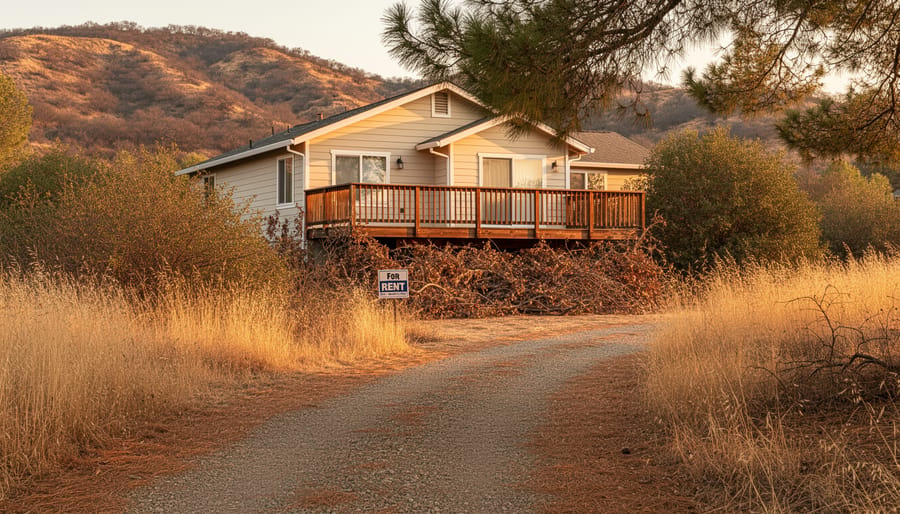
Critical Questions Every Renter Should Ask Before Fire Season
Property Defense and Maintenance Questions
When evaluating a rental property in wildfire-prone areas, asking detailed questions about property defense measures can literally save lives and protect your belongings. Start by inquiring about defensible space zones—specifically, what vegetation management the landlord performs and how frequently. Ask which zone (Zone 0, 1, or 2) they actively maintain and whether they follow local fire marshal recommendations. Understanding defensible space strategies helps you assess whether the property meets minimum safety standards.
Roof materials matter tremendously. Question whether the roof has a Class A fire rating (the highest resistance level) and when it was last inspected. Ask about gutter cleaning schedules—clogged gutters filled with dry leaves become ignition points during ember storms. A responsible landlord should clean gutters at least twice annually in fire-prone regions, ideally before fire season begins.
Inquire about fire-resistant upgrades like tempered glass windows, ember-resistant vents, and non-combustible siding materials. These improvements significantly reduce ignition risk and often result in insurance premium reductions that responsible landlords pass along to tenants.
Red flags include vague answers about maintenance schedules, complete lack of vegetation management plans, or landlords who seem unfamiliar with local fire codes. If a landlord cannot provide specifics about defensible space or dismisses fire preparation as unnecessary, consider this a serious warning sign.
Expect landlords to provide documentation of their fire prevention efforts, including maintenance records and any certifications from fire safety inspections. Properties that lack basic fire-resistant features or show signs of neglected vegetation management represent elevated risk—not just to your safety, but potentially to your financial liability if lease agreements shift responsibility for maintenance onto tenants.
Emergency Communication and Evacuation Protocol Questions
When disaster strikes, communication can mean the difference between safety and chaos. Start by asking how your landlord will notify you of an emergency evacuation order. Will they use text messages, email, phone calls, or a tenant portal? Request specific contact methods and verify they have your current information on file. Don’t assume local authorities will reach you in time—private property managers should have their own alert systems.
Next, inquire about comprehensive evacuation planning protocols for the property. Ask if there are designated evacuation routes, assembly points, or alternative exits if primary routes become blocked. For multi-unit buildings, this becomes particularly critical.
The question of property access during emergencies often gets overlooked. If you evacuate quickly, can you return to retrieve essential documents or medications with landlord assistance? Clarify whether management will be on-site or available by phone during crisis situations, and get after-hours emergency contact numbers.
Pet owners face unique challenges during evacuations. Ask explicitly about pet policies during emergency situations, including whether your lease’s pet restrictions might be temporarily waived or if the landlord knows of pet-friendly evacuation centers nearby.
Finally, confirm your landlord’s availability during actual emergencies. Will they remain accessible throughout the crisis? Understanding their communication commitment helps you plan backup strategies and ensures you’re not left navigating insurance claims, property damage assessments, or temporary housing arrangements alone when you need support most.

Insurance and Liability Questions
Understanding insurance coverage before wildfire season hits can mean the difference between financial recovery and devastating loss. For renters, this conversation becomes particularly nuanced since you’re protecting contents while your landlord insures the structure itself.
Start by asking your landlord directly whether the property has wildfire insurance coverage and what it includes. Many standard policies exclude or limit wildfire damage in high-risk zones, leaving significant gaps. While your landlord’s policy covers the building, you need to understand whether it provides any loss-of-use coverage that might affect your displacement timeline if evacuation becomes necessary.
Renters insurance is typically your responsibility, and it’s non-negotiable in fire-prone areas. A quality policy should cover personal property replacement, temporary housing expenses during displacement, and liability protection if your actions somehow contribute to fire damage. That last point deserves attention: if investigators determine that negligence on your part led to a fire that damaged the property or spread to neighboring units, you could face substantial liability claims.
Documentation becomes your strongest defense in insurance disputes. Before fire season, photograph or video all your belongings, creating a detailed inventory with approximate values. Store this documentation in cloud storage, not just on your phone. Capture images of the property’s condition too, particularly any fire hazards you’ve reported to your landlord. This evidence protects you from liability claims related to pre-existing conditions.
The insurance gap many renters face centers on replacement cost versus actual cash value coverage. Cheaper policies pay depreciated values, meaning your three-year-old laptop might net you fifty dollars rather than the six hundred needed for replacement. In wildfire scenarios where you’re replacing everything simultaneously, this distinction becomes financially catastrophic. Verify your coverage type and consider upgrading to replacement cost coverage, which typically adds minimal premium costs but provides substantially better protection when disaster strikes.
Preparation Rights and Responsibilities Questions
As a renter, understanding your rights and responsibilities around wildfire preparation can feel like navigating murky waters. The good news? Most landlords appreciate tenants who take safety seriously, but you’ll need clear answers before making any modifications.
Start by asking what interior safety modifications you’re permitted to make without approval. Can you install battery-operated smoke detectors in addition to existing units? Are you allowed to add weatherstripping to doors to prevent ember intrusion? These low-impact improvements rarely require permission, but it’s better to ask than assume.
Storage becomes critical during fire season. Where can you keep emergency supplies, go-bags, and fire extinguishers? Does your lease allow storage in shared areas like garages or sheds? Some properties restrict what can be stored where due to HOA regulations or fire codes, so clarify these limitations upfront.
Exterior preparations present trickier territory. If you want to clear vegetation within five feet of the building, remove dead plants from balconies, or install modern fire defense technology like ember-resistant vent covers, you’ll need explicit permission. Get it in writing.
The reimbursement question often surprises renters: Will your landlord reimburse you for approved safety improvements that benefit the property long-term? Some landlords offer partial reimbursement for items like fire-resistant door seals or upgraded smoke detectors, especially if these improvements reduce their insurance premiums. Others maintain that tenant-initiated upgrades remain the tenant’s expense. Document any agreements about who pays for what, and keep receipts for everything. This protects both parties and creates clarity around financial responsibilities that could otherwise spark disputes when you move out.
The Questions Landlords Must Answer (And Document)
As a landlord, your responsibilities extend far beyond collecting rent and maintaining appliances. When your property sits in or near wildfire-prone areas, you carry legal, financial, and ethical obligations that demand proactive attention—and meticulous documentation.
Let’s start with the legal framework. While specific requirements vary by jurisdiction, most regions don’t explicitly mandate landlord wildfire disclosures beyond general property condition statements. However, this legal gray area creates risk rather than protection. If a tenant suffers losses because you failed to disclose known wildfire hazards or inadequate defensible space, you could face negligence claims. The key question: Can you demonstrate you acted as a reasonable property owner would under similar circumstances?
Your documentation strategy should begin with a comprehensive property assessment. Conduct and record annual evaluations of your property’s wildfire vulnerability, including proximity to wildland areas, vegetation management status, ember-resistant venting, and roof condition. These assessments serve dual purposes—they guide your improvement investments and create a paper trail showing diligent property management.
When communicating with prospective or current tenants, transparency isn’t just good ethics; it’s smart business. Provide written information about the property’s fire risk zone classification, evacuation routes, local fire department response times, and any property defense systems you’ve installed. Document these conversations through signed acknowledgment forms.
From a financial perspective, consider how wildfire exposure affects your insurance coverage and premium costs. Many landlords are discovering that standard policies now exclude wildfire damage or carry prohibitively high deductibles in high-risk areas. You need clarity on what your policy actually covers and whether you require additional riders. This information should inform your rental pricing strategy—properties in fire zones carry legitimately higher operating costs.
Best practices include creating a landlord wildfire preparedness packet for each property containing current insurance certificates, emergency contact protocols, maintenance records for fire-prevention measures, and clear delineation of tenant versus landlord responsibilities for defensible space maintenance. Update this annually and provide copies to tenants.
Remember, your goal isn’t just liability protection—it’s creating rental properties where tenants feel genuinely safe and informed. That reputation becomes invaluable when insurance companies and municipalities increasingly scrutinize fire-risk properties.
Red Flag Responses That Should Worry Both Parties
Not all answers to wildfire preparedness questions are created equal. Some responses might sound reassuring on the surface but actually reveal dangerous gaps in protection. Learning to identify red flag responses can save you from financial disaster and potential safety hazards.
When asked about evacuation procedures, vague answers like “just leave if there’s a fire” or “follow what everyone else does” demonstrate a complete lack of planning. This isn’t just inconvenient—it indicates a landlord who hasn’t considered how quickly wildfires spread or how chaotic evacuations become. Without clear protocols, you’re left to figure out life-or-death decisions in smoke-filled chaos.
The response “I don’t know what insurance I have” should immediately concern both parties. Landlords uncertain about their coverage likely haven’t reviewed policies in years, which means gaps probably exist. For renters, this signals you’ll face significant delays and complications if fire damages the property or your belongings. It also suggests the landlord may be underinsured, potentially leading to abandonment of the property after a loss.
Defensive brush clearance questions that receive answers like “the fire department hasn’t complained” reveal dangerous complacency. Compliance isn’t about avoiding citations—it’s about survival. Properties that merely meet minimum standards still face elevated risk in high-wind fire conditions.
Perhaps the biggest red flag is dismissiveness: “Fires don’t happen here” or “you’re worrying too much.” This attitude indicates a landlord unwilling to engage with legitimate safety concerns. Wildfire risk increases annually across most regions, and denial doesn’t reduce vulnerability—it amplifies financial exposure for everyone involved.
If you encounter these responses, document them carefully. They may become relevant for insurance claims, liability questions, or lease negotiations. Consider whether the risk level justifies finding alternative housing or, for landlords, whether your current approach adequately protects your investment.
How to Document Wildfire Preparedness Conversations
Creating a solid paper trail isn’t just bureaucratic busy work—it’s your financial and legal safety net when wildfire risks are involved. Whether you’re a landlord or tenant, documenting these conversations protects everyone if disputes arise or insurance claims become necessary.
Start by putting everything in writing. After verbal discussions, send a follow-up email summarizing what was discussed, decisions made, and any action items with deadlines. Use a simple template: “This email confirms our conversation on [date] regarding wildfire preparedness at [property address]. We discussed [key points]. Next steps include [action items].”
Create a documentation checklist that includes dated photographs of the property’s current condition, defensible space measurements, vegetation clearance, roof condition, and any fire-resistant features. Take photos from multiple angles and store them in cloud-based storage with timestamps. If you’re documenting existing hazards, include a measuring tape or newspaper in photos to establish scale and date.
Keep copies of all correspondence, inspection reports, evacuation plan acknowledgments, and insurance policy updates in a dedicated folder—both digital and physical. For landlords, maintain records showing you’ve shared fire safety information and evacuation procedures with tenants.
When should you escalate? Contact your local fire marshal for official property inspections if significant hazards exist. Involve legal counsel when responsibilities are disputed, insurance coverage questions arise, or if either party refuses to address documented fire risks. These professionals can clarify obligations before small disagreements become expensive legal battles, ensuring your property investment remains protected.
Financial Protections: Insurance Strategies for Both Renters and Landlords
Understanding insurance coverage before wildfire season arrives can mean the difference between financial recovery and devastating loss. For renters and landlords alike, knowing exactly what policies cover—and what they don’t—is essential to comprehensive protection.
Renters insurance typically covers personal belongings damaged or destroyed by wildfire, but the devil lives in the details. Standard policies usually protect clothing, furniture, electronics, and other possessions up to your coverage limits, but you’ll need to document everything with photos or video beforehand. What catches many renters off-guard is that their policy won’t cover structural damage to the building itself—that’s the landlord’s responsibility. However, renters insurance shines in its loss of use coverage, which pays for temporary housing and additional living expenses if your rental becomes uninhabitable due to fire. This coverage can be a financial lifeline when you’re suddenly displaced.
Landlords need robust property insurance that specifically includes fire damage and dwelling coverage. Beyond the structure itself, landlord policies should cover loss of rental income during repairs—a critical protection that prevents financial bleeding when your property sits vacant for months during reconstruction. Many landlords mistakenly assume their policy automatically covers all wildfire scenarios, but exclusions exist. Review whether your policy includes debris removal, code upgrade coverage (older properties often require costly updates when rebuilt), and fair rental value protection.
The coordination between renter and landlord policies requires clear communication. Renters should ask landlords about the building’s insurance coverage limits and any gaps that might affect them. Landlords benefit from requiring renters to carry insurance as a lease condition, creating a protective buffer against liability claims.
Consider bundling wildfire preparedness training with your insurance strategy—some carriers offer premium discounts for documented mitigation efforts. Both parties should review policies annually, adjusting coverage limits to match current property values and replacement costs, because wildfire rebuilding expenses consistently exceed pre-disaster estimates.
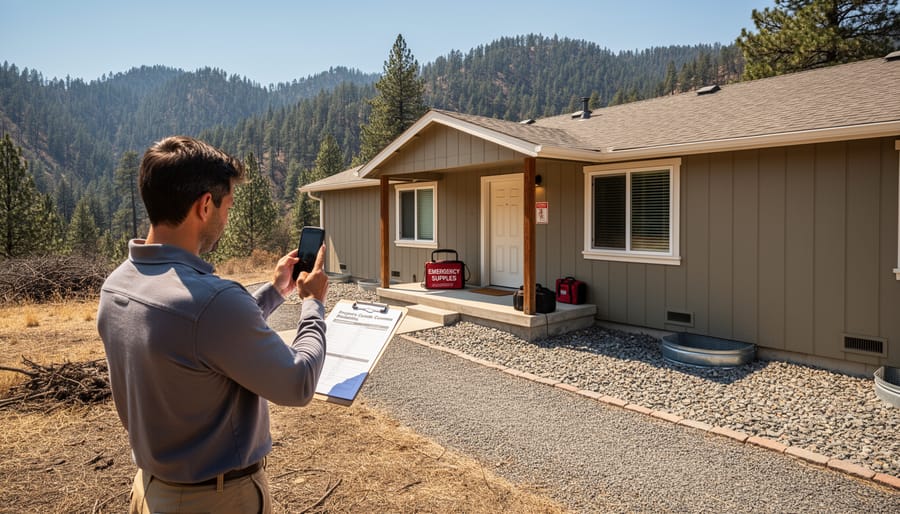

When Answers Aren’t Good Enough: Your Next Steps
If your landlord’s responses raise red flags—vague answers, defensiveness, or complete silence—it’s time to take action. Unsatisfactory answers aren’t just frustrating; they’re potential indicators of serious safety gaps that could impact your financial security and physical well-being.
Start by documenting everything. Keep written records of all communications, including emails, text messages, and notes from verbal conversations with dates and times. This paper trail becomes crucial if you need to escalate concerns or break a lease under duress. Take photographs of property conditions, note missing or non-functional fire safety equipment, and save copies of your lease agreement highlighting any safety-related clauses.
Next, escalate through appropriate channels. Contact your local fire marshal’s office or building inspector to report safety violations—they have authority to inspect properties and mandate corrections. Many jurisdictions also have tenant rights organizations that provide free consultations and can advise whether your landlord’s negligence constitutes a lease violation. Your state’s attorney general office often has a consumer protection division handling landlord-tenant disputes.
If you’re in a demonstrably high-risk situation with an unresponsive landlord, breaking your lease may be justified. Many states allow tenants to terminate leases when properties become uninhabitable or landlords fail to meet basic safety standards. Consult with a tenant rights attorney before taking this step, as improper lease termination can damage your credit and rental history.
Consider the financial implications carefully. While relocating involves costs, staying in an under-protected property during fire season could result in total loss of your belongings and potential displacement without assistance. Review your renter’s insurance policy to understand coverage limits and additional living expense provisions. Sometimes the smartest financial decision is protecting yourself first and negotiating the details later.
Asking wildfire questions isn’t about being difficult or mistrustful—it’s about smart risk management that protects everyone involved. When you raise these concerns with your landlord or tenant, you’re not creating conflict; you’re establishing a foundation of transparency that can prevent devastating financial and legal consequences down the road.
Think of these conversations as essential due diligence, similar to reviewing insurance policies or conducting property inspections. Landlords who respond defensively to legitimate safety questions may be revealing gaps in their own preparedness. Meanwhile, tenants who engage proactively demonstrate the kind of responsible behavior that protects property values and reduces liability exposure.
The reality is straightforward: wildfires don’t care about awkward conversations. They do, however, care about defensible space, evacuation plans, and proper insurance coverage. A ten-minute discussion today could save hundreds of thousands of dollars and potentially lives tomorrow.
Don’t wait until smoke fills the sky to discover your rental lacks adequate fire insurance or that evacuation responsibilities were never clarified. Start these conversations now—before fire season arrives, before lease signing, before assumptions become expensive mistakes. Your financial security and personal safety deserve nothing less than complete clarity on wildfire preparedness.