
A K tag on your property is more than a compliance violation—it’s a financial liability that can derail real estate transactions, spike insurance premiums, and expose you to significant legal risk. These red placards, issued by fire marshals when buildings fail to meet life safety code requirements, signal critical deficiencies in fire protection systems, emergency exits, or building infrastructure that must be corrected immediately.
Property owners who ignore K tags face compounding consequences. Insurance carriers routinely increase premiums by 15-40% or deny coverage entirely for properties with unresolved life safety violations, leaving you personally exposed to catastrophic liability. Real estate transactions grind to a halt when K tags appear during inspections, as most lenders refuse to finance properties with active code violations. Beyond financial implications, you’re legally responsible for occupant safety—failure to address K tag violations can result in forced building closure, daily fines ranging from $500 to $5,000, and personal liability if injuries occur.
Understanding what triggers K tags and how to resolve them strategically protects your property value and maintains insurability. Common violations include blocked fire exits, inoperable sprinkler systems, missing fire doors, inadequate emergency lighting, and improper fire alarm systems. Resolution requires engaging licensed contractors to correct deficiencies, scheduling re-inspection with the fire marshal, and documenting all remediation for insurance carriers and future buyers.
The key to avoiding these disruptions lies in implementing proactive compliance monitoring rather than reactive crisis management, transforming life safety requirements from regulatory burden into competitive advantage.
What Are K Tags in Life Safety Code?
The NFPA Connection
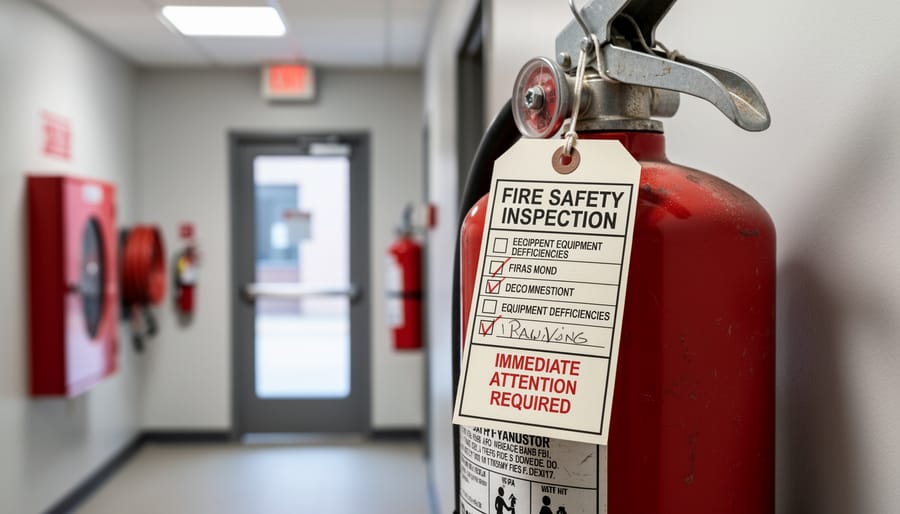
K tags are intrinsically linked to the National Fire Protection Association’s NFPA 101, commonly known as the Life Safety Code. This comprehensive document serves as the bible for fire safety and evacuation standards in buildings across the United States. When inspectors issue K tags, they’re citing specific violations of NFPA 101 requirements that pose immediate threats to occupant safety.
The most common NFPA standards triggering K tags include blocked or locked exit doors, inadequate emergency lighting, compromised fire-rated doors and walls, missing or non-functional smoke detectors, and obstructed exit pathways. NFPA 13 standards for sprinkler systems and NFPA 72 for fire alarm systems also frequently generate K tag violations when these critical systems fail or show signs of tampering.
What makes K tags particularly serious is that NFPA 101 serves as the foundation for local fire codes nationwide. When your property receives a K tag, you’re not just dealing with a local ordinance violation but a failure to meet nationally recognized safety benchmarks. This distinction matters significantly for property owners because insurance carriers and mortgage lenders reference NFPA standards when evaluating risk and coverage eligibility. Understanding this connection helps property owners appreciate why K tags demand immediate attention and why ignoring them can trigger cascading financial consequences beyond the initial citation.
When Properties Receive K Tags
Properties receive K tags when fire inspectors identify deficiencies that could compromise life safety during an emergency evacuation. These citations typically arise during routine inspections, pre-sale assessments, or complaint-driven investigations. Understanding what triggers these tags helps property owners stay ahead of compliance issues that could derail transactions or impact insurance coverage.
The most common violations leading to K tags include blocked or locked exit doors, malfunctioning emergency lighting systems, and missing or expired fire extinguishers. Inspectors also issue K tags for obstructed egress pathways—think storage boxes piled in stairwells or equipment blocking exit corridors. Faulty fire alarm systems, damaged exit signage, and improperly maintained sprinkler systems round out the typical offenders.
What catches many property owners off guard is that K tags aren’t reserved for obvious hazards. Even seemingly minor issues like a single missing emergency light bulb or an exit sign with faded lettering can trigger a citation. The logic is straightforward: during an actual emergency, every safety feature matters. Inspectors assess whether occupants could safely evacuate under worst-case scenarios, including power failures and smoke conditions. This strict standard means properties must maintain every life safety component in full working order, not just most of them.
Why K Tags Matter for Property Owners and Real Estate Professionals
Insurance Implications
K tags carry serious insurance coverage implications that property owners cannot afford to ignore. When insurance companies discover unresolved K tags during policy renewals or claim investigations, they may increase premiums substantially or, in severe cases, refuse to renew coverage altogether. These life safety violations signal heightened risk to insurers, who view them as indicators of poor property maintenance and increased liability exposure.
Perhaps more concerning, active K tags can provide grounds for claim denials. If a fire or safety-related incident occurs while known violations remain unaddressed, your insurer may deny coverage entirely, arguing that the unresolved K tag contributed to the loss. This leaves you personally liable for damages, repairs, and potential injury claims from tenants or visitors.
The liability exposure extends beyond property damage. If someone is injured due to a condition flagged by a K tag, you could face lawsuits where the violation serves as evidence of negligence. Insurance carriers take this seriously, often conducting their own property inspections before issuing commercial policies. Proactively resolving K tags not only ensures compliance but also protects your insurability and helps maintain affordable premium rates while reducing your personal liability risk.
Impact on Property Value and Transactions
Unresolved K tags can significantly complicate property transactions and diminish market value. When a building carries active K tag violations, most lenders view it as a red flag that can derail financing altogether. Mortgage companies typically require certification that all life safety code violations are resolved before approving loans, essentially stalling sales until corrections are complete.
From a valuation perspective, properties with K tags often appraise lower than comparable buildings without violations. The anticipated cost of corrections gets factored into the property’s market value, and buyers rightfully demand price reductions to offset remediation expenses. In commercial real estate, these violations can command discounts ranging from thousands to tens of thousands of dollars depending on severity.
Sellers face strict disclosure obligations regarding K tags. Failing to disclose known life safety violations can expose you to legal liability and potential lawsuits after closing. Even resolved K tags may require disclosure in some jurisdictions, as they represent material facts about the property’s history.
Title companies may also flag K tag violations during due diligence, potentially holding funds in escrow until compliance is verified. For investors and homebuyers alike, understanding a property’s K tag status before making offers protects against unexpected costs and transaction delays that could derail your purchase timeline and strain your budget.
Common K Tag Violations in Property Maintenance
Fire Protection System Failures
Fire protection systems represent some of the most critical K tag violations, and they can significantly impact your property’s insurability and value. Sprinkler system deficiencies are among the most common culprits, ranging from corroded pipes and missing heads to inadequate water pressure or coverage gaps in renovated spaces. Insurance carriers take these seriously because they directly affect risk assessment and claim potential.
Fire alarm issues also trigger K tags frequently. These include non-functional smoke detectors, outdated alarm panels that no longer meet current code standards, or systems lacking proper zone coverage. Many property owners discover these problems only during routine inspections, which can create urgent compliance timelines.
Emergency lighting failures round out this category. Exit signs with dead bulbs, battery backup systems that don’t hold charge, or insufficient illumination along egress routes all warrant immediate attention. From a financial perspective, addressing these violations promptly prevents potential insurance coverage gaps and demonstrates due diligence that could prove valuable during property transactions or liability claims.
Egress and Exit Issues
Egress and exit issues represent some of the most serious K tag violations because they directly impact occupants’ ability to escape during emergencies. Blocked exits are perhaps the most common violation—think storage boxes piled near fire doors, furniture obstructing hallways, or locked exit doors that should remain accessible. Fire inspectors take these seriously because every second counts during an evacuation.
Door hardware violations often involve improper panic bars, missing self-closing mechanisms, or doors that swing the wrong direction in high-occupancy areas. From an insurance perspective, these deficiencies can complicate claims if an incident occurs, potentially leaving property owners personally liable for injuries.
Inadequate or missing exit signage also triggers K tags frequently. Exit signs must be illuminated, visible from multiple angles, and properly maintained with functioning battery backups. Directional arrows must accurately guide occupants toward the nearest safe exit.
Other common violations include insufficient exit width for building occupancy levels, exit paths that require travel through hazardous areas, and discharge doors that don’t lead to safe outdoor locations. Property owners should conduct quarterly walkthroughs following evacuation routes to identify potential problems before inspectors do, protecting both occupants and their investment value.
Fire-Rated Assembly Compromises
Fire-rated assemblies represent your property’s critical defense system against fire spread, and K tag violations here carry serious implications for both safety and property value. Inspectors commonly flag compromised fire doors that won’t close properly due to damaged hardware, missing self-closing mechanisms, or wedges propping them open. Fire-rated walls with unauthorized penetrations—think holes drilled for cables or pipes without proper fire-stopping materials—create pathways for flames and smoke to bypass containment zones.
These violations directly impact your insurance coverage and property marketability. Insurance carriers may refuse claims if fire damage spreads through compromised assemblies, and potential buyers will demand costly repairs before closing. Understanding compliance and permitting requirements becomes essential when modifying fire-rated structures. Professional remediation typically involves certified contractors who can restore fire ratings to code standards, ensuring your investment remains protected and saleable.
The K Tag Resolution Process: A Property Owner’s Roadmap
Immediate Response Steps
Receiving a K tag demands swift, methodical action to minimize financial exposure and liability risks. Your first step is documenting everything—photograph the tagged violation from multiple angles, note the exact date and time of notification, and make copies of all official paperwork. This documentation becomes crucial for insurance claims and potential legal disputes down the road.
Next, contact a licensed contractor specializing in life safety code compliance within 24 hours. Speed matters here because K tags often come with strict correction deadlines, and delays can trigger escalating penalties or even temporary closure orders. Request a detailed assessment and written quote that outlines the specific work needed to achieve compliance.
Simultaneously, notify your property insurance carrier about the violation. Some policies include provisions for code upgrade coverage that could offset correction costs. Also alert your property manager if applicable, and consider consulting with a real estate attorney if the violation is complex or involves significant structural modifications. Keep a detailed log of all communications, expenses, and contractor visits—this paper trail protects your investment and demonstrates good-faith compliance efforts should disputes arise later.
Working with Fire Marshals and Inspectors
Building a cooperative relationship with fire marshals and inspectors can significantly streamline the K tag resolution process. Start by requesting a detailed written report during the initial inspection—this documentation helps you understand exactly what needs correction and provides clarity for contractors you’ll hire. When communicating with authorities, be professional and responsive. Return calls promptly and demonstrate you’re taking violations seriously.
If you need additional time to complete corrections, request an extension before the deadline expires. Most jurisdictions allow extensions for legitimate reasons like supply chain delays, contractor scheduling conflicts, or complex repairs requiring specialized expertise. Document your progress with photos and receipts to show good-faith compliance efforts.
Consider scheduling a pre-reinspection walkthrough with the fire marshal. This informal review can identify any remaining issues before the official reinspection, saving you time and potential re-inspection fees. Remember, inspectors want compliance, not penalties—their goal aligns with yours in maintaining safe properties.
From an insurance perspective, maintaining positive relationships with local fire authorities can benefit your property’s risk profile. Some insurers view proactive safety partnerships favorably when underwriting policies or processing claims. Keep detailed records of all communications, extension requests, and inspection reports as these documents may prove valuable for insurance documentation or future property transactions.
Verification and Tag Removal
Once you’ve corrected the deficiencies, a certified fire safety inspector must conduct a re-inspection to verify compliance. This typically involves scheduling with your local fire marshal’s office and providing documentation of all repairs and upgrades. The inspector will check that all violations listed on the original K tag have been properly addressed according to code requirements. Only after confirming full compliance will the inspector authorize removal of the K tag. Keep all inspection reports and receipts for your records, as these documents may be required for insurance claims or future property transactions. The re-inspection fee varies by jurisdiction but is a necessary investment to restore your property’s marketability and insurance eligibility.
Proactive Compliance: Preventing K Tags Before They Happen
Regular Inspection Schedules
Establishing a consistent inspection schedule is crucial for maintaining K tag compliance and protecting your property investment. Fire extinguishers require monthly visual checks and annual professional servicing, while sprinkler systems need quarterly inspections and annual flow tests by certified technicians. Emergency lighting and exit signs should be tested monthly, with battery replacements every few years depending on usage.
Create a master maintenance calendar that tracks all inspection dates, certifications, and upcoming renewals. This proactive approach not only prevents K tags but can also lower your property insurance premiums by demonstrating commitment to safety protocols. Consider hiring a qualified fire safety contractor to manage all inspections under one service agreement, which simplifies scheduling and ensures nothing falls through the cracks.
Document every inspection thoroughly, maintaining digital and physical copies of all reports, certificates, and corrective actions taken. These records become invaluable during insurance claims, property sales, or municipal audits. Integrating life safety inspections into your broader preventive maintenance strategies maximizes efficiency while protecting both occupant safety and your bottom line.
Documentation and Record-Keeping
Maintaining thorough documentation of K tag violations and their resolutions isn’t just good practice—it’s essential protection for your property investment. Keep detailed records of all inspection reports, violation notices, correction work orders, contractor invoices, and final compliance certificates. These documents serve as your defense against potential liability claims and demonstrate your commitment to maintaining property safety standards.
From an insurance perspective, complete compliance records can directly impact your premiums and coverage eligibility. Many insurers require proof of life safety compliance, and gaps in documentation could lead to coverage denials or premium increases. Additionally, prospective buyers or tenants increasingly request safety compliance history during due diligence processes, making your records valuable assets during transactions.
Organize your documentation chronologically and store both physical and digital copies securely. Include photographs of violations before and after corrections, correspondence with fire marshals, and any permits obtained. This comprehensive approach not only streamlines future inspections but also provides crucial evidence should disputes arise regarding property condition or safety compliance timelines.
Financial Planning for Life Safety Compliance
Budgeting for Fire Safety Upgrades
Planning for fire safety upgrades requires understanding typical correction costs. Simple fixes like adding compliant exit signage or testing smoke detectors may run $200-$500, while more substantial improvements like installing fire doors or upgrading alarm systems can range from $2,000-$15,000 depending on building size. Major retrofits involving sprinkler systems or structural fire separation can exceed $50,000.
Smart property owners integrate life safety maintenance into annual operating budgets, allocating 3-5% for compliance-related expenses. For capital improvement planning, consider scheduling major upgrades during renovation periods to reduce disruption and potentially leverage economies of scale. This proactive approach protects property values and helps secure favorable insurance premiums, as carriers increasingly reward buildings with documented compliance records. Maintaining a reserve fund specifically for emergency corrections ensures you can address K tags promptly without derailing other financial priorities.
Financing Options for Compliance Projects
Addressing K tag violations doesn’t have to drain your reserves. Several financing avenues can help spread costs while maintaining compliance. Property improvement loans, specifically those designed for safety upgrades, often feature favorable terms since they enhance building value and reduce liability. Some lenders even offer expedited approval for code-related emergencies.
Your insurance carrier might provide unexpected relief too. Many insurers offer premium reductions or grants for proactive safety improvements, recognizing that compliant properties present lower claims risk. Contact your agent before starting work to explore available incentives or rebates for fire suppression systems, exit lighting, or sprinkler installations.
Don’t overlook tax considerations either. Certain life safety upgrades may qualify as capital improvements, offering depreciation benefits for investment properties. Some jurisdictions provide tax credits for accessibility enhancements or energy-efficient safety equipment. Consult a tax professional familiar with real estate to maximize deductions while ensuring your improvements meet both code requirements and IRS guidelines. Strategic financing transforms compliance from a burden into a value-adding investment.
Understanding K tags and life safety code compliance isn’t just about avoiding fines or passing inspections. It’s about protecting your most valuable asset, safeguarding lives, and demonstrating the kind of responsible property stewardship that pays dividends in insurance premiums, property values, and peace of mind. Whether you’re managing a commercial building, considering a property purchase, or maintaining residential units, K tag awareness should be a cornerstone of your property management strategy.
The financial implications extend far beyond immediate correction costs. Properties with unresolved K tags face increased liability exposure, higher insurance premiums, and significant market value depreciation. Conversely, maintaining rigorous life safety compliance positions your property as a lower-risk investment, potentially qualifying you for preferential insurance rates and commanding premium pricing in competitive markets.
So where do you start? Begin with a comprehensive life safety audit of your property. Engage a certified fire protection professional to identify any existing violations before they become K tags. Document all safety systems and establish a maintenance schedule with clear responsibility assignments. If you’re purchasing property, make life safety compliance verification a non-negotiable component of your due diligence process.
Create a compliance protocol that includes quarterly inspections, annual professional assessments, and immediate response procedures for any violations. Keep detailed records of all maintenance, testing, and corrections. These documents become invaluable during property transactions, insurance underwriting reviews, and legal proceedings.
Remember, proactive compliance is always more cost-effective than reactive correction. Take action today to assess your property’s life safety status and protect your investment for tomorrow.