
Calculate your total property investment costs by multiplying the purchase price by 0.09 to determine your exact sales tax liability upfront. A $350,000 home in a 9% jurisdiction means you’ll pay $31,500 in sales tax—money that needs immediate accounting in your closing budget and can significantly impact your financing strategy.
Map the seven states where 9% combined sales tax rates commonly occur: Tennessee, Arkansas, Louisiana, Alabama, Oklahoma, Kansas, and Washington. These regions stack state and local rates, with some counties pushing totals even higher. Understanding your specific jurisdiction’s breakdown helps you identify potential deductions and plan strategically around major purchases.
Time substantial property improvements before year-end in 9% tax areas to maximize current-year deduction opportunities. A $50,000 kitchen renovation carries a $4,500 tax burden that may qualify for business deductions if you’re renting the property or operating from home. Document these expenses meticulously because the IRS scrutinizes high-value home improvement claims.
Negotiate seller concessions to offset tax burdens in high-rate markets where 9% significantly impacts affordability. Many sellers in competitive markets will contribute $2,000-$5,000 toward closing costs, effectively subsidizing your tax obligation. This strategy works particularly well when purchasing properties that have sat on the market beyond 60 days.
Structure commercial real estate purchases through entities that may qualify for different tax treatment than individual buyers face. LLCs and S-corporations sometimes access exemptions or credits unavailable to personal purchasers, potentially saving thousands on transactions exceeding $500,000. Consult your CPA before finalizing any significant property acquisition in 9% tax jurisdictions to explore every available advantage.
Understanding the 9% Sales Tax Threshold

States and Municipalities with 9% Sales Tax
Understanding where 9% sales tax applies is crucial when budgeting for major purchases, especially home improvements and furnishings. While no state currently has a flat 9% state sales tax rate, several locations reach this threshold through combined state and local rates.
Tennessee frequently hits the 9% mark in many counties, combining its 7% state rate with local additions. For instance, Knox County and Shelby County commonly see total rates at or near 9%, making it essential to verify your specific location before closing on that kitchen renovation or new appliance package.
Louisiana presents similar scenarios, where the 4.45% state rate combines with parish and local rates to reach approximately 9% in areas like Orleans Parish and East Baton Rouge Parish. If you’re investing in property upgrades in these regions, factor this into your total project costs.
Parts of California can also reach 9% when combining state, county, and district rates. While the base state rate is 7.25%, additional local taxes in certain municipalities push the total close to or at 9%.
Arkansas sees this combination in various counties as well, where the 6.5% state rate plus city and county taxes bring the total to 9% in locations like Little Rock.
The key takeaway for real estate professionals and homeowners is recognizing that sales tax isn’t one-size-fits-all. Before making significant purchases for your property, check your exact location’s combined rate using your state’s Department of Revenue website or local tax authority. This simple step can reveal hundreds or thousands of dollars in tax implications for major home investments.
What Real Estate Purchases Trigger Sales Tax
Understanding what triggers sales tax in real estate transactions can save you thousands of dollars and prevent unwelcome surprises at closing. The key distinction is simple: real property itself is generally exempt from sales tax, while tangible personal property is not.
When you purchase land or a house, you won’t pay sales tax on the structure or the dirt beneath it. However, things get interesting with items that accompany your purchase. Movable items like refrigerators, washers, dryers, and freestanding furniture are typically subject to sales tax because they’re considered personal property. Even if these appliances are included in your home purchase, their value may be separated out and taxed accordingly.
Building materials present another scenario worth understanding. If you’re hiring a contractor for renovations, you generally won’t pay sales tax on materials they purchase and install, as this becomes part of the real property. However, if you’re buying materials yourself for a DIY project, expect to pay the full sales tax rate at checkout.
Fixtures occupy a gray area that often confuses buyers. Items permanently attached to the property, like built-in cabinets, ceiling fans hardwired into the electrical system, or installed carpet, typically aren’t subject to sales tax when sold with the home. The determining factor is whether removing the item would damage the property or if it’s intended to remain permanently.
For investors and homeowners planning significant purchases during tax season, itemizing these distinctions on your purchase agreement can provide clarity and potentially reduce your overall tax burden. Always consult with your real estate attorney to ensure proper categorization of items in your transaction.
Tax Season Timing Strategies for Major Property Purchases
Pre-Tax Deadline Purchase Benefits
Timing your real estate-related purchases strategically before the tax filing deadline can unlock immediate financial benefits for your current year’s return. When you’re facing a 9% sales tax rate on significant property improvements, furniture for rental units, or business equipment, understanding which expenses qualify for deductions becomes crucial to maximizing your tax position.
Making qualifying purchases before April 15th allows you to claim deductions on your current tax return rather than waiting another year. For real estate professionals, this includes items like office equipment, property management software, marketing materials, and vehicle expenses directly related to your business operations. The sales tax you pay on these items can be deducted using the state and local tax (SALT) deduction method, though remember the $10,000 cap on combined state, local, and sales tax deductions.
Homeowners renovating investment properties or making energy-efficient improvements can benefit substantially from pre-deadline purchases. Energy-efficient windows, HVAC systems, and solar panels not only carry sales tax implications but may qualify for additional federal tax credits. By completing these purchases before the deadline, you can apply both the sales tax deduction and any applicable credits to reduce your current tax liability.
Consider bundling planned purchases into the current tax year if you’re approaching the SALT deduction cap strategically. This approach, combined with proper documentation and receipt organization, ensures you’re maximizing available deductions. Real estate investors should consult with tax professionals about capitalizing versus expensing certain improvements, as this decision significantly impacts your immediate tax benefits. Implementing smart tax season strategies means evaluating whether accelerating planned purchases serves your overall financial strategy and current-year tax situation.
Post-Tax Season Purchase Advantages
Once tax season wraps up, you might find yourself in a surprisingly strong position to make those big-ticket purchases you’ve been eyeing. Here’s why strategic timing could work in your favor.
First, your cash flow improves dramatically once you’ve settled your tax obligations. Whether you’re receiving a refund or simply relieved of the ongoing mental load of tax preparation, you’ll have a clearer picture of your actual available funds. This clarity is invaluable when planning major purchases like home improvement materials, appliances, or investment property upgrades that carry that 9% sales tax burden.
Post-tax season also marks the beginning of your planning window for next year’s deductions. Making significant purchases between April and December gives you ample time to organize receipts, track expenses, and consult with your tax advisor about maximizing deductions. For real estate professionals, this might include office equipment, property staging materials, or technology upgrades that qualify as business expenses.
Additionally, many retailers launch promotional sales after the spring rush, potentially offsetting some of that 9% sales tax through discounts. Combined with your newfound financial clarity, these savings opportunities can make expensive items more accessible.
Consider this approach particularly for discretionary purchases like renovation materials or non-urgent property improvements. By waiting until you understand your complete tax picture, you avoid the risk of overextending yourself financially. You’re essentially trading immediate gratification for strategic advantage, ensuring that when you do pull the trigger on that purchase, you’re doing so from a position of financial strength rather than uncertainty.
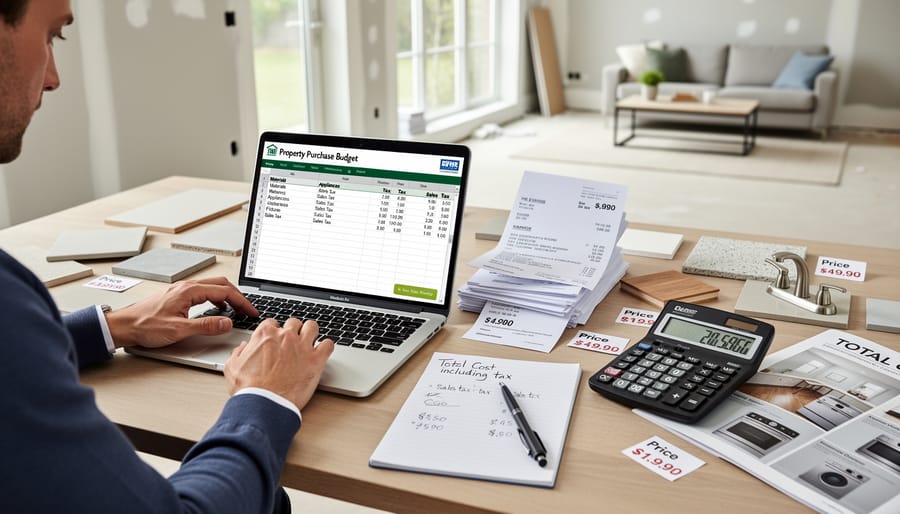
Calculating the True Cost: 9% Sales Tax Impact on Property-Related Purchases
Home Renovation and Improvement Materials
When planning home renovations, a 9% sales tax can significantly impact your budget. Understanding these costs upfront helps you make smarter purchasing decisions and avoid sticker shock.
For construction materials, the numbers add up quickly. A $5,000 flooring order incurs $450 in sales tax, while $10,000 worth of lumber and framing materials adds $900 to your bill. These aren’t trivial amounts, especially when you’re managing a complete renovation project.
Major appliances represent another substantial expense category. That $2,500 refrigerator costs an additional $225 in tax, and a high-end dishwasher priced at $1,200 adds $108. When outfitting an entire kitchen, expect to pay several hundred dollars in sales tax alone.
Fixtures and finishes also contribute to the tax burden. Premium bathroom fixtures totaling $3,000 mean $270 in sales tax, while $4,000 in lighting fixtures adds $360.
The strategic takeaway? Calculate the 9% tax early in your budgeting process. For a $50,000 renovation, you’re looking at $4,500 in sales tax. Some jurisdictions offer exemptions for certain energy-efficient materials or contractor-purchased items, so research local regulations to potentially reduce your tax liability.
Furnishing Investment Properties
When outfitting rental properties with furniture and appliances, sales tax can significantly impact your bottom line. A 9% sales tax rate on a $15,000 furnishing package adds $1,350 to your upfront costs—money that directly affects your cash-on-cash return and extends your break-even timeline.
Smart investors approach these expenses strategically. Consider purchasing in states with lower sales tax rates if you’re near a border, or timing your acquisitions during tax-free weekends where available. Some jurisdictions offer exemptions for certain business purchases, though rental property furnishings typically don’t qualify.
The good news? While sales tax itself isn’t deductible, the total purchase price (including tax paid) increases your depreciable basis. For furniture and appliances, you can depreciate these costs over five to seven years, creating valuable tax shields. Track every receipt meticulously—that $1,350 in sales tax becomes part of your annual depreciation deductions.
When running your investment numbers, factor sales tax into your initial capital requirements. Many novice investors overlook this expense, then scramble when actual costs exceed projections. Understanding these costs alongside other essential real estate deductions helps you build accurate pro formas and make informed purchasing decisions that protect your profit margins from day one.
Tax Deduction Opportunities for Real Estate Professionals
Deductible Business Equipment and Supplies
When you’re investing in property or running a real estate business, understanding which sales tax payments you can deduct is crucial for maximizing your tax benefits. The good news is that sales tax paid on legitimate business equipment and supplies typically qualifies as a deductible expense on your tax return.
Office equipment purchases are prime candidates for deductions. This includes computers, printers, desks, filing cabinets, and software subscriptions essential for managing properties or running your real estate operations. If you paid a 9% sales tax rate on a new laptop or professional camera for property photos, that tax amount can be written off.
Marketing materials also qualify for deductions. Think yard signs, business cards, promotional brochures, and even website development costs. The sales tax you pay on these items supports your business growth and is considered a legitimate expense.
Technology investments deserve special attention. CRM systems, virtual tour equipment, electronic lockboxes, and communication devices all fall under deductible categories. Remember to keep detailed receipts showing the sales tax paid separately.
To fully leverage these deductions alongside other benefits like tax credits for homeowners, maintain organized records of all business-related purchases throughout the year. This documentation becomes invaluable during tax preparation and potential audits.
Documentation Requirements
Proper documentation transforms sales tax from a financial burden into a valuable deduction opportunity. The IRS requires contemporaneous records, meaning you need to maintain documentation as transactions occur rather than scrambling to reconstruct everything at tax time.
Start by keeping all receipts for major purchases, particularly those related to property improvements, furniture for rental properties, or business equipment. Your receipts should clearly show the sales tax amount separately from the purchase price. For larger items like appliances or building materials, consider creating a dedicated folder—either physical or digital—to store these documents throughout the year.
Credit card and bank statements serve as secondary documentation, but they typically don’t break out sales tax separately. That’s why original receipts remain crucial. Many modern point-of-sale systems email receipts automatically, making digital record-keeping easier than ever.
If you’re claiming the sales tax deduction instead of state income tax, you’ll need to track every deductible purchase or use the IRS’s optional sales tax tables as a baseline. Real estate professionals should maintain a separate log for property-related purchases, noting the date, vendor, item description, purchase amount, and sales tax paid.
Consider using accounting software or a simple spreadsheet to categorize purchases monthly. This proactive approach not only simplifies tax preparation but also provides audit protection if the IRS ever questions your deductions.

Sales Tax Exemptions and Workarounds for Property Buyers
Understanding sales tax exemptions can save you thousands on property-related purchases, especially when facing a 9% rate. While you can’t dodge sales tax on everything, several legitimate strategies exist to reduce your burden when buying materials, furniture, or fixtures for real estate investments.
Resale certificates offer one of the most powerful exemption tools for real estate professionals. If you’re purchasing items specifically for resale—like a house flipper buying appliances to install in a property—you can typically avoid paying sales tax upfront by providing vendors with a valid resale certificate. The key requirement? You must have a legitimate business structure and genuinely intend to resell the items. However, this doesn’t apply to materials you’ll consume in providing a service, so contractors can’t use resale certificates for most supplies.
Tax exemption certificates work differently and apply to specific qualifying organizations or purchases. Nonprofits buying property for charitable purposes may qualify for exemptions in many states. Some jurisdictions also exempt construction materials for certain agricultural or manufacturing facilities. Real estate investors should investigate whether their state offers exemptions for energy-efficient improvements or renewable energy installations—these can significantly reduce costs on solar panels, high-efficiency HVAC systems, or insulation upgrades.
Enterprise zones and opportunity zones represent another avenue worth exploring. These designated areas often provide sales tax holidays or reduced rates to encourage investment in economically distressed communities. Some states waive sales tax entirely on building materials used within these zones, making them attractive for development projects.
Timing your purchases strategically around sales tax holidays can yield additional savings. Many states schedule annual tax-free weekends covering building materials, appliances, or Energy Star-rated products. While these events typically target back-to-school shopping, several states include construction supplies and home improvement items.
Remember that exemption abuse carries serious consequences, including back taxes, penalties, and potential fraud charges. Always maintain proper documentation and consult with a tax professional before claiming exemptions. The savings are real, but only when pursued through legitimate channels with appropriate business structures and qualifying circumstances.
Financing Considerations: Sales Tax and Your Home Loan
When you’re financing a home purchase or renovation, that 9% sales tax can significantly impact your borrowing power and monthly payment obligations. Understanding how lenders view sales tax in the financing equation helps you make smarter decisions about what to finance and when.
Most lenders calculate your debt-to-income ratio based on the total financed amount, which means rolling sales tax into financing increases both your loan principal and interest payments over the life of the loan. For a $30,000 kitchen renovation in a 9% sales tax jurisdiction, you’re financing an additional $2,700 in tax. Over a 15-year home equity loan at 7% interest, that tax portion alone costs you approximately $4,100 in total payments.
Renovation loans like FHA 203(k) and Fannie Mae HomeStyle programs allow you to include improvement costs and their associated sales taxes in your mortgage. While convenient, this approach means you’re paying interest on tax for potentially 30 years. A $50,000 renovation with $4,500 in sales tax, financed at 6.5% over 30 years, results in roughly $6,900 in interest paid on just the tax portion.
Smart financing strategies include paying sales tax upfront when possible, especially for smaller projects, or timing larger purchases to align with available cash reserves. Some homeowners strategically phase renovations to keep individual project costs below thresholds that would strain their financing capacity.
Consider your overall borrowing capacity too. That 9% sales tax on major purchases reduces the improvement value you can afford within your approved loan amount. If you’re approved for $75,000 in renovation financing, the actual improvement value drops to approximately $68,800 after accounting for sales tax, limiting your project scope more than you might initially expect.
Year-End vs. Tax Season Purchasing: A Strategic Comparison
The timing of major property-related purchases can significantly impact your financial outcomes, especially in areas with 9% sales tax rates. Understanding the strategic differences between year-end and tax season purchases helps you maximize savings and optimize your tax position.
Year-end purchases, particularly those made in December, offer immediate tax deduction opportunities. When you buy furniture, appliances, or building materials for a rental property before December 31st, you can claim those deductions on your current tax return. This approach works especially well if you’ve had a high-income year and need to reduce your taxable income. The 9% sales tax you pay on a $10,000 home improvement purchase equals $900, which might be deductible as a state tax payment, subject to the $10,000 state and local tax cap.
However, tax season purchases from January through April present different advantages. Retailers often slash prices during the slower post-holiday months, potentially offering discounts that exceed your sales tax costs. A 15% discount on that same $10,000 purchase saves you $1,500, compared to the $900 in sales tax. While you’ll wait until the following year to claim deductions, the immediate savings may outweigh the tax benefits.
Market conditions also play a crucial role. Real estate professionals know that construction material prices typically rise in spring as building activity increases. Purchasing during winter months can mean lower base prices before sales tax even enters the equation. For investment properties, consider your depreciation schedule and overall tax strategy. Large purchases might serve you better spread across multiple tax years if you’re already maximizing current deductions.
The optimal strategy depends on your specific situation. High earners in their peak income years benefit more from year-end purchases that provide immediate deductions. Meanwhile, those with moderate incomes or already-low tax liability might prioritize the deeper discounts available during tax season, accepting the delayed deduction benefit. Calculate both scenarios with your actual numbers before committing to timing your purchase.
Navigating a 9% sales tax environment requires both strategic planning and informed decision-making, especially when it comes to substantial real estate-related purchases. As you’ve seen throughout this guide, understanding how these rates impact your bottom line can translate into significant savings when timed correctly around tax season.
The key takeaway is simple: timing matters. Whether you’re considering closing on a property, investing in major home improvements, or purchasing appliances and furnishings for a new space, aligning these decisions with your tax planning calendar can optimize your financial outcomes. Remember that large purchases made earlier in the year give you more time to organize documentation and potentially benefit from deductions when filing season arrives.
However, sales tax calculations aren’t always straightforward. Local jurisdictions may have additional fees, exemptions vary by state and purchase type, and real estate transactions often involve multiple taxable components. What seems like a simple 9% rate can become more complex when you’re dealing with six-figure property investments or significant renovation projects.
This is where professional guidance becomes invaluable. A qualified tax advisor who understands both real estate transactions and your local jurisdiction’s specific regulations can help you identify opportunities you might otherwise miss. They can clarify which purchases qualify for deductions, help structure transactions to minimize tax burdens, and ensure you’re compliant with reporting requirements.
Don’t leave money on the table. Before making your next major purchase, consult with a tax professional who can provide personalized strategies tailored to your unique situation and help you make the most of that 9% sales tax reality.