
Evaluate agricultural properties through the ESG lens by examining soil health certifications, water conservation systems, and renewable energy infrastructure before making purchase decisions. Properties with USDA organic certification, regenerative farming practices, or established carbon sequestration programs typically command premium valuations and attract sustainability-focused tenants willing to pay 15-20% above market rates.
Diversify your agricultural real estate portfolio by allocating capital across specialized ESG-compliant REITs that focus on farmland, vertical farming facilities, and agtech-enabled properties. These vehicles provide exposure to sustainable real estate investments without requiring direct operational management, while offering liquidity advantages over traditional land ownership. Leading agricultural REITs now report ESG metrics quarterly, making performance tracking straightforward for investors who demand transparency.
Leverage green financing incentives specifically designed for sustainable agriculture acquisitions. USDA Conservation Loans, state-level agricultural sustainability grants, and specialized lending programs from institutions like Farm Credit Services offer favorable terms—often 0.5-1% below conventional rates—for properties meeting environmental standards. These programs typically require documented conservation plans and may provide additional capital for implementing renewable energy systems or water-efficient irrigation.
Structure due diligence around quantifiable ESG metrics rather than subjective sustainability claims. Request third-party environmental site assessments, review historical pesticide and fertilizer usage data, verify water rights and consumption patterns, and analyze soil composition reports from independent laboratories. Properties with documented baseline ESG measurements allow you to track improvement over time, creating measurable value appreciation beyond traditional cap rate calculations. Insurance carriers increasingly offer premium discounts for agricultural properties with certified sustainable practices, reducing your ongoing operational costs by 8-12% annually while protecting against climate-related risks.
Why Agricultural ESG Investments Matter for Real Estate Investors
The Financial Case for Sustainable Farmland
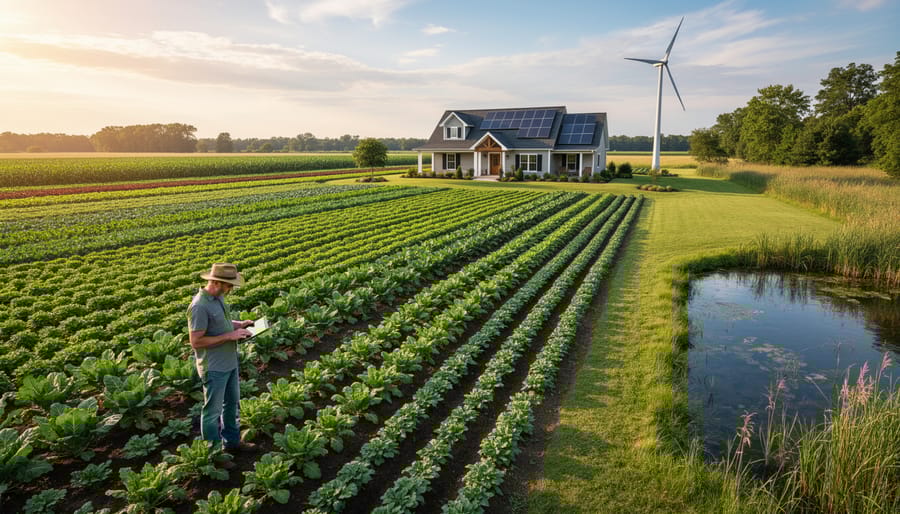
Sustainable farmland has emerged as a compelling asset class that delivers competitive returns while advancing environmental stewardship. According to the National Council of Real Estate Investment Fiduciaries (NCREIF), farmland has historically generated average annual returns of 10-12%, combining both income from crop yields and land appreciation. What’s particularly noteworthy is how ESG-compliant agricultural properties are widening this performance gap.
Recent data from AgFunder and similar agricultural investment platforms shows that farms implementing regenerative practices—such as cover cropping, reduced tillage, and rotational grazing—are experiencing appreciation rates 15-20% higher than conventional operations over five-year periods. This premium stems from multiple factors: enhanced soil health that boosts productivity, lower input costs through reduced chemical dependency, and increasing buyer demand for sustainable properties.
For those exploring real estate investment management opportunities, sustainable farmland offers particularly attractive risk-adjusted returns. Properties meeting ESG criteria command premium lease rates—typically 8-12% above market averages—as food companies and institutional buyers actively seek suppliers with verified sustainable credentials.
Additionally, climate-smart farmland demonstrates greater resilience during extreme weather events, translating to more stable cash flows. Insurance actuaries are taking notice too, with some carriers offering reduced premiums for farms implementing soil conservation practices and water management systems. These tangible financial benefits, combined with growing carbon credit revenue opportunities, make ESG-compliant farmland an increasingly strategic allocation within diversified portfolios.
Risk Mitigation Through Environmental Stewardship
Sustainable agricultural practices serve as powerful risk management strategies that protect the long-term value of farmland investments. Properties managed with environmental stewardship in mind actively combat soil degradation through crop rotation, cover cropping, and reduced tillage methods. These techniques preserve soil health and fertility, maintaining the land’s productive capacity for decades rather than depleting it within years.
Water scarcity poses an increasing threat to agricultural property values, particularly in drought-prone regions. Farms implementing drip irrigation, rainwater harvesting, and water-efficient technologies demonstrate resilience against this challenge, making them more attractive to investors and less vulnerable to regulatory restrictions on water use.
Climate volatility represents perhaps the most significant long-term risk facing agricultural real estate. Properties incorporating diverse crop systems, agroforestry, and carbon sequestration practices show greater adaptability to changing weather patterns and temperature shifts. These farms often command premium valuations because they’re better positioned to maintain productivity despite climate disruptions.
From an insurance perspective, environmentally responsible farms may qualify for lower premiums as insurers increasingly recognize the reduced risk profile associated with sustainable management practices. This creates a compounding effect where environmental stewardship simultaneously protects asset values while reducing operational costs.
Core ESG Strategies in Agricultural Real Estate
Environmental Criteria: Soil Health and Water Management
When evaluating agricultural properties through an ESG lens, soil health and water management stand as fundamental environmental indicators that directly impact both sustainability and financial performance. These criteria aren’t just feel-good measures—they translate into tangible value for investors.
Regenerative farming practices represent the gold standard in soil management. Unlike conventional agriculture that depletes soil nutrients over time, regenerative methods like cover cropping, reduced tillage, and crop rotation actively rebuild soil organic matter. Properties employing these techniques typically demonstrate higher carbon sequestration potential, which can generate additional revenue streams through carbon credit markets. For real estate investors, this means agricultural land managed regeneratively may command premium valuations compared to conventionally farmed parcels.
Organic certifications provide another measurable benchmark. USDA Organic or similar certifications signal commitment to soil health through prohibited use of synthetic fertilizers and pesticides. These designations often correlate with stronger lease rates and buyer interest, particularly as consumer demand for organic products continues climbing.
Water management practices equally influence property values and financing accessibility. Efficient irrigation systems, water recycling infrastructure, and watershed protection measures reduce operational costs while demonstrating environmental stewardship. Properties with documented water conservation programs increasingly qualify for favorable financing terms, as lenders recognize reduced climate risk and regulatory exposure.
From a financing perspective, agricultural properties scoring well on these environmental criteria often access specialized green lending programs offering lower interest rates or extended terms. Insurance providers are similarly taking notice, with some carriers offering premium discounts for properties implementing verified sustainable practices that reduce long-term risk exposure.

Social Responsibility: Labor Practices and Community Impact
When evaluating agricultural properties or ESG-focused funds, social responsibility isn’t just about doing good—it directly impacts your bottom line. Properties with strong labor practices and community engagement typically command premium valuations and experience lower operational risks.
Fair labor standards form the foundation of social governance in agricultural investments. This means ensuring farm workers receive living wages, safe working conditions, and access to healthcare. Properties that invest in worker training programs and provide clear pathways for advancement tend to see higher productivity and lower turnover costs. For real estate investors, these practices translate to more stable cash flows and reduced liability exposure.
Community impact extends beyond the farm gate. Sustainable agricultural operations that support local economies through fair procurement practices, infrastructure investments, and educational partnerships build stronger reputations and regulatory goodwill. This social capital proves invaluable when seeking permits for expansion or navigating zoning changes.
The investment returns speak for themselves. Studies show agricultural properties with robust social governance programs experience up to 15% higher tenant retention rates and stronger resilience during economic downturns. Communities actively engaged with farming operations are more likely to support development initiatives and less likely to impose restrictive regulations.
For due diligence, examine third-party certifications like Fair Trade or Rainforest Alliance, review worker safety records, and assess community investment programs. Properties demonstrating genuine social responsibility consistently outperform peers in long-term value creation while minimizing reputational and operational risks that can erode investment returns.
Governance Standards: Transparency and Certification Systems
When evaluating agricultural investments through an ESG lens, verifying claims requires robust governance standards and third-party validation. Think of these certification systems as the inspection reports and title insurance of sustainable agriculture—they provide the due diligence framework that protects your investment and confirms what you’re actually buying.
Several reporting frameworks have emerged as industry standards for agricultural ESG compliance. The Global Reporting Initiative (GRI) offers comprehensive sustainability reporting guidelines that agricultural operations use to disclose environmental and social impacts. The Sustainability Accounting Standards Board (SASB) provides sector-specific standards for food and agriculture, helping investors compare ESG metrics across different properties and operations.
Third-party certifications add another layer of credibility. The Fair Trade certification verifies ethical labor practices and fair compensation for workers—critical governance factors in agricultural investments. USDA Organic certification confirms environmental standards, while Rainforest Alliance and B Corporation certifications assess comprehensive sustainability practices. These function similarly to LEED certification in commercial real estate, providing standardized benchmarks that investors can trust.
For agricultural REITs and direct property investments, look for operations that undergo annual third-party audits and publish transparent sustainability reports. The Task Force on Climate-related Financial Disclosures (TCFD) framework is increasingly adopted by agricultural companies to report climate risks—essential information when assessing long-term property values and operational viability. Strong governance structures should include board-level ESG oversight, clear policies on environmental compliance, and documented stakeholder engagement processes, ensuring your agricultural investment meets genuine sustainability standards rather than just marketing claims.
Investment Vehicles for Agricultural ESG Exposure
Direct Farmland Ownership and Leasing Models
Direct farmland ownership offers real estate investors a tangible way to align portfolios with ESG principles while potentially generating stable returns. The key is partnering with operators who demonstrate genuine commitment to sustainable practices, not just greenwashing.
When acquiring agricultural property, look for farms with documented conservation efforts like soil health monitoring, water stewardship programs, and biodiversity initiatives. These metrics translate into long-term land productivity and resilience against climate risks—factors that protect your investment value over time.
Lease structures can actively incentivize ESG performance rather than passively hoping for good stewardship. Consider crafting agreements that reward tenants for achieving specific sustainability benchmarks, such as reducing chemical inputs by a certain percentage or maintaining wildlife corridors. Some progressive landowners structure rent reductions tied to third-party sustainability certifications or carbon sequestration measurements. This approach aligns financial incentives with environmental outcomes while potentially increasing property valuation as ESG-conscious buyers pay premiums for well-managed land.
Financing these acquisitions has become more accessible through green loan programs specifically designed for sustainable agriculture investments. These loans often feature favorable terms—lower interest rates or extended amortization periods—when properties meet defined environmental criteria. Some agricultural lenders now offer preferential pricing for farms with organic certification or documented regenerative practices.
Insurance considerations matter too. Properties with documented sustainable practices may qualify for specialized coverage or risk-adjusted premiums, as insurers increasingly recognize that climate-resilient farming operations present lower long-term risk profiles. Due diligence should include environmental assessments and verification of operator credentials to ensure your investment truly delivers on ESG commitments.
Agricultural REITs and Timberland Funds
Agricultural REITs and timberland funds offer a compelling entry point for investors seeking ESG exposure without direct property management. Publicly traded options like Farmland Partners and Gladstone Land focus on sustainable farming practices, while private funds including Nuveen and TIAA’s farmland portfolios cater to accredited investors with higher minimums.
When evaluating these investments, start by requesting their annual sustainability reports. Look for concrete metrics on water conservation, soil health improvements, and pesticide reduction rather than vague green marketing language. The best operators track carbon sequestration data and maintain third-party certifications like USDA Organic or Rainforest Alliance.
Pay attention to tenant lease structures. REITs partnering with regenerative agriculture practitioners typically demonstrate stronger ESG commitment than those prioritizing conventional commodity crops. Review what percentage of acreage uses cover cropping, crop rotation, or no-till methods.
Financial performance matters too. Examine occupancy rates, lease renewal percentages, and dividend stability over multiple growing seasons. Agricultural investments face unique climate risks, so scrutinize how funds assess and mitigate drought, flooding, and extreme weather exposure.
For timberland funds, verify sustainable forestry certifications from organizations like the Forest Stewardship Council. These credentials signal responsible harvesting practices that balance returns with ecosystem preservation.
Agribusiness Property Development
Agribusiness property development represents one of the most dynamic frontiers in ESG-compliant real estate investing. Modern processing facilities designed with energy-efficient technologies and zero-waste systems are transforming how agricultural products move from farm to market. These facilities often incorporate solar panels, rainwater harvesting systems, and advanced refrigeration technology that significantly reduces carbon footprints while improving operational efficiency.
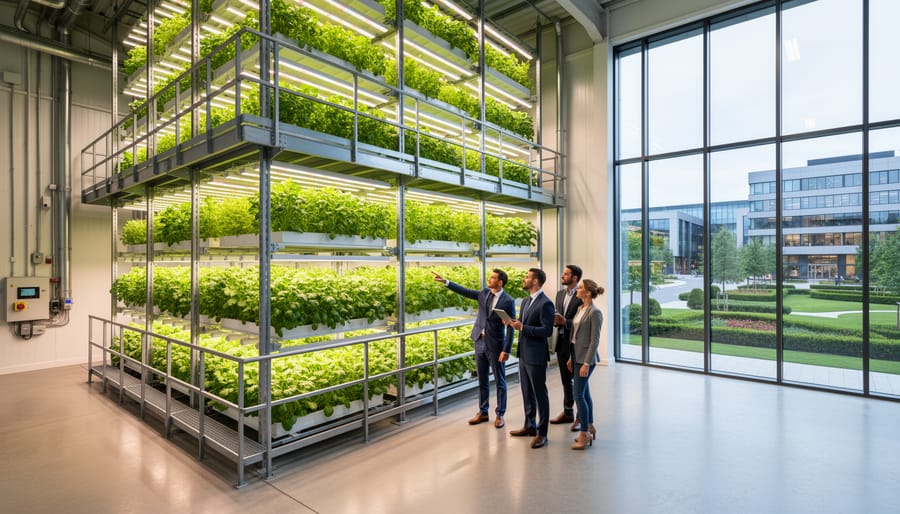
Vertical farming operations have emerged as particularly attractive investment opportunities, especially in urban markets where land premiums are high. These controlled-environment agriculture facilities use up to 95% less water than traditional farming while producing yields year-round. For real estate investors, vertical farms offer stable, long-term lease agreements with technology-forward tenants who prioritize sustainability metrics.
Agricultural technology centers that serve as innovation hubs for agtech startups present another compelling opportunity. These properties typically combine laboratory space, demonstration farms, and incubator facilities under one roof. They attract government grants and private capital focused on food security and climate resilience.
When evaluating agribusiness properties, examine certifications like LEED or BREEAM, which verify environmental standards. Consider financing options specifically designed for green agricultural infrastructure, including USDA programs and specialized agtech lenders. Insurance considerations should address unique risks like crop failure impacts on tenant stability and specialized equipment coverage for automated farming systems.
Financing and Insurance Considerations for ESG Agricultural Properties
Green Financing Options and Tax Incentives
Sustainable agricultural investments offer several attractive green financing mechanisms that can significantly improve your returns while supporting environmental stewardship. Understanding these options helps you structure deals more effectively and maximize both financial and ecological impact.
Conservation easements represent one of the most powerful tools for agricultural property investors. These voluntary legal agreements permanently limit development on land to protect its conservation values, and in return, landowners receive substantial federal income tax deductions—often valued at 30-50% of the property’s fair market value. The deduction can be carried forward for up to 15 years, making it particularly valuable for high-income investors.
The USDA administers multiple programs supporting sustainable agriculture. The Environmental Quality Incentives Program (EQIP) provides financial assistance for implementing conservation practices, covering up to 75% of costs for improvements like water conservation systems or soil health initiatives. The Conservation Stewardship Program rewards landowners already employing sustainable practices with annual payments averaging $18-20 per acre.
Green bonds have emerged as innovative financing vehicles for large-scale agricultural projects. These debt instruments specifically fund environmentally beneficial initiatives and often attract institutional investors seeking ESG-compliant portfolios. While primarily accessible for substantial developments, understanding green bond markets helps you position properties for future capital opportunities.
Tax credits sweeten the deal further. The Investment Tax Credit covers 30% of qualifying renewable energy installations like solar panels or biogas systems on agricultural properties. State-level incentives vary widely but frequently include property tax abatements for certified sustainable operations and sales tax exemptions for conservation equipment. Consulting with a tax professional specializing in agricultural real estate ensures you capture every available benefit while structuring your investment optimally.
Specialized Insurance for Sustainable Operations
When you’re investing in sustainable agricultural properties, understanding the insurance landscape becomes crucial—and it’s quite different from traditional farm coverage. Sustainable and organic operations face unique risks that standard policies may not adequately address, which directly impacts your investment’s financial stability.
Crop insurance for organic farms operates under specialized frameworks. Because organic crops typically command premium prices but may have lower yields during transition periods, you’ll need coverage that reflects these economic realities. The USDA’s Risk Management Agency now offers organic price elections that align with market values, but premiums can run 5-20% higher than conventional coverage. This cost differential should factor into your due diligence calculations when evaluating agricultural investments.
Liability coverage presents another layer of complexity. Organic certification requirements mean that contamination from neighboring conventional operations or chemical drift can devastate an entire harvest and void certification. Smart investors look for pollution liability endorsements and business interruption coverage that specifically protects against decertification events—losses that could take three years to recover from as the land undergoes re-certification.
Here’s the encouraging news: insurance carriers increasingly recognize that ESG-focused operations often present lower risk profiles. Properties with documented sustainable practices, soil health programs, and water conservation measures may qualify for premium discounts ranging from 10-15%. Some insurers now offer “green upgrades” coverage that pays replacement costs for damaged infrastructure with more sustainable alternatives, adding long-term value to your investment portfolio. This alignment between responsible practices and favorable insurance terms strengthens the financial case for sustainable agriculture investments.
Due Diligence: Evaluating ESG Agricultural Opportunities

Essential Questions to Ask Before Investing
Before committing capital to sustainable agriculture investments, conduct thorough environmental due diligence using this essential checklist:
Verify all organic or sustainability certifications through third-party agencies. Confirm USDA Organic, Rainforest Alliance, or other relevant credentials are current and transferable. Request certification history showing compliance patterns over time.
Investigate historical land use through county records and Phase I environmental assessments. Past industrial activity, chemical applications, or contamination can derail organic certification and create liability exposure.
Examine water rights documentation carefully. In many regions, these rights transfer separately from land ownership. Confirm adequate water allocation, usage restrictions, and any pending litigation affecting access.
Commission comprehensive soil testing beyond standard agricultural assessments. Test for heavy metals, persistent pesticides, nutrient levels, and organic matter content. Poor soil quality impacts both crop yields and property valuations.
Review operator track records including financial statements, production histories, and management experience. Even prime agricultural land underperforms with inexperienced operators. Request references from suppliers, distributors, and neighboring farms to verify reputation and operational competency.
Reading ESG Reports and Third-Party Assessments
When evaluating agricultural properties or sustainable agriculture investments, ESG reports and third-party certifications serve as your roadmap to verify sustainability claims. These documents translate abstract environmental commitments into measurable performance data you can trust.
Start by requesting the property’s sustainability report, which typically outlines water usage, soil health metrics, pesticide application rates, and carbon footprint. Look for year-over-year improvements rather than one-time achievements. Third-party certifications add credibility to these claims by providing independent verification.
Organic certification remains the gold standard, indicating the property avoids synthetic pesticides and fertilizers while maintaining soil health through natural methods. Rainforest Alliance certification signals biodiversity protection, fair labor practices, and water conservation efforts. For the highest tier of commitment, Regenerative Organic Certified combines organic practices with soil regeneration, animal welfare, and social fairness standards.
These certifications aren’t just environmental badges. They directly impact property value and income potential, as certified products command premium prices in the marketplace. When reviewing reports, pay attention to certification renewal dates and any compliance issues. Properties maintaining multiple certifications typically demonstrate stronger ESG commitment, reducing long-term investment risk while potentially qualifying for favorable green financing terms.
Integrating sustainable agricultural ESG strategies into your real estate portfolio isn’t just environmentally responsible—it’s financially strategic. As we’ve explored, these investments offer compelling diversification benefits by adding agriculture-based assets that typically move independently from traditional commercial or residential properties. This uncorrelated performance can smooth out volatility while positioning your portfolio to capitalize on growing consumer demand for sustainably produced food and the increasing flow of capital toward ESG-compliant opportunities.
The long-term value proposition is equally attractive. Agricultural properties with strong environmental stewardship practices often command premium valuations, benefit from emerging carbon credit markets, and qualify for favorable financing terms through green loans and government incentives. Meanwhile, robust governance structures and positive social impact metrics reduce regulatory risks and enhance tenant stability—critical factors for preserving value through market cycles.
Ready to take the next step? Begin by evaluating your current portfolio allocation and identifying where agricultural ESG investments could strengthen your diversification. Consider starting with established farmland REITs that provide immediate exposure without operational complexity, or explore direct property acquisitions if you have the capital and appetite for hands-on management. Engage with qualified appraisers who understand sustainable agriculture metrics, and partner with insurance professionals experienced in agricultural property coverage.
The intersection of profitability, environmental stewardship, and portfolio resilience isn’t theoretical—it’s already delivering results for forward-thinking investors. Your move toward sustainable agricultural ESG strategies today positions you advantageously for tomorrow’s investment landscape.