
ESG innovation is reshaping how real estate professionals evaluate properties, secure financing, and protect assets. Buildings with energy-efficient systems now command 7-10% higher valuations, while properties lacking sustainability features face mounting insurance premiums and declining buyer interest. This shift isn’t abstract corporate responsibility—it’s a fundamental recalibration of risk assessment that directly impacts your bottom line.
Corporate research and development in ESG has produced tangible tools that property stakeholders can leverage immediately. Solar panel integration, smart building technology, and water conservation systems have evolved from experimental upgrades to expected features that lenders prioritize when structuring loans. Insurance carriers now deploy satellite imagery and AI-driven climate risk models to price policies, meaning properties in flood zones or wildfire corridors without mitigation measures face premium increases of 20-40%.
The financial implications extend beyond individual properties. Institutional investors controlling trillions in capital now screen real estate portfolios through ESG filters, creating a two-tier market where compliant properties access cheaper capital and faster sales. Green bonds and sustainability-linked loans offer interest rate reductions of 10-25 basis points—savings that accumulate significantly over a 30-year mortgage.
Understanding which ESG innovations deliver measurable returns versus those that simply generate headlines determines whether you capitalize on this transformation or watch property values stagnate. The gap between ESG-aligned and traditional properties widens quarterly, making immediate assessment of your portfolio’s positioning essential for competitive positioning in today’s market.
What ESG Innovation Actually Means for Your Portfolio
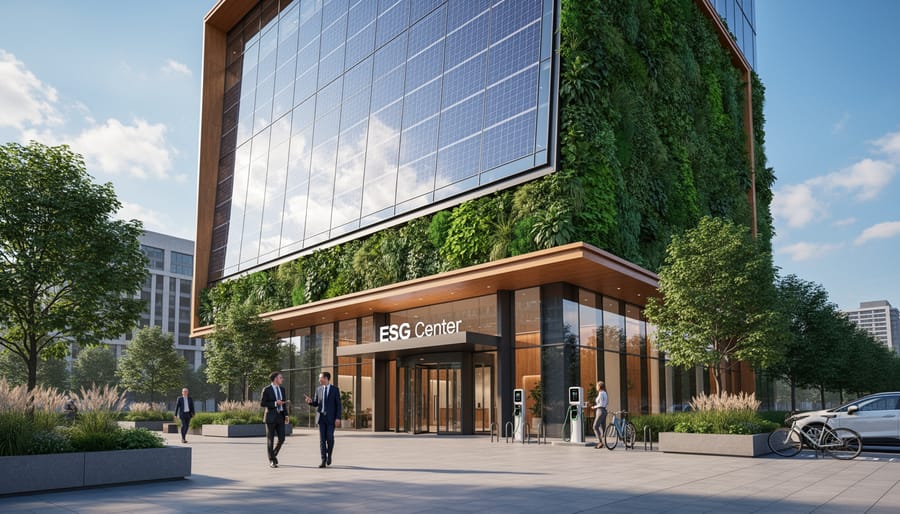
Beyond Buzzwords: ESG Innovation in Action
ESG innovation isn’t just corporate lip service—it’s reshaping how properties are built, financed, and insured. Let’s look at real-world applications that directly impact your bottom line.
Green building technologies are leading the charge. Smart HVAC systems that reduce energy consumption by 30% aren’t just eco-friendly; they lower operating costs and increase property values. Solar panel arrays with battery storage are transforming commercial buildings into energy-independent assets, making them more attractive to sustainability-focused tenants willing to pay premium rents. These upgrades also unlock preferential insurance rates, as carriers recognize reduced risk profiles in climate-resilient properties.
Sustainable financing products have evolved beyond niche offerings. Green mortgages now provide rate discounts of 0.25% to 0.5% for energy-efficient homes, translating to thousands in savings over a loan’s lifetime. ESG-linked loans for commercial properties tie interest rates to measurable sustainability targets—meet your ESG metrics, and your borrowing costs decrease. Major banks are also launching carbon-neutral mortgage programs that offset emissions associated with property financing.
Social impact initiatives are gaining traction too. Affordable housing developments that incorporate mixed-income units qualify for tax incentives and preferential zoning. Developers partnering with community organizations on workforce housing projects access both government grants and positive ESG ratings that attract institutional investors. These initiatives demonstrate that social responsibility and profitability can coexist, creating opportunities for savvy real estate professionals who understand this evolving landscape.
The Money Trail: Why Companies Are Betting Big on ESG R&D
Follow the money, and you’ll understand why ESG innovation has become a corporate priority. Companies are pouring billions into environmental, social, and governance research and development, and the reasons are anything but altruistic—they’re strategic.
Regulatory pressure tops the list. Governments worldwide are tightening environmental standards, particularly around carbon emissions and energy efficiency. For real estate companies, this translates directly to building codes, energy disclosure requirements, and potential carbon taxes. Investing in ESG innovation now helps firms stay ahead of compliance costs rather than scrambling to catch up later.
Investor demand drives even more spending. Institutional investors managing trillions in assets are increasingly requiring ESG metrics before committing capital. This shift affects everything from commercial real estate financing to residential mortgage-backed securities. Properties with strong ESG credentials command better terms and attract more interest from lenders who face their own ESG reporting requirements.
The market advantages are tangible too. Buildings with green certifications lease faster and at premium rates. Insurance companies offer better rates for properties with climate-resilient features—a direct cost savings that property owners immediately appreciate. Companies recognize that ESG innovation isn’t just about doing good; it’s about reducing operational costs, attracting quality tenants, and future-proofing assets against both regulatory changes and physical climate risks.
For real estate professionals, understanding these financial drivers helps explain why ESG considerations increasingly influence property valuations, lending decisions, and insurance premiums. The money trail makes one thing clear: ESG innovation is here to stay.
How Banks Are Innovating Around ESG (And What It Means for Your Mortgage)
Green Financing Products That Lower Your Borrowing Costs
Financial institutions are rolling out innovative green financing products that reward environmentally conscious property decisions with tangible cost savings. These products go beyond traditional mortgages by tying interest rates and loan terms directly to a property’s sustainability credentials.
Energy-efficient mortgages (EEMs) allow borrowers to finance energy improvements alongside their home purchase, often with more favorable terms than conventional loans. The key advantage? Lenders recognize that energy-efficient homes have lower operating costs, which improves your debt-to-income ratio and potentially qualifies you for larger loan amounts. Some programs offer interest rate reductions of 0.25% to 0.5%, translating to thousands in savings over the loan’s lifetime.
Green home equity loans and lines of credit specifically fund sustainable upgrades like solar panels, high-efficiency HVAC systems, or water conservation features. Banks increasingly view these improvements as value-adds that reduce default risk, since eco-friendly homes typically command premium resale prices and attract motivated buyers faster.
Perhaps most compelling are the preferential rate structures emerging for certified green buildings. Properties with LEED certification, ENERGY STAR ratings, or other third-party sustainability verification often qualify for discounted rates and reduced origination fees. Some lenders even offer cash-back incentives or closing cost credits for homes meeting specific environmental benchmarks.
The bottom line? Your commitment to sustainability can directly lower your borrowing costs while simultaneously increasing your property’s market value and appeal. It’s a financial win-win that smart real estate investors and homeowners are increasingly leveraging.

Climate Risk Assessment: The New Credit Factor
Banks are revolutionizing how they assess property values by integrating climate risk into their lending models. Traditional appraisals focused on location, square footage, and market comparables, but forward-thinking financial institutions are now developing sophisticated R&D programs that factor in flood zones, wildfire susceptibility, hurricane exposure, and sea-level rise projections.
This shift affects everyone in real estate. Properties in high-risk climate zones may receive lower appraisals or face stricter lending requirements, directly impacting your buying power and investment returns. Some banks have established dedicated climate risk teams that use satellite imagery, historical weather data, and predictive analytics to create risk scores for individual properties.
The practical implications are already surfacing. Coastal properties and homes in wildfire-prone areas are experiencing tighter loan-to-value ratios, meaning buyers need larger down payments. Insurance requirements are also becoming more stringent, as lenders recognize that uninsurable or underinsured properties pose greater default risks.
For property professionals and buyers, understanding these emerging assessment criteria is crucial. Climate risk modeling isn’t just an environmental concern anymore, it’s a credit factor that directly influences financing terms, property marketability, and long-term asset value. Stay informed about your property’s climate vulnerabilities to make smarter investment decisions.
Insurance Companies Are Rewriting Risk Models for ESG Properties
Premium Breaks for Sustainable Buildings
Insurance companies are rolling out innovative premium discount programs that reward property owners for making environmentally responsible choices. These new products recognize that green-certified buildings and climate-resilient construction methods actually reduce risk, and they’re passing those savings directly to policyholders.
If your property holds LEED, ENERGY STAR, or similar green certifications, you might qualify for premium reductions ranging from 5% to 15%. Insurers have found that these buildings typically experience fewer claims due to superior construction standards, enhanced maintenance protocols, and more efficient building systems that reduce the likelihood of mechanical failures.
Climate adaptation features are particularly attractive to underwriters. Properties equipped with flood-resistant materials, storm-resistant roofing, impact-resistant windows, or drought-tolerant landscaping demonstrate proactive risk management. Some carriers now offer specialized endorsements that provide additional coverage for sustainable building materials and green reconstruction after a covered loss, ensuring your property can be restored to its eco-friendly standards.
The financial incentive goes beyond just premium savings. Properties with these features often command higher resale values and attract quality tenants more readily. For real estate investors and homeowners alike, investing in sustainability isn’t just environmentally conscious—it’s becoming a smart insurance and financial strategy that protects both your property and your bottom line.
Parametric Insurance and Climate Tech Innovation
Climate change is fundamentally reshaping how insurers evaluate and price property risk, leading to innovative parametric insurance products that offer property owners new protection options. Unlike traditional insurance that pays out based on damage assessments, parametric policies trigger automatic payments when specific measurable events occur—such as hurricane wind speeds exceeding predetermined thresholds or rainfall surpassing certain levels.
These innovations leverage cutting-edge technology to transform climate risk management. Insurers now combine IoT sensors, satellite imagery, and artificial intelligence to continuously monitor properties and surrounding conditions in real-time. For example, rooftop sensors can detect water accumulation patterns, while satellite data tracks vegetation health around wildfire-prone properties. AI algorithms then analyze this information to create highly customized risk profiles and pricing models.
For property owners, this means potentially lower premiums if your property demonstrates strong climate resilience features—think elevated structures in flood zones or fire-resistant materials in wildfire areas. It also enables faster claim settlements since payments aren’t contingent on lengthy damage inspections. However, these innovations require property owners to understand how technology-driven risk assessment works and what improvements might meaningfully reduce their insurance costs while protecting their investment against escalating climate threats.
Real Estate Tech Innovation Driven by ESG Mandates
Smart Buildings That Pay for Themselves
Modern buildings are becoming revenue generators rather than cost centers, thanks to innovations that merge environmental responsibility with financial performance. Through Internet of Things (IoT) sensors, artificial intelligence, and sophisticated energy management systems, property owners are seeing dramatic reductions in operating expenses while simultaneously boosting their ESG credentials.
These smart building technologies monitor everything from HVAC efficiency to occupancy patterns, automatically adjusting systems to minimize waste. The financial impact is substantial—commercial properties implementing AI-driven building operations typically reduce energy costs by 20-30% within the first year. For property owners, this translates to improved net operating income and higher property valuations.
The insurance industry has taken notice too. Buildings equipped with predictive maintenance systems and automated safety protocols often qualify for reduced premiums, as insurers recognize the lower risk profile. Meanwhile, lenders increasingly offer favorable financing terms for properties with verified energy efficiency credentials, creating a compelling business case beyond environmental benefits.
These real estate innovations represent a shift where sustainability and profitability align perfectly. Smart buildings don’t just pay for their initial technology investment—they generate ongoing value through reduced operational costs, enhanced tenant satisfaction, and improved marketability to ESG-conscious investors and occupants alike.

Construction Materials Getting a Sustainable Makeover
The construction industry accounts for nearly 40% of global carbon emissions, but innovative materials are rapidly reshaping this landscape. Low-carbon concrete alternatives are leading the charge, with companies developing formulations that reduce CO2 emissions by up to 70% compared to traditional Portland cement. These breakthroughs utilize recycled industrial byproducts, carbon capture technology, and novel binding agents that maintain structural integrity while dramatically cutting the carbon footprint.
Sustainable timber is experiencing a renaissance through cross-laminated timber (CLT) and engineered wood products. These materials sequester carbon throughout a building’s lifetime and can now compete with steel and concrete in mid-rise construction. For property investors, this translates to buildings with lower embodied carbon, potentially qualifying for green financing incentives and reduced insurance premiums.
The circular economy approach is transforming material sourcing altogether. Recycled plastics are being converted into insulation and composite materials, while demolition waste gets processed into aggregate for new construction. Material passports—digital records tracking component origins and compositions—enable efficient disassembly and reuse at end-of-life.
These innovations directly impact property values and financing options. Buildings constructed with sustainable materials often command premium rents, attract ESG-conscious tenants, and face lower regulatory risks as carbon pricing mechanisms expand. Lenders increasingly favor projects incorporating these materials, offering preferential rates for developments meeting strict sustainability benchmarks.
The ROI of ESG Innovation: Hard Numbers for Property Investors
Valuation Premiums for ESG-Compliant Properties
ESG-compliant properties are commanding significant pricing advantages in today’s market, translating corporate sustainability commitments into tangible financial returns. Recent data reveals that green-certified buildings sell for 7-15% premiums compared to conventional properties, with LEED and ENERGY STAR certifications leading the pack. In commercial real estate, A-grade ESG buildings achieve rental premiums averaging 3-5%, while vacancy rates remain 2-4% lower than traditional properties.
The residential sector mirrors these trends. A 2023 analysis found homes with solar installations and energy-efficient features sold 4.1% higher than comparable properties without green upgrades. Meanwhile, sustainable real estate investments increasingly attract institutional capital, with ESG-focused real estate funds outperforming traditional portfolios by an average 2.8% annually over five-year periods.
Insurance costs also reflect this premium shift. Properties meeting ESG standards often qualify for reduced premiums, with some insurers offering 10-20% discounts for climate-resilient features. These valuation advantages demonstrate that ESG innovations aren’t just environmentally responsible—they’re financially strategic, creating measurable value for property owners and investors alike.
Tenant Demand and Corporate ESG Commitments
Corporate tenants are increasingly steering the commercial real estate market toward sustainable innovation, driven by their own ESG commitments and stakeholder expectations. Major corporations now prioritize office spaces that align with their sustainability goals, creating substantial demand for buildings with green certifications, renewable energy systems, and advanced environmental controls. This shift isn’t just about corporate responsibility—it’s becoming a competitive necessity as employees, investors, and customers expect tangible environmental action.
For property owners and investors, this trend translates into concrete opportunities. Buildings that offer innovative ESG features command premium rents and experience lower vacancy rates, as corporate tenants view sustainable spaces as essential rather than optional. Companies like Microsoft, Amazon, and Google have publicly committed to net-zero operations, requiring their real estate portfolios to meet strict environmental standards. This corporate pressure is accelerating adoption of smart building technologies, air quality monitoring systems, and renewable energy infrastructure across commercial properties.
The financial implications extend beyond rental premiums. Properties meeting corporate ESG requirements often secure better financing terms from lenders who factor sustainability into risk assessments. Insurance providers are also adapting, offering favorable rates for buildings with climate-resilient features. For real estate professionals, understanding these tenant-driven demands is crucial for positioning properties competitively and maximizing long-term investment returns in an increasingly ESG-conscious market.
Navigating ESG Innovation as a Real Estate Professional
Questions to Ask About ESG Innovation Before Any Deal
Before making any real estate decision, whether you’re purchasing, selling, or advising clients, consider these critical ESG innovation questions. First, what energy-efficiency certifications does the property hold, and how do these impact insurance premiums and financing terms? Second, has the building incorporated renewable energy systems or smart technology that could enhance long-term value? Third, what climate risks affect the property’s location, and how might these influence future insurability? Fourth, does the property meet emerging green building codes that could affect resale potential? Fifth, are there available green mortgages or tax incentives that make ESG-compliant properties more financially attractive? Additionally, ask about the property’s water management systems and waste reduction features, as these increasingly influence buyer preferences and operational costs. Finally, investigate whether the property owner or developer has documented sustainability practices that could signal stronger asset performance. These questions help you connect ESG innovation directly to financial outcomes, protecting investments while capitalizing on the growing demand for sustainable real estate.
Staying Ahead: ESG Certifications Worth Your Time
Staying competitive in today’s market means understanding ESG’s impact on property values and financing. Consider pursuing credentials like the LEED Green Associate or WELL AP to demonstrate expertise in sustainable building practices—these certifications signal to clients that you understand how environmental features affect both marketability and insurance premiums.
For professionals focused on real estate investment management, the GRESB Real Estate Assessment credential offers insights into how institutional investors evaluate properties through an ESG lens. This knowledge helps you identify opportunities where sustainability improvements can boost returns.
Real estate professionals should also explore ESG-focused continuing education through organizations like the National Association of Realtors or Urban Land Institute. These programs connect ESG principles to practical outcomes: lower energy costs, reduced climate-related insurance rates, and access to green financing options.
Investing time in these certifications positions you as a trusted advisor who can navigate the intersection of sustainability, finance, and property value—exactly what today’s informed buyers and investors are seeking.
ESG innovation in corporate R&D is fundamentally reshaping how we evaluate and invest in real estate. The transformation extends far beyond surface-level green marketing—it’s creating measurable changes in property valuations, insurance premiums, and financing terms that directly impact your bottom line. Properties incorporating sustainable technologies are commanding premium prices while enjoying lower operating costs, a combination that’s proving increasingly attractive to both institutional investors and individual homeowners.
Looking ahead, several emerging trends warrant close attention. Expect to see carbon-neutral commitments driving accelerated adoption of renewable energy infrastructure across commercial and residential properties. Insurance carriers will continue refining their risk models to reward sustainable building practices with more competitive rates. Meanwhile, lenders are developing increasingly sophisticated ESG scoring systems that could make or break your ability to secure favorable financing terms.
For real estate professionals and investors, the action steps are clear: Begin evaluating your portfolio through an ESG lens, identifying opportunities to retrofit existing properties with energy-efficient systems. Stay informed about evolving regulatory requirements and incentive programs that can offset implementation costs. When considering new acquisitions, factor ESG credentials into your due diligence process—these features are rapidly transitioning from nice-to-have amenities to essential value drivers. The integration of ESG principles into corporate innovation isn’t a passing trend; it’s a fundamental market shift that will define real estate success in the decades ahead.