
Your property faces two distinct climate-related challenges that demand different responses: adapting to floods happening now and contributing to solutions that prevent future escalation. Understanding this distinction isn’t academic—it directly impacts your insurance premiums, property values, and access to financing.
Adaptation means protecting what you own today. Elevate your HVAC systems, install backwater valves, and implement flood-resistant landscaping to minimize damage when water levels rise. These immediate physical improvements not only reduce your flood exposure but often qualify you for lower insurance rates and better climate resilience insurance coverage. Lenders increasingly scrutinize flood risk during underwriting, making adaptation investments essential for maintaining property liquidity.
Mitigation addresses the broader issue—reducing greenhouse gas emissions to slow climate change itself. While installing solar panels or improving energy efficiency helps the planet long-term, these actions won’t stop the flood projected to hit your neighborhood next spring.
The critical insight for property stakeholders: adaptation protects your investment immediately and demonstrably, while mitigation contributes to collective climate stabilization over decades. Your financial interests demand prioritizing adaptation strategies first—securing your asset against current and near-term risks—while supporting mitigation efforts as part of responsible property stewardship. The properties that weather coming decades successfully will be those where owners recognize this dual imperative and act decisively on both fronts, starting with concrete adaptation measures that insurance underwriters and mortgage lenders can evaluate and reward.
What Climate Adaptation and Mitigation Actually Mean for Property Owners
Mitigation: Stopping the Problem at Its Source
While adaptation helps you deal with climate change impacts happening now, mitigation tackles the root cause: greenhouse gas emissions that drive climate change in the first place. Think of it this way—if your basement keeps flooding, adaptation is installing a sump pump, while mitigation is fixing the broken pipe causing the water problem.
Mitigation strategies focus on reducing carbon footprints through renewable energy adoption, energy-efficient building practices, sustainable transportation, and protecting natural carbon sinks like forests and wetlands. For property owners and real estate professionals, this means considering LEED-certified buildings, solar installations, and energy-efficient upgrades that simultaneously reduce emissions and lower operating costs.
Here’s the long-term connection to your property investment: successful mitigation slows climate change progression, which means less severe flooding, fewer extreme weather events, and more stable insurance markets down the road. Communities implementing strong mitigation policies through zoning laws that preserve wetlands, green building codes, and sustainable development plans are essentially protecting future property values and insurability.
While mitigation won’t solve your immediate flood risk, supporting these efforts through property improvements and community engagement helps ensure the real estate market remains viable for decades to come. It’s the ultimate long-term insurance policy for your investment portfolio.
Adaptation: Protecting What You Own Right Now
Climate adaptation is your first line of defense against flooding—it’s about protecting your property and financial investment right now, regardless of what happens globally. Think of it as flood-proofing rather than waiting for the world to change.
At the property level, adaptation means taking concrete steps today. Installing backflow valves prevents sewage from backing up during floods. Elevating critical systems like HVAC units, electrical panels, and water heaters above projected flood levels can save you thousands in replacement costs. French drains and proper grading direct water away from your foundation. These aren’t glamorous upgrades, but they’re insurance policies that actually prevent claims rather than just paying for damage after the fact.
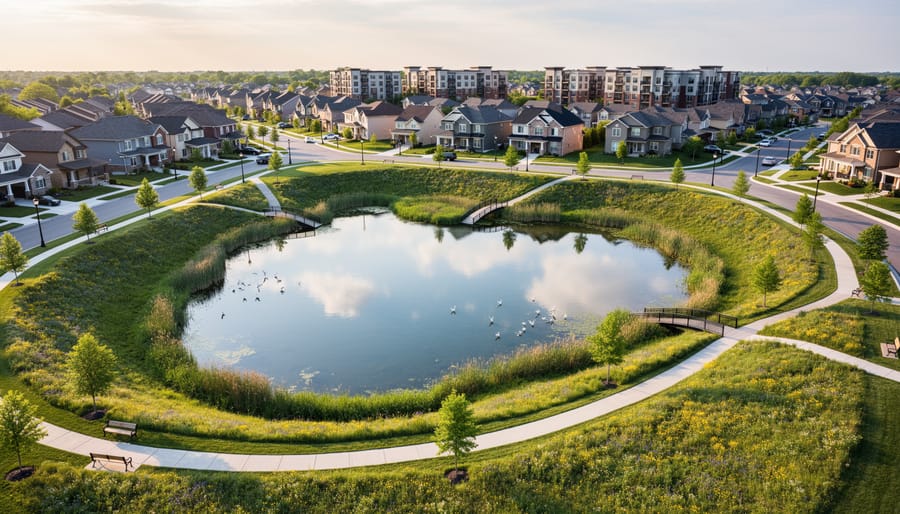
Smart real estate investors are also looking at community-level solutions. Properties in neighborhoods with updated stormwater infrastructure, retention ponds, and green spaces that absorb runoff command better prices and lower insurance premiums. Some forward-thinking communities are investing in living shorelines and rain gardens—natural barriers that reduce flood velocity while increasing property values.
Here’s the financial reality: adaptation measures often qualify for insurance discounts and can significantly reduce your flood insurance premiums over time. They also protect your equity. A home with documented flood mitigation improvements will sell faster and for more money in flood-prone areas. For landlords and property investors, these upgrades mean fewer weather-related vacancies and lower emergency repair costs.
Why Flood Adaptation Can’t Wait for Mitigation to Work
The Insurance Crisis That’s Already Here
The insurance industry isn’t waiting for future projections—it’s reacting to today’s flood losses with dramatic policy changes that are reshaping property markets right now. While climate change impacts insurance across multiple sectors, flood risk represents the most immediate threat to coverage availability and affordability.
In Florida, the canary in the coal mine, major insurers like State Farm and Farmers have stopped writing new homeowners policies entirely. Louisiana faces similar challenges, with Citizens Property Insurance Corporation—the state-backed insurer of last resort—now covering over 100,000 policies as private insurers retreat. California’s FAIR Plan, also a residual market, has seen enrollment surge past 400,000 policies as traditional carriers withdraw from wildfire and flood-prone areas.
The withdrawal pattern follows a predictable trajectory. Insurers first raise premiums sharply in high-risk zones, sometimes tripling rates within a few years. When regulators cap increases or homeowners can no longer afford coverage, carriers stop renewing policies or exit markets completely. Property owners then face limited options: expensive state-backed plans with minimal coverage, specialty high-risk insurers charging premium prices, or going uninsured—a gamble that threatens mortgage eligibility and personal finances.
This crisis extends beyond coastal properties. Inland flooding from intense rainfall events has prompted premium increases in previously low-risk areas across the Midwest and Northeast, catching homeowners off guard and complicating real estate transactions nationwide.
What Lenders Are Starting to Demand
The mortgage lending landscape is shifting dramatically as climate risks become harder to ignore. If you’re looking to buy or refinance property in flood-prone areas, expect your lender to ask tougher questions than ever before.
Many lenders now require comprehensive flood insurance even when properties fall just outside FEMA-designated high-risk zones. They’re recognizing that outdated flood maps don’t always reflect current reality. Some institutions are going further, requesting detailed property resilience assessments before approving loans. This might include documentation of elevation certificates, drainage systems, or backup power installations.
Portfolio lenders and private mortgage companies are leading this charge, often requiring higher down payments for properties with elevated flood exposure. Think 25-30% instead of the traditional 20%. They’re also shortening loan terms or adding climate risk riders to loan agreements, protecting their investments against future losses.
The most forward-thinking lenders are incorporating climate projection data into their underwriting processes, looking at 30-year flood risk scenarios rather than historical patterns. For borrowers, this means properties in emerging risk zones could face unexpected hurdles during the approval process. The message is clear: demonstrate your property’s resilience upfront, or prepare for higher costs and potentially declined applications.
Practical Flood Adaptation Strategies That Protect Your Investment
Property-Level Modifications That Actually Work
When it comes to protecting your property from flood risk, strategic property modifications deliver measurable returns through reduced insurance premiums and preserved property values. Here’s what actually works, along with realistic costs and financial benefits.
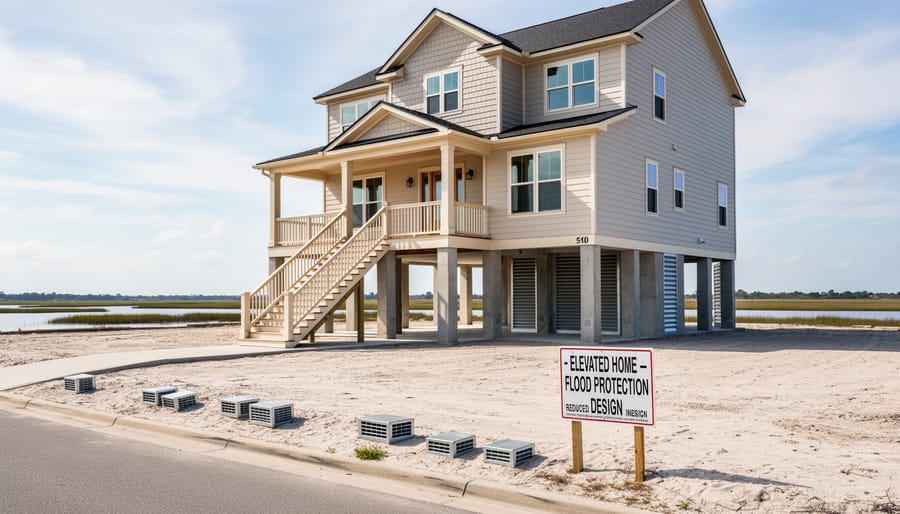
Elevating structures remains the gold standard for flood-prone homes. Raising a foundation costs between $30,000 and $100,000 depending on your home’s size and foundation type, but can reduce flood insurance premiums by 30-60% annually. For a property paying $3,000 yearly in premiums, that’s $900-$1,800 in savings, creating payback periods of 15-30 years while significantly protecting your largest asset.
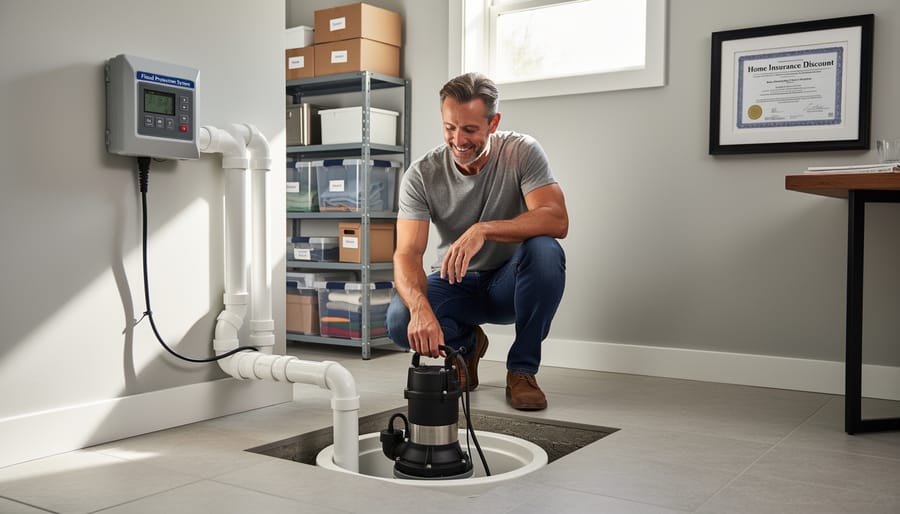
Sump pumps and backflow valves offer more accessible entry points. A quality sump pump system runs $1,200-$3,000 installed, while backflow valves preventing sewage backup cost $500-$2,500. Many insurers provide 5-15% premium discounts for these installations, meaning a $200-$300 annual savings on a typical policy. Beyond insurance benefits, these prevent the catastrophic damage scenarios that can cost $50,000 or more in repairs.
Exterior flood barriers and permeable surfaces address water before it reaches your home. Deployable flood barriers cost $2,000-$8,000, while converting traditional landscaping to permeable pavers or rain gardens runs $3,000-$15,000. These improvements rarely qualify for direct insurance discounts but demonstrate proactive risk management that claims adjusters notice when processing future claims.
Strategic landscaping using native plants with deep root systems and proper grading away from foundations costs $2,000-$10,000. This passive approach prevents water accumulation while enhancing curb appeal, typically adding 5-10% to property values in flood-conscious markets.
The real return on investment extends beyond premium savings. Adapted homes sell faster and maintain values better in increasingly climate-aware markets, while unadapted properties face growing scrutiny from lenders and insurers. Think of these modifications as defensive investments protecting your equity when climate risks intensify.
Smart Real Estate Decisions in High-Risk Areas
Making informed real estate decisions in flood-prone areas requires a methodical approach that balances risk assessment with potential opportunities. The first step is understanding exactly what you’re getting into before signing any purchase agreement.
Start by obtaining a professional elevation certificate for any property you’re considering. This document, prepared by a licensed surveyor, shows the property’s elevation relative to the Base Flood Elevation (BFE) in that area. Properties built above the BFE typically qualify for lower insurance premiums and face reduced flood risk. Think of it as your property’s report card for flood resilience—and it can save you thousands of dollars annually in insurance costs.
Next, dive deep into FEMA flood maps, but don’t stop there. These maps provide a baseline, but they’re often outdated and don’t account for recent development or climate projections. Request historical flood data from local agencies and talk to neighbors who’ve weathered storms in the area. Ask pointed questions: When was the last flood? How high did water reach? How often does street flooding occur during heavy rain?
Consider the property’s infrastructure beyond just elevation. Does it have a sump pump system? Are utilities elevated? Is there proper drainage? These details matter significantly when you’re calculating long-term ownership costs and potential appreciation.
From a financial perspective, run the numbers on required flood insurance premiums over your expected ownership period. A property might seem like a bargain until you factor in annual insurance costs that could exceed your property tax bill. Request quotes before making an offer—this isn’t a detail to sort out after closing.
Finally, evaluate the municipality’s commitment to flood mitigation projects. Communities investing in levees, improved drainage systems, or participating in FEMA’s Community Rating System often represent better long-term investments than areas ignoring their flood challenges.
Community and Infrastructure Solutions
While individual property improvements are essential, community-wide infrastructure solutions offer the most robust defense against flooding—and can significantly impact property values and insurance costs across entire neighborhoods.
Green infrastructure represents a modern approach to water management that works with nature rather than against it. These systems include rain gardens, bioswales, permeable pavements, and urban forests that absorb stormwater before it overwhelms traditional drainage systems. Cities like Philadelphia have saved millions in infrastructure costs while reducing flood risk through these installations. For homeowners, proximity to green infrastructure can translate to lower flood insurance premiums and increased property marketability.
Retention basins and detention ponds serve as temporary holding areas during heavy rainfall, preventing downstream flooding. When properly designed and maintained, these features can double as community amenities—think parkland or recreational spaces during dry periods. Property values near well-maintained retention systems often see appreciation as buyers recognize the flood protection benefits.
Upgraded drainage systems, including larger culverts and modernized storm sewers, address the reality that many existing systems were designed for historical rainfall patterns that no longer reflect current climate conditions. These improvements can remove properties from flood zones entirely, eliminating mandatory flood insurance requirements for mortgaged properties.
Zoning changes and building code updates represent forward-thinking adaptation strategies. Communities are implementing regulations requiring elevated structures in flood-prone areas, restricting development in high-risk zones, and mandating flood-resistant construction materials.
Homeowners can advocate for these solutions by attending local planning meetings, joining neighborhood associations, and supporting bond measures that fund infrastructure improvements. Real estate professionals should track proposed infrastructure projects, as these initiatives create opportunities to advise clients on emerging value propositions and changing risk profiles in specific neighborhoods.
How Adaptation Affects Your Insurance Coverage and Costs
Premium Discounts for Proactive Property Owners
Taking proactive steps to flood-proof your property isn’t just smart risk management—it can also deliver significant insurance savings. Both the National Flood Insurance Program (NFIP) and private insurers reward property owners who invest in climate adaptation measures.
Under the NFIP’s Community Rating System (CRS), communities that implement floodplain management activities can secure discounts of 5-45% for their residents. Individual property owners can qualify for additional premium reductions through specific elevation certificates showing their home sits above Base Flood Elevation (BFE). If your lowest floor is even one foot above BFE, you could see savings of 30% or more on annual premiums.
Private insurers typically offer more granular discounts for documented adaptation measures. Installing backflow prevention valves, sump pumps with battery backup, or flood vents can qualify you for 5-15% reductions. Elevating mechanical systems above expected flood levels often nets another 10-20% discount. Some carriers reward comprehensive retrofits—like raising the entire structure on piers or pilings—with premium cuts exceeding 40%.
Documentation is critical. You’ll need professional elevation certificates from licensed surveyors, contractor receipts for improvements, engineering reports for structural modifications, and photographs showing completed work. Keep copies in waterproof storage and digital backups. Many insurers require re-certification every three to five years.
The math works in your favor: a homeowner spending $15,000 on elevation improvements might save $1,200 annually on insurance, recovering costs in roughly 12 years while simultaneously protecting their most valuable asset and boosting resale value.
Maintaining Insurability in Changing Markets
Insurance companies are reshaping their risk assessment models in response to escalating climate threats, and properties that demonstrate resilience are increasingly standing apart in underwriting evaluations. As insurers tighten their criteria and withdraw coverage from high-risk areas, homeowners who’ve invested in adaptation measures find themselves in a stronger negotiating position.
Think of adaptation investments as your insurance policy for keeping insurance. Documented flood mitigation improvements like elevated utilities, backwater valves, or sump pump systems can translate directly into premium reductions and continued coverage availability. Many insurers now offer specific discounts for properties with verified protective measures, recognizing that preparing for disasters reduces their claims exposure.
The financial implications extend beyond immediate premium savings. Properties with adaptation features maintain stronger market valuations because buyers and lenders recognize their reduced risk profile. When competing properties lose coverage or face astronomical premiums, resilient homes become significantly more attractive investments.
Forward-thinking property owners are also documenting their adaptation efforts meticulously. Maintaining records of improvements, engineering assessments, and maintenance schedules creates a compelling case during insurance renewals or property sales. This documentation demonstrates proactive risk management, which insurers increasingly reward.
The reality is straightforward: as climate risks intensify, the gap widens between insurable and uninsurable properties. Adaptation investments today protect not just your physical asset but your ability to secure affordable coverage tomorrow, ultimately preserving your property’s long-term financial viability in an uncertain market.
The Financial Case: When Adaptation Pays for Itself
Here’s the bottom line that many property owners miss: smart flood adaptation investments often deliver measurable returns within just a few years, making them one of the most financially rational decisions you can make for your property.
Consider the numbers. A comprehensive flood adaptation strategy—including elevation systems, backwater valves, sump pumps, and landscaping modifications—typically costs between $15,000 and $40,000 for a residential property. Meanwhile, a single severe flood event can cause $50,000 to $150,000 in damages. But the financial case extends far beyond just avoiding catastrophic losses.
Insurance savings alone can offset adaptation costs surprisingly quickly. Properties with documented flood mitigation measures often qualify for premium reductions of 20-40% on flood insurance policies. For a property carrying $3,000 in annual flood insurance premiums, that’s $600-$1,200 saved every single year. Over a 15-year period, those savings can nearly cover the initial investment while simultaneously protecting your asset.
Property values tell an equally compelling story. Research from the First Street Foundation shows that properties in high-risk flood zones without adaptation measures have experienced value depreciation of 10-15% compared to comparable properties with lower risk profiles. Conversely, homes with certified flood protection systems maintain their values and often command premium prices, particularly as climate-aware buyers become more sophisticated.
The avoided losses calculation is where the math becomes undeniable. Beyond major flooding, adaptation measures prevent smaller recurring water damage incidents that chip away at property value through mold, foundation issues, and general deterioration. These “minor” events cost homeowners $3,000-$8,000 each on average and occur with increasing frequency.
Effective property risk management means viewing adaptation not as an expense but as a strategic investment with quantifiable returns. When you factor in insurance savings, avoided damages, and value preservation, most comprehensive adaptation projects achieve positive ROI within 5-10 years—making them financially sound regardless of your climate beliefs.

Where Mitigation Still Matters for Property Owners
While adaptation addresses your immediate property protection needs, mitigation remains crucial for your long-term financial interests and community stability. Think of it this way: elevating your home protects you from tomorrow’s flood, but reducing emissions helps ensure your neighborhood remains insurable and financially viable twenty years from now.
Property values aren’t isolated from broader climate trends. Communities that actively support mitigation through green infrastructure, renewable energy adoption, and climate-forward policies often see better insurance availability and more stable property markets. When local governments invest in both flood defenses and emissions reduction, they’re essentially protecting your investment from multiple angles.
From a practical standpoint, supporting mitigation efforts can directly impact your bottom line. Properties with solar panels or energy-efficient upgrades may qualify for better insurance rates and increased resale values. Communities with robust climate action plans tend to attract more resilient lending markets and avoid the insurance deserts that can devastate property values.
The reality is that adaptation alone is a holding pattern. Without meaningful mitigation, the adaptation measures you implement today become inadequate faster, requiring constant reinvestment. Sea levels don’t stop rising, and storms don’t stop intensifying without addressing root causes.
As a property owner, you don’t need to choose between adaptation and mitigation. Install that flood barrier, but also advocate for climate-smart development in your community. Your immediate safety and your long-term equity both depend on action at multiple levels.
Here’s the reality: climate change isn’t an either-or proposition, and neither is your property protection strategy. Mitigation efforts to reduce global emissions remain essential for our collective future, but adaptation strategies are what will safeguard your specific investment right now. Think of mitigation as the long-term cure and adaptation as your immediate insurance policy—you need both, but only one provides protection you can implement today.
The financial stakes couldn’t be clearer. With flood insurance premiums rising and property values increasingly tied to climate resilience, waiting for global mitigation efforts to solve your local flood risk simply isn’t a viable strategy. Property owners who proactively adapt—whether through elevation, drainage improvements, or strategic landscaping—are already seeing tangible benefits: lower insurance costs, stronger property valuations, and genuine peace of mind.
So what’s your next move? Start with a comprehensive flood risk assessment of your property, even if you’re not currently in a mapped high-risk zone. Remember, over 40% of flood claims come from outside designated flood zones. Review your current insurance coverage to identify gaps, and explore adaptation measures that make financial sense for your situation.
Don’t navigate these decisions alone. Consulting with knowledgeable insurance agents who understand flood risk and real estate professionals familiar with climate-resilient features can provide personalized guidance tailored to your property and budget. The time to act is now—because while mitigation shapes tomorrow’s climate, adaptation protects today’s investment.