
Automate routine tasks like rent collection, maintenance requests, and lease renewals through integrated property management software that connects directly to your accounting systems—this single step can reduce administrative overhead by up to 40% while minimizing costly human errors in financial tracking. Deploy smart building sensors and IoT devices to monitor HVAC performance, water usage, and security systems in real-time, enabling predictive maintenance that cuts emergency repair costs by an average of 30% and extends equipment lifespans significantly.
Implement centralized tenant communication portals that streamline everything from application processing to move-out inspections, reducing vacancy periods by providing faster response times and improving tenant retention rates—properties using these systems report 25% higher renewal rates. Leverage data analytics platforms to track key performance indicators like occupancy rates, maintenance costs per unit, and rent collection efficiency, allowing you to identify underperforming assets and make data-driven decisions about capital improvements and pricing strategies.
The property management landscape has fundamentally shifted. What once required armies of on-site staff, mountains of paperwork, and reactive firefighting now demands strategic technology adoption. PropTech innovations have transformed property management from a cost center into a profit driver, but only for those who understand which tools deliver measurable ROI versus which merely add complexity. The difference between thriving and surviving in today’s competitive real estate market increasingly depends on operational efficiency—and that efficiency comes from smart optimization strategies that balance technology investment with practical business outcomes.
The Real Cost of Inefficient Space Management
Inefficient space management isn’t just an operational hiccup—it’s a silent profit killer that drains thousands of dollars annually from property portfolios. When commercial spaces sit underutilized or vacant areas consume resources without generating returns, property managers face a triple threat of financial losses that compound over time.
Consider the utilities burden alone. An empty 2,000-square-foot office suite still requires climate control, lighting for security, and water service, costing approximately $300-500 monthly in wasted utilities. Multiply this across multiple vacant or underutilized units, and you’re looking at $20,000-30,000 in annual losses per property. These expenses don’t pause simply because tenants aren’t present or spaces aren’t optimized.
Maintenance costs add another layer of financial drain. Poorly configured spaces often require more frequent repairs due to inefficient traffic flow and equipment placement. A retail property with awkward layouts might experience accelerated carpet wear in high-traffic bottlenecks, necessitating replacement every three years instead of five—a difference of thousands in unplanned capital expenditures.
The most devastating impact, however, comes from missed revenue opportunities. A commercial property operating at 70% capacity due to poor space planning leaves 30% of potential rental income untapped. For a property generating $500,000 annually, that’s $150,000 in lost revenue yearly. Over a typical five-year hold period, this inefficiency costs investors $750,000 in foregone income—money that could have funded property improvements, reduced mortgage principal, or boosted portfolio returns.
Real estate investors also face indirect costs through diminished property valuations. Commercial real estate appraisals heavily weight income potential, so chronically underutilized properties command lower sale prices and refinancing values. This compression affects loan-to-value ratios, potentially increasing insurance premiums and limiting leverage opportunities for portfolio expansion.
The financial implications extend beyond immediate cash flow, affecting long-term wealth building strategies that savvy real estate professionals simply cannot afford to ignore.

What PropTech Occupancy Analytics Actually Measures

Real-Time Occupancy Tracking
Real-time occupancy tracking transforms how property managers understand and optimize their spaces. Through strategically placed sensors and IoT integration platforms, you can now monitor exactly how tenants and visitors use your property throughout the day. These smart devices track foot traffic patterns, measure peak usage times, and identify underutilized areas that represent hidden opportunities for revenue generation.
The data collected goes beyond simple headcounts. Modern sensors detect movement patterns, dwell times in specific zones, and occupancy density across different areas. For commercial properties, this intelligence helps justify rental rates by demonstrating high-traffic zones to potential retail tenants. In office buildings, understanding peak occupancy times enables better allocation of shared resources like conference rooms and common areas, directly reducing operational waste.
From a financial perspective, occupancy data supports more accurate property valuations and insurance assessments. Insurers increasingly factor in real-time risk management capabilities when calculating premiums, and properties with comprehensive monitoring systems often qualify for reduced rates. The initial investment in sensor technology typically pays for itself within 18-24 months through improved space utilization and reduced overhead costs.
Behavioral Pattern Recognition
Modern analytics platforms are revolutionizing how property managers understand space utilization by revealing the gap between design intent and actual tenant behavior. Think of it as the difference between what architects envisioned and how people really live and work in your properties.
These systems use sensors, WiFi tracking, and occupancy data to map real usage patterns. For example, that communal workspace you installed might sit empty while tenants cluster in hallways for impromptu meetings. Or those premium corner offices could be vacant 60% of the time while shared conference rooms are constantly overbooked. This disconnect represents both wasted square footage and missed revenue opportunities.
The financial implications are significant. When analytics reveal that residential tenants primarily use amenity spaces during evening hours rather than throughout the day, you can adjust staffing schedules and reduce operational costs by 15-20%. For commercial properties, discovering that 30% of leased space remains unused daily opens conversations about flexible workspace arrangements or subleasing opportunities that boost your bottom line.
From an insurance perspective, understanding actual space usage helps you optimize coverage. Why pay premiums based on maximum occupancy when real usage patterns show significantly lower density? This behavioral data provides concrete evidence to negotiate more accurate, cost-effective policies.
Property managers who leverage these insights can reconfigure spaces to match actual needs, command premium rents for truly desirable features, and eliminate investments in underutilized amenities. The result is properties that work harder for both your tenants and your investment returns.
Four Ways Space Optimization Directly Improves Your Property ROI
Energy Cost Reduction Through Smart Usage
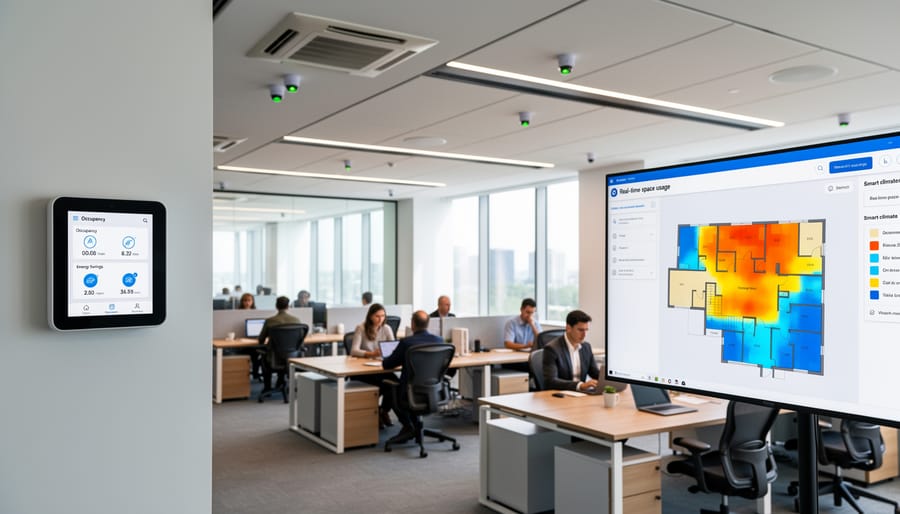
Smart occupancy sensors are transforming how property managers control utility costs, particularly in commercial buildings and multi-unit residential properties. By tracking real-time occupancy patterns, smart building technology enables dynamic adjustments to HVAC systems and lighting based on actual usage rather than fixed schedules.
Consider a typical office building where conference rooms sit empty 40% of the workday. Traditional systems heat, cool, and illuminate these spaces regardless of occupancy. Smart systems automatically reduce HVAC output and dim or shut off lights in unoccupied areas, cutting energy consumption by 20-30% in well-implemented installations.
The financial impact extends beyond monthly utility bills. Lower energy usage reduces wear on mechanical systems, decreasing maintenance costs and extending equipment lifespan. This matters significantly for property insurance considerations, as well-maintained buildings with modern control systems often qualify for lower premiums due to reduced risk profiles.
For property managers juggling tight budgets, the return on investment typically materializes within 18-24 months, with ongoing savings improving net operating income and ultimately property valuations.
Strategic Space Reconfiguration
Property analytics platforms can identify underutilized spaces that drain resources without generating returns. By tracking foot traffic patterns, occupancy rates, and usage frequency, property managers uncover hidden opportunities within their portfolios. That rarely-used conference room on the third floor? Analytics might reveal it sits empty 80% of the time, making it a prime candidate for transformation into co-working spaces or storage units that command monthly fees.
Heat mapping technology shows exactly where tenants congregate and which corridors remain ghost towns. These insights drive strategic decisions about converting low-value square footage into amenities that boost property valuations and tenant retention. Some property managers have successfully transformed underperforming retail corners into package lockers or fitness centers, directly increasing net operating income.
The financial implications are substantial. Repurposing just 500 square feet of dead space into revenue-generating use can add thousands annually to your bottom line while potentially reducing insurance costs through improved space utilization. Smart reconfiguration backed by data creates tangible ROI, turning liabilities into assets without major construction investments.
Preventive Maintenance Scheduling
Smart property managers are moving away from calendar-based maintenance schedules in favor of condition-based approaches driven by actual usage data. Instead of replacing HVAC filters every three months regardless of need, PropTech sensors can monitor airflow efficiency and alert you when replacement is actually necessary. This shift from arbitrary timelines to data-driven scheduling can reduce maintenance costs by 15-30% while extending equipment lifespan.
IoT sensors track everything from elevator usage patterns to foot traffic in common areas, providing concrete insights into wear and tear. For example, if your commercial property’s parking garage sees significantly heavier use on certain floors, you can prioritize resurfacing efforts where they’re genuinely needed rather than following a building-wide rotation schedule. This targeted approach not only saves money but also helps you avoid premature maintenance that ties up capital unnecessarily.
From an insurance perspective, documented preventive maintenance based on real usage data strengthens your position during claims and may qualify you for premium reductions. Many insurers now recognize that sensor-driven maintenance programs reduce risk more effectively than traditional scheduled approaches, translating directly to your bottom line.
Informed Lease Negotiations and Pricing
Real-time occupancy data transforms lease negotiations from guesswork into strategic planning. When you can demonstrate consistent 95% occupancy rates during peak seasons or show foot traffic patterns across different property zones, you’re equipped with powerful evidence to justify premium pricing.
Property managers using occupancy analytics can segment spaces by performance metrics. High-traffic retail corners or office suites near amenities naturally command higher rates when backed by concrete utilization data. This approach works particularly well in mixed-use developments where space valuation varies significantly.
Data-driven pricing also protects your bottom line during negotiations. When tenants request rent reductions, you can reference comparative occupancy metrics and market demand indicators rather than relying on intuition. This evidence-based approach maintains profitability while fostering transparent landlord-tenant relationships.
Consider implementing dynamic pricing models similar to hospitality industry practices. Flexible workspace operators already leverage occupancy insights to adjust hourly rates based on demand patterns. Even traditional lease structures benefit from understanding seasonal fluctuations and usage trends when setting renewal terms.
The financial benefit extends beyond individual leases. Aggregated occupancy data helps underwriters assess property performance more accurately, potentially improving insurance premiums and financing terms. When your properties demonstrate optimized space utilization through verifiable metrics, lenders and insurers recognize reduced risk, translating directly into better financial arrangements for your portfolio.
Integration With Your Existing Property Management Systems
Implementing new property management technology doesn’t mean abandoning your current systems overnight. Most modern PropTech solutions are designed with integration in mind, offering API connections and data migration tools that work seamlessly with popular platforms like Yardi, AppFolio, and Buildium. The key is selecting solutions that complement rather than complicate your existing workflow.
A typical implementation timeline ranges from 4-8 weeks for basic integrations to 3-6 months for comprehensive system overhauls. During this transition, expect an initial learning curve as your team adapts to new interfaces and processes. Smart property managers phase in features gradually, starting with high-impact areas like automated rent collection or maintenance tracking before expanding to more complex functions.
The financial aspect of technology upgrades often creates hesitation, but several financing options make the transition more manageable. Many PropTech vendors offer subscription-based pricing models that spread costs over time rather than requiring substantial upfront capital. This approach transforms technology from a capital expenditure into a predictable operational cost, making budgeting more straightforward. Some providers also offer performance-based pricing, where fees align with the value generated through efficiency gains or increased revenue.
For property managers concerned about ROI, consider leveraging equipment financing or technology loans specifically designed for business software investments. These financing structures typically offer terms of 24-36 months with competitive interest rates, allowing you to preserve working capital while accessing cutting-edge real estate finance tools.
Before committing to any platform, request a pilot program or trial period. This hands-on experience reveals compatibility issues early and helps your team identify potential workflow improvements. Additionally, ensure your vendor provides comprehensive training and ongoing support, as these resources significantly impact successful adoption and long-term value realization.
Insurance and Risk Management Benefits You’re Probably Missing
Your property’s occupancy data isn’t just a management tool—it’s a goldmine for optimizing insurance costs and managing risk exposure. Most property managers overlook this connection, but the data you’re already collecting through PropTech systems can translate directly into insurance savings and better coverage strategies.
Insurance carriers are increasingly willing to adjust premiums based on demonstrated risk mitigation efforts. When you can present concrete occupancy analytics showing consistent monitoring, reduced vacancy periods, and documented usage patterns, you’re building a compelling case for lower rates. For example, properties using smart sensors to track occupancy can demonstrate 24/7 monitoring capabilities, which insurers view as a significant risk reducer for everything from liability claims to property damage.
Think about liability protection specifically. If an incident occurs on your property, detailed occupancy logs become crucial evidence. Time-stamped data showing who accessed the building and when can support or refute claims, potentially saving thousands in disputed settlements. This documentation also helps during policy renewals when carriers assess your claims history and risk profile.
Beyond premium reductions, occupancy analytics help you right-size your coverage. Why pay for full occupancy insurance during periods when sections of your building sit consistently empty? Usage data allows you to adjust coverage dynamically, ensuring you’re protected when needed without overpaying during low-occupancy periods.
The key is communicating this data effectively to your insurance broker. Present quarterly reports showing occupancy trends, security monitoring consistency, and any risk reduction measures you’ve implemented based on the analytics. This proactive approach positions you as a lower-risk client worthy of preferential rates—turning your PropTech investment into tangible insurance savings while strengthening your overall risk management strategy.
Choosing the Right Analytics Solution for Your Property Type
Selecting the right analytics platform requires careful alignment with your specific property portfolio and operational objectives. Before evaluating AI and PropTech solutions, start by defining your baseline needs. A 50-unit residential building has vastly different requirements than a 500,000-square-foot commercial complex or a mixed-use development combining retail and residential spaces.
For residential properties under 100 units, look for solutions offering tenant screening automation, maintenance tracking, and basic financial reporting. Mid-sized portfolios (100-500 units) benefit from platforms with lease management, automated rent collection, and predictive maintenance capabilities that identify equipment failures before they become costly emergencies. Large-scale commercial or mixed-use properties require enterprise-level systems with advanced financial modeling, CAM reconciliation tools, and multi-property dashboards.
When evaluating vendors, ask these critical questions: What is the total cost of ownership, including implementation, training, and ongoing support? How does the platform integrate with your existing accounting software and insurance management systems? What security certifications does the vendor hold to protect sensitive tenant and financial data? Can you access real-time data through mobile devices? Most importantly, request case studies from properties similar to yours in size and type.
Red flags include vendors unwilling to provide transparent pricing structures, those lacking responsive customer support during the trial period, or platforms requiring extensive customization before basic functionality works. Avoid solutions with rigid contracts preventing you from switching providers if performance doesn’t meet expectations. Be wary of feature overload; paying for capabilities you’ll never use erodes ROI.
Request a 30-60 day trial period with actual property data rather than demo scenarios. This hands-on evaluation reveals whether the platform genuinely simplifies workflows or adds complexity. Remember, the best analytics solution isn’t necessarily the most sophisticated but rather the one that addresses your specific operational challenges while delivering measurable improvements to your bottom line.
At the end of the day, optimizing your property management isn’t about jumping on the latest technology bandwagon or installing flashy software because everyone else is doing it. It’s about making smarter, data-driven financial decisions that directly impact your bottom line. The properties generating the highest returns aren’t necessarily the ones with the most square footage or the prime locations—they’re the ones where every square foot is working hard to generate revenue.
Space optimization analytics give you the financial clarity that gut feelings and traditional management approaches simply can’t match. When you understand exactly how your property is being utilized, you can make informed decisions about lease negotiations, renovation investments, amenity allocations, and operational budgets. These insights translate into tangible financial outcomes: reduced vacancy costs, optimized insurance premiums based on actual usage patterns, improved tenant retention, and maximized revenue per square foot.
The beauty of this approach is that you don’t need to overhaul your entire operation overnight. Start small and build momentum. Take action today by conducting a thorough audit of your current space utilization. Walk through your properties with fresh eyes, review your occupancy data, and ask yourself: Where are we losing money due to underutilized space? Which areas could generate more revenue with better optimization? Identify just one area where better analytics could make an immediate impact on your profitability. That single improvement might be the catalyst that transforms your entire property management approach and sets you apart in an increasingly competitive market.