
Community development real estate transforms distressed neighborhoods into thriving economic hubs, but traditional lenders often reject these projects due to perceived higher risks and lower profit margins. The disconnect between conventional financing requirements and the reality of socially-conscious development creates a critical gap that specialized financing solutions must fill.
Real estate professionals entering this space face a unique challenge: projects that serve lower-income communities, create affordable housing, or revitalize underserved areas rarely fit standard underwriting criteria. Banks typically require market-rate returns and conservative loan-to-value ratios that make community-focused projects financially unfeasible under conventional terms.
This financing gap has sparked innovative solutions specifically designed for community development initiatives. Community Development Financial Institutions (CDFIs), New Markets Tax Credits, Low-Income Housing Tax Credits, and impact investment funds now provide capital structures that account for both financial returns and social outcomes. These mechanisms recognize that community development projects generate value beyond traditional metrics—reducing vacancy rates, stabilizing property values, creating jobs, and improving neighborhood quality of life.
Understanding these alternative financing pathways is no longer optional for real estate professionals working in urban revitalization, affordable housing development, or mixed-use community projects. The community development sector represents billions in annual investment, supported by federal incentives, private capital seeking impact investments, and local governments prioritizing neighborhood transformation.
The following framework breaks down the primary community-based financing solutions available today, detailing eligibility requirements, application processes, and strategic considerations that determine project viability. Whether you’re developing your first affordable housing complex or expanding a portfolio of community-serving properties, mastering these financing tools separates successful community developers from those who remain stuck in the planning phase.
What Community Development Real Estate Actually Means
The Triple Bottom Line: People, Planet, Profit
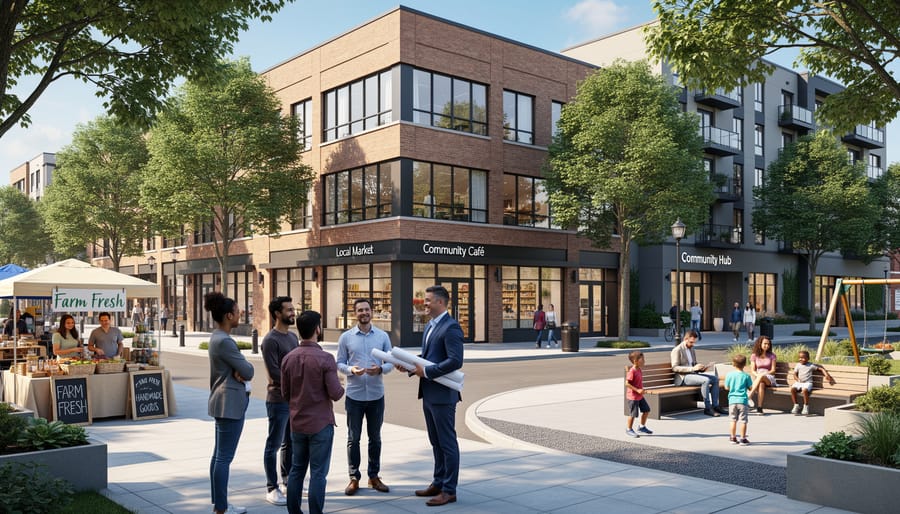
Community development real estate succeeds by achieving what industry experts call the triple bottom line: creating positive outcomes for people, planet, and profit simultaneously. Unlike traditional real estate projects that prioritize financial returns above all else, these developments weave together three equally important objectives.
The “people” component focuses on social impact. This means creating affordable housing that working families can actually afford, developing commercial spaces for local entrepreneurs, or building community centers that serve as gathering places. Projects might include job training programs during construction, hiring from the local community, or providing services like childcare and healthcare within the development itself.
Environmental sustainability forms the “planet” pillar. Community development projects increasingly incorporate green building practices, energy-efficient systems, and sustainable materials. These features not only reduce environmental impact but also lower utility costs for residents and business owners, making affordability more achievable long-term. Think solar panels, rainwater collection systems, and transit-oriented designs that reduce car dependency.
The “profit” element ensures financial viability. Here’s the reality: even mission-driven projects need to generate returns to attract investors and remain sustainable. The difference lies in accepting below-market returns in exchange for measurable social and environmental benefits. Patient capital from community development financial institutions, impact investors, and government programs makes this balance possible by prioritizing long-term community wealth building over short-term profit maximization. This integrated approach proves that doing good and doing well aren’t mutually exclusive in real estate development.
Real Examples That Show the Concept in Action
Let’s look at three projects that demonstrate how community development real estate transforms neighborhoods through innovative community financing models and strategic investment.
The Via Verde project in the South Bronx stands as a prime example of mixed-use community development. This LEED Gold-certified complex combines 222 affordable housing units with medical facilities, a fitness center, and green spaces. Financed through a combination of tax-exempt bonds, low-income housing tax credits, and community development financial institution loans, the project revitalized a previously vacant lot while keeping 60% of units affordable for households earning less than $51,000 annually. The financing structure allowed developers to maintain affordability while delivering amenities typically found in market-rate properties.
In Portland, Oregon, the Rosewood Initiative transformed a struggling neighborhood through a comprehensive community center development. Rather than focusing solely on bricks and mortar, this project leveraged community development block grants and New Markets Tax Credits to create a 15,000-square-foot facility offering educational programs, health services, and small business incubators. The financing strategy incorporated patient capital from mission-driven investors willing to accept below-market returns in exchange for measurable community impact, demonstrating how flexible financing terms can prioritize social outcomes.
Finally, the Park DuValle neighborhood redevelopment in Louisville showcased large-scale transformation. This initiative replaced aging public housing with 1,000 mixed-income units, retail spaces, and parks. By layering multiple financing sources including HOPE VI grants, private equity, and municipal bonds, developers created a sustainable community that serves diverse income levels while maintaining long-term affordability covenants.
Why Traditional Financing Falls Short for Community Projects

The Risk-Return Mismatch Banks See
Traditional lenders often view community development real estate projects through a risk lens that doesn’t align with the actual long-term performance of these investments. Here’s the disconnect: banks typically evaluate projects using conventional underwriting standards designed for market-rate properties, and community developments frequently don’t fit neatly into these established boxes.
The primary concern centers on perceived market weakness. Community development projects often target underserved neighborhoods or populations with lower median incomes, which triggers red flags in traditional risk assessment models. Banks see limited comparable sales data, lower property values, and borrower profiles that may not meet standard debt-to-income ratios. On paper, these factors suggest higher default risk.
However, this assessment misses critical nuances. Community development projects often demonstrate remarkable stability because they’re backed by mission-driven organizations with strong community ties and diverse funding streams. Many include built-in support systems like financial counseling for homebuyers or property management assistance that actually reduce default risk. Additionally, these projects frequently benefit from government guarantees, tax credits, and grants that provide cushions against market volatility.
The irony is striking: while banks classify community developments as risky, data from community development financial institutions shows default rates comparable to or sometimes better than conventional projects. The stability comes from intentional design, community investment, and layered financing structures. Traditional lenders simply lack the specialized expertise to properly evaluate these non-traditional strengths, creating a risk-return mismatch that leaves viable projects unfunded and communities underserved.
When Lower Returns Serve Higher Purposes
Community development real estate operates on a different value proposition than conventional property investments. While traditional projects might target double-digit returns, community development initiatives often deliver single-digit financial yields—typically ranging from 2% to 8% annually. This gap exists by design, not by accident.
The modest financial returns reflect intentional trade-offs that prioritize social impact. A mixed-income housing project might accept lower rents to ensure affordability for working families, or a community health center development might involve below-market lease rates to support local healthcare access. Traditional financial models would reject these deals outright, viewing them as underperforming assets.
However, this perspective misses the bigger picture. Community development projects generate substantial social returns that balance sheets don’t capture: reduced crime rates, improved educational outcomes, stronger neighborhood cohesion, and increased economic mobility. These benefits create long-term value for entire communities, even if they don’t directly boost investor profits in the short term.
For real estate professionals considering these projects, understanding this dual-return framework is essential. Success requires partners who recognize that a 5% financial return paired with measurable community transformation often serves higher purposes than a 12% return in a market already saturated with capital. Community development financing tools like New Markets Tax Credits and Community Reinvestment Act-motivated loans exist precisely to bridge this gap, compensating for lower commercial returns while unlocking significant social dividends that benefit society broadly.
Community-Based Financing Solutions That Actually Work
Community Development Financial Institutions (CDFIs)
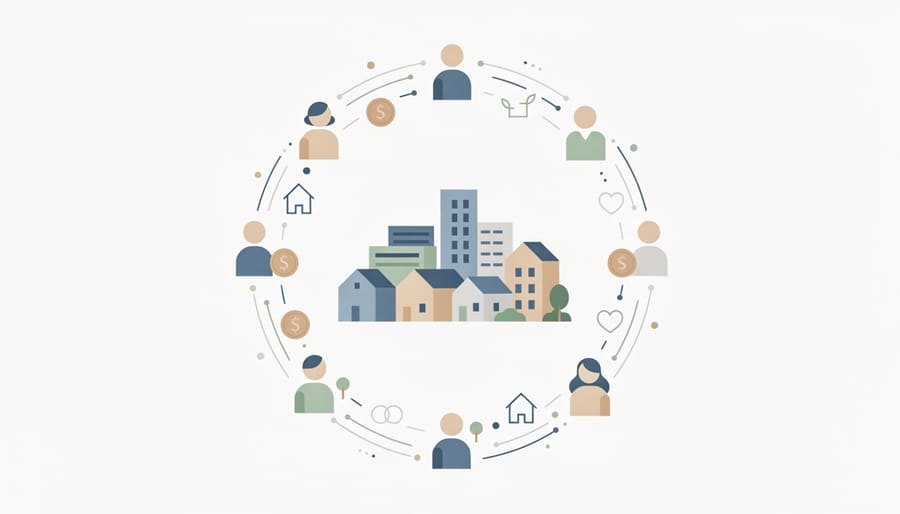
Community Development Financial Institutions, or CDFIs, serve as specialized lenders dedicated to financing projects that traditional banks often overlook. These mission-driven organizations bridge the gap between community needs and capital availability, making them essential partners for community development real estate projects.
At their core, CDFIs are private financial institutions certified by the U.S. Department of Treasury that focus on underserved markets and populations. Unlike conventional lenders who prioritize maximum returns, CDFIs balance financial sustainability with social impact. They provide loans, investments, and financial services to individuals and organizations in economically distressed areas where traditional financing remains elusive.
How do they operate? CDFIs pool capital from various sources including government programs, philanthropic foundations, socially-conscious investors, and deposits from individuals who want their money to create positive change. This diverse funding base allows them to offer more flexible terms than typical commercial lenders. Many CDFIs also provide technical assistance and capacity-building support, helping borrowers succeed beyond just providing capital.
Their lending criteria reflect this dual mission. While CDFIs certainly evaluate creditworthiness and project feasibility, they also assess community impact. A proposed affordable housing development that creates jobs and stabilizes a neighborhood might secure financing even with unconventional collateral or limited borrower credit history. CDFIs typically look at character, capacity, and community benefit alongside traditional financial metrics.
For community development real estate projects, CDFIs represent ideal financing partners because they understand the unique challenges these ventures face. They recognize that patient capital and relationship-based lending often prove more valuable than purely transactional approaches. Their willingness to structure creative financing solutions, including subordinated debt and longer amortization periods, makes previously impossible projects financially viable while advancing meaningful community transformation.
Crowdfunding and Community Investment Platforms
Real estate crowdfunding has revolutionized how communities can directly participate in local development projects. Through online platforms, residents can invest as little as $500 to $1,000 in neighborhood initiatives, from affordable housing complexes to mixed-use developments that serve community needs. This democratization of real estate investment creates a powerful alignment between financial returns and social impact.
The regulatory landscape varies significantly by jurisdiction. In the United States, platforms typically operate under SEC regulations like Regulation Crowdfunding or Regulation A+, which dictate investment limits based on investor income and net worth. In Canada, similar frameworks exist through provincial securities commissions, often requiring investors to meet certain accreditation standards or limiting investment amounts for non-accredited participants.
Success factors for community-focused crowdfunding campaigns include transparent communication about both financial projections and social outcomes, local partnerships with trusted community organizations, and competitive returns that reflect project risks. Projects that clearly demonstrate community benefit while maintaining financial viability tend to attract stronger investor interest. Additionally, platforms specializing in community development often provide educational resources and due diligence reports, helping everyday investors make informed decisions.
The insurance considerations are equally important. Projects must carry adequate liability coverage, and platforms should verify proper developer insurance to protect investor capital. This combination of accessible investment opportunities, appropriate regulatory safeguards, and risk management strategies makes crowdfunding an increasingly viable tool for community development financing.
New Markets Tax Credits and Tax Incentive Programs
Tax incentive programs have emerged as powerful catalysts for community development real estate, with the New Markets Tax Credit (NMTC) leading the charge. Created in 2000, the NMTC program offers investors a 39% federal tax credit over seven years for qualified equity investments in designated low-income communities. This translates to real dollars for developers: a $10 million investment generates approximately $3.9 million in tax credits, significantly reducing project costs.
Here’s how it works in practice. The Community Development Entity (CDE) receives the investment, then deploys that capital into qualifying projects like affordable housing, community facilities, or commercial developments in census tracts meeting specific poverty or income criteria. The beauty of NMTCs lies in their flexibility—they can be layered with other financing tools, including traditional loans and historic tax credits, creating robust capital stacks for complex projects.
For real estate professionals, accessing these credits requires strategic planning. Start by identifying CDEs operating in your target market, as they serve as intermediaries between investors and projects. Your development must demonstrate measurable community impact, from job creation to improved access to essential services. Documentation is critical—maintain detailed records showing how the project meets distressed community thresholds.
Beyond NMTCs, state-level programs like Opportunity Zones offer capital gains tax deferrals and potential exemptions for long-term investments in economically distressed areas. These programs work best when you understand both the compliance requirements and the genuine community benefits your project delivers, creating a win-win scenario for investors and residents alike.
Community Land Trusts and Shared Equity Models
Community Land Trusts (CLTs) and shared equity models represent innovative approaches to keeping housing affordable across generations while simultaneously building community wealth. Unlike traditional ownership where property values can price out long-term residents, these structures separate land ownership from building ownership, creating a powerful affordability mechanism.
In a CLT, a nonprofit organization holds land in perpetual trust while homeowners purchase only the buildings. When homeowners sell, they receive a fair return on their investment, but the resale price is capped using a formula that maintains affordability for the next buyer. This arrangement typically allows homeowners to capture about 25-35% of appreciation, ensuring they build equity without pricing out future community members.
Shared equity models work similarly but with more variation. Limited equity cooperatives, deed-restricted properties, and shared appreciation mortgages all balance individual wealth building with community stability. These structures often make financing easier too, as they reduce default risk through lower purchase prices and built-in community support networks.
From a real estate professional’s perspective, these models require different underwriting approaches. Lenders must evaluate both the restricted resale value and the community organization’s strength. Title insurance considerations also shift since the land trust maintains certain rights. However, default rates on CLT properties run significantly lower than traditional mortgages, approximately 50% below conventional loans, making them attractive to mission-driven lenders and impact investors seeking stable returns alongside social benefits.
How to Structure a Community-Based Real Estate Deal
Layering Multiple Funding Sources
Community development real estate projects rarely succeed with a single funding source. Instead, developers must master the art of layering multiple financing mechanisms to create what’s known as a capital stack—the strategic combination of various funding types that together make a project financially viable.
Think of it like building a financial layer cake. At the base, you typically have senior debt—conventional loans or bonds that get repaid first but carry lower interest rates. Above that sits subordinate debt, which accepts higher risk in exchange for better returns. The middle layers often include tax credits, such as Low-Income Housing Tax Credits or New Markets Tax Credits, which provide significant equity through investor partnerships. Near the top, you’ll find grants from government agencies or foundations that don’t require repayment. Finally, the developer’s equity contribution caps the stack.
This approach to funding without traditional banks addresses a fundamental challenge: community development projects often generate lower market-rate returns, making them unattractive to conventional lenders. By blending patient capital (grants and below-market loans) with market-rate financing, developers can bridge the viability gap.
For example, a mixed-use affordable housing project might combine: 30% senior bank debt, 25% tax credit equity, 20% subordinate loans from a community development financial institution, 15% state housing trust fund grants, and 10% developer equity. Each source fills a specific role, and removing any layer could topple the entire structure.
Successfully layering these sources requires understanding each funder’s priorities, timing requirements, and restrictions. Tax credit investors want proven track records. Grant makers demand measurable community impact. Traditional lenders require solid collateral. Aligning these diverse expectations is both art and science, requiring patience, creativity, and deep relationship-building across the financing ecosystem.
Documentation and Compliance Requirements You Can’t Ignore
Community development real estate projects come with a unique set of documentation requirements that go well beyond traditional commercial deals. Understanding these compliance obligations upfront can save you significant headaches and potential legal exposure down the road.
First and foremost, you’ll need to familiarize yourself with Community Reinvestment Act (CRA) documentation if you’re working with traditional lenders. Banks receive CRA credits for investing in qualifying projects, but this means meticulous record-keeping of how your development benefits low-to-moderate income communities. You’ll need demographic data, impact assessments, and detailed project descriptions that demonstrate genuine community benefit.
For projects utilizing New Markets Tax Credits (NMTC) or Low-Income Housing Tax Credits (LIHTC), prepare for extensive compliance monitoring that extends years beyond project completion. NMTC investments require quarterly reporting, annual certification of qualified business activities, and seven-year compliance periods. LIHTC properties face even longer oversight, typically 15 years minimum, with annual income certifications for tenants and regular property inspections.
Environmental reviews under the National Environmental Policy Act (NEPA) are often required when federal funds are involved, even indirectly. This includes Phase I and sometimes Phase II environmental assessments, historical preservation reviews, and community impact studies.
Don’t overlook fair housing compliance documentation. Community development projects receiving public funding must demonstrate adherence to Fair Housing Act requirements, including affirmative marketing plans and tenant selection procedures that promote equal access.
Securities regulations also apply when raising capital through community investment vehicles. If you’re offering investment opportunities to community members, consult with securities attorneys to ensure proper registration or exemption documentation under federal and state laws. Crowdfunding platforms, while increasingly popular, still require compliance with SEC regulations and proper disclosure documents that protect both you and your investors.
The Real Estate Professional’s Role in Community Development
Building Partnerships That Create Value
Success in community development real estate hinges on building authentic relationships with specialized partners who understand both real estate fundamentals and community impact goals. Community Development Financial Institutions (CDFIs) serve as crucial allies, offering patient capital and expertise that traditional lenders often can’t provide. These mission-driven organizations evaluate projects through a dual lens of financial viability and community benefit, making them ideal partners for developments addressing affordable housing, job creation, or neighborhood revitalization.
Nonprofit developers bring invaluable local knowledge and established trust within communities. They’ve navigated regulatory challenges, secured tax credits, and built relationships with residents whose input shapes project success. Partnering with these organizations can streamline permitting processes and ensure developments meet genuine community needs rather than perceived market demands.
Community organizations, including neighborhood associations and advocacy groups, shouldn’t be afterthoughts in your development strategy. Early engagement helps identify priorities, anticipate concerns, and build support that can make or break project approvals. These partnerships also unlock community-powered real estate solutions like crowdfunding or community land trusts.
Start by attending local housing coalition meetings, connecting with your regional CDFI network, and scheduling coffee meetings with nonprofit developers active in your target areas. These conversations create foundations for collaborative deals that generate both returns and lasting community value.
Skills and Knowledge That Set You Apart
Success in community development real estate requires a unique blend of traditional real estate acumen and specialized knowledge. Beyond standard property valuation and market analysis skills, professionals need deep expertise in navigating complex regulatory frameworks, particularly those governing community development financial institutions (CDFIs), low-income housing tax credits, and opportunity zones.
Understanding creative financing structures is essential. You’ll need to master how to layer multiple funding sources—think blending New Markets Tax Credits with traditional bank loans, philanthropic capital, and grant funding. This financial engineering requires fluency in public-private partnerships and the ability to demonstrate both social impact metrics and financial returns to diverse stakeholder groups.
Strong relationship-building skills prove invaluable, as these projects demand coordination among government agencies, nonprofit organizations, private investors, and community members. You’ll also benefit from knowledge of insurance strategies that protect both the physical investment and the social mission—including coverage considerations for mixed-use developments and community facilities.
Finally, impact measurement expertise sets top performers apart. Successful professionals can quantify community benefits through metrics like job creation, affordable housing units delivered, and neighborhood revitalization indicators. This data-driven approach helps secure funding and demonstrates accountability to all stakeholders invested in the project’s success.
The Financial Returns and Risks You Need to Understand
Let’s be clear from the start: community development real estate investments operate on a different financial paradigm than traditional commercial properties. If you’re expecting double-digit returns in the first few years, you’ll need to recalibrate your expectations. These projects typically deliver returns in the 5-8% range initially, with potential for appreciation as neighborhoods revitalize over time.
The financial profile here reflects a trade-off between social impact and immediate profitability. Development costs often run higher due to environmental remediation, code compliance in older buildings, or infrastructure improvements in underserved areas. Meanwhile, rental income may start lower than market-rate properties, especially when prioritizing affordable housing components. You’re essentially accepting compressed margins in exchange for community impact and long-term value creation.
However, this doesn’t mean you’re flying blind financially. Several risk mitigation strategies can stabilize your investment. First, diversification across multiple community projects spreads your exposure beyond a single neighborhood’s economic trajectory. Consider partnering with experienced community development corporations who understand local dynamics and have established relationships with residents and municipal agencies.
Layered financing structures also cushion risk. By combining low-interest government loans, tax credit equity, and conventional debt, you reduce the cost of capital and create built-in safety nets. New Markets Tax Credits and Historic Tax Credits can significantly improve project economics while serving community goals.
Insurance considerations deserve special attention in these investments. Standard property policies may not adequately cover unique risks associated with community development projects. You’ll want coverage that addresses potential construction delays in economically distressed areas, liability protection for community engagement activities, and builders risk insurance that accounts for projects in neighborhoods with higher crime statistics. Some insurers now offer specialized community development property policies that bundle these protections at more favorable rates than piecing together individual coverages.
Environmental insurance becomes particularly relevant when redeveloping brownfield sites or older industrial properties common in community development work. Pollution liability coverage protects against unexpected contamination discoveries that could derail project timelines and budgets.
The reality is that patient capital performs best here. Investors who maintain a 7-10 year hold period typically see the most favorable outcomes, as neighborhood improvements compound and rental income stabilizes. Exit strategies should account for potential sales to mission-aligned buyers or conversion to community ownership models, which may take longer to execute but often yield premium valuations from motivated purchasers committed to continuing the community impact mission.
Community development real estate stands at a pivotal intersection where financial viability meets meaningful social impact, and the financing solutions supporting this sector have matured into sophisticated mechanisms that serve both purposes remarkably well. As we’ve explored throughout this discussion, traditional lending often falls short in addressing the unique needs of projects that prioritize community benefit alongside returns, but community-based financing solutions have emerged to fill this critical gap.
The growth trajectory of this sector tells an encouraging story. Community Development Financial Institutions (CDFIs) now manage billions in assets, New Markets Tax Credits continue to channel private investment into underserved areas, and social impact bonds are proving that measurable community outcomes can attract serious capital. These aren’t just feel-good programs—they’re legitimate financial instruments delivering competitive returns while simultaneously revitalizing neighborhoods, creating affordable housing, and supporting local businesses.
For real estate professionals, the implications are clear: community development financing represents both opportunity and responsibility. The sector offers access to patient capital, favorable terms, and risk-sharing arrangements that make challenging projects viable. More importantly, it provides a framework for building developments that strengthen rather than displace communities, creating long-term value that extends beyond property appreciation.
Looking ahead, the importance of community-based financing will only intensify. As income inequality widens and affordable housing shortages persist in markets nationwide, the demand for development that serves broader social purposes continues growing. Real estate professionals who understand these financing mechanisms position themselves at the forefront of an expanding market while contributing to lasting community transformation. The question isn’t whether to engage with community development real estate, but how quickly you can integrate these strategies into your practice.