
Picture a homeowner filing a property damage claim, uploading photos of their damaged roof, and receiving an accurate assessment within minutes rather than days. That’s the reality artificial intelligence is creating in damage detection today. This technology analyzes images of property damage using sophisticated algorithms trained on millions of examples, identifying everything from hail-damaged shingles to water-stained drywall with remarkable precision.
For real estate professionals and homeowners, AI damage detection represents a fundamental shift in how insurance claims are processed and verified. The technology slashes assessment times from weeks to hours while simultaneously catching fraudulent claims that cost honest policyholders an estimated $80 billion annually in the United States alone. Insurance fraud drives up premiums for everyone, but AI systems are proving remarkably effective at identifying inconsistencies, exaggerated claims, and staged damage scenarios that human adjusters might miss.
Beyond fraud prevention, this technology delivers tangible benefits: faster claims processing means quicker repairs and reduced property depreciation, more accurate assessments eliminate disputes over damage extent, and reduced operational costs for insurers can translate into lower premiums. Understanding how AI damage detection works and what it means for your property transactions isn’t just about staying current with technology. It’s about recognizing how this innovation directly impacts your bottom line, whether you’re managing investment properties, buying your first home, or advising clients through complex real estate transactions.
What AI Damage Detection Actually Means for Insurance Claims
The Technology Behind the Curtain
At its core, AI damage detection relies on three interconnected technologies working together like a highly trained inspection team. Think of it as giving a computer the ability to see, learn, and recognize patterns the way an experienced property assessor would after years in the field.
Computer vision serves as the system’s eyes. This technology enables AI to analyze photos and videos of damaged property, identifying visual elements like cracks in foundations, water stains on ceilings, or hail damage on roofing materials. When you submit a claim photo of a damaged kitchen, computer vision breaks down that image into thousands of data points, examining textures, colors, and spatial relationships.
Neural networks function as the brain, mimicking how human neurons process information. These networks learn from analyzing millions of property damage images, gradually becoming more sophisticated at distinguishing between minor wear-and-tear and significant structural damage. For instance, a neural network trained on thousands of roof damage claims can quickly differentiate between normal aging and storm-related destruction.
Pattern recognition ties everything together by comparing current damage against historical data. If a homeowner submits photos of flood damage, the AI compares these images against its database of legitimate flood claims, flagging inconsistencies that might indicate fraud. This technology can spot subtle details human adjusters might miss, like identifying whether water damage patterns align with the claimed event timeline or suggest a pre-existing condition. Together, these technologies create a powerful tool that processes property damage assessments in minutes rather than days, benefiting both insurers and homeowners seeking faster claim resolutions.
From Photos to Decisions: The AI Assessment Process
The AI assessment process transforms simple smartphone photos into detailed damage reports through a sophisticated yet straightforward workflow. Here’s how it works in practice.
When you submit photos of property damage—say, hail damage to your roof or water stains on your ceiling—the AI system first processes the images to enhance clarity and identify the affected areas. Think of it as a highly trained inspector examining every pixel, but doing so in seconds rather than days.
Next, the system compares your damage against vast databases containing millions of reference images. For a cracked foundation, the AI analyzes the width, depth, and pattern of cracks, matching them against known structural issues. It considers factors like your property’s age, location-specific risks (earthquake zones, flood plains), and typical wear patterns versus actual damage requiring repairs.
The technology then generates a preliminary assessment, complete with severity ratings and estimated repair costs. For instance, minor roof shingle damage might be flagged as a Category 2 issue with a repair estimate based on local contractor rates, while extensive water damage could trigger immediate escalation to a human adjuster.
This automated analysis dramatically reduces claim processing times—often delivering initial assessments within 24-48 hours instead of weeks. The system also flags inconsistencies that might indicate fraud, such as pre-existing damage or artificially inflated claims, protecting both insurers and honest policyholders from increased premiums.
For straightforward claims, AI can provide final assessments independently. Complex scenarios still require human expertise, but the AI groundwork ensures adjusters arrive fully briefed and ready to resolve your claim efficiently.
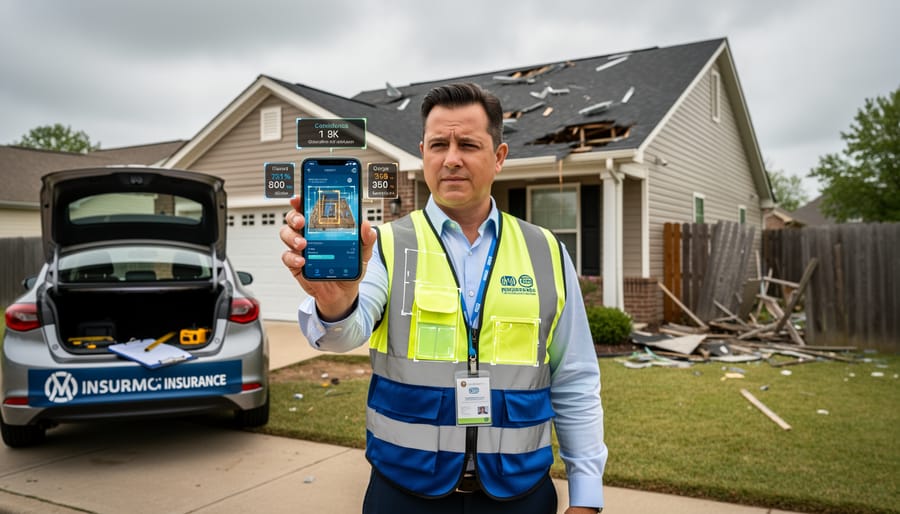
Why Insurance Fraud Is Becoming Harder to Pull Off
Spotting the Red Flags Humans Miss
AI systems excel at catching fraudulent patterns that might slip past even experienced insurance investigators. These sophisticated algorithms analyze damage claims with a level of detail and consistency that’s simply impossible for humans to maintain across thousands of cases.
One of AI’s strongest capabilities is detecting photo manipulation. The technology can identify when images have been digitally altered to make damage appear worse than it actually is. This includes spotting cloned areas where damage has been copy-pasted to multiple locations, inconsistent lighting that suggests tampering, or metadata discrepancies that reveal when photos were actually taken versus when they were supposedly captured.
AI also flags inconsistencies in damage documentation. For instance, if a homeowner claims wind damage from a specific storm but weather data shows no severe winds in that area on that date, the system raises an alert. Similarly, it can detect when damage patterns don’t match the claimed cause, such as water stains that appear too uniform to result from a natural leak.
Staged incidents often follow predictable patterns that AI recognizes. The technology can identify when damage appears intentionally created rather than accidental, based on factors like impact angles, material stress patterns, and the sequence of events described in the claim. By cross-referencing millions of legitimate claims, AI learns what authentic damage looks like versus fabricated scenarios designed to trigger payouts.

Real Cases: When AI Caught What Adjusters Couldn’t
AI systems have already proven their worth in real-world scenarios, catching fraudulent claims that might have otherwise slipped through traditional review processes. In one notable case from 2023, a major insurance carrier used AI damage detection to analyze photos from a water damage claim. While the initial human review appeared legitimate, the AI flagged inconsistencies in the moisture patterns and identified digital manipulation of the timestamp metadata. The claim, valued at $47,000, was flagged for investigation and ultimately denied.
Another compelling example involved roof damage claims following a major hailstorm. An AI system cross-referenced thousands of claims against weather data and satellite imagery, identifying 23 properties where the reported damage predated the storm by weeks or even months. These homeowners were attempting to use the natural disaster as cover for pre-existing wear and tear.
Perhaps most impressively, AI caught a sophisticated fraud ring operating across multiple states. The system detected identical damage patterns across seemingly unrelated claims, revealing a network of contractors staging damage and splitting payouts with property owners. This case alone saved insurers an estimated $2.3 million and led to criminal prosecutions.
What This Means for Homeowners and Property Investors
Faster Payouts When Disaster Strikes
Traditional insurance claims can drag on for weeks or even months, leaving property owners in financial limbo after damage occurs. AI damage detection is transforming this frustrating timeline into a matter of days or even hours.
Here’s how it works in real scenarios: When a storm tears shingles off your roof, you simply upload photos through your insurer’s app. AI algorithms instantly analyze the images, measuring the affected area, identifying material types, and calculating repair costs. What once required scheduling an adjuster’s visit, waiting for their report, and subsequent reviews now happens almost immediately.
For water damage cases, AI can distinguish between fresh incidents and pre-existing issues by analyzing moisture patterns and structural indicators in photographs. This precision eliminates the back-and-forth disputes that typically delay settlements. Fire damage assessments benefit similarly, with AI quickly categorizing burn severity and structural compromise across different areas of a property.
The speed advantage becomes crucial when disaster strikes and you need funds for temporary housing or emergency repairs. Some insurers now offer instant pre-approvals for straightforward claims, releasing initial payments within 24 hours. This rapid response not only reduces your financial stress but also prevents secondary damage that worsens when repairs are delayed, ultimately protecting your property’s long-term value.

More Accurate Damage Assessments Mean Fairer Claims
Traditional damage assessments rely heavily on human adjusters, who, despite their expertise, can introduce inconsistencies into the claims process. Personal biases, varying experience levels, and simple human error can lead to significant discrepancies in how similar damages are evaluated. AI damage detection technology changes this dynamic by applying consistent evaluation criteria across every single claim.
These sophisticated systems analyze thousands of data points simultaneously, comparing your property damage against vast databases of similar cases and repair costs. The result? You’re more likely to receive compensation that accurately reflects the actual cost of repairs, rather than an estimate influenced by subjective judgment calls. This is particularly valuable for real estate investors managing multiple properties, where consistent and fair assessments directly impact your bottom line.
The technology also reduces the risk of undervaluation, a common frustration among homeowners who feel their claims don’t fully cover their losses. By removing human bias from initial assessments, AI creates a more level playing field. Insurance carriers benefit from this accuracy too, as it helps prevent both overpayments and the costly disputes that arise from perceived unfairness. The outcome is a claims process that’s not just faster, but fundamentally fairer for everyone involved.
The Insurance Industry’s Shifting Landscape
Which Insurers Are Leading the AI Revolution
Major insurance carriers are embracing AI damage detection to streamline their claims processes and enhance accuracy for homeowners. Lemonade, a digital-first insurer, has pioneered the use of AI through its claims bot, which can process simple property damage claims in seconds. State Farm has integrated AI-powered photo analysis tools that help adjusters assess roof damage, hail impact, and water intrusion more efficiently. Liberty Mutual utilizes drone technology combined with AI algorithms to evaluate property damage in hard-to-reach areas, reducing assessment time from days to hours.
In the homeowners insurance space, Allstate has invested heavily in AI predictive analytics and computer vision systems to detect everything from wind damage to structural issues. Progressive has partnered with tech companies to develop mobile apps that allow policyholders to submit damage photos for instant preliminary assessments. These innovations benefit real estate professionals and homeowners by accelerating claim resolution times and providing more transparent, data-driven evaluations of property damage.
How This Could Impact Your Premiums
Here’s the bottom line: when insurers catch more fraudsters and process claims faster, everyone wins. AI damage detection directly tackles two major cost drivers in insurance—fraudulent claims and administrative overhead. When fraud decreases, insurers lose less money to fake or exaggerated claims. When claims processing becomes more efficient through automated assessments, operational costs drop significantly.
These savings create opportunities for insurers to lower premiums or slow rate increases. While the insurance industry moves cautiously on pricing adjustments, early adopters of AI technology have already reported potential savings of 10-20% on operational costs. As this technology becomes standard practice across the industry, competition among insurers should drive some of these savings toward policyholders.
For real estate investors and homeowners, this means more accurate property valuations and fairer premium calculations based on actual risk rather than inflated industry-wide losses from fraud. The technology also speeds up legitimate claims, reducing the financial strain when you need coverage most.
Privacy and Accuracy Concerns You Should Know About
When AI Gets It Wrong
No technology is perfect, and AI damage detection systems occasionally miss the mark. False positives happen when algorithms flag legitimate damage as suspicious or, conversely, when they fail to detect actual fraud patterns. These errors can stem from unusual lighting conditions in photos, non-standard repair methods, or damage scenarios the system hasn’t encountered before.
If your claim gets flagged incorrectly, don’t panic. Insurance companies maintain formal appeals processes specifically for disputed AI assessments. Start by requesting a human adjuster review with detailed documentation supporting your claim, including additional photos, contractor estimates, and receipts. Most insurers recognize that AI serves as a screening tool, not the final decision-maker.
From a real estate investment perspective, understanding this limitation matters. Property owners with unique architectural features or vintage homes may face more scrutiny since AI systems train primarily on conventional structures. Document your property’s pre-existing conditions thoroughly and maintain detailed maintenance records. This proactive approach streamlines the claims process and provides ammunition if an AI assessment goes sideways. Remember, the technology exists to protect honest policyholders by catching fraudsters, and legitimate claims ultimately receive approval once human expertise enters the equation.
Your Data and How It’s Being Used
When AI systems analyze property damage, they typically collect photos or videos you submit through your insurer’s app or portal. The technology examines these images for visible damage patterns, structural issues, and repair cost estimates. Most systems don’t store your personal information alongside the damage data, keeping your identity separate from the analysis process.
Insurance companies must comply with strict data protection regulations, meaning your images are encrypted during transmission and storage. Reputable insurers delete or anonymize this data after your claim is processed, though retention periods vary by provider. It’s worth asking your insurance company about their specific data handling practices, including how long they keep your photos and who has access to them.
The good news for homeowners and real estate investors is that AI damage detection often requires less personal information than traditional claims processes. You’re simply providing visual evidence of damage rather than detailed property histories or extensive documentation, streamlining the experience while maintaining your privacy.
What to Expect When Filing Your Next Claim
As AI damage detection becomes standard practice in insurance claims, understanding the process will help you navigate your next filing with confidence. Here’s what the experience typically looks like and how to prepare.
When you file a claim, expect a hybrid approach where AI handles the initial assessment while human adjusters oversee final decisions. You’ll likely receive faster preliminary responses—often within 24 to 48 hours instead of the traditional week-long wait. Some insurers now offer mobile apps that guide you through uploading photos directly, with AI providing real-time feedback on image quality and coverage.
Documentation remains crucial, even with advanced technology. Take comprehensive photos from multiple angles in good lighting, capturing both wide shots and close-ups of damage. Include reference objects like rulers or coins to show scale. AI systems work best with clear, high-resolution images, so avoid blurry or poorly lit photos. Don’t clean up damage before documenting it—AI algorithms are trained to assess original conditions.
When working with AI-assisted adjusters, communication stays important. While the technology handles initial damage assessment and cost estimation, adjusters review AI findings and consider factors the system might miss, like historical property issues or unique architectural features. Be prepared to answer follow-up questions and provide additional documentation if the AI flags inconsistencies or requires clarification.
Real estate professionals should inform clients about this evolving process during property transactions. Understanding that AI speeds up claims without eliminating human oversight helps set realistic expectations. The technology serves as a powerful tool for efficiency and accuracy, but your adjuster remains your advocate throughout the claims journey, ensuring fair treatment and appropriate compensation for legitimate damage.
AI damage detection represents a significant leap forward in how insurance companies handle property claims, delivering benefits that extend well beyond fraud prevention. For homeowners and real estate professionals, this technology translates into faster claim processing, more accurate damage assessments, and ultimately, a smoother experience during what’s often a stressful time. When claims are resolved efficiently and fairly, everyone wins—insurers can reduce costs associated with fraud and inflated claims, while property owners receive the support they need without unnecessary delays or disputes.
That said, it’s important to recognize that AI damage detection is still maturing. The technology continues to learn and improve, and human expertise remains essential for handling complex cases and edge scenarios. Insurance companies are investing heavily in refining these systems, addressing concerns about accuracy, and ensuring the technology complements rather than replaces the human judgment that’s crucial in the claims process.
Looking ahead, the future of property insurance claims appears increasingly streamlined and transparent. As AI systems become more sophisticated, we can expect even faster turnaround times, more personalized service, and potentially lower premiums as fraud rates decline. For homeowners and real estate investors, staying informed about these technological advances isn’t just about understanding how claims work—it’s about recognizing how innovation in the insurance sector can protect your property investments more effectively while making the entire experience considerably less painful when damage does occur.