
Every insurance claim you file generates dozens of data points—from photos of water damage to repair cost estimates—and artificial intelligence now analyzes this information in seconds rather than weeks. Insurance claims analytics uses machine learning algorithms to evaluate property damage, detect fraudulent patterns, and calculate fair settlements automatically, fundamentally changing how your homeowners or property insurance claims get processed.
For property owners and real estate professionals, this technology means receiving claim decisions in hours instead of days, with AI systems instantly comparing your roof damage against thousands of similar claims to determine accurate repair costs. The same algorithms that streamline legitimate claims also identify suspicious patterns—like multiple claims for the same type of damage or inflated contractor estimates—which ultimately helps keep premiums lower for honest policyholders by reducing fraud losses that insurers typically pass on to customers.
The shift toward data-driven claims processing brings tangible benefits: faster emergency housing arrangements after major damage, more accurate property valuations based on real-time market data, and transparent explanations of how settlement amounts get calculated. Understanding how insurers use predictive analytics, natural language processing, and computer vision to assess everything from storm damage photographs to contractor invoices helps you prepare better documentation when filing claims and sets realistic expectations for settlement timelines.
This guide breaks down exactly how AI transforms insurance claims from submission to payout, what data insurers actually examine, and how you can leverage this knowledge to navigate the claims process more effectively while protecting your property investments.
What Makes AI-Driven Insurance Claims Analytics Different
Traditional Claims Processing vs. AI-Enhanced Systems
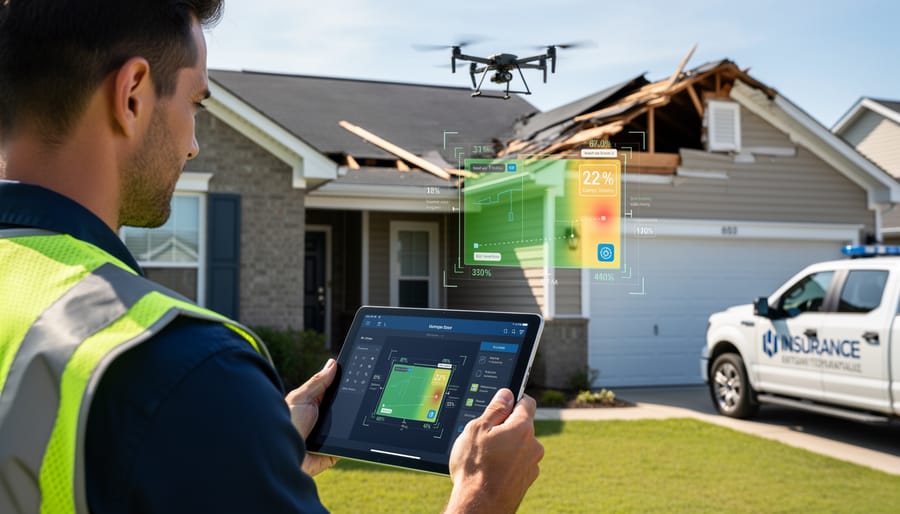
The difference between traditional and AI-enhanced claims processing is striking, particularly when you’re waiting to repair storm damage or file a water damage claim on your rental property.
Traditional systems typically require 15-30 days to process a standard property claim. An adjuster must schedule a site visit, manually review photos, cross-reference policy details, and compile reports—all while juggling dozens of other cases. This manual approach creates bottlenecks, especially during peak periods like hurricane season when thousands of claims flood the system simultaneously.
AI-enhanced systems compress these claim processing times to 3-7 days for straightforward property claims. Machine learning algorithms instantly analyze submitted photos, identify damage types, estimate repair costs using current market data, and flag potential issues—all within hours of submission. For real estate investors managing multiple properties, this speed difference directly impacts vacancy periods and cash flow.
Accuracy improvements are equally impressive. Traditional processing carries a 12-18% error rate in damage assessment, often requiring costly re-evaluations. AI systems reduce this to 4-6% by cross-referencing millions of historical claims and current construction costs.
The cost implications benefit everyone in the property ecosystem. Insurers processing claims 60% faster with fewer errors can reduce operational expenses by up to 40%, savings that increasingly translate to more competitive premiums for property owners. For a landlord with five rental properties, even a 5-10% premium reduction represents significant annual savings while maintaining comprehensive coverage.
The Core Technologies Behind the Transformation
Three powerful technologies are revolutionizing how insurance companies handle property claims, and understanding them helps you navigate the process more effectively.
Machine learning acts as the system’s brain, analyzing thousands of past claims to identify patterns. For example, when you file a water damage claim, machine learning algorithms instantly compare your situation against similar claims from homes in your area, predicting repair costs and processing timelines with remarkable accuracy. This means faster approvals and more precise settlements.
Natural language processing, or NLP, reads and understands your claim documents like a human would, but much faster. When you submit photos of hail damage to your roof or written descriptions of a break-in, NLP technology extracts key details automatically. No more waiting days for an adjuster to manually review every document.
Predictive analytics takes historical data and forecasts future outcomes. Insurance companies use this to assess risk factors specific to your property. If your neighborhood has experienced increased storm activity, predictive models help insurers prepare resources in advance and even alert homeowners to potential vulnerabilities before damage occurs. This proactive approach benefits everyone by reducing claim severity and keeping premiums more stable for conscientious property owners.
How AI Detects Fraud in Property Insurance Claims
Pattern Recognition That Humans Miss
Think of AI insurance analytics as a detective with a photographic memory of millions of claims. While a human adjuster might review 50-100 claims per month, AI systems simultaneously analyze thousands of data points across millions of historical claims to spot patterns that would be virtually impossible for humans to detect.
Here’s where it gets interesting for homeowners: AI doesn’t just look at the obvious red flags. It examines subtle correlations that reveal sophisticated fraud schemes. For instance, the system might notice that claims filed within 60 days of a policy purchase are statistically more likely to be fraudulent, or that certain contractors appear repeatedly in suspicious claims across different properties.
In one real-world example, AI identified a pattern where multiple water damage claims in a specific postal code all featured the same make and model of washing machine, occurring within similar timeframes. This led to the discovery of a coordinated fraud ring that human investigators hadn’t connected. This sophisticated insurance fraud detection protects honest policyholders by keeping premiums lower.
For legitimate claims, this pattern recognition works in your favor too. AI can quickly identify your claim as routine and low-risk, fast-tracking approval. It analyzes weather data, property characteristics, claims history, and repair costs simultaneously, determining within seconds whether your roof damage claim aligns with the storm that hit your neighborhood last Tuesday. This means faster processing and quicker payouts for straightforward claims.
Real-Time Risk Scoring for Property Damage Claims
When you file a property damage claim, AI-powered systems now evaluate your submission in seconds rather than days. These sophisticated algorithms analyze hundreds of data points simultaneously, creating a comprehensive risk score that determines how your claim will be processed.
Here’s how it works in practice: the moment your water damage claim lands in the system, AI examines the incident details, compares them against historical patterns, cross-references your policy history, and checks external databases for weather events or regional issues. Within moments, your claim receives a risk score, typically ranging from low to high risk.
Low-risk claims move through an express lane. If you’re reporting roof damage after a documented hailstorm in your area, and your claim details align with typical patterns for such events, you’ll likely receive approval and payment within days instead of weeks. This is a game-changer for homeowners facing urgent repairs.
The system flags higher-risk claims for human review rather than automatic denial. Red flags might include claim amounts significantly higher than similar incidents, suspicious timing patterns, or inconsistencies in the damage description. This protects honest policyholders by keeping premiums lower and deterring fraudulent activity that drives up costs for everyone.
For real estate professionals managing multiple properties, this technology means faster turnaround times for tenant-occupied units where delays can mean lost rental income. Property investors benefit from more predictable claim timelines, making it easier to budget for repairs and maintain cash flow.
The transparency advantage is significant too. Many insurers now provide preliminary risk assessments directly to policyholders, explaining what information strengthens their claim and what might trigger additional review. This allows you to submit more complete documentation upfront, further accelerating the process.
Speed and Efficiency Gains for Property Owners
From Weeks to Days: Accelerated Claim Resolution
Remember when filing an insurance claim meant weeks of phone calls, mountains of paperwork, and endless waiting? AI-powered analytics is changing that game dramatically, particularly for property claims that directly impact your living situation and financial security.
Take water damage claims, for instance. Traditional processing required schedulers to arrange adjuster visits, manual inspection reports, contractor estimates, and multiple approval layers—typically consuming 15 to 30 days. Today, AI systems analyze photos you upload from your smartphone, cross-reference them against thousands of similar claims, assess damage severity, and generate repair cost estimates within 24 to 48 hours. For straightforward cases like a burst pipe or leaking water heater, you might receive approval and payment in as little as three days.
Storm damage claims show even more impressive improvements. After major weather events, insurance companies historically faced massive backlogs as adjusters physically visited properties one by one. AI analytics now process satellite imagery and drone footage to assess roof damage, broken windows, and structural issues across entire neighborhoods simultaneously. What once took three to six weeks for an adjuster appointment can now move to the settlement phase within a week.
Fire damage claims, while still complex due to safety concerns, benefit from AI’s ability to quickly categorize damage types—smoke versus structural versus complete loss—and immediately connect you with appropriate resources. The system pulls comparable reconstruction costs from recent similar claims in your area, eliminating the guesswork and negotiation that previously extended timelines.
This speed matters beyond convenience. Faster claim resolution means quicker repairs, reduced displacement time, and minimized secondary damage that occurs when properties sit damaged and exposed.

Automated Documentation and Data Gathering
Gone are the days of tedious paperwork and weeks-long wait times for claim approvals. AI-powered insurance claims analytics has revolutionized the documentation process, making it remarkably easier for property owners to file and track claims.
Here’s how it works in practice: When your property suffers damage from a storm or other covered event, you can now simply snap photos with your smartphone and upload them through your insurer’s app. Advanced AI algorithms immediately analyze these images, identifying the type and extent of damage with impressive accuracy. The system can distinguish between wind damage, water intrusion, and structural issues without requiring an immediate in-person inspection.
This automated verification process cross-references your photos against massive databases of similar claims, property records, and repair cost estimates. Within minutes rather than days, the AI can provide an initial damage assessment and estimated payout range. For straightforward claims, this might be all that’s needed to initiate payment.
The real benefit for real estate professionals and homeowners is the dramatic reduction in administrative burden. Instead of filling out lengthy forms and waiting for adjusters to schedule visits, you’re providing visual evidence that the system processes instantly. This is particularly valuable for investment property owners managing multiple locations who need quick resolutions to minimize vacancy periods.
The technology also reduces human error in documentation. AI systems flag missing information or inconsistencies immediately, allowing you to address issues upfront rather than experiencing frustrating back-and-forth communications weeks into the claims process.
Accuracy Improvements That Protect Your Investment
Precise Damage Assessment Through Image Recognition
Gone are the days of waiting weeks for an insurance adjuster to visit your property. Today’s AI-powered image recognition technology is transforming how insurers assess damage, often providing accurate repair estimates within hours of you submitting photos from your smartphone.
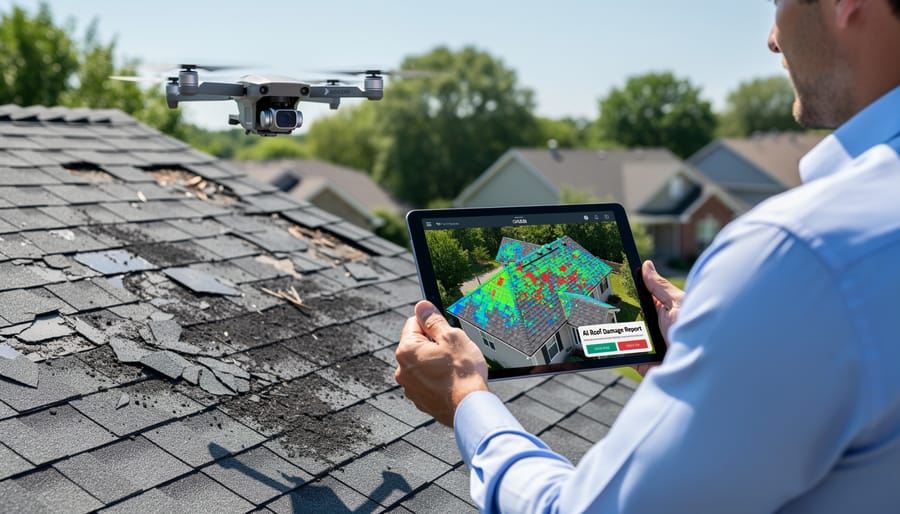
Here’s how it works: When you photograph damaged property—whether it’s hail damage to your roof, water damage in your basement, or collision damage to your vehicle—AI algorithms analyze these images with remarkable precision. The technology identifies the type of damage, measures its extent, and cross-references this information against vast databases of repair costs in your specific location. It can distinguish between superficial cosmetic damage and structural issues that require immediate attention.
For property owners, this means faster claim processing and more consistent estimates. AI-powered property assessments reduce human error and subjective interpretations that sometimes led to disputes over claim amounts. The system can also detect previous damage or wear-and-tear, helping ensure you’re fairly compensated for recent incidents without inflating claims for pre-existing conditions.
What’s particularly valuable for real estate professionals is the documentation trail. Every analysis creates a detailed digital record with timestamped photos and damage assessments, which can be crucial for property transactions, tenant disputes, or future insurance applications. This technology doesn’t replace human adjusters entirely—complex claims still require expert review—but it streamlines straightforward cases significantly, getting you back to normal faster.
Reducing Underpayments and Overpayments
Insurance claims analytics creates a win-win scenario by dramatically improving payment accuracy. For property owners, this means getting the right compensation when disaster strikes—no drawn-out disputes over whether that storm damage warrants $8,000 or $12,000 in repairs. Analytics systems compare your claim against thousands of similar property incidents, factoring in local contractor costs, material prices, and regional market conditions to arrive at fair valuations.
This precision protects you from underpayment, ensuring your settlement actually covers the restoration costs. For insurers, it prevents overpayments that ultimately drive up everyone’s premiums. Think of it as a sophisticated pricing mechanism: when claims are paid accurately based on data rather than estimates or negotiations, the entire risk pool becomes more predictable.
The real estate implications are significant. Properties with accurate claims histories maintain better insurability profiles, and when insurers can confidently predict their exposure, they’re more willing to offer competitive rates. This data-driven approach also reduces the adversarial nature of claims processing. Instead of policyholders feeling shortchanged or insurers suspecting inflation, both parties reference the same objective analytics, creating transparency that benefits honest homeowners while identifying the relatively few who might exaggerate damages.
What This Means for Your Insurance Premiums
Here’s the bottom line that matters to your wallet: AI-powered insurance claims analytics is creating downward pressure on premiums for property owners who maintain their investments responsibly. Let’s break down exactly how these technological advances translate into real financial benefits.
First, fraud detection improvements are protecting honest policyholders. When insurers use AI to catch fraudulent claims—which currently cost the industry billions annually—they’re not absorbing those losses themselves. They’re preventing costs that would otherwise be distributed across all premium-payers. Some insurers are already reporting fraud detection rates improved by 20-30% through AI analytics, and those savings create room for more competitive pricing for legitimate customers.
Efficiency gains matter too. Traditional claims processing involves significant administrative overhead, with adjusters spending hours on documentation, verification, and cross-referencing. AI analytics automates much of this grunt work, processing data in minutes rather than days. Faster insurance payouts mean insurers hold funds for shorter periods, and reduced processing costs directly impact operational expenses that factor into premium calculations.
The risk assessment angle is perhaps most significant for real estate investors and homeowners. AI systems analyze hundreds of property-specific variables—from local weather patterns to building materials to neighborhood claims history—creating highly accurate risk profiles. If your property demonstrates lower risk factors, you’re increasingly likely to see that reflected in your premiums rather than being pooled with higher-risk properties in broad categorizations.
For commercial property owners, the impact can be even more pronounced. Portfolio analytics help insurers offer volume discounts based on actual performance data across multiple properties rather than generic formulas. Smart building technology that feeds data to insurers can qualify properties for additional premium reductions.
While individual results vary by insurer and jurisdiction, industry analysts estimate that AI-driven efficiencies could reduce premiums by 5-15% for well-maintained properties over the next few years—meaningful savings that reward responsible property stewardship.

Privacy Concerns and Data Security in AI Claims Processing
When AI systems analyze insurance claims, they process significant amounts of personal information, from property details to financial records. For property owners, understanding how this data is protected is essential, particularly as smart technology in insurance becomes increasingly prevalent.
The good news is that insurance companies using AI analytics operate under strict regulatory frameworks. In Canada, organizations must comply with the Personal Information Protection and Electronic Documents Act (PIPEDA), which governs how private sector companies collect, use, and disclose personal information. This means insurers can only collect data necessary for processing claims and must obtain your consent for its use.
Modern AI systems employ advanced encryption protocols to protect data both in transit and at storage. Think of it as multiple layers of security safeguards, similar to how banks protect financial transactions. Most insurers also implement anonymization techniques, where personal identifiers are stripped from data used for training AI models, ensuring your specific information isn’t exposed during system improvements.
Property owners should know they have rights regarding their data. You can request to know what information is being collected, how it’s being used, and who has access to it. If you’re filing a claim, ask your insurer about their data protection measures and AI usage policies. Reputable companies will provide clear explanations.
Red flags to watch for include requests for excessive personal information unrelated to your claim or vague data usage policies. Choose insurers with transparent AI practices and strong cybersecurity track records. While AI claims processing offers numerous benefits, including faster settlements and reduced fraud, your data security should never be compromised in the process.
How to Leverage AI-Enhanced Claims When Filing Your Next Claim
Understanding how to work effectively with AI-enhanced claims systems can significantly improve your experience when filing property insurance claims. These intelligent platforms are designed to accelerate processing and reduce friction, but knowing how to navigate them gives you an edge.
First, document everything thoroughly from the moment damage occurs. AI systems excel at analyzing visual data, so take clear, well-lit photos and videos from multiple angles. Capture wide shots showing the entire affected area and close-ups of specific damage. Many insurers now offer mobile apps with AI-powered guidance that actually prompts you which images to capture, ensuring you don’t miss critical documentation that could delay your claim.
When describing the incident, be specific and chronological. AI algorithms parse your narrative looking for key details about timing, cause, and extent of damage. Instead of writing “the roof leaked,” provide context: “During the March 15 storm with 60 mph winds, shingles were torn from the northwest section of the roof, causing water intrusion in the master bedroom.” This level of detail helps the AI categorize and route your claim appropriately.
Submit your claim as soon as possible. AI systems process claims in real-time, and early submission means faster assignment to adjusters and quicker initial assessments. Many platforms now provide instant preliminary estimates based on your documentation, giving you immediate visibility into potential payouts.
Don’t hesitate to follow up if the system requests additional information. AI-powered claims platforms often identify gaps in documentation automatically and send targeted requests. Responding quickly keeps your claim moving through the processing pipeline without bottlenecks.
Finally, maintain digital records of all correspondence and documentation. AI systems create comprehensive audit trails, and having your own backup ensures you can reference specific details if questions arise. This organized approach demonstrates your credibility and helps the AI assign appropriate confidence scores to your claim, potentially expediting approval.
AI-driven claims analytics represents a genuine paradigm shift in how property insurance operates, delivering tangible benefits that extend far beyond corporate efficiency metrics. For homeowners and real estate professionals, this technology translates into faster claim resolutions—often reducing processing times from weeks to days—more accurate damage assessments, and significantly lower fraud rates that help keep premiums stable for honest policyholders. The algorithms work tirelessly to ensure that legitimate claims receive prompt attention while suspicious patterns get flagged for review, creating a fairer system for everyone involved.
As this technology continues evolving, the gap between insurers who embrace these innovations and those who don’t will only widen. Property owners stand to benefit most by choosing carriers that invest in advanced analytics capabilities, as these companies typically offer smoother claims experiences and more competitive pricing structures.
When shopping for property insurance or reviewing your current coverage, don’t hesitate to ask pointed questions: Does your insurer use AI-powered claims analytics? How does their technology improve processing times? What measures protect your data privacy? Insurers leveraging these tools should welcome such inquiries and clearly explain how their systems benefit policyholders. Understanding your carrier’s technological capabilities isn’t just about staying informed—it’s about ensuring you receive the efficient, fair treatment you deserve when filing a claim. In today’s competitive insurance landscape, knowledge truly is power, and choosing an insurer committed to cutting-edge analytics can make all the difference when you need support most.