
Verify every Zillow listing independently through county property records before sending money or sharing personal information—scammers clone legitimate listings, alter contact details, and pose as property owners to collect fraudulent deposits from unsuspecting renters and buyers. The scheme has cost victims an average of $2,000 per incident, with some losing entire down payments to criminals who never owned the properties they advertised.
Cross-reference the listing agent’s credentials directly with their brokerage and state real estate commission rather than trusting contact information provided in the ad itself. Fraudsters create convincing fake agent profiles complete with stolen photos and fabricated reviews, then redirect communication to untraceable email addresses and burner phones. Request video calls and in-person meetings at the actual property—legitimate agents readily accommodate these requests, while scammers make excuses or disappear entirely.
Examine payment requests with extreme skepticism, particularly demands for wire transfers, cryptocurrency, gift cards, or payments sent before viewing the property. Real estate transactions follow established protocols through escrow companies and attorneys, never through peer-to-peer payment apps or direct transfers to individuals. If someone pressures you to “act fast” or claims multiple interested parties require immediate payment, you’re likely encountering a fraud attempt designed to override your better judgment.
The financial devastation extends beyond lost deposits. Victims face identity theft when scammers collect Social Security numbers, bank statements, and employment verification documents through fake rental applications. These criminals leverage your personal information for additional fraud schemes long after the initial scam concludes. Understanding these risks represents your first line of defense, but comprehensive protection requires both vigilance and proper financial safeguards against the evolving landscape of real estate fraud.
What Are Zillow Frauds and Why They’re Exploding

The Most Common Zillow Scam Tactics
Scammers have developed increasingly sophisticated tactics to exploit Zillow’s trusted platform, leaving both buyers and renters vulnerable to financial loss. Understanding these common schemes is your first line of defense against becoming a victim.
Cloned listings represent one of the most prevalent scams. Fraudsters copy legitimate property listings—complete with photos, descriptions, and pricing—then repost them on Zillow or redirect interested parties to fake websites. These duplicates often advertise impossibly low prices to attract desperate house hunters. The scammer then requests upfront deposits or application fees before disappearing entirely. This tactic mirrors broader virtual property transaction scams affecting the digital real estate landscape.
Fake rental properties follow a similar pattern but target renters specifically. Criminals advertise properties they don’t own, often claiming to be out-of-state landlords unable to show the property in person. They pressure victims to wire deposits or send gift cards immediately to secure the rental, sometimes even providing fake lease agreements to appear legitimate.
Agent and seller impersonation scams involve fraudsters posing as licensed real estate professionals or property owners. They create convincing profiles, use stolen credentials, and communicate through seemingly official channels. Once they’ve established trust, they manipulate transactions to their advantage.
Perhaps the most financially devastating are wire transfer redirect scams during closing. Hackers infiltrate email communications between legitimate parties, then send fraudulent wiring instructions that appear authentic. Buyers unknowingly transfer their down payment or closing costs directly into the scammer’s account. By the time the fraud is discovered, recovering funds becomes extremely difficult, making preventive measures and proper insurance coverage essential considerations for any real estate transaction.
Why Zillow Creates Unique Vulnerabilities
Zillow’s business model, while revolutionary for home shopping convenience, inadvertently creates a perfect storm for fraud. The platform’s open-access design allows anyone to create listings or contact sellers with minimal verification, making it easy for fraudsters targeting property deals to operate with relative anonymity.
Unlike traditional real estate transactions where face-to-face meetings and established broker relationships provide natural safeguards, Zillow facilitates virtual-first interactions. Buyers and sellers often communicate exclusively through messaging systems or email, eliminating the intuitive trust signals we rely on during in-person encounters. This digital distance makes it harder to verify identities or spot red flags.
The platform’s verification processes, while improving, remain relatively light. Users can post rental listings without proving property ownership, and communication can begin without thorough identity checks. For scammers, this represents low-hanging fruit. They can quickly set up convincing fake profiles, clone legitimate listings, and reach thousands of potential victims before detection.
Additionally, Zillow’s massive user base means fraudulent activity can easily blend into legitimate transactions, allowing scams to persist longer before patterns emerge. This combination of accessibility, anonymity, and scale makes vigilance absolutely essential for users.
Real Stories: When Zillow Fraud Strikes
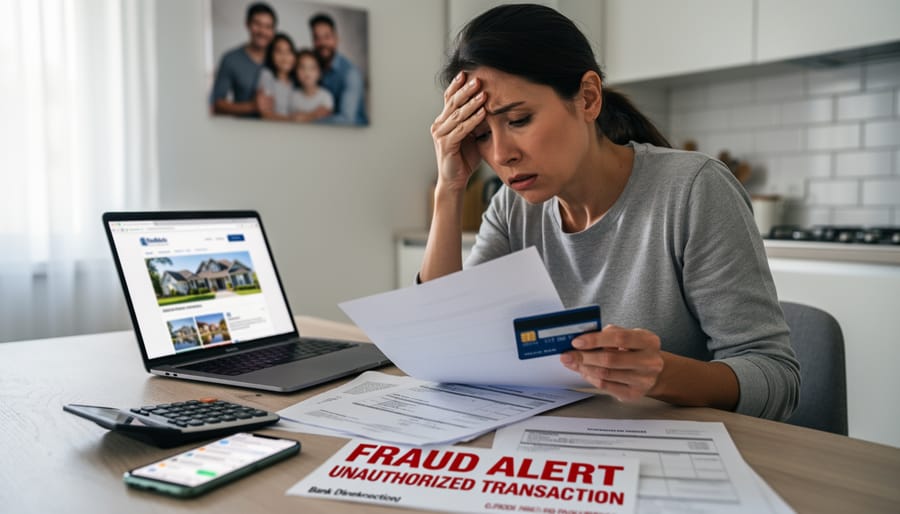
When fraud targets your property listing or home search, the consequences extend far beyond dollars and cents. Here are three real situations that illustrate how Zillow-related scams unfold and affect actual people.
The Philadelphia Rental That Never Existed
Sarah, a graduate student relocating to Philadelphia, found what seemed like the perfect apartment on a listing shared through Zillow. The supposed landlord claimed to be overseas for work and offered to mail keys after she wired a security deposit and first month’s rent totaling $2,800. The listing photos matched the address, and the price aligned with neighborhood averages, so nothing seemed suspicious.
After wiring the money through a payment app, Sarah never heard from the landlord again. When she arrived at the property, the actual owner had no idea his home had been fraudulently listed. Sarah lost her entire deposit and faced weeks of temporary housing expenses while scrambling to find legitimate accommodation. The emotional toll of feeling violated and foolish compounded the financial loss.
The Hijacked Home Sale in Austin
Michael and Jennifer were selling their Austin home when they noticed their property photos appearing in a separate listing at a suspiciously low price. Scammers had copied their legitimate Zillow listing, created fake contact information, and were attempting to collect deposits from interested buyers.
Three families contacted them after losing deposits ranging from $3,000 to $5,000 to the fraudulent listing. While Michael and Jennifer weren’t directly financially harmed, they spent countless hours dealing with police reports, notifying Zillow, and fielding calls from angry victims who initially blamed them. Their home sale was delayed by six weeks as buyers became wary of the legitimate listing.
The Investment Property Impersonation
Robert, an experienced real estate investor, fell victim to a sophisticated wire fraud scheme. Days before closing on a rental property he found through Zillow, he received official-looking emails with updated wiring instructions. The $87,000 down payment went to fraudsters who had infiltrated the email chain between Robert and his title company.
He discovered the fraud only when the actual title company called asking why payment hadn’t arrived. Though his bank eventually recovered $52,000, Robert absorbed $35,000 in losses plus legal fees. The experience left him questioning every transaction and considering whether digital fraud coverage could have protected his investment.
What Digital Fraud Coverage Actually Means for Virtual Property Transactions
Coverage Components That Matter Most
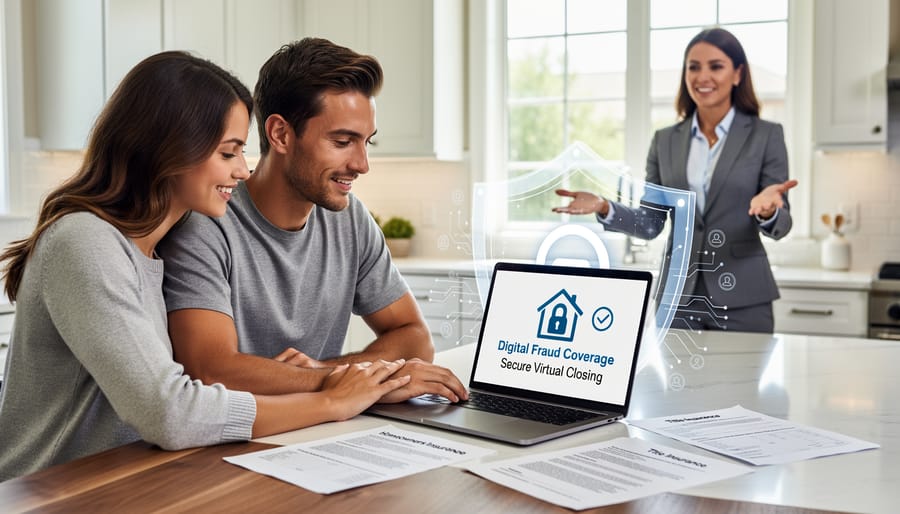
When shopping for digital fraud coverage specific to real estate transactions, understanding which policy components actually protect you makes all the difference. Not all fraud insurance is created equal, especially when dealing with property scams that can reach six or seven figures.
Wire transfer fraud protection stands as your first line of defense. This coverage reimburses you when criminals intercept payment instructions and divert funds to fraudulent accounts—the most common scenario in real estate wire fraud. Look for policies covering amounts up to your transaction value, as basic policies may cap at insufficient limits.
Identity theft recovery services go beyond simple credit monitoring. Quality coverage includes case management specialists who handle the paperwork nightmare of reclaiming your identity, freezing accounts, and disputing fraudulent charges. This matters tremendously when scammers use your personal information to create fake property listings or impersonate you in transactions.
Phishing protection coverage addresses losses stemming from email compromise schemes where fraudsters pose as real estate agents, title companies, or lenders. Since these attacks specifically target transaction communications, dedicated coverage ensures you’re protected when clicking a sophisticated fake link leads to financial loss.
Document forgery coverage protects against falsified deeds, titles, or closing documents—increasingly common as digital document sharing becomes standard practice. This component typically covers legal costs to prove forgery and restore proper ownership records.
Legal defense costs coverage handles attorney fees when you’re forced to litigate fraud-related disputes. Real estate fraud cases often involve multiple parties and complex ownership questions, making legal expenses skyrocket quickly. Comprehensive policies should cover defense costs separate from settlement amounts, ensuring you’re not choosing between adequate legal representation and preserving your coverage limits.
What’s NOT Covered (The Fine Print)
Before you breathe a sigh of relief thinking your digital fraud coverage has you completely protected, let’s talk about what these policies typically won’t cover. Understanding these gaps is crucial to avoid a false sense of security when dealing with real estate scams.
Most digital fraud insurance policies exclude losses stemming from your own business dealings gone wrong. If you entered into a legitimate real estate transaction that simply didn’t work out financially, that’s not fraud coverage territory. Similarly, if you willingly sent money to someone after ignoring multiple red flags or failing to verify their identity through basic due diligence, insurers may deny your claim based on negligence clauses.
Investment losses don’t typically qualify either. If you invested in a property based on inflated Zillow estimates or misleading listing information, but the transaction itself was legitimate, you’re likely on your own. The coverage focuses on criminal deception, not market fluctuations or poor investment decisions.
Many policies also exclude losses that occurred before you purchased the coverage, even if you only discovered the fraud recently. There’s usually a specific reporting window too. Wait too long to report suspicious activity, and you might forfeit your right to claim.
Insider fraud sometimes falls into gray areas. If a family member or business partner with authorized access to your accounts facilitates the scam, coverage may be limited or excluded entirely. Finally, policies won’t cover consequential damages like lost opportunity costs, emotional distress, or the time you spent dealing with the aftermath, only direct financial losses from the fraudulent transaction itself.
How to Spot Zillow Fraud Before It’s Too Late
The good news? Most Zillow-related fraud attempts follow predictable patterns, and you can catch them before they catch you. Let’s walk through the warning signs that should immediately raise your guard.
Start with the listing itself. If a property’s price seems dramatically lower than comparable homes in the area—we’re talking 20-30% below market value—pause before you get excited. Scammers know that incredible deals short-circuit our better judgment. Run a reverse image search on the property photos using Google Images or TinEye. Fraudulent listings often steal images from legitimate real estate sites or vacation rental platforms. If those same photos appear on multiple listings with different addresses or prices, you’ve found your red flag.
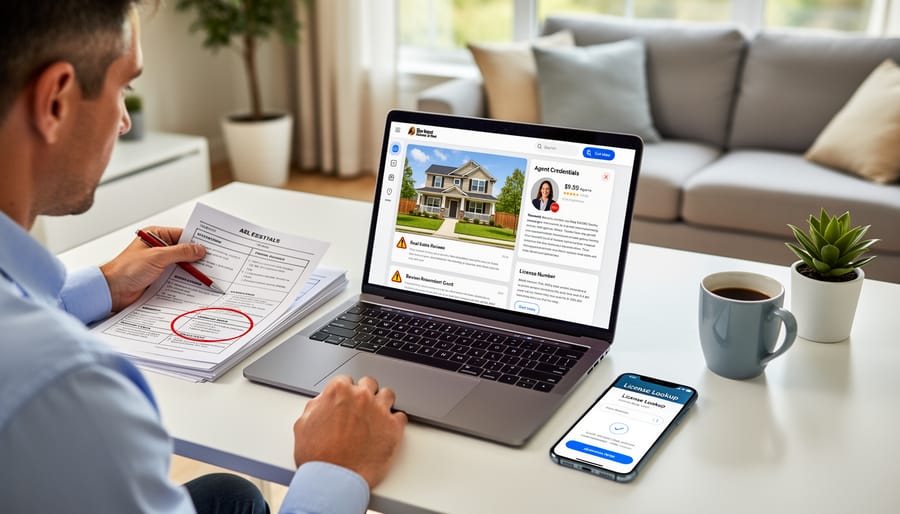
Next, verify the listing agent’s credentials independently. Don’t just trust the contact information provided in the listing. Visit your state’s real estate licensing board website and search for the agent’s name and license number. Every legitimate real estate professional has a verifiable license that you can check in minutes. If you can’t find their license, or if the person pressures you to skip this step, walk away immediately.
Pay close attention to communication patterns. Legitimate agents typically use professional email addresses tied to their brokerage, not generic Gmail or Yahoo accounts. They’ll meet you in person or via video call, not just through text messages. Be especially wary if someone claims to be out of the country or unable to show the property in person but still wants to move forward quickly.
When it comes to money transfers, this is where many fraud schemes succeed. Always verify wire transfer instructions through a known phone number—one you’ve looked up yourself, not one provided in an email. Call your real estate agent or title company directly before sending any funds. Scammers have become experts at creating fake emails that look nearly identical to legitimate ones, changing just the bank account details.
Consider implementing a personal verification checklist: confirm the property exists by driving by it, verify the owner’s identity through public property records, insist on touring the property with a licensed professional, and never send money without independent confirmation of banking details. For added protection, some homebuyers are now exploring digital fraud insurance coverage specifically designed for real estate transactions, which can provide financial recovery options if verification steps somehow fail despite your best efforts.
Getting Digital Fraud Coverage: Your Options and Costs
Protecting yourself from real estate fraud doesn’t have to break the bank, but knowing where to look for coverage is essential. Your first stop should be your title insurance company. While standard title insurance policies typically protect against ownership disputes and lien issues, many carriers now offer enhanced digital transaction protection riders specifically designed to cover wire fraud and cyber-related scams. These endorsements usually cost between $150 and $500 as a one-time fee at closing.
Your homeowners insurance agent represents another valuable resource. Some comprehensive homeowners policies include limited cyber fraud coverage, though the caps are often low, ranging from $1,000 to $10,000. Ask your agent specifically about cyber liability endorsements or identity theft riders that might extend to real estate transaction fraud. These additions typically increase your annual premium by $25 to $100.
For real estate professionals handling multiple transactions annually, standalone cyber insurance policies offer the most robust protection. These specialized products, available through commercial insurance brokers, provide coverage limits from $100,000 to several million dollars. Annual premiums vary widely based on transaction volume and coverage limits but generally start around $500 for basic professional coverage.
Don’t overlook your bank, either. Some financial institutions offer fraud guarantee programs that reimburse customers for losses resulting from wire transfer scams, though coverage isn’t universal and often requires proving you followed security protocols.
Before purchasing separate coverage, review your existing policies carefully. Call each insurance provider and ask specifically about wire fraud, cybercrime, and social engineering coverage in real estate contexts. Many people already have partial protection without realizing it.
The investment in proper coverage is minimal compared to potential losses. With median wire fraud scams in real estate exceeding $150,000, spending a few hundred dollars for protection makes financial sense and provides invaluable peace of mind during what should be an exciting transaction.
What to Do If You’re Already a Victim
Discovering you’ve fallen victim to Zillow-related fraud can be devastating, but taking immediate action is crucial to minimize damage and begin recovery. Here’s your step-by-step action plan.
First, contact your financial institution immediately. If wire transfers were involved, call your bank within 24 hours—speed is critical as funds may still be recoverable. Request a wire recall and document everything with reference numbers. For credit card fraud, dispute charges immediately and request new cards.
Next, file a police report in your local jurisdiction. While individual cases may seem small, these reports create patterns that help law enforcement track larger fraud operations. Include all documentation: emails, screenshots of fake listings, payment receipts, and communication records. You’ll need this report number for insurance claims and credit disputes.
Simultaneously, contact the three major credit bureaus—Experian, Equifax, and TransUnion—to place fraud alerts on your credit reports. Consider a credit freeze for added protection. If identity theft occurred, file a report with the Federal Trade Commission at IdentityTheft.gov.
If you purchased title insurance or digital fraud coverage, initiate claims immediately. Most policies have strict notification windows. Your insurer can guide you through documentation requirements and may cover financial losses depending on your coverage terms. Contact your title company as well—they have fraud departments and may offer recovery assistance.
Consider engaging a professional fraud investigation service, particularly for complex wire fraud schemes. These specialists can trace funds and gather evidence for potential recovery.
Finally, report the incident to Zillow directly through their fraud reporting channels. While they may have limited liability, documentation helps them identify patterns and potentially shut down fraudulent operations targeting other users.
The digital real estate landscape has transformed how we buy, sell, and invest in property, but it’s also created new vulnerabilities that demand our attention. As Zillow frauds and similar scams become increasingly sophisticated, protecting yourself is no longer just smart—it’s essential. The good news? You’re now equipped with the knowledge to spot red flags, understand the tactics fraudsters use, and most importantly, know that financial protection exists specifically for these modern threats.
Digital fraud coverage has evolved from a niche insurance product to a fundamental safeguard for anyone engaging in virtual property transactions. Whether you’re a first-time homebuyer conducting video tours or a seasoned real estate professional coordinating remote closings, understanding your exposure and available protections is critical. The statistics are sobering, but they shouldn’t paralyze you—they should motivate action.
Start by taking inventory of your current insurance policies and identifying gaps in digital fraud protection. Reach out to specialized insurance providers who understand the real estate-specific risks you face. Implement the verification strategies we’ve discussed: always confirm wire instructions through known phone numbers, meet parties in person when possible, and trust your instincts when something feels off.
Remember, fraudsters count on urgency and confusion to succeed. By staying informed, asking questions, and prioritizing protection over convenience, you’re already several steps ahead. The future of real estate is digital, and your security strategy should match that reality. Take control today—your financial peace of mind depends on it.